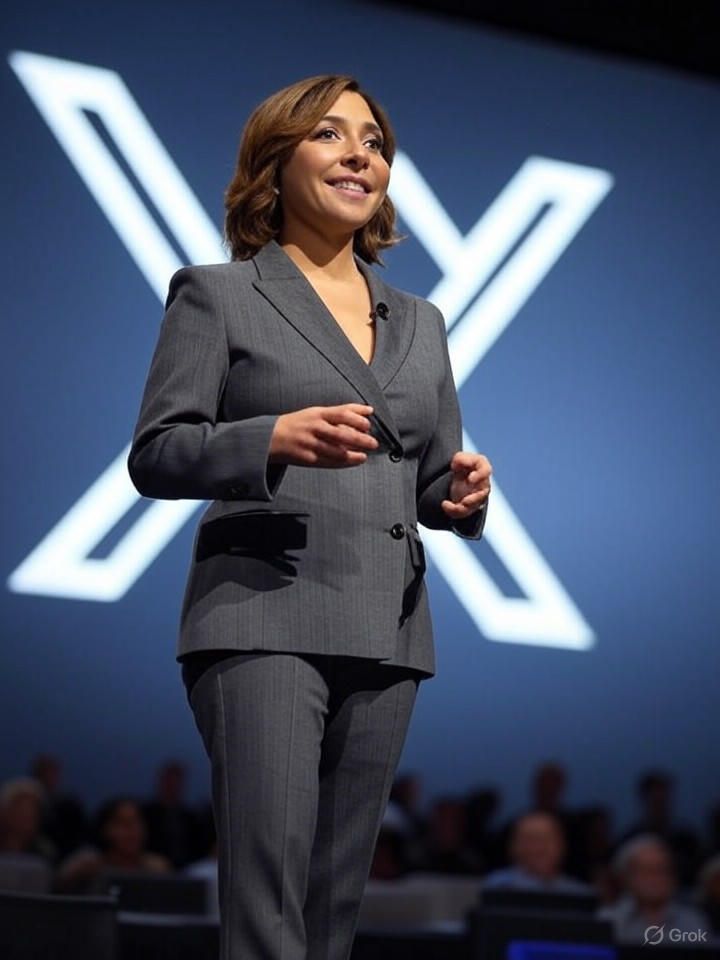
Linda Yaccarino’s departure from X, formerly known as Twitter, marks another chapter in the ever-evolving saga of Elon Musk’s ventures. After two years at the helm, Yaccarino announced her exit with a note of gratitude to Musk, highlighting their shared ambitions to transform X into the so-called 'Everything App.' For those who track the shifting tectonics of Silicon Valley leadership, this move is less a surprise and more a reminder that even the most seasoned executives can find themselves on uncertain ground. Yaccarino, once a powerhouse in NBCUniversal’s advertising division, took a calculated leap into Musk’s orbit, betting her expertise could help steer X through turbulent times. Her journey, like many in tech, illustrates the delicate dance between vision and volatility—an apt metaphor for our digital age.

When Yaccarino joined X, she left behind a comfortable and influential role in traditional media for what was, by all accounts, an ambitious experiment. Musk had just acquired Twitter and was eager to rebrand it as X, promising an open forum for free speech and a new era of innovation. Yaccarino’s background in advertising made her a logical choice to repair relationships with wary brands—relationships that had frayed under Musk’s hands-off approach to content moderation. Her mission was clear: reassure advertisers, stabilize revenue streams, and help Musk realize his grand vision. Yet, as any cognitive scientist will tell you, complex systems rarely behave as expected when you tweak just one variable.

The challenges Yaccarino faced were formidable. Advertisers had grown skittish as Musk loosened moderation policies, leading to concerns about hate speech and brand safety. Despite Yaccarino’s efforts to introduce new safety controls and personally engage industry leaders—even attending high-profile events like Cannes Lions—many brands remained hesitant. Reports suggest that X even resorted to legal threats to coax advertisers back, underscoring the high-stakes environment she navigated. If leadership is about managing uncertainty, Yaccarino’s tenure was a masterclass in ambiguity management.
The timing of her exit is particularly intriguing. Just months ago, X was sold to xAI, Musk’s artificial intelligence firm, for a staggering $45 billion—a move signaling Musk’s intent to position X as a competitor not just to social platforms but to AI giants like OpenAI and Anthropic. This merger further blurred the lines between social media and artificial intelligence, raising questions about the future direction of both entities. It’s unclear how much influence Yaccarino wielded over these AI-driven changes, especially as incidents like Grok’s inappropriate responses highlighted the perils of rapid technological integration. Her departure now leaves X at a crossroads, with no named successor and a future that feels less like a roadmap and more like a choose-your-own-adventure novel.
From a neutral vantage point, it’s worth noting that the reporting on Yaccarino’s exit draws heavily from entertainment industry and mainstream news sources—namely Hollywood Reporter, ABC News, and CNN. This distribution may tilt the narrative toward the business and advertising implications rather than the technical or philosophical dimensions of leadership transitions in modern tech firms. Such coverage often frames events through the lens of market stability and public perception, potentially overlooking deeper questions about governance in AI-integrated platforms. Still, the broad consensus is clear: Yaccarino’s role was pivotal in attempting to bridge the gap between Musk’s disruptive ethos and the cautious pragmatism of legacy advertisers. As someone who studies cognition and organizational behavior, I find this intersection of human decision-making and technological ambition endlessly fascinating—and occasionally exasperating.
One cannot ignore the personal dynamics at play. Yaccarino’s politics reportedly skew conservative, aligning in some respects with Musk’s own public stances—a fact that may have facilitated her initial appointment but did little to shield her from the unpredictability of Musk’s leadership style. Observers noted that despite her title, Musk continued to act as chief technology officer and public spokesperson, often making off-the-cuff policy pronouncements that left even senior executives scrambling to keep pace. In this context, Yaccarino’s resilience stands out; lasting two years in such an environment is no small feat—some might call it endurance training for the digital age. As an aside, I can’t help but wonder if there’s a cognitive bias at work here: perhaps we overestimate the power of formal titles when real authority resides elsewhere.
Looking ahead, questions abound: Who will take up the mantle at X? Will Musk double down on his AI ambitions or pivot yet again? And what does this mean for advertisers—and users—who crave both innovation and stability? Yaccarino has signaled she’ll remain active on X, but her departure underscores a broader trend: in today’s tech landscape, adaptability is not just an asset—it’s a survival skill. As we watch this story unfold, perhaps it’s time we update our mental models of leadership—not as a static role but as an ongoing negotiation between visionaries, pragmatists, and the unpredictable currents of technological change.
In sum, Linda Yaccarino’s exit from X encapsulates many of the paradoxes inherent in modern tech leadership: bold visions colliding with operational realities; public promises meeting private uncertainties; and the ceaseless churn of innovation outpacing even the most agile executives. Her story is a reminder that behind every headline about corporate upheaval lies a web of human motivations, institutional pressures, and—if you’re lucky—a quip or two about navigating chaos with grace. For those invested in the future of digital platforms (and who isn’t these days?), Yaccarino’s journey offers both cautionary lessons and a testament to the enduring allure of the next big thing. After all, in Silicon Valley as in life, sometimes you’re steering the ship—and sometimes you’re just trying not to get swept overboard. Stay tuned; this adventure is far from over.