
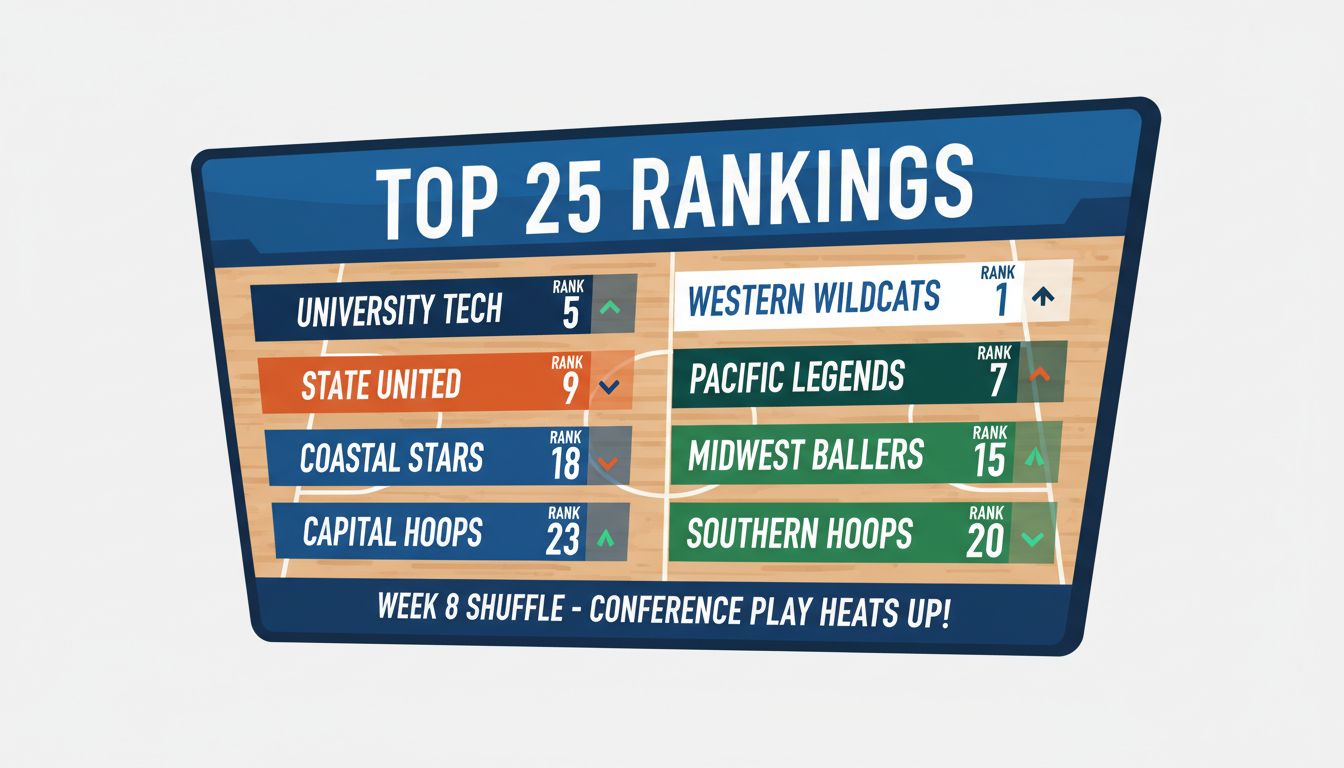
If you love order, college basketball was not for you this past Saturday. Five top-10 teams went down in one wild day, and in the middle of that storm Duke quietly slid into the No. 1 spot in the Week 16 AP poll. Michigan’s one-week stay on the throne is over, Arizona regrouped and climbed to No. 2, and the rest of the top 10 looks like a bracket someone shook over a trash can. From my seat in Lexington, it’s another reminder that March is creeping up fast and nobody – not even the blue bloods – is safe from a bad half, a hot whistle, or a hungry underdog. Let’s walk through what this poll really tells us about the national picture, who’s peaking, who’s wobbling and why, even in a Duke-at-No.1 world, the gap between "contender" and "caution sign" is thinner than ever.
Start at the top: Duke is 25-2 and now back where they think they live – on the top line of every graphic on ESPN. The numbers are impressive: 11 wins all time over AP No. 1 teams, 153 wins over AP top-10 opponents, and more victories in top-three showdowns than anyone in poll history. That’s the résumé of a program that expects to be in the national title conversation every single season. But if there’s one thing years of watching this sport have taught me, it’s that being No. 1 in February can be as much a burden as a badge. You stop sneaking up on people, and every road gym you walk into treats you like it’s their Super Bowl, their Final Four and their senior night all rolled into one.
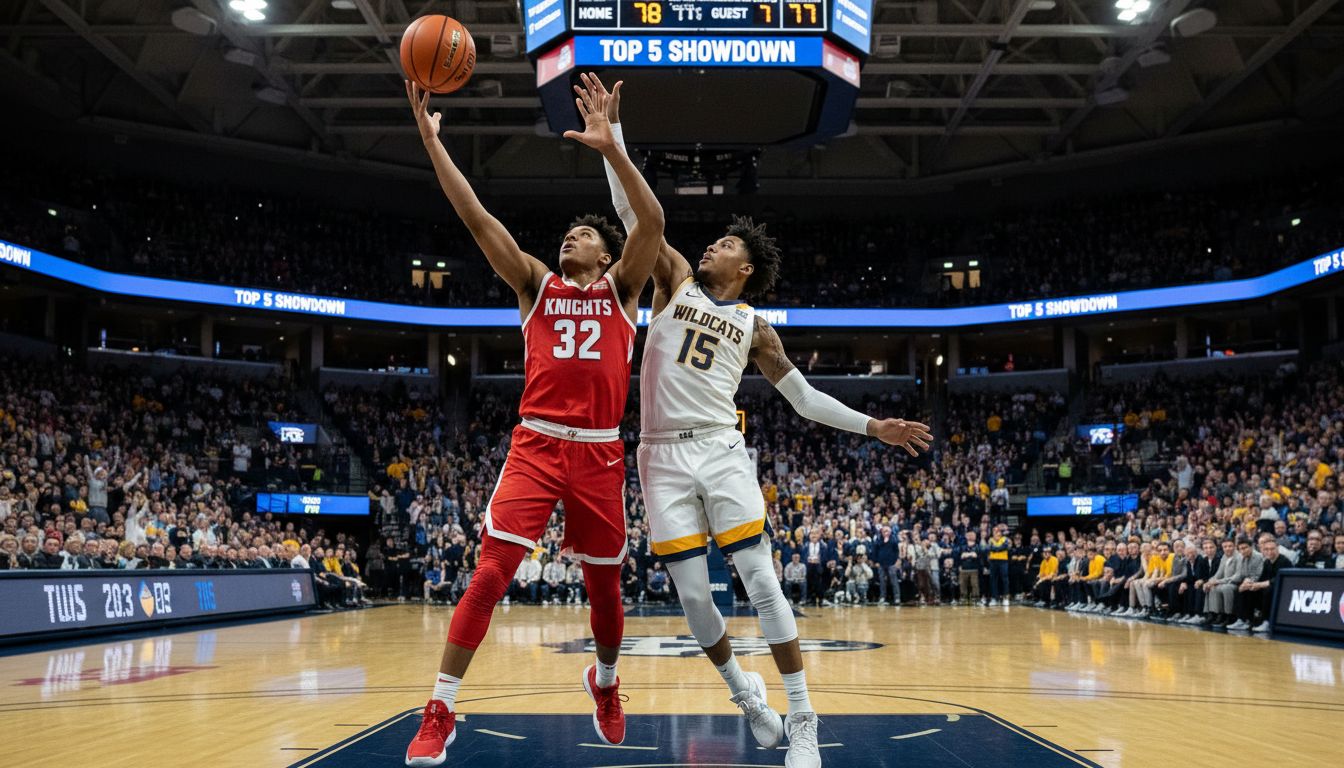
Right behind Duke sits Arizona at 25-2, and the Wildcats have quietly stacked one of the more impressive regular-season résumés we’ve seen in a while. Three wins over AP top-three opponents in a single season ties the best mark since the poll started back in 1949. That’s not smoke and mirrors; that’s repeatedly beating teams that believe they’re national title good. Their next test, at Baylor, is exactly the kind of road trip that separates a polished contender from a high-flying team that just happens to be hot in February. If they handle that environment, Arizona is more than just a fun offense in a late-night time slot – they’re a team you trust in your bracket deep into the second weekend.
Michigan falls to No. 3 after the loss to Duke, but nothing about their profile screams "pretender." They were unbeaten against ranked opponents before that, sitting at 6-0 in those games, and they still sit at 25-2. Sometimes you just run into a team that’s making shots you can’t quite contest and playing with a little more edge than you are that night. Same story, different zip code for Iowa State and Houston, rounding out the top five after both slipped. Iowa State saw their streak against ranked foes snapped by BYU, the same program that tagged them with their last loss to a ranked opponent a year ago, and Houston finally dropped back-to-back games for the first time since January 2024, ending an 87-game run without consecutive losses.
Those Houston numbers deserve a second look. Eighty-seven straight games without losing two in a row speaks to a culture where the floor is incredibly high – you can have an off night, but you don’t have an off week. They had won 11 straight games that immediately followed a loss before this skid, which is the kind of stat that usually tells you a team knows how to correct quickly and doesn’t dwell. So when you see them lose two in a row, you don’t overreact; you just note that even the steadiest teams can wobble when the schedule compresses and the legs get heavy in late February. Come March, that ability to bounce back between Thursday and Saturday might matter more than a mid-winter bump in the AP poll does.
If the top five is about heavyweights trading punches, the middle of the poll is about momentum swings and identity checks. Florida shoots up to No. 7 after becoming just the second SEC program in 50 years to score at least 85 in six straight road games, joining Alabama’s 2024-25 group in rare air. That’s not just pace; that’s poise – you don’t hang big numbers in hostile gyms unless you’re getting good shots and handling pressure. Alabama themselves are up to No. 17 and lead the nation with 18 games of 90-plus points, while Arkansas, sitting at No. 20, has cracked 90 in 12 contests, tying their best mark of the past 30 seasons. For SEC fans, it’s a reminder that the league has become every bit as offensively explosive as the coastal pundits once insisted only lived in the ACC or Big 12.
Outside the SEC, a few storylines jump off the page. Purdue bludgeoned Indiana by 29, their biggest margin in that rivalry since 1969, and finally broke 90 on the Hoosiers again after nearly three decades, reinforcing that their best nights still look like No. 1 seed material. Gonzaga, somehow under the radar at 27-2, just notched their 10th season since 2012-13 with at least 15 conference wins – nobody else in Division I has done it more than seven times in that stretch, which is the definition of sustained dominance. Illinois hangs at No. 10, but their fortunes track almost directly with freshman Keaton Wagler’s shooting; they’re just 3-4 when he’s under 35% from the field, a reminder of what happens when a young star carries too much of the shot-making burden. Virginia rides an eight-game win streak back into the edge of the national conversation, and Nebraska quietly sits at 23-4 with eight 20-point wins, matching the best blowout seasons in their modern history. You don’t have to squint hard to see a second weekend bracket full of names we aren’t quite used to penciling that far.
Drop down the rankings and you hit the chaos pocket, where big swings, comebacks and warning lights all live together. Kansas tumbles to No. 14 after a 16-point home loss to Cincinnati, their largest home defeat to an unranked team in the AP era and the first double-digit loss to such a team in Allen Fieldhouse since 1993, snapping a 425-game streak. That’s more than a bad night; that’s a crack in the armor of one of the sport’s most reliable home-court advantages. Meanwhile, Saint Louis, now No. 23, keeps proving they aren’t just a nice mid-major story – a 14-point first-half deficit turned into a 13-point win over VCU, their second-biggest comeback this season and the 12th time they’ve outscored a team by 20 in a half. Throw in BYU at No. 19 finally snapping a six-game slide against top-10 opponents and grabbing their highest-ranked win since they stunned Gonzaga in 2020, and you’ve got a reminder that late February is when the so-called middle class starts punching up.
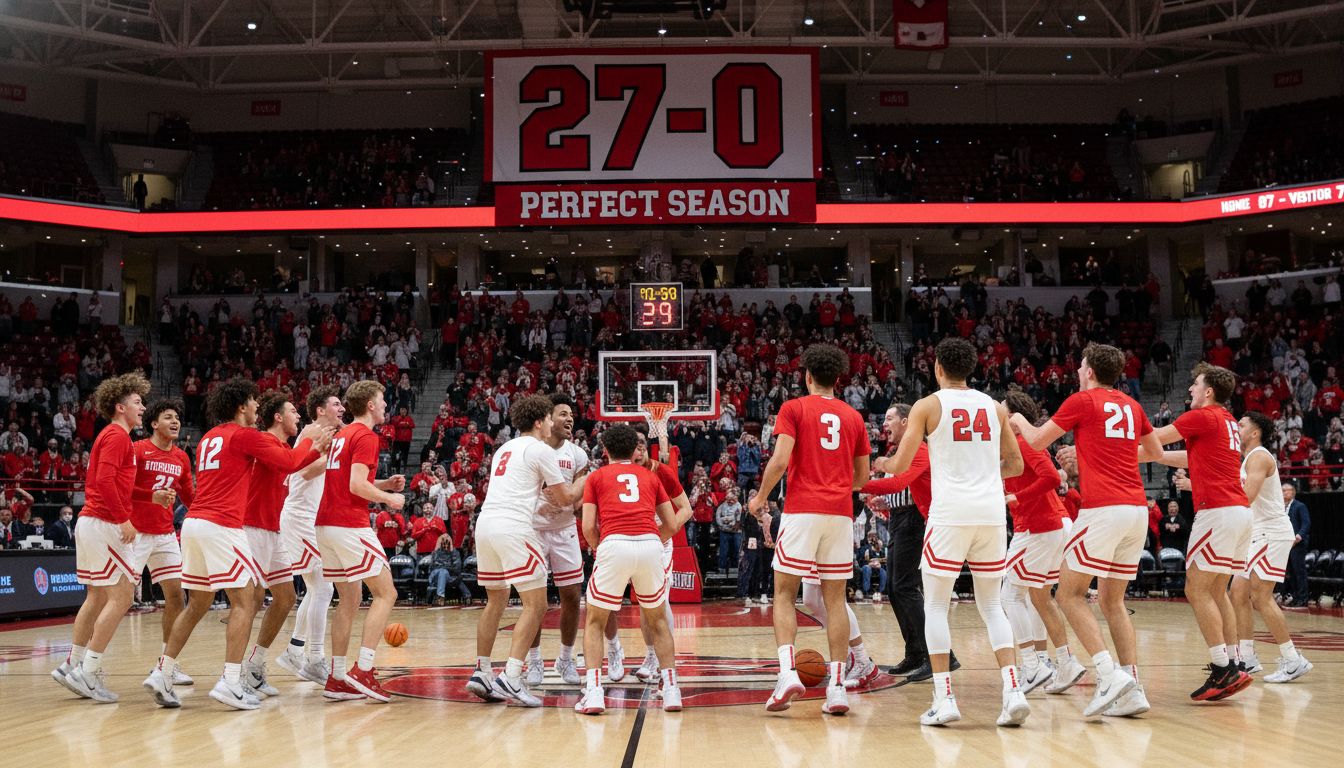
There’s also the undefeated elephant in the room: Miami (Ohio) at No. 21, sitting at 27-0 and doing it with remarkable scoring balance. Nine different RedHawks have had at least one 20-point game, tied for the second-most such instances over the past 30 seasons. That kind of distribution isn’t just fun for a box-score nerd; it makes game-planning a headache, because you can’t shade your defense to one obvious star. Will the committee trust that résumé if the schedule isn’t as rugged as the power leagues? History says they’ll still need to prove it in March, but anybody who hasn’t at least watched them for a half is missing one of the year’s better stories.
Finally, a quick lap through the back end of the poll tells you who’s rising, who’s hanging on and who’s still trying to rediscover their early-season selves. Tennessee jumps in at No. 22 after owning Vanderbilt lately – 15 wins in their last 17 meetings, including four straight when the Vols were unranked and Vandy carried the number beside its name. Louisville sits at No. 24 with back-to-back 20-win seasons for the first time since that long 2000s run, a sign that the program’s trying to inch back toward relevance. Vanderbilt, down to No. 25, is a classic tale of two seasons: a 16-0 start that tied the best in school history followed by a 5-6 skid that reminds you how hard it is to sustain excellence once every opponent circles you on the schedule. Rankings shift, streaks end and narratives flip, but this entire poll board screams the same thing: there’s no untouchable juggernaut this year, just a lot of really good teams trying to peak at the right time.
When five top-10 teams lose on the same day and nobody blinks at a new No. 1, you know we’re living in a golden age of parity. From historic home-court streaks falling to mid-majors erasing double-digit deficits in a half, the margin between winning your league and sweating on Selection Sunday is razor thin. For fans, that’s the joy of it – every Tuesday in February can feel like a Sweet 16 night if you know what you’re watching. For coaches, it’s a reminder that experience, depth and the ability to respond to adversity matter more than what number sits beside your name in late February. Polls are nice, banners are forever, and over the next few weeks, we’re going to separate the teams collecting votes from the ones capable of collecting nets.