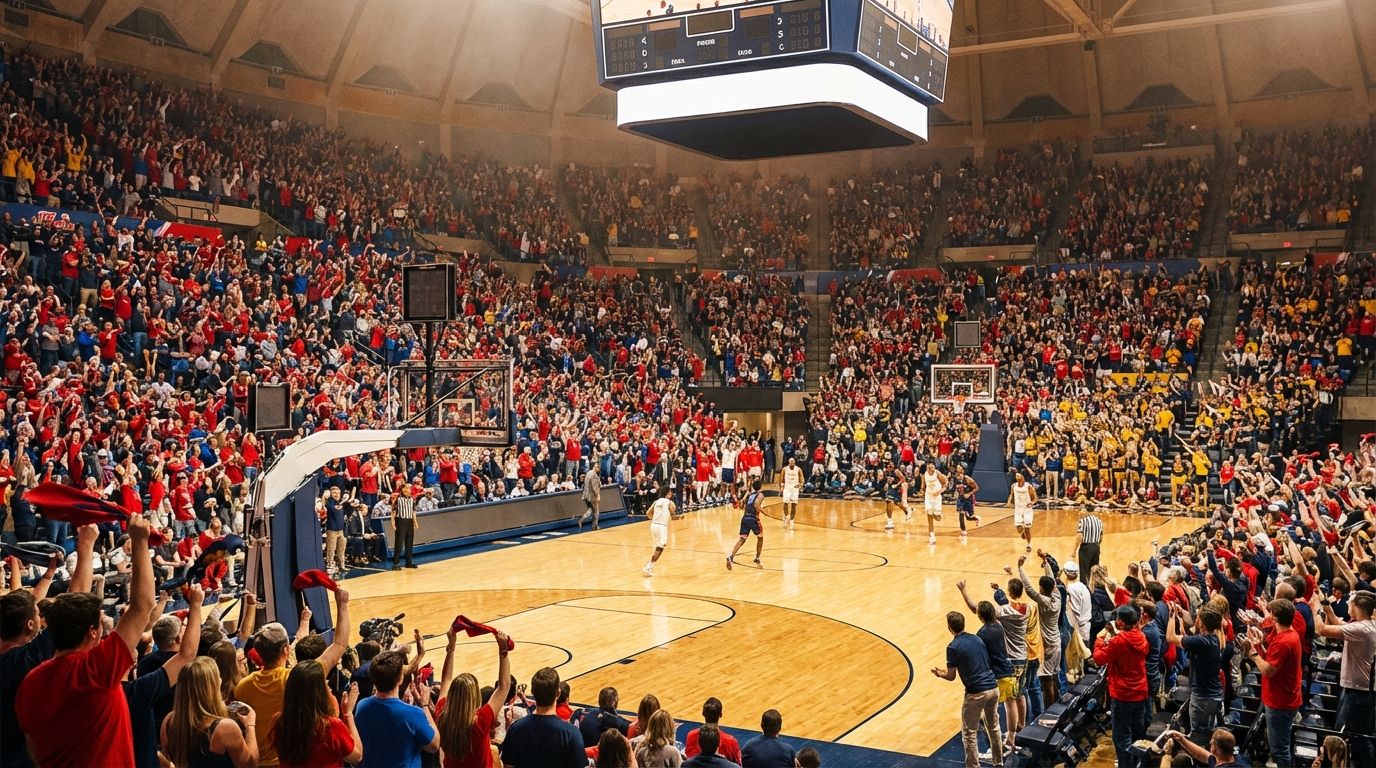
The first weekend back from the college basketball holiday lull always feels a bit like the first day of spring semester on campus: everyone’s a little rusty, a little optimistic, and absolutely convinced this is the year they’ve finally figured it out. This Saturday’s slate is a perfect case study, with bluebloods and upstarts alike diving straight into the deep end of conference play. From Purdue’s trip to a pesky Wisconsin squad to Kentucky walking into Tuscaloosa and Duke visiting Florida State, the schedule reads less like a random Saturday and more like a midterm exam for half the country’s top programs. As someone who makes a living thinking about how young adults learn, grow, and occasionally brick free throws in high‑leverage moments, I’m less interested in just who covers the spread than in what these games reveal about identity, adaptability, and pressure. Still, because this is college basketball in late December, we’ll talk matchups and margins too—just with an eye on the human stories underneath the box score.
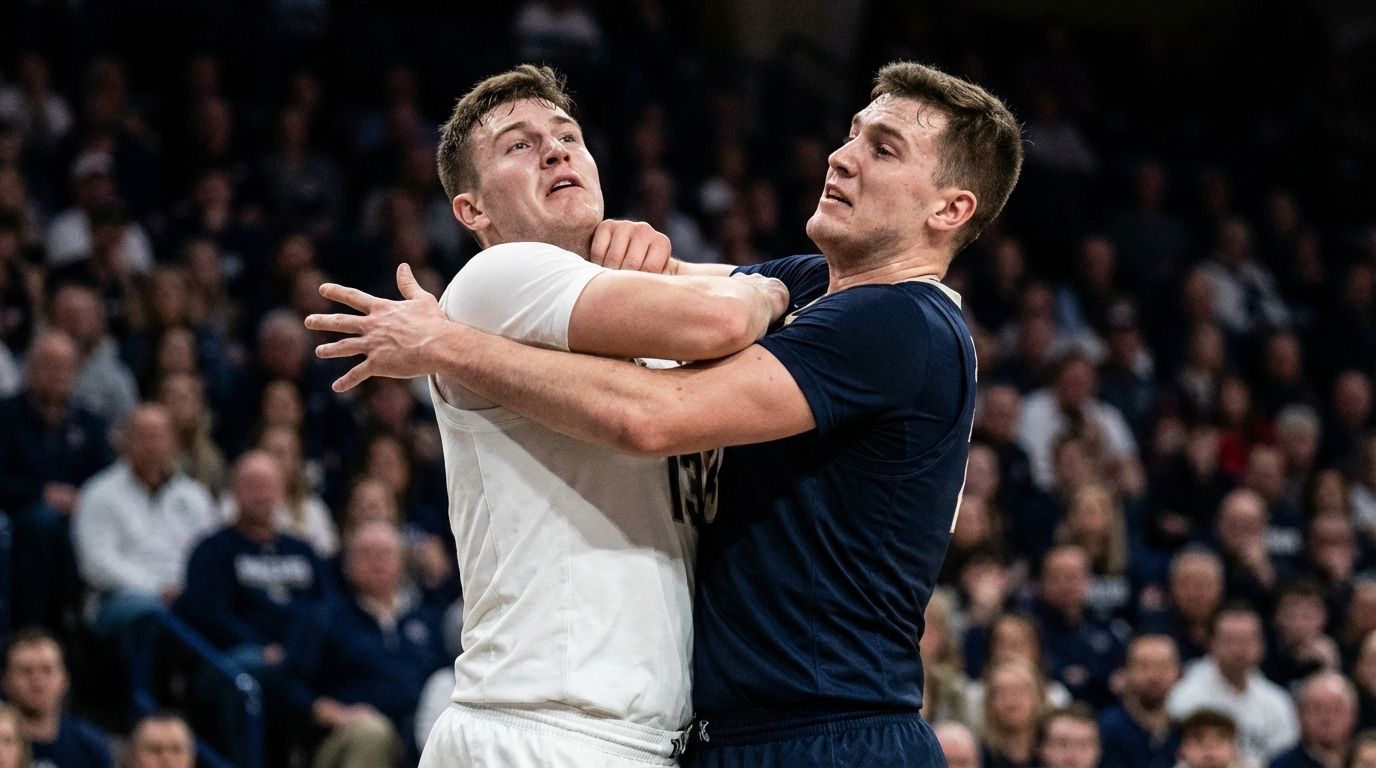
Start with Purdue at Wisconsin, a matchup that always seems to feel like a graduate seminar in half‑court offense and patience. On paper, Purdue is better almost everywhere: deeper, more experienced, and more polished offensively, which is why they’re the favorite on the road. Yet Wisconsin has made a minor art form out of being “frisky,” as one national writer put it—never quite elite, but perpetually annoying to teams that assume talent alone will carry the day. This is the sort of game where the numbers may like Purdue, but the personality of the matchup tugs you toward the Badgers to at least keep it close, especially at home with a crowd that specializes in disruptive energy rather than highlight‑reel aesthetics. If Nolan Winter can hold his own against Trey Kaufman‑Renn and Wisconsin controls tempo, the Badgers don’t have to be better; they just have to be stubborn enough to stay within shouting distance.
Kentucky at Alabama offers a very different kind of test, more like an intro course in chaos theory. Kentucky stumbled early this season, opening 5–4 and prompting the usual hand‑wringing in Lexington about whether the Wildcats still are who they think they are. Then, quietly, they strung together four straight wins, including solid victories over St. John’s and Indiana, and began to look less like a program in crisis and more like one that simply needed time for a young roster to cohere. Alabama, though, has the personnel and the pace to stress‑test that cohesion, especially in the backcourt, where defensive lapses get punished immediately in a system that wants to turn every possession into a track meet. You can absolutely imagine Kentucky hanging around, covering the number, and walking away knowing more about themselves even in a narrow loss—a reminder that in college basketball, like in the classroom, progress doesn’t always show up as an A on the first exam.
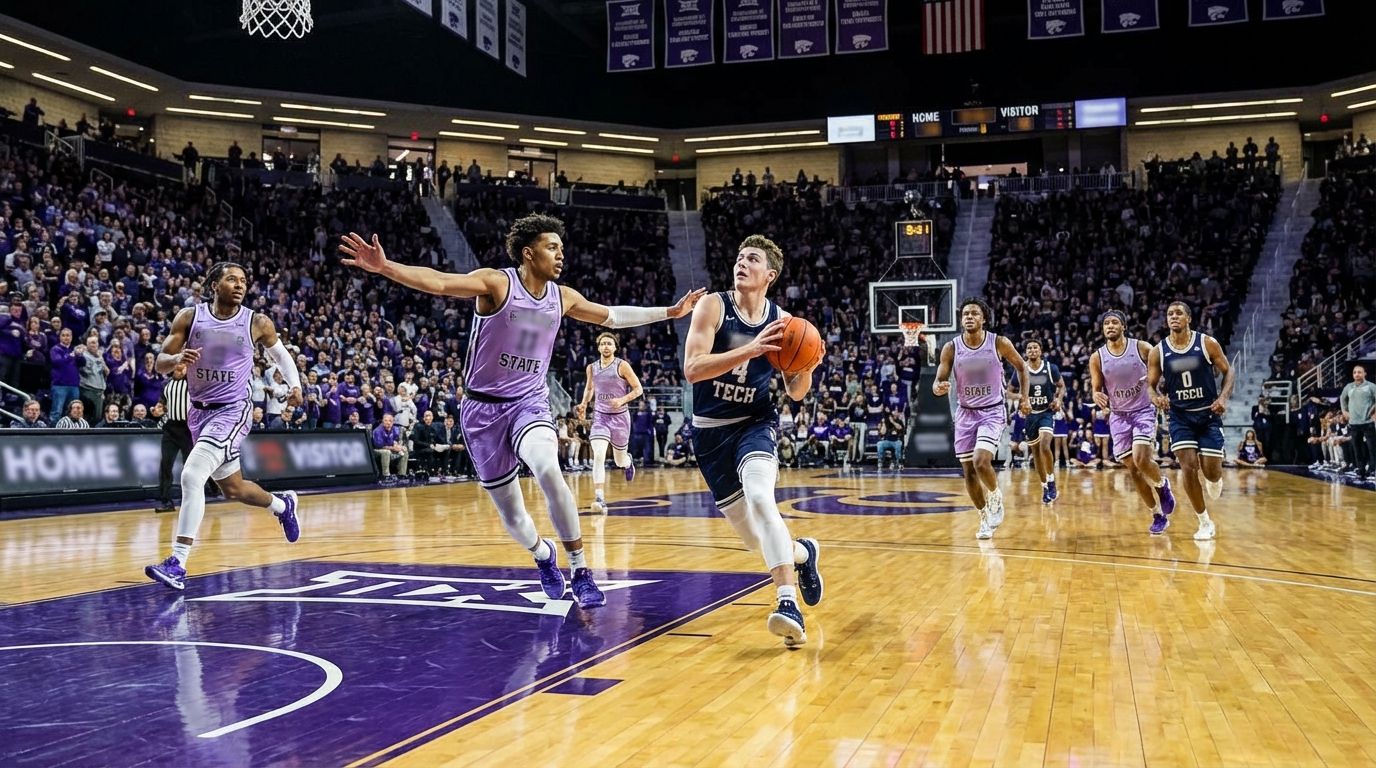
Then there’s BYU’s trip to Kansas State, a fascinating case of how rest, rhythm, and readiness intersect after a long layoff. BYU has had nearly two weeks away from competition, which will either be framed as restorative or ruinous depending entirely on what the final score says. Coaches love to talk about controllables, and in this matchup that mostly means transition defense: Kansas State wants to run at every opportunity, looking for quick‑strike chances before the defense is fully set. BYU, which has no problem playing fast when it suits them, has to resist the temptation to turn this into a pure sprint and instead “build a wall,” as the cliché goes, against Tylor Haggerty and the Wildcats’ shooters. The twist is that Kansas State’s defense is, by most measures, the weakest unit on the floor, and BYU’s balanced offense, with options like Richie Saunders and Rob Wright, has the tools to hunt mismatches and dictate terms even in a hostile environment.
The analytics crowd will tell you this is where talent and scheme usually win out over noise, and in many ways that’s the story here: BYU probably has four of the best five players on the floor, plus a clearer offensive identity. Even so, Kansas State’s ability to manufacture easy points in transition means they can hang around the betting number, particularly at home, where adrenaline and officiating can both act as invisible sixth men. This is also a reminder that “better team” and “better value” are not always synonyms, something my students slowly learn when we talk about how structural advantages don’t automatically translate into outcomes without execution. In other words, you can recognize BYU’s schematic and talent edges while still acknowledging that Kansas State, spotted a healthy number of points, is hardly drawing dead. College basketball rewards nuance, which is one reason it’s so endlessly teachable—and so endlessly frustrating for anyone seeking guarantees.
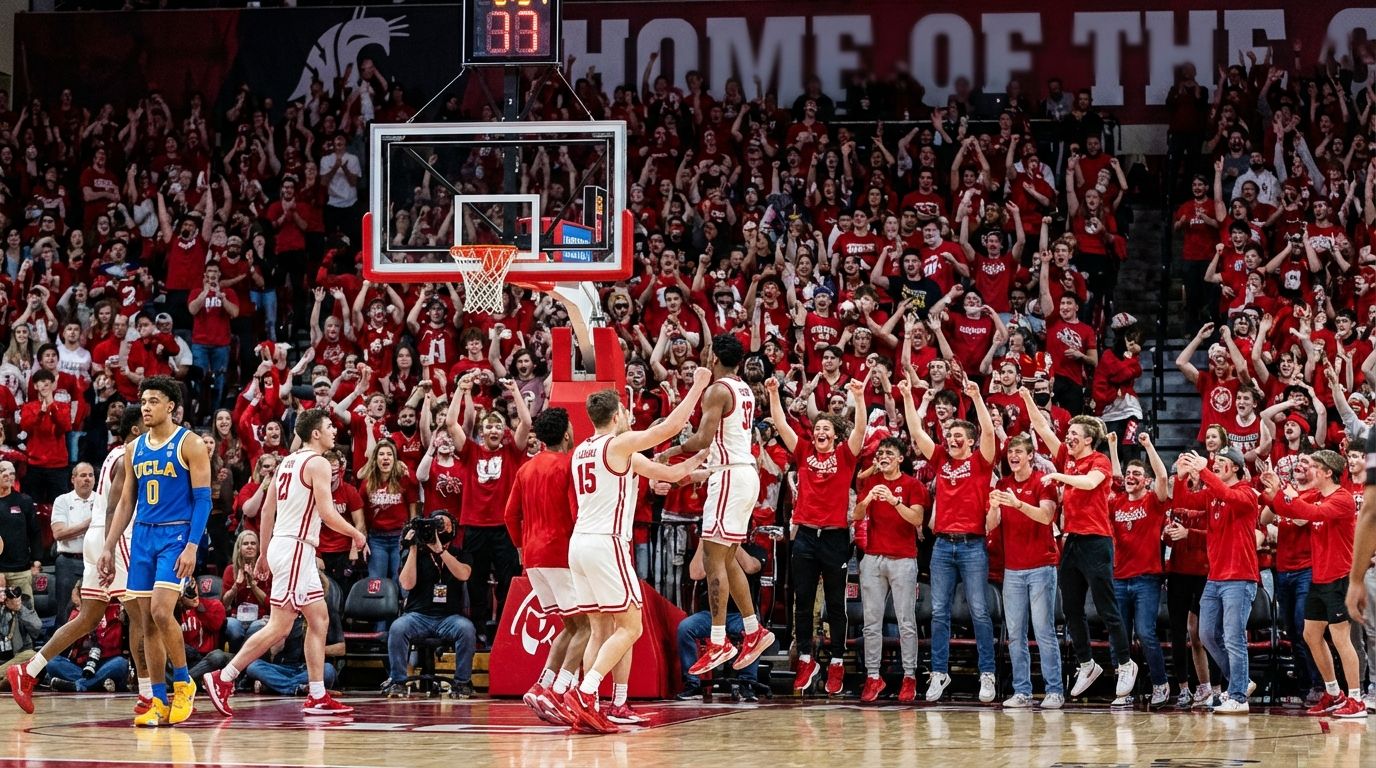
Over in Fayetteville, Arkansas hosting Tennessee might be the purest expression of home‑court energy on this particular Saturday. Arkansas has been perfect at home, and Bud Walton Arena is one of those venues that seems to amplify stakes and emotions, especially once conference play begins. Against Louisville earlier in the month, the Razorbacks found another gear defensively and on the offensive glass, the kind of identity‑forming performance that coaches file away as proof of concept. If Trevon Brazile and Malique Ewin can replicate that edge on the boards against a physical Tennessee front line, Arkansas has every right to believe the home streak stays intact. There’s something almost democratic about rebounding dominance: it’s less about star power and more about collective will, which is probably why I’ve always loved watching teams that defend and crash the glass like their scholarships depend on it.
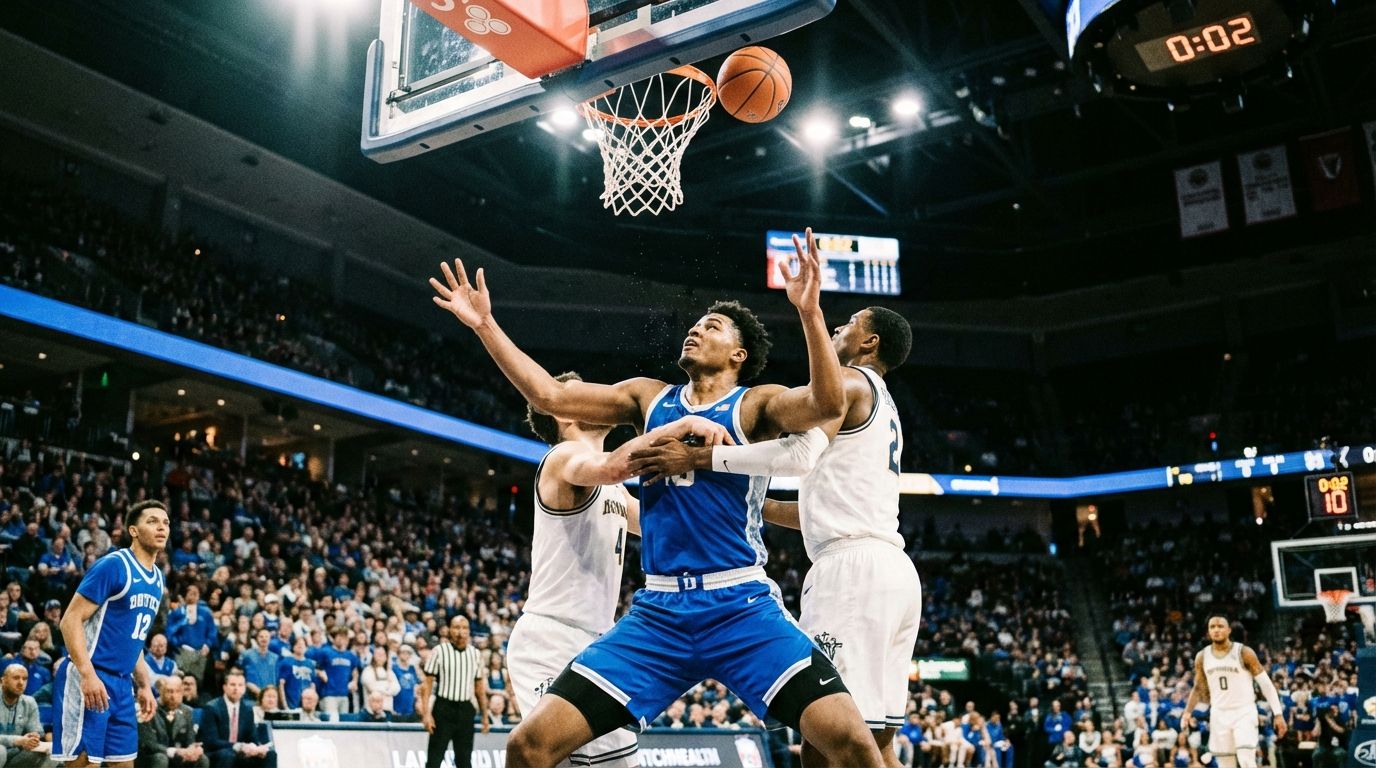
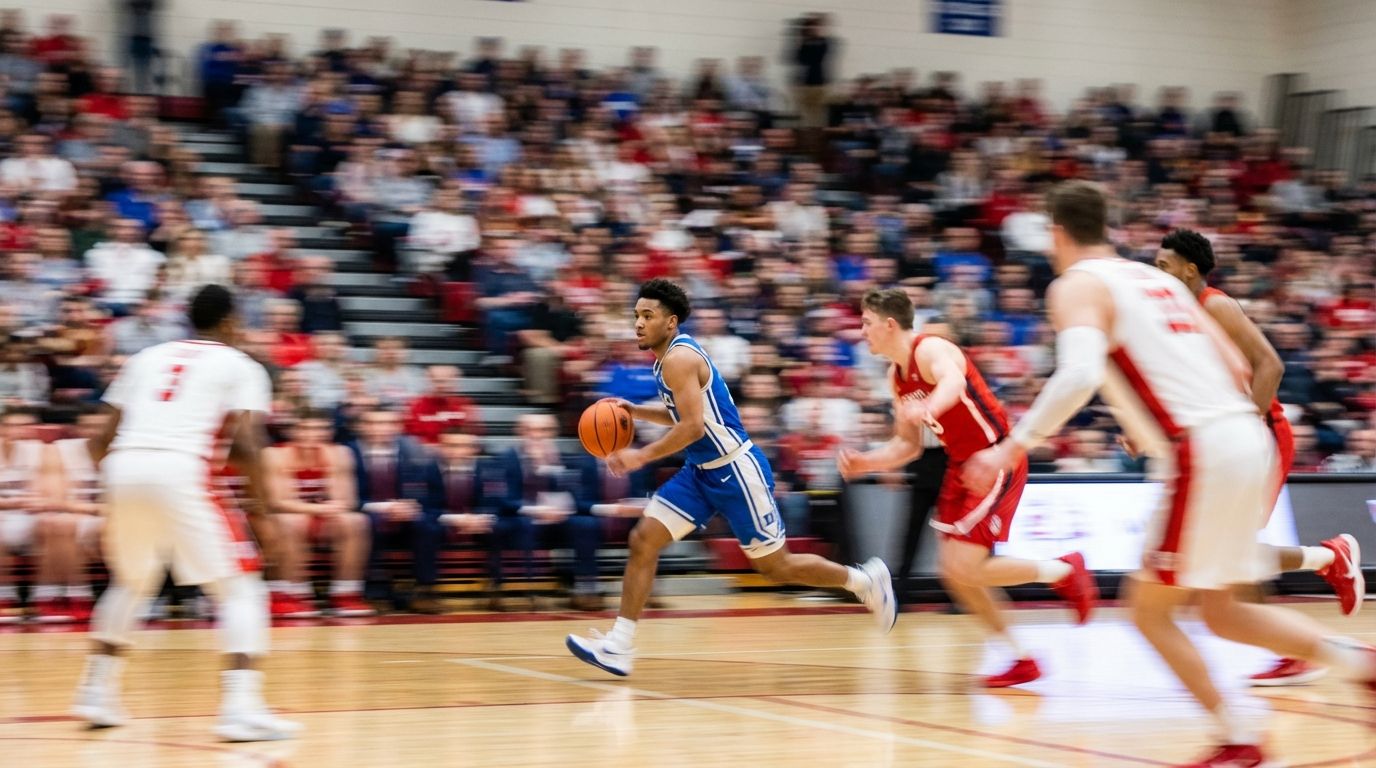
And then, like a required reading you secretly enjoy, comes Duke at Florida State, where the margin for error looks dramatically different on each sideline. For Florida State, the plausible path to an upset is almost comically narrow: hit a blizzard of three‑pointers—something like 20‑plus—and hope Duke has an off night on the glass. That’s a problem, because Florida State has struggled all season to secure defensive rebounds, surrendering 15 or more offensive boards to Georgia, Florida, and, yes, North Carolina. Duke, with a frontcourt anchored by Khaman Maluach Ngongba, Cameron Boozer, and Maliq Brown, should view this as a buffet line on the offensive glass, especially if the officiating lets them play through contact. Add in the Blue Devils’ recent shift to more two‑point‑guard looks, pairing Cayden Boozer with Caleb Foster to attack the Seminoles’ pressure, and you start to see why oddsmakers have installed Duke as a heavy favorite, even on the road.
The real challenge for Florida State is ball‑handling depth: outside of Jameer McCray, there just aren’t many reliable options to break down a disciplined switching defense for forty minutes. Duke has become increasingly comfortable grinding opponents into submission with switches and length, turning possessions into late‑clock improvisations rather than smoothly orchestrated sets. When that happens, an underdog like Florida State almost always needs an individual performance that borders on the miraculous—McCray going nuclear from deep, or a role player suddenly playing far above their average—to stay connected. That’s not impossible; this sport lives on the small sample size theater of hot shooting nights and unexpected heroes, the same way my classroom occasionally runs on the magic of a shy student finding their voice in week twelve. But if Duke pounds the paint, dominates the glass, guards the arc, and handles pressure without panicking, this feels less like a coin flip and more like an exam question with only one right answer, however much the rest of us might root for chaos.
Threaded through all of these games is an old tension that anyone who loves college hoops eventually has to make peace with: the pull between analysis and affection. You can talk tempo, matchups, and rebounding rates all you want, but fan cultures—especially in places like Tuscaloosa, Madison, Fayetteville, and, yes, Durham and Tallahassee—live on stories, rituals, and collective memory as much as on numbers. As a Chapel Hill‑based academic who grew up on Dean Smith’s insistence that how you play matters as much as whether you win, I can’t help but look for signs of cohesion, unselfishness, and resilience in these high‑profile matchups. We don’t just remember who covered the spread; we remember who dove on the floor, who made the extra pass, who kept their composure when the whistle didn’t go their way. In that sense, this weekend’s slate is less about crowning a January champion and more about watching young teams navigate pressure and expectation in real time.
So as you flip between Purdue‑Wisconsin’s slow‑burn chess match, Kentucky‑Alabama’s blur of possessions, BYU‑Kansas State’s tug‑of‑war in transition, Arkansas‑Tennessee’s rebounding brawl, and Duke‑Florida State’s study in structural advantage, try watching with both your analytic and humanist hats on. Notice who adjusts when the game script goes sideways, which coaches trust their benches, and which players still take care of their business in the classroom when the travel ramps up and the spotlight gets harsh. The beauty of college basketball, especially in this stretch between the holidays and March, is that every possession is both competition and curriculum. These games are, in their own way, labs for learning how to fail, recalibrate, and respond—skills that matter long after the last horn sounds. And if, along the way, a certain school eight miles down the road from my office gets reminded that offensive rebounding and integrity are non‑negotiables, well, that’s just a bonus lesson I’m always happy to assign.