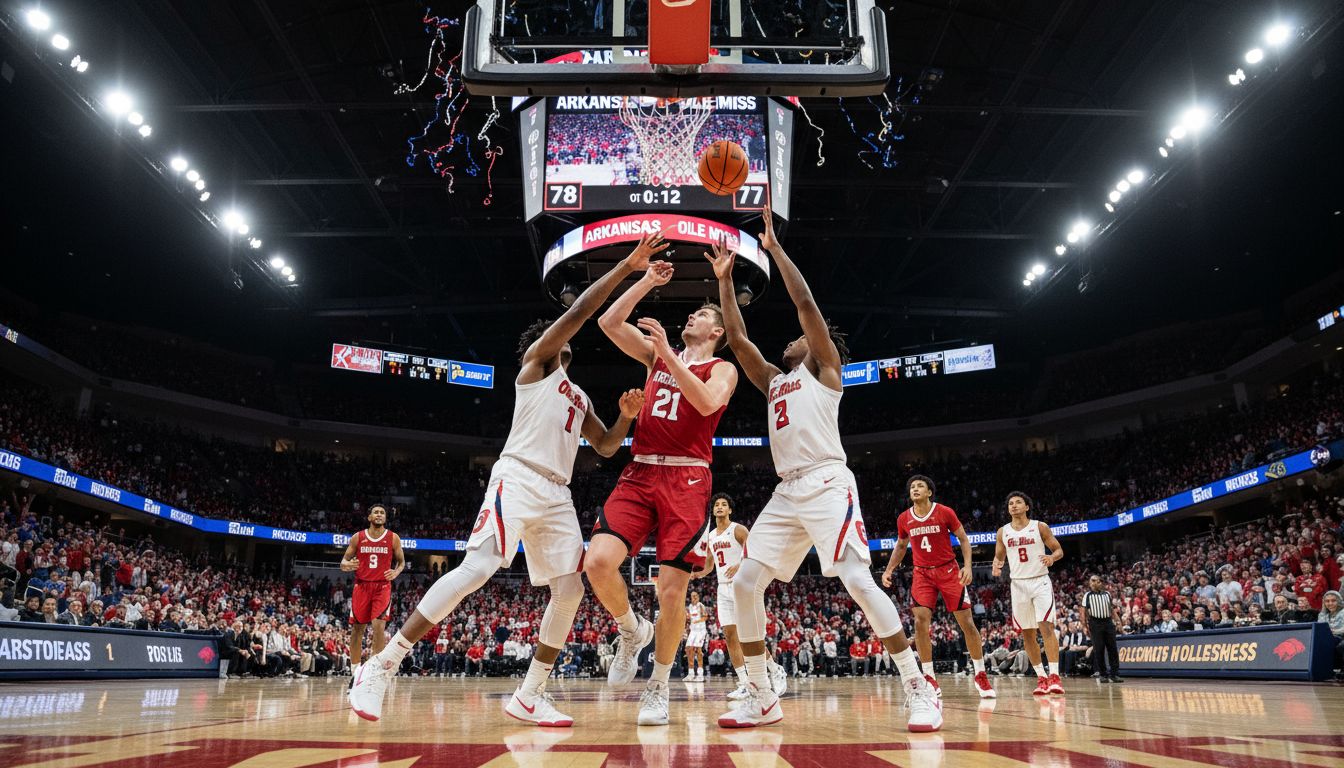
If you just watched Arkansas escape Ole Miss 93-90 in overtime, you probably walked away with two thoughts: first, that Darius Acuff Jr. and Meleek Thomas are terrifying human shot-makers, and second, that this Ole Miss run was "improbable" in some vaguely magical sense. I’m obligated, both by temperament and a Ph.D., to ruin the magic a bit: what we saw in Nashville was unlikely, yes, but also exactly the kind of tail-event you should expect when you let a 15th seed roll the dice three days in a row. The Rebels became only the second double-digit seed to win three games at this event, joining Auburn’s 2015 cameo in the land of outliers, and then pushed a top-20 Arkansas team with the SEC’s best scorer into overtime. The narrative version is Cinderella; the data version is a small sample of noisy possessions that happened to align just right until they didn’t. Both can be true, but only one helps you understand what’s actually happening on the floor.
Start with the basics: Arkansas is now 25-8 and headed to its eighth SEC tournament championship game, its first since winning the title in 2017, and John Calipari is one win away from his seventh SEC tournament crown and first with the Razorbacks. That’s the résumé headline stuff, the part that ends up on graphics and in media guides. Underneath it, though, is a more interesting profile: a team whose offensive ceiling is driven by a freshman guard who led the league in scoring and somehow still spent much of the season being discussed more as a curiosity than as a solved problem. Against Ole Miss, Acuff put up 24 points and seven assists, and crucially scored five in overtime, which will no doubt be described as him "taking over" or "being clutch." What actually happened is that a high-usage, high-talent engine continued to do what he’s been doing all year, in a slightly higher-leverage subset of possessions that we emotionally over-weight.
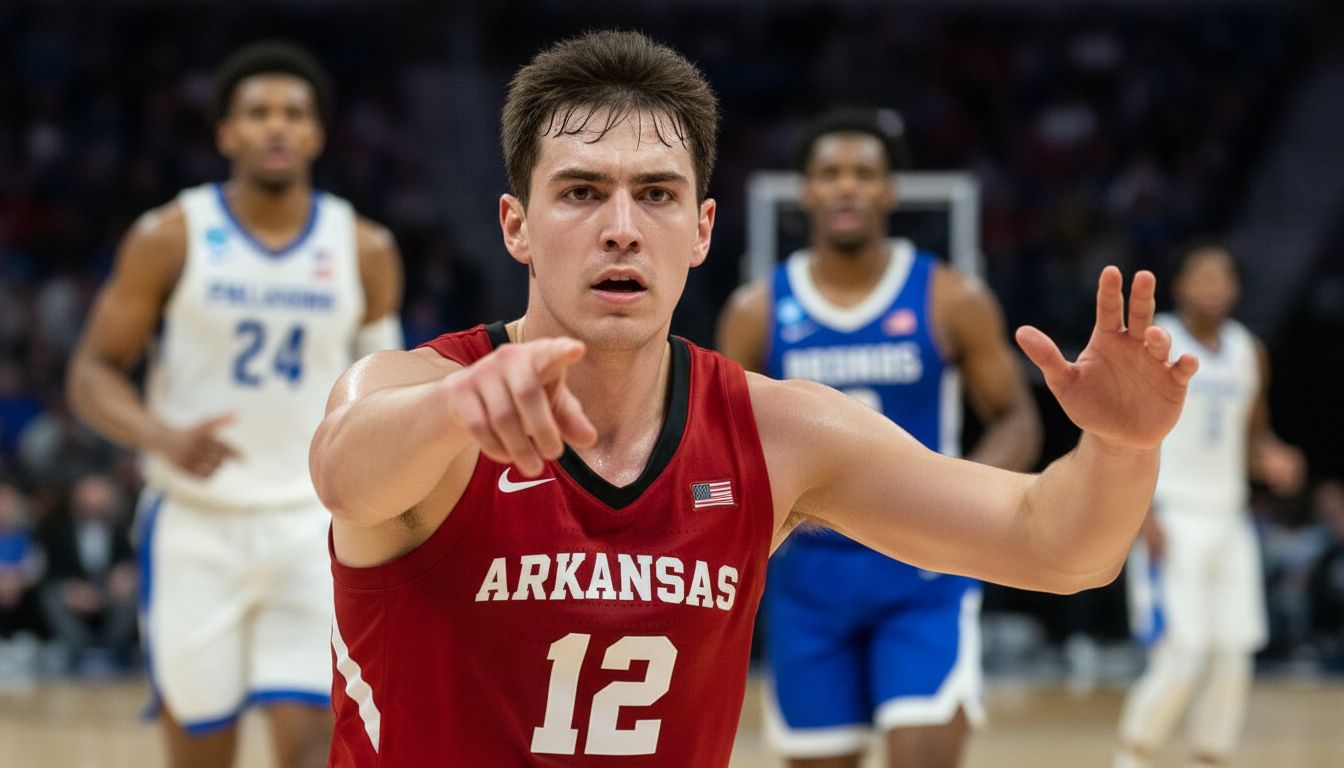
Meleek Thomas quietly outscored everyone with 29, which is the stat-line equivalent of shouting in a library and somehow no one looking up because the book on Acuff is just that loud. Add in Trevon Brazile’s 16 points and 10 rebounds and Malique Ewin’s 14, including the go-ahead dunk 10 seconds into overtime, and you get a pretty efficient usage tree: Arkansas kept its best finishers active, and they paid it off. If you modeled this purely as expected value per possession, Arkansas looked like the more stable offensive entity throughout; Ole Miss kept closing the gap with higher-variance outcomes, particularly late. The overtime sequence provides a neat case study: Ewin’s dunk is a high-probability, high-expected-value shot generated by good structure, while AJ Storr’s final 3-point attempt for Ole Miss is a necessary but lower-probability heave that clanked off the front rim. To the box score it’s just "missed 3"; to a probabilistic model it’s the predictable downside of living on thin margins.
That thin margin is what made the Rebels’ week in Nashville so fun and so fragile. Coming in as the 15th seed at 15-20 overall, Ole Miss had already burned through a significant amount of luck (and effort) just to reach Arkansas. They became only the second double-digit seed to ever win three games at this tournament, which sounds cinematic but is entirely compatible with what you’d expect if you simulate these brackets thousands of times. Somewhere in those simulations, a team with this profile makes shots, avoids foul trouble, runs into a higher seed on an off-night, and suddenly looks "hot." On Friday, that manifested in a win over No. 15 Alabama where the Rebels built just enough of a cushion to survive a furious rally, which again will be framed as "heart" and "belief" when a more accurate description is that they executed decently while Alabama’s shot distribution went ice-cold at the wrong time.
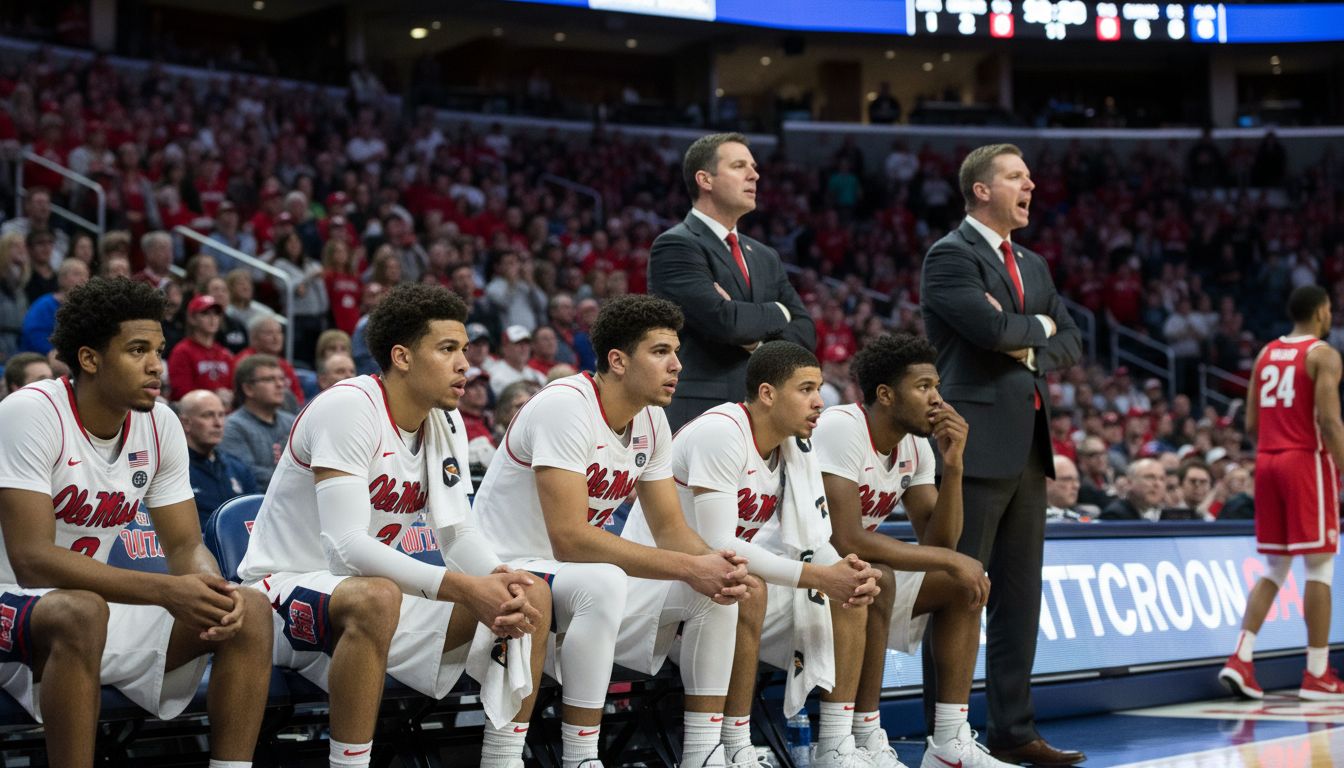
None of this is meant to diminish what Ole Miss did; playing three high-intensity games in three days and then pushing a top-20 team to overtime is physically and mentally punishing. AJ Storr’s 24 points, Malik Dia’s 16, and the team’s ability to outscore Arkansas 8-1 in the final minute-plus of regulation to even reach overtime all reflect real on-court skill and resilience. It’s just that resilience is not some mystical clutch gene; it’s the noisy output of preparation, conditioning, and a willingness to keep running your stuff under stress, plus a heavy assist from variance. From a roster-construction standpoint, Chris Beard squeezed more competitive minutes out of a group that had to replace four starters than most preseason models would have predicted. If you’re looking for a sustainable takeaway, it’s less "this team has magic" and more "this staff can build a functional defense and offense baseline even while turning over core personnel."
For Arkansas, the sustainability question looks different and frankly more interesting from a data perspective. Acuff is the SEC’s player and freshman of the year, which is a polite way of saying "this level of usage and efficiency will be nearly impossible to replace if he leaves early," and thus Razorbacks fans should enjoy every pick-and-roll while silently fearing draft declarations. The fact that he can both self-create and table-set, as reflected in those seven assists, makes him a system-agnostic star; most schemes just ask, "How much do we want to tilt the floor around this guy?" Plug that into any expected value model of half-court offense and you get the same answer: a team like Arkansas should be leaning into Acuff as an offensive hub while distributing secondary touches to Thomas, Brazile, and Ewin the way they did here. If there’s a concern, it’s that high-concentration offenses can become brittle under foul trouble or targeted defensive game plans in a single-elimination setting, which is a non-trivial consideration heading into the championship game against Vanderbilt.
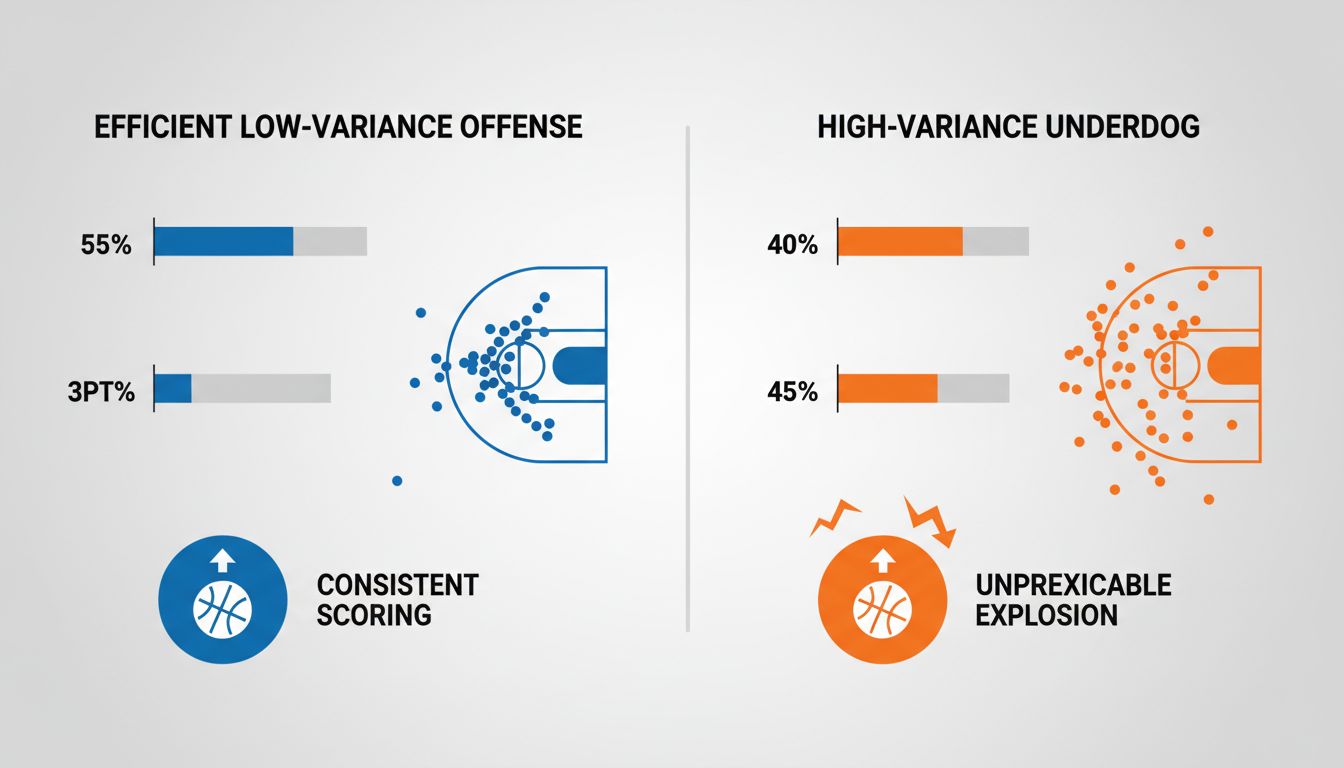
Speaking of Vanderbilt, their rout of No. 4 Florida earlier in the day functioned as a reminder that tournament brackets are not a meritocracy; they’re a structured chaos experiment heavily mediated by matchups and health. Arkansas will enter the title game as the more numerically impressive team by ranking and star power, but Vanderbilt’s path, and Ole Miss’ before them, is a caution against assuming the future will look like the median of past outcomes. From a probabilistic standpoint, Arkansas should be favored to give Calipari that seventh SEC tournament title, yet any model honest about confidence intervals has to leave plenty of room for more weirdness. The Razorbacks’ best hedge against that is the same thing that got them here: concentrate usage in their high-expected-value creators, avoid self-inflicted volatility in shot selection, and trust that over 40 minutes, good process wins more often than not. Fans can still call it destiny if it works; the rest of us can quietly log another data point in a very long experiment.
Stepping back, there’s an easy media temptation to carve the week in Nashville into heroes, goats, and grand narratives about belief and momentum, but most of what defined this Arkansas-Ole Miss game lives in the mundane details of possession-to-possession execution. Ole Miss maximized its narrow path to an upset by embracing variance late, forcing overtime, and putting the ball in the hands of its best scorer for the final shot, and it still wasn’t enough. Arkansas, for its part, played more like a favorite that understands its own profile: let the star guard drive the bus, keep your efficient scorers involved, and generate high-quality looks when it matters. Over time, that approach usually beats the one that needs everything to break just right, which is why Ole Miss heads home with a 15-21 record and a compelling story, and Arkansas plays for hardware. If there’s a lesson here beyond "basketball is stressful," it’s that what we casually call "improbable" is very often just the visible edge of a probability distribution we don’t bother to think about until it spits out something dramatic on national television.