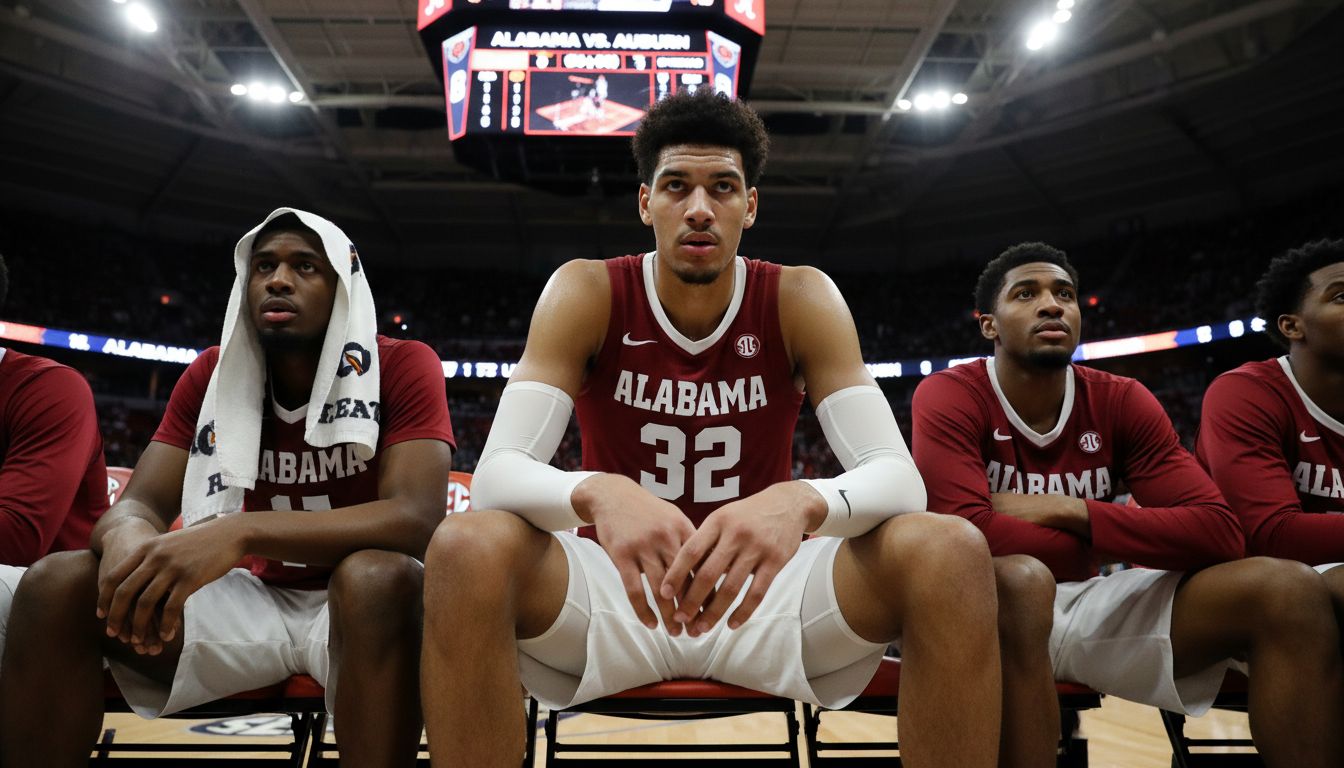
On a gray February afternoon in Bloomington, as the banners in Assembly Hall hang like stained glass in a secular cathedral, the Charles Bediako case in Alabama feels at once distant and very familiar. College basketball, especially for those of us raised on the catechism of five national titles and motion offense, has always claimed a clear moral storyline: you are either a student-athlete or a professional. Yet Bediako’s journey from Tuscaloosa to the G League and back again has exposed how fuzzy that once-bright line has become. His appeal to the Alabama Supreme Court is not just a personal bid to get back on the floor; it is a stress test of the NCAA’s entire philosophy about who college sports are really for. For those of us who still regard a college gym as a place of learning as much as winning, the case raises uncomfortable but necessary questions, as it challenges the sanctity of the amateurism ideal many still hold dear.
To understand why Alabama’s former center is now entangled with the state’s highest court, you have to trace the path that led him there. Charles Bediako played two seasons for the Crimson Tide, from 2021–22 through 2022–23, before doing what many talented big men now do: he forwent his remaining eligibility and entered the NBA Draft pool. He wasn’t drafted, but he landed a two-way contract with the San Antonio Spurs and then bounced through the G League with Austin, Grand Rapids, and Motor City on Exhibit 10 deals. On paper, that sequence signals a clear choice to pursue life as a professional, the very step that used to close the book on a college career. Yet because he enrolled in 2021, his five-year NCAA eligibility clock was still ticking, leaving what lawyers like to call a 'colorable argument' that his story in Tuscaloosa wasn’t necessarily over, questioning just how rigid the clock should be in this era of fluid athlete careers.
In late January 2026, Bediako filed suit against the NCAA, asking for immediate preliminary and permanent injunctive relief so he could return to Alabama’s lineup. A Tuscaloosa County judge initially granted him a temporary restraining order, clearing the way for him to play while the legal fight played out. Under that order, he appeared in five games between Jan. 24 and Feb. 7, averaging 10 points, 4.6 rebounds, and 1.4 blocks while shooting a blistering 77% from the field—numbers that suggest rust was not the issue. But when it emerged that the judge was an Alabama donor, he recused himself, and the case landed with another circuit court judge, Daniel Pruet. Pruet denied Bediako’s motion for a preliminary injunction on Feb. 9, effectively shutting the door on the rest of his season unless a higher court intervenes.
Bediako’s legal team quickly pivoted, filing an appeal with the Alabama Supreme Court and, crucially, seeking interim injunctive relief that would allow him to play while the justices consider the case. His attorneys argue that without such temporary relief, the appeal will become moot, because the season will end before a final ruling is handed down. As David Holt, one of his lawyers, explained, the request is essentially to freeze the status quo while the Supreme Court evaluates whether the lower court got it wrong. So far, Judge Pruet has declined to grant that stop-gap measure, and Bediako’s camp is now asking the state’s highest court for a different answer. In the meantime, he remains enrolled at Alabama, working with the scout team and inching toward his degree, a student-athlete in practice if not in the box score, further blurring the definition of professionalism in college sports.
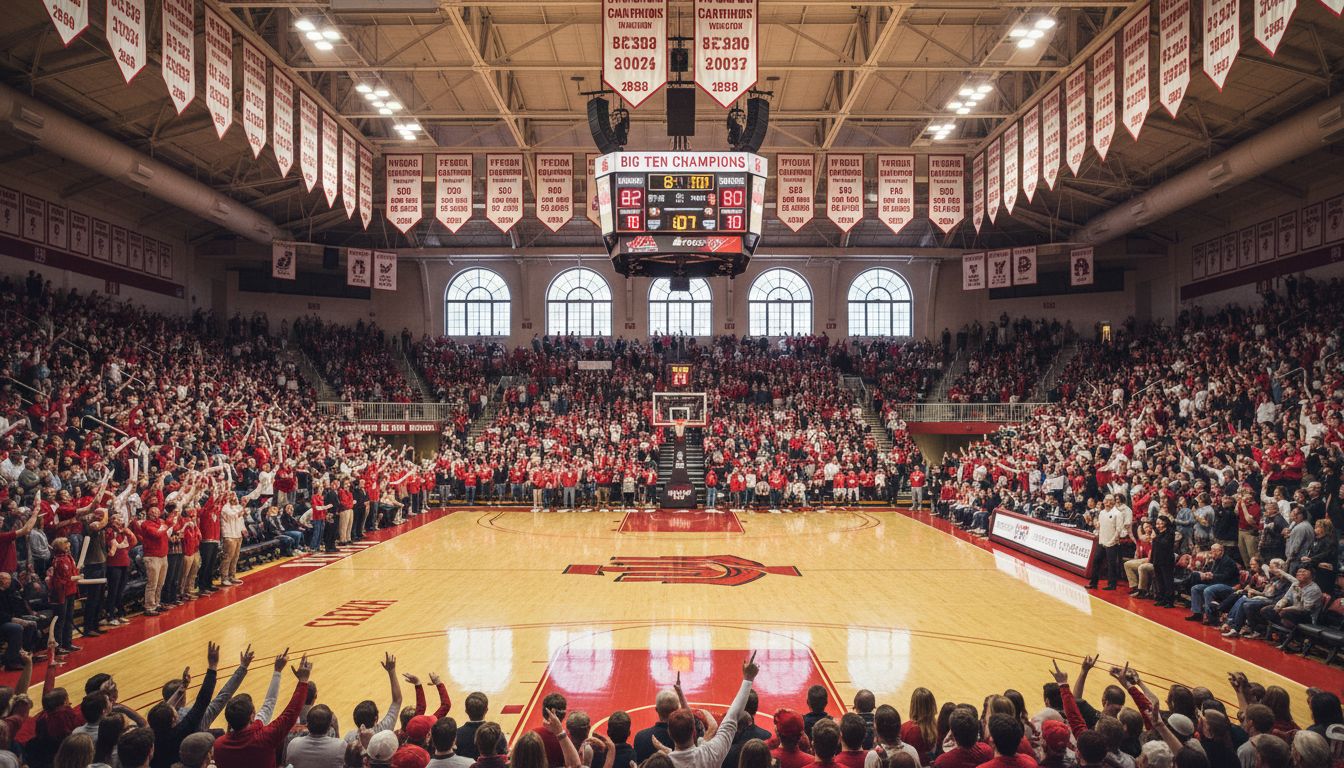
The NCAA, for its part, has framed the dispute as a defense of the line between amateur and professional sports. President Charlie Baker hailed Pruet’s ruling by declaring that 'common sense won a round today,' casting Bediako’s effort as an attempt by professionals to pivot back to college and 'crowd out the next generation of students.' The message is clear: if you sign professional contracts—especially multiple ones—you have, in the NCAA’s moral universe, walked away from the student-athlete covenant. SEC commissioner Greg Sankey even signed an affidavit opposing Bediako’s cause, underscoring that the resistance is not confined to NCAA headquarters in Indianapolis. The broader worry, at least as administrators describe it, is a slippery slope in which rosters become revolving doors for players toggling between G League checks and campus locker rooms, threatening to destabilize team dynamics and dilute educational commitments.
From a Midwestern vantage point shaped by decades of Big Ten basketball, I can appreciate the NCAA’s anxiety and still question its rigidity. In the Bob Knight era that defined my graduate-school years at Indiana, the expectation was unforgivingly simple: you went to college, you played, you stayed, you graduated. That model felt coherent—deeply demanding, sometimes harsh, but philosophically clean. Today, however, the sport’s ecosystem looks more like a crowded interchange than a straight road: NIL deals, the transfer portal, early departures, and developmental leagues have scrambled the old map. If we permit coaches to chase new jobs every March without sitting out a year, it’s at least worth asking whether a player who tested the professional waters and found them cold should be forever barred from returning to campus competition, as we recognize the evolving landscape of player mobility.
That doesn’t mean throwing open the doors to every journeyman looking for a March showcase. Reasonable guardrails can coexist with second chances; in fact, they have to, if we want the system to feel fair to both returning players and incoming freshmen. One could imagine a framework that distinguishes between brief professional experiments and long-term pro careers, or that ties any return to clear academic progress benchmarks. Bediako, after all, has remained a student at Alabama, contributing on the scout team while working toward his degree, and the university has publicly backed him on that front. For the kid in high school dreaming of a scholarship, the more important question is whether policies are transparent and consistently applied—not whether someone like Bediako is forever punished for a decision that, in another era, might simply have been called a miscalculation.
There is also a legal and political layer to this saga that extends far beyond Tuscaloosa’s city limits. Baker has used the case to argue that the patchwork of state laws governing college athletics has created a 'national mess,' and he’s urged Congress to step in and provide uniform rules. From an Indiana moderate’s perspective, that plea is understandable but not without irony: the NCAA long operated as the unquestioned central authority, and only after courts and legislatures began scrutinizing its power more closely has it turned to Washington for rescue. If Congress does get involved, the Bediako case will likely be one of many cited as evidence that the current system is unsustainable. Whether federal lawmakers can craft something that respects both institutional stability and individual rights is another question—and one that, if history is any guide, will not be answered in a single offseason, as the tug-of-war between autonomy and centralization continues.
For now, Bediako’s reality is more straightforward than the legal theories swirling around him. Alabama prepares for games—Mississippi State is next on the docket—while he practices without knowing whether he will wear the Crimson Tide jersey in meaningful minutes again. His appeal to the Alabama Supreme Court represents one more attempt to make that happen, but time, as every college player learns, is the most unforgiving opponent on the schedule. If the justices decline to grant interim relief, his season, and perhaps his college career, will likely end not with a buzzer-beater but with a quietly filed opinion. For those of us who grew up believing that the purity of the college game lived somewhere between the band, the banners, and the student section, the Bediako case is a reminder that modern amateurism is less a bright line than a negotiation in progress, underscoring the complex fusion of tradition and change.
Back in Assembly Hall, the game will tip, the crowd will roar, and the old traditions will keep doing their best to hold off the new realities. Yet even here, under banners honoring an undefeated season and a combustible genius of a coach, the sport has changed too much to pretend that the professional world can be kept at arm’s length. Cases like Bediako’s force us to confront what we value most: is it strict adherence to an ideal of amateurism, or a more flexible model that still insists college basketball be rooted in education and opportunity? There may not be an easy answer, and reasonable people of all allegiances—SEC and Big Ten alike—can disagree in good faith. What is clear is that the conversation can no longer be avoided, whether in Tuscaloosa courtrooms or in the echoing bowl of a gym in Bloomington where, for forty minutes at a time, we still like to believe that the game is simple.