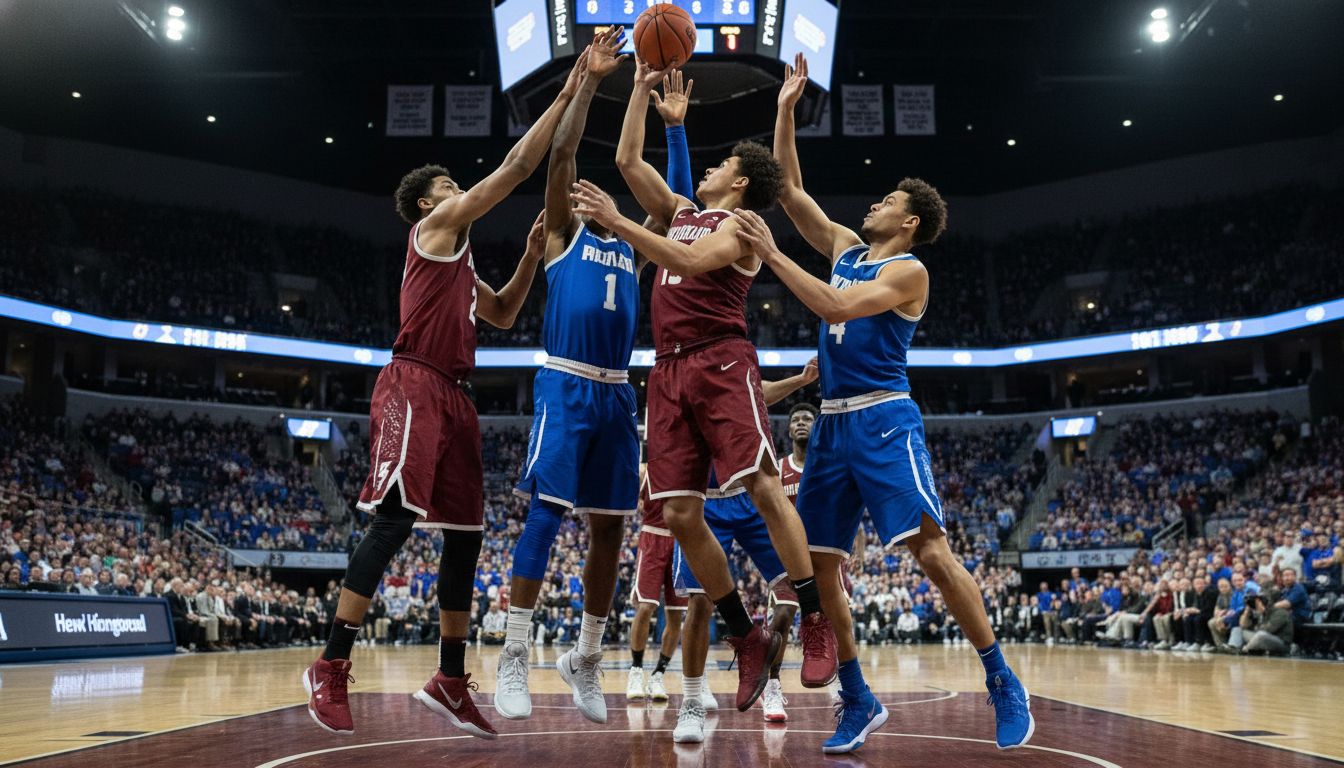
On paper, this first round of the NCAA Tournament looked almost boringly predictable: favorites advanced, double-digit seeds went home, the bracket held its shape like it had been laminated by the selection committee. However, if you stop at the scores, you overlook the underlying narrative: the exercise of power, the cost of misjudgments, and the vulnerability even top programs face under immense pressure. St. John’s bulldozed Northern Iowa, Kentucky survived Santa Clara by a possession and some overtime thriller, Tennessee overpowered a storybook Miami (Ohio) run, and Alabama advanced while maneuvering through the off-court turmoil of a felony arrest. Amid the dunks and buzzer beaters, what emerged was a portrait of a tournament that is technically 'chalky' but emotionally volatile. As always in big-time college sports, when pressure hits, it unveils who is accountable—and who manages to escape scrutiny.
Let’s start with St. John’s, because that was not just a game but a statement of intent from Rick Pitino’s crew. Handed a No. 5 seed that appeared deceptively low and shipped across the country to San Diego, the Red Storm responded by launching a 16–2 blitz to open the game, dominating Northern Iowa offensively and defensively even before the first TV timeout. The press was relentless, the size mismatch glaring, and senior leader Zuby Ejiofor played with a determined intensity: 14 points, 11 rebounds, four blocks, and a defensive effort that would make any conditioning coach proud. This encapsulates the romantic tales of March—the under-seeded group dramatically over-delivering, the veteran who refuses to fade quietly, and the historic margin that becomes a footnote in the records and a vivid memory for the opponent. Yet, there’s an underpinning issue: if a team appears 'too big, too strong, too athletic' for its seed line, it's either a selection oversight or a system prioritizing brand reputation and metrics over on-court realities, with the system rarely held responsible.
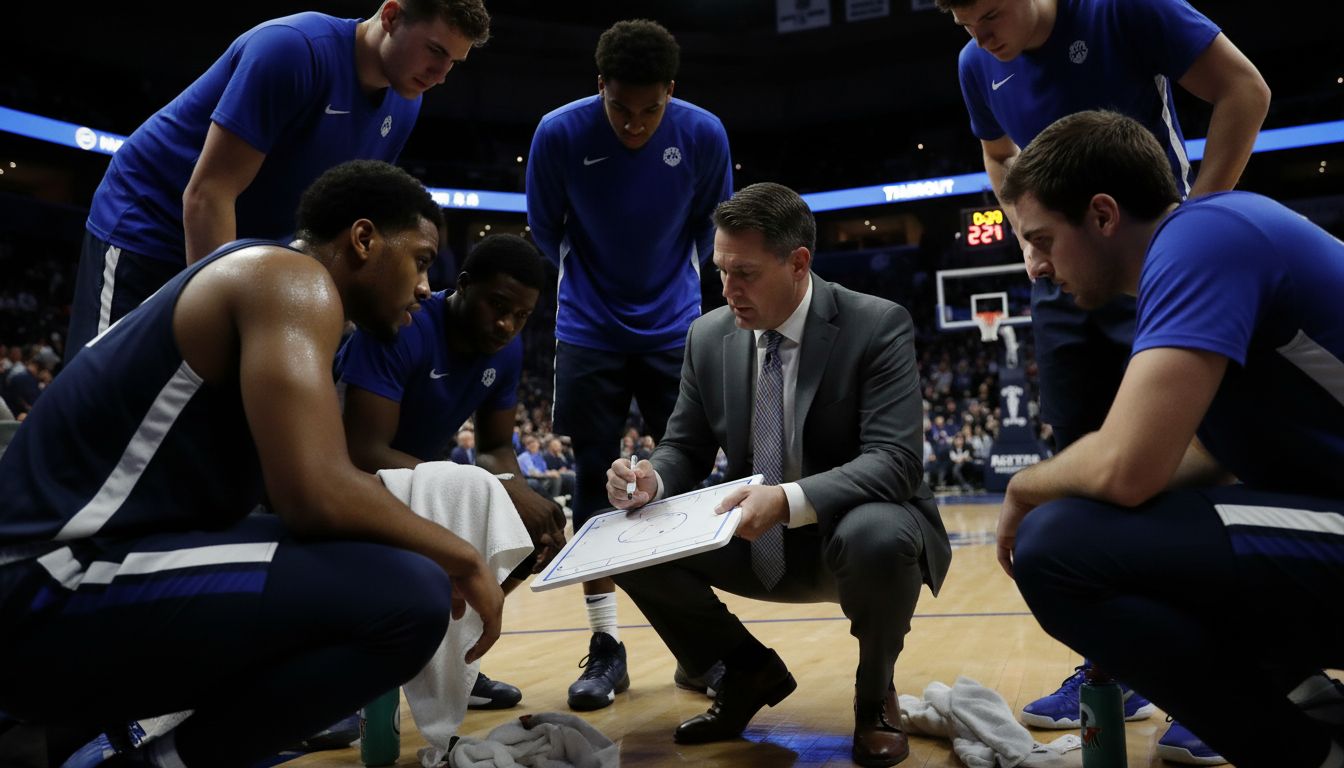
If St. John’s was controlled demolition, Kentucky–Santa Clara felt like a live wire lurking beneath the court. Santa Clara believed it had victory in hand after Allen Graves nailed a crucial late three, and head coach Herb Sendek insists he called timeout before the disorganized final play which saw Otega Oweh etched into March lore. The Wildcats escaped in overtime, 89–84, thanks to Oweh’s phenomenal performance—35 points, eight rebounds, seven assists, reminiscent of storied performances we see alongside grainy Larry Bird clips—and Brandon Garrison’s timely blocks. Kentucky’s triumph will be recalled as cinematic drama, worthy of tournament montage replays for years. Yet, there’s an oft-overlooked angle: when officiating or timeout recognition sways a season's work, there is little consequence for those in charge, highlighting a gap where accountability fades into highlight reels.
Elsewhere, the day mainly conformed to the expectations of favorites, making Texas Tech’s thorough dismantling of Akron notable for its clarity of purpose. Head coach Grant McCasland entered with a straightforward goal: Akron wouldn’t get clean threes, and the Red Raiders executed with near-clinical proficiency, limiting the Zips to just five made triples while five Red Raiders scored at least 14 points. Freshman Jaylen Petty spearheaded the effort with 24 points and five threes, reversing the strategy Akron was built upon. In a tournament often determined by late-game chaos, here precision triumphed. And that, too, is accountability: when a team fully commits to a defensive identity and executes it consistently for 40 minutes, the result is less serendipity and more an embodiment of a program that understands its core.
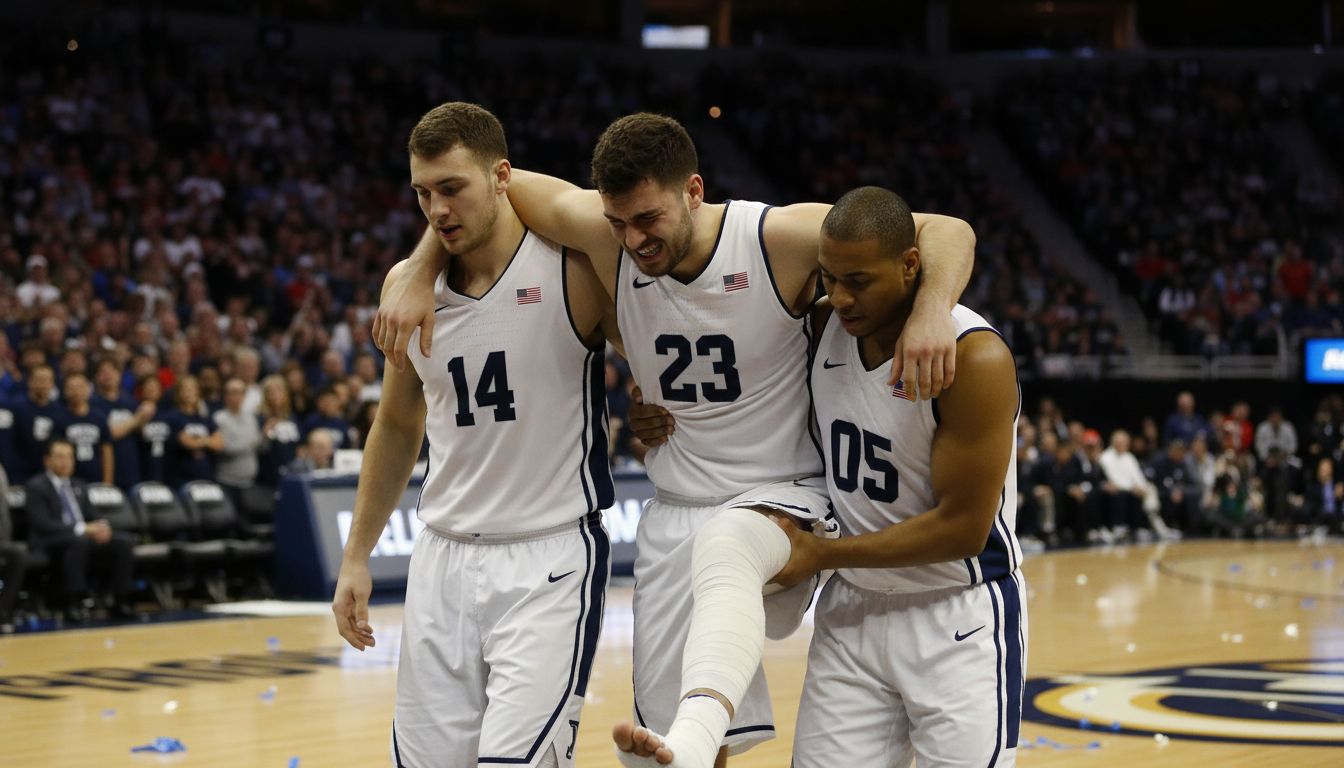
Not every team with a distinct identity finds reward, though. Miami (Ohio) went into the tournament as a 32–2 upstart but faced Tennessee, an SEC powerhouse rooted in size and physicality, after a First Four victory over SMU. The Volunteers absorbed an early challenge, then exerted control in a 78–56 victory, exposing resource differences more than heart or resilience. Miami's limitations were laid bare against a robust, deep high-major lineup, rendering 'a season to remember' for the mid-major merely a phrase, as the power program progresses quietly with ample TV revenue and institutional support. While Cinderella tales captivate us, structurally, the scales are skewed: power conferences command the talent pipelines, the exposure, and increasingly, the NIL ecosystems which transform a 'fairytale run' into little more than a temporary cameo.
Virginia, familiar with both national title glory and first-round catastrophe, faced potential embarrassment against Wright State. Trailing late due to a soft technical on Sam Lewis, the Cavaliers were bailed out by Jacari White, their nominal fifth guard but decisive leader in the moment. White sank six threes en route to 26 points, securing Virginia's first NCAA Tournament victory since their 2019 championship. The narrative often highlights composure and championship pedigree, and these qualities are indeed significant. However, there's a thin line between the labels 'tournament-tested' and 'choke artist'—designations clinging longer to coaches and players than to the high-pressure systems fostering them.
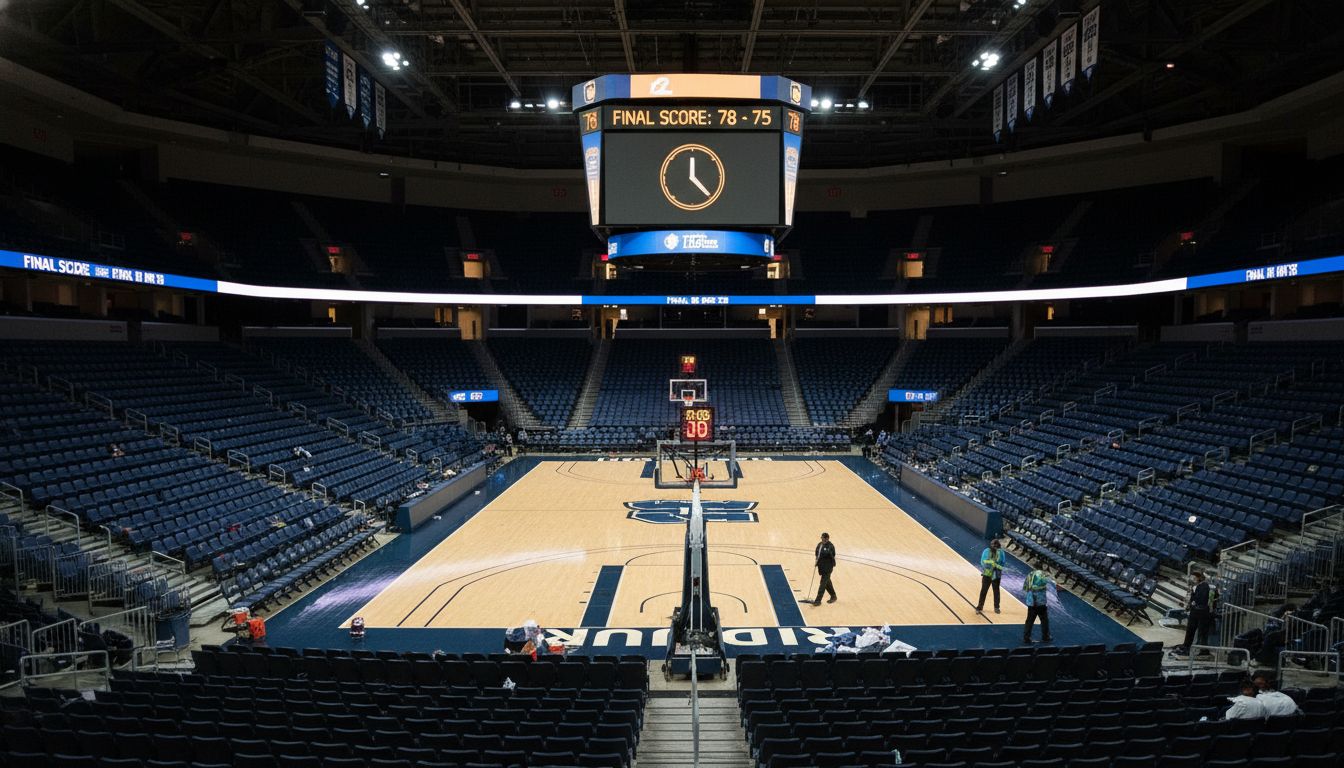
The round's most unsettling moment emerged in what was otherwise a straightforward game: No. 2 seed Iowa State cruised past Tennessee State 108–74, but not without a key loss. All-American forward Joshua Jefferson exited with an ankle injury, leaving him on crutches and wearing a boot. While x-rays showed no fractures and he is hopeful for the next match against Kentucky, the incident starkly reminded everyone of the season's fragility, often reliant on a star player's ability to endure a demanding schedule. Discussions about load management dominate professional sports; in college, the relentless pace is often romanticized as tradition and toughness, rarely scrutinizing the realignment of game schedules, travel, and TV slots with player health as a priority. Doubt lingers as a tournament worth millions in broadcasting pivots on a sprained ankle, posing questions about who shoulders the risks and who ultimately benefits from the revenue.
Alabama's 90–70 victory over Hofstra seemed routine by numerical standards, but its context was far from simple. They played without starting point guard Aden Holloway, arrested on felony drug charges, thrusting sophomore star Labaron Philon into the spotlight. Philon responded brilliantly, nearly recording a triple-double: 29 points, eight rebounds, seven assists, with 21 of those points post-intermission. On one level, it’s the classic 'next man up' narrative depicting resilience amid adversity. On another, it’s an indication of the oversight and cultural dynamics surrounding a roster operating under the university's name but often beyond genuine institutional transparency. Big-time programs are swift to claim 'familial bonds' when winning but slower to explain player situations leading to felonious paths and the structural oversights involved.
Beyond these isolated dramas, the Round of 64 was historically obedient to seed expectations. All 16 favorites won outright on Saturday, marking one of the chalkiest opening rounds where no double-digit seed advanced—foreshadowed by advanced metrics pointing to unusually dominant top seeds. Kentucky faced the only genuine threat of an upset, resolved back to form in overtime. For bracket enthusiasts, the experience was either comforting or dull, contingent on chaos appetite. For observers of sports power dynamics, it underscored how resource and recruiting chasms between the haves and have-nots manifest on the court, within box scores, and in determining who advances and maintains their platform as the weekend concludes.
If there was a microcosm of this gap, it lay in Missouri’s collapse against Miami, where the Tigers had the Hurricanes unstable but failed in securing defensive rebounds. Miami, led by Tre Donaldson and Malik Reneau’s combined 41 points, secured 41% of their own missed shots—a stark rebounding discrepancy pointing more towards resource habits and investment than isolated effort failures. It's easy to label it toughness, or program design: it comes down to recruitment, player development, and non-negotiable practice details. When late-game issues repeatedly plague a program year after year, it’s less a mystery, more a pattern; and patterns are reflections of leadership. In a tournament that markets itself as beautifully chaotic, accountability remains simultaneously diffuse and intensely focused, dependent on whether you’re a player in the closing huddle or an institution profiting in the aftermath.