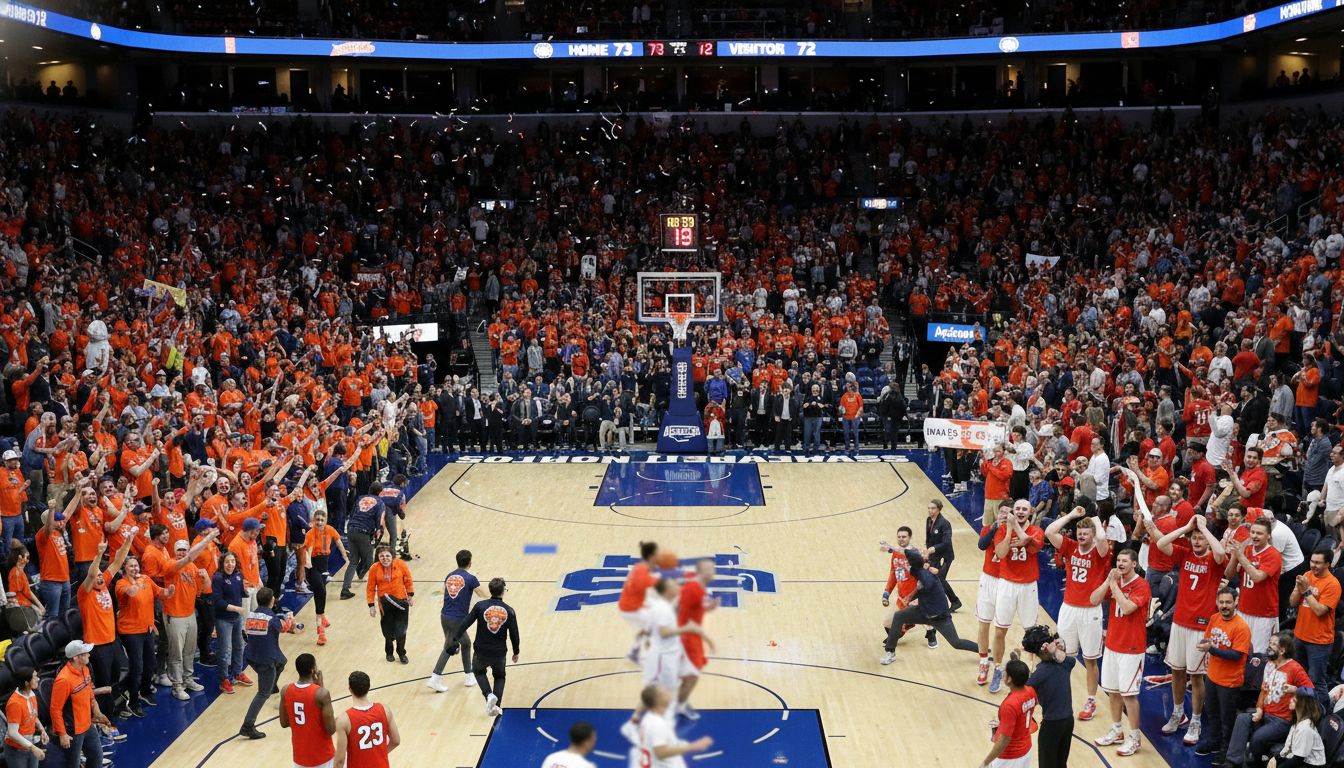
Every March, we romanticize the chaos: buzzer beaters, busted brackets, and that grainy montage set to “One Shining Moment.” But if you strip away the marketing gloss, the NCAA tournament is a national exercise in emotional volatility, especially for the people with the least control over what happens: players and fans. The 2026 men’s bracket gave us upsets and near-miracles, but it also produced a remarkably clear map of competitive pain, from 16-seeds just happy to have their logo on TV to power programs staring down existential questions. Look closely and you see something else, too: how expectations, money, and institutional power quietly script who’s allowed to suffer and who’s expected to just be grateful. You don’t need a conspiracy board and yarn to see it; you just need to follow which collapses are framed as tragedy and which are brushed off as “participation trophies.”
The so‑called “Just happy to be here” tier is where the sport’s hierarchy is most naked: Lehigh, Idaho, Prairie View A&M, Long Island University, Queens, Tennessee State, North Dakota State, Miami (Ohio), UMBC. They’re praised for showing up, for winning obscure conference tournaments, for briefly leading a national power before gravity reasserts itself. Lehigh sputtered to 19 points over 21 minutes in a First Four loss; Prairie View A&M lost to Florida by 59, the second-largest margin in tournament history; LIU’s peak win probability came 34 seconds into a game it never had a chance to win. Yet the tone around them is indulgent, almost paternal: enjoy the experience, cash the conference check, see you next time if you’re lucky. When a program’s ceiling is publicly defined as “don’t embarrass yourselves too badly,” that’s not just about talent gaps — it’s about the financial and structural gaps baked into this event.
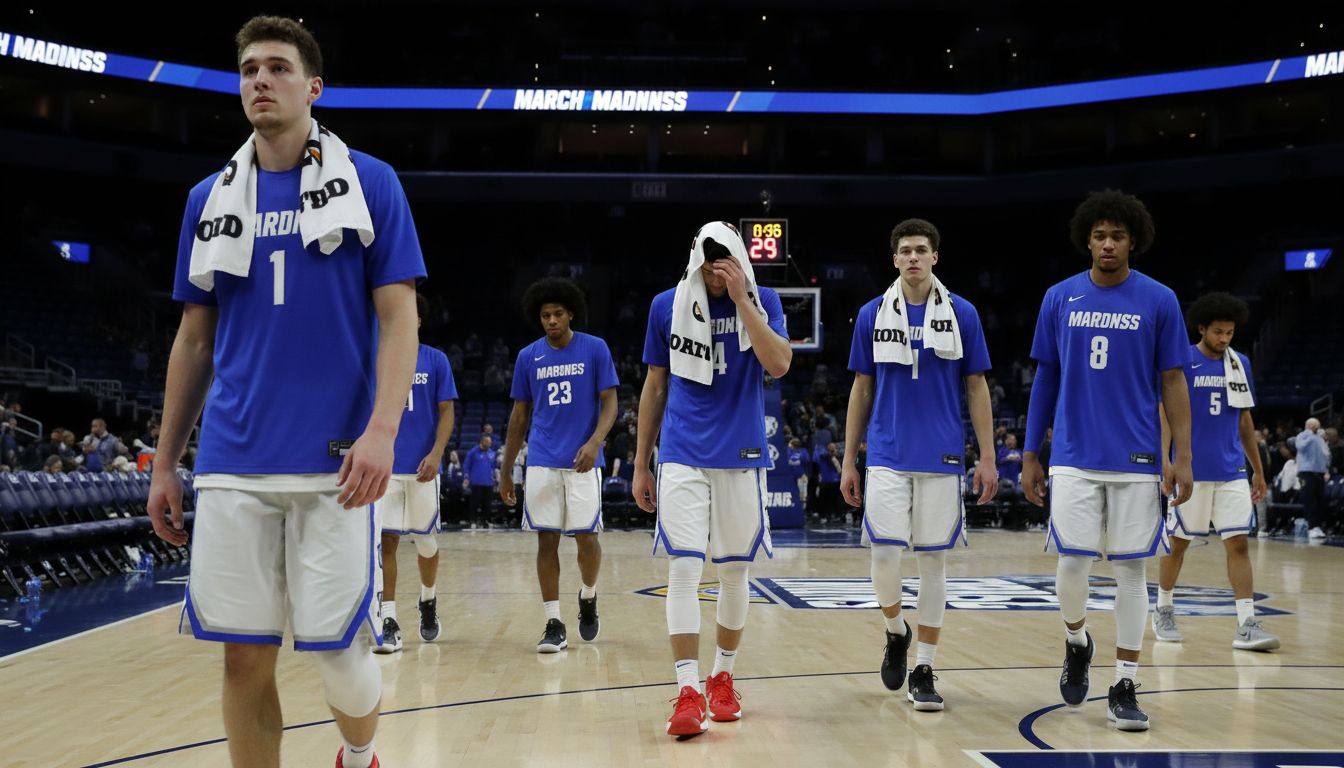
Move up to “Such a tease” and “Here’s your participation trophy,” and the emotional calculus shifts from gratitude to mild frustration. Penn hangs with Illinois for a while before getting avalanched; Howard stays within shouting distance of Michigan; Hofstra leads Alabama by 10; Kennesaw State jousts briefly with Gonzaga. Hawai‘i, Troy, Northern Iowa, Texas A&M, Saint Mary’s — all live in that middle space where the bracket whispers upset potential but the machinery of high-major depth, payroll‑adjacent resources and charter-flight comfort usually wins. The narrative here is that these teams didn’t really blow it; they were playing with house money against brands that are built — and funded — to survive. You’ll notice something: we talk about “magic” and “heart” a lot, and almost never about who can afford three extra staffers dedicated to scouting and analytics.
The “Silver linings playbook” tier — VCU, Louisville, Villanova, Miami, and others — is where optimism becomes a coping mechanism. Louisville bows out to Michigan State without its injured star but celebrates its first tournament win since Rick Pitino; VCU is overpowered by Illinois after losing Nyk Lewis; Miami nearly drags Purdue into danger despite an overhauled roster and no shooting luck. Fans are encouraged to focus on trajectory: new coaches, rebuilt identities, rosters overperforming their talent composite. This is where athletic departments love to live, because it justifies extensions and raises without demanding real accountability for systemic issues like scheduling protections, buy-game dependence or opaque booster influence on NIL deals. If you’ve ever sat through a postseason press conference and heard the phrase “we’re ahead of schedule” while knowing players just generated millions in free advertising for a school that won’t guarantee them a multi‑year scholarship, you recognize this song.
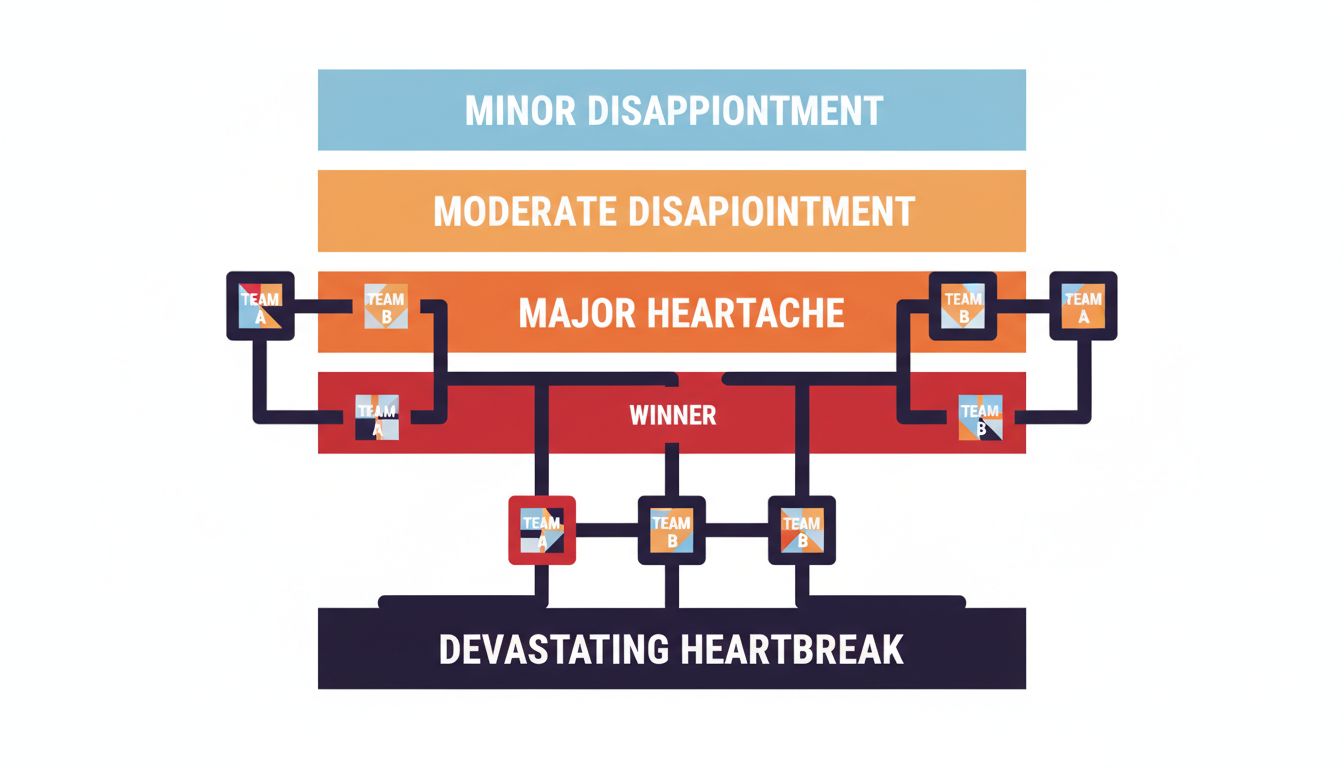
By the time we hit “So close, yet so far” and “We’re not mad, just disappointed,” the pain sharpens. Utah State, Wright State, Akron, UCF, Furman, Saint Louis, McNeese, South Florida, UCLA, TCU, Kentucky, Missouri, Texas Tech, Georgia, SMU, Gonzaga, BYU — all carried rational hope of staying longer than they did. Some led late, some were trendy upset picks, some simply ran into superior talent after surviving round one. Here, officiating breaks, injuries and late‑game execution become the storyline, not the system that funnels resources to the same cluster of schools year after year. When a mid‑major loses a double‑digit lead, we psychoanalyze “poise”; when a blueblood folds, we talk about “culture,” “leadership,” and whether a coach making seven figures is still the right guy — that’s accountability language, but notice it almost never extends to the athletic director or the conference that created the ecosystem.
The “Emotional roller coaster” tier earns its name honestly. Clemson plays one of the slowest games in Division I and still finds heartbreak; California Baptist nearly erases a 22‑point deficit against Kansas; NC State claws back from nine down in the final minutes only to lose on a jumper; Siena’s starters play 40 minutes trying to become the first 16‑seed to knock off Duke. High Point stuns Wisconsin, then pushes Arkansas to the brink; Virginia lives every fan’s nightmare of technicals, reviews and officiating angst as Tennessee squeezes out a win. These are the games that produce the viral clips and the “remember where you were” stories, but they also expose how thin the line is between Cinderella and cautionary tale. You can call it randomness; I’d call it the part of the tournament the NCAA monetizes most aggressively while insisting the athletes are just “students” who happened to be on national TV in a time slot priced like a mid‑market IPO.
Then we reach the top‑shelf agony: the “…What just happened?!” tier, where one possession rewrites seasons and, sometimes, careers. Ohio State erases a 15‑point deficit against TCU only to lose in the final seconds; Wisconsin, a 5‑seed, watches a 94% win probability disintegrate against High Point; Kansas lets St. John’s go the length of the floor for a buzzer‑beating layup after a season full of drama. Vanderbilt loses to Nebraska on a half‑court heave that rattles in and out; North Carolina blows a 19‑point second‑half lead to VCU; Santa Clara is effectively robbed of a timeout in a sequence that flips a near‑certain win over Kentucky into an overtime loss; and defending champion Florida fails to get a shot off in the final seconds against Iowa, ending its repeat bid by one point. If your first instinct is to think about brackets, I’d suggest zooming in closer: for players, these aren’t just probabilities on a graphic — they’re the last images scouts, donors and, yes, NIL brokers remember. One missed rotation or one uncalled timeout can cost more than a season; it can alter how much leverage a player has the next time his name is used to raise money in a closed‑door booster event.
What’s striking across all eight tiers is how expectation management shapes the story we tell about winning and losing. A 16‑seed’s 59‑point loss is “cute,” a 1‑seed’s one‑point loss is “catastrophic,” and everyone in between is assigned an approved emotional response by the way we talk about seeds, brands and histories. That doesn’t mean Florida’s collapse against Iowa or North Carolina’s blown lead against VCU aren’t genuinely brutal — they are, and those fan bases have long memories. It does mean the people making the real money here — conference commissioners, TV executives, some coaches — are largely insulated from the consequences of their decisions. No one in a suite loses their job because a referee crew misses a visible timeout signal that flips Santa Clara’s season, or because a mid‑major has to play its stars 40 minutes just to keep the lights on against a rested blueblood.
If there’s a quiet throughline to this year’s Pain Index, it’s that competitive heartbreak sits on top of a larger, less visible ledger: who got fairly seeded, who had to fly commercial, who played at 10 p.m. local time for TV inventory, who had injuries worsened by schedule compression. Ohio State’s gut punch, Wisconsin’s collapse, Florida’s title defense dying without a final shot — they all live in the same emotional neighborhood as Lehigh’s First Four exit and Siena’s near‑miss versus Duke, even if the zip codes of budget and prestige are wildly different. The tournament sells us on the idea that everyone gets their shot; the tiers remind us that some schools are allowed to fail safely, while others are told to be grateful they were invited to the party at all. Enjoy the drama — I do, too, and I still cover this thing every year with a notebook full of coffee stains and win probabilities. But as you watch the next miracle or meltdown, ask yourself not just who’s hurting, but who designed the system that decides whose pain really matters.