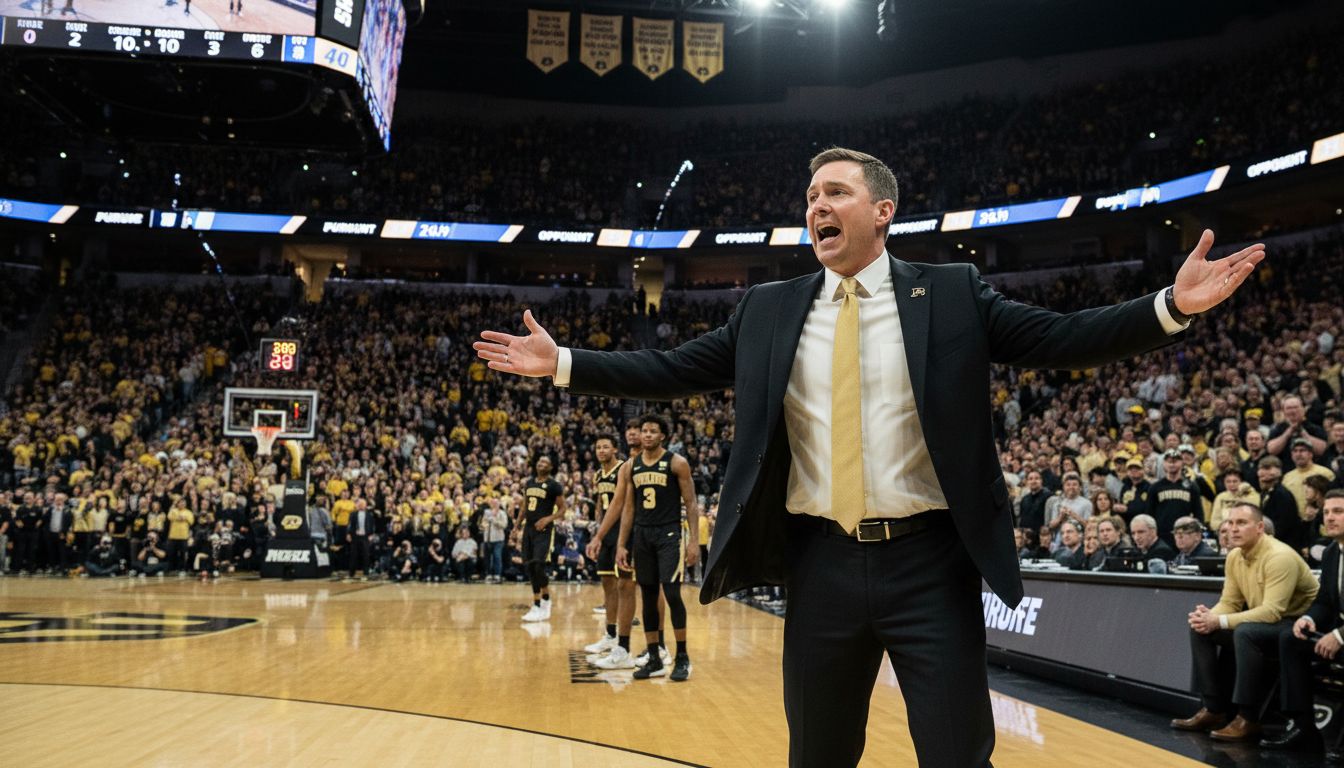
If you love college basketball the way we do down here in the Bluegrass, you get a feel for when an era ends, even if there’s no banner going up to mark it. That’s where Purdue finds itself right now. The Boilermakers just saw their season – and really, their four‑year run of rare continuity – end with a 79–64 loss to No. 1 seed Arizona in the Elite Eight out in San Jose. They built this latest push without two‑time national player of the year Zach Edey, betting instead on a trio that chose loyalty over the transfer portal carousel: Braden Smith, Fletcher Loyer and Trey Kaufman‑Renn. In today’s one‑foot‑out‑the‑door era, that alone makes Purdue feel almost old‑school.
A year ago, after UConn cut them down in the national title game, the big question was how you replace a mountain like Edey without diving headfirst into the portal. Matt Painter answered by doubling down on his own guys, the way an old‑timer coach in Rupp Arena might have done: no splashy transfers, just internal development and a whole lot of trust. Kaufman‑Renn broke out in the post, Smith and Loyer grew into bigger leadership roles, and Purdue played the long game on chemistry while the rest of the sport played musical chairs. That decision didn’t bring a championship back to West Lafayette, but it did produce back‑to‑back deep March runs – Sweet 16, then Elite Eight – in a landscape where staying together for four years is almost a museum exhibit. Whether you wear blue or black and gold, you have to respect that.
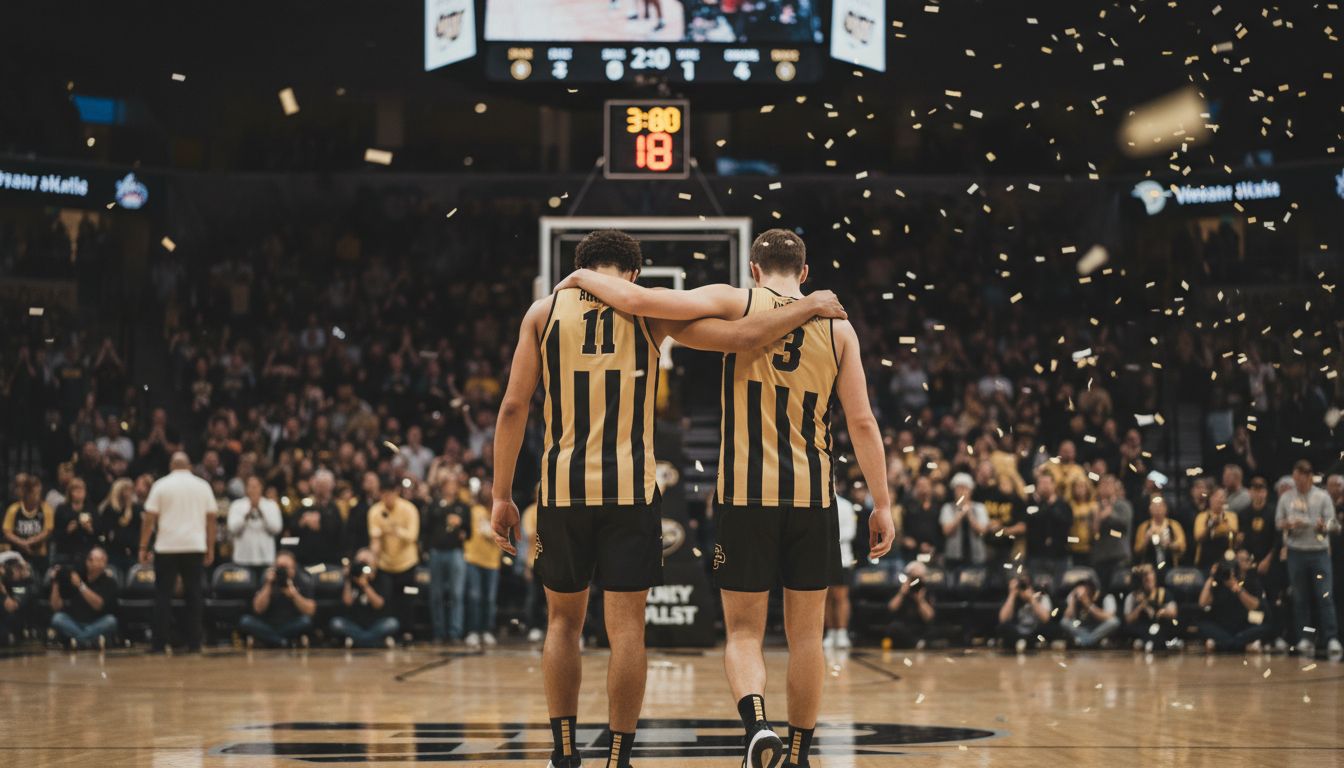
The loss to Arizona told the story of this team and this era in miniature. Purdue came out fearless, built a seven‑point lead, and had the Wildcats wobbling in the first half. Then, over the final 20 minutes, Arizona flipped the script and outscored the Boilermakers 48–26. Purdue didn’t quit, but they did look like a group that finally ran out of gas after carrying the weight of expectation for multiple seasons. Sometimes March doesn’t end with a collapse so much as a slow fade, and that’s what this felt like – a proud program just getting worn down by a deeper, fresher roster.
Zoom out, and the résumé for this “Core Three” is the kind of thing any fan base would sign up for in ink: most wins in school history, most NCAA Tournament wins in school history, two Big Ten regular‑season titles, two Big Ten Tournament titles, three straight trips at least to the Sweet 16, and a Final Four in 2024. Braden Smith even passed Bobby Hurley to become the NCAA’s all‑time assists leader, finishing with 1,103 dimes – a record that might stand a long while in this age of early exits and constant movement. Loyer called picking Purdue the best decision of his life, and you can hear the sincerity in that kind of statement after four years of real investment. This wasn’t a mercenary roster stitched together for one quick run; it was a core that grew together, failed together, and pushed the ceiling of the program together. For a sport increasingly driven by short‑term transactions, Purdue was a reminder that relationships can still be the backbone of a contender.
But eras don’t last forever, and now comes the hard part: life after Smith, Loyer and Kaufman‑Renn. When Edey left, Purdue at least had its trusted trio ready to slide into bigger shoes; this time, there’s no obvious next wave with that level of shared experience waiting in the wings. The portal, which Purdue flirted with only lightly in recent years – adding Lance Jones before the 2024 title game run and Oscar Cluff last offseason – now looks less like an optional tool and more like a necessity. You can build patiently the way Purdue did with its 2020s core, but you also risk aging out of your best shot, the way Detroit Lions coach Dan Campbell admitted after their NFC title game loss when he said, “This may have been our only shot.” That line has to hit a little close to home in West Lafayette right now.
Purdue’s underlying dilemma is the same one every high‑major program faces, whether you’re in the Big Ten or down in the SEC: how do you keep your identity without getting left behind by the new rules of the game. Painter has shown he can win big doing things his way – by developing high school recruits and trusting continuity – and that approach produced a level of sustained success that most schools would envy. Yet the cold reality is that the Boilermakers still sit on 54 NCAA Tournament wins without a national title, the most of any program in that particular club. They climbed right up to the doorstep with Edey, Smith, Loyer and Kaufman‑Renn, but never kicked the door all the way down. In the current era, you usually need a mix: a core you’ve grown and a few carefully chosen portal pieces who can give you matchup advantages in March.

There is some hope baked into Purdue’s future. The staff has already lined up four players in the 2026 recruiting class plus another commit, and they’ve landed Princeton forward Caden Pierce, who averaged 11.2 points last season and brings some skill and toughness to the fold. If Painter can hit on a new wave of multi‑year players while using the portal with a slightly lighter touch than the all‑in mercenary model, Purdue can stay in that national conversation. What they probably can’t do is expect another four‑year stretch of three starters racking up 147 games together; that’s a once‑in‑a‑generation alignment in today’s climate. The next chapter will look different by necessity, not by choice.
From a neutral vantage point – even one colored Kentucky blue – Purdue’s run under this core deserves more respect than it’s getting from folks who only count banners. Yes, the Fairleigh Dickinson loss in 2023 was a gut punch and will sit in every highlight reel of March upsets until the end of time. Yes, failing to turn all that continuity and talent into a title will sting for a long while, especially as that 54‑win, no‑championship stat gets repeated every March. But sustained relevance, high‑level winning and consistent deep runs in a chaotic era are not accidents; they’re the product of a coach with a clear identity and players willing to buy into something bigger than themselves. If you care about the health of college basketball, you should want programs like Purdue to remain contenders doing it that way, even if the sport nudges everyone toward constant reinvention.
So what’s next for Purdue. In the short term, it’s about managing expectations and embracing the uncertainty instead of fearing it. The Boilermakers will likely need to be more aggressive in the portal while still protecting the culture that made this four‑year run possible. They’ll sell recruits and transfers alike on the chance to be the group that finally breaks through that national title ceiling – the ones who turn all those “almost” seasons into history. And somewhere down the line, if they do hang that first banner, they’ll look back on the Smith‑Loyer‑Kaufman‑Renn years the way we look back on foundational eras everywhere else: as the teams that pushed the program right up to the edge and proved that, yes, it can be done.