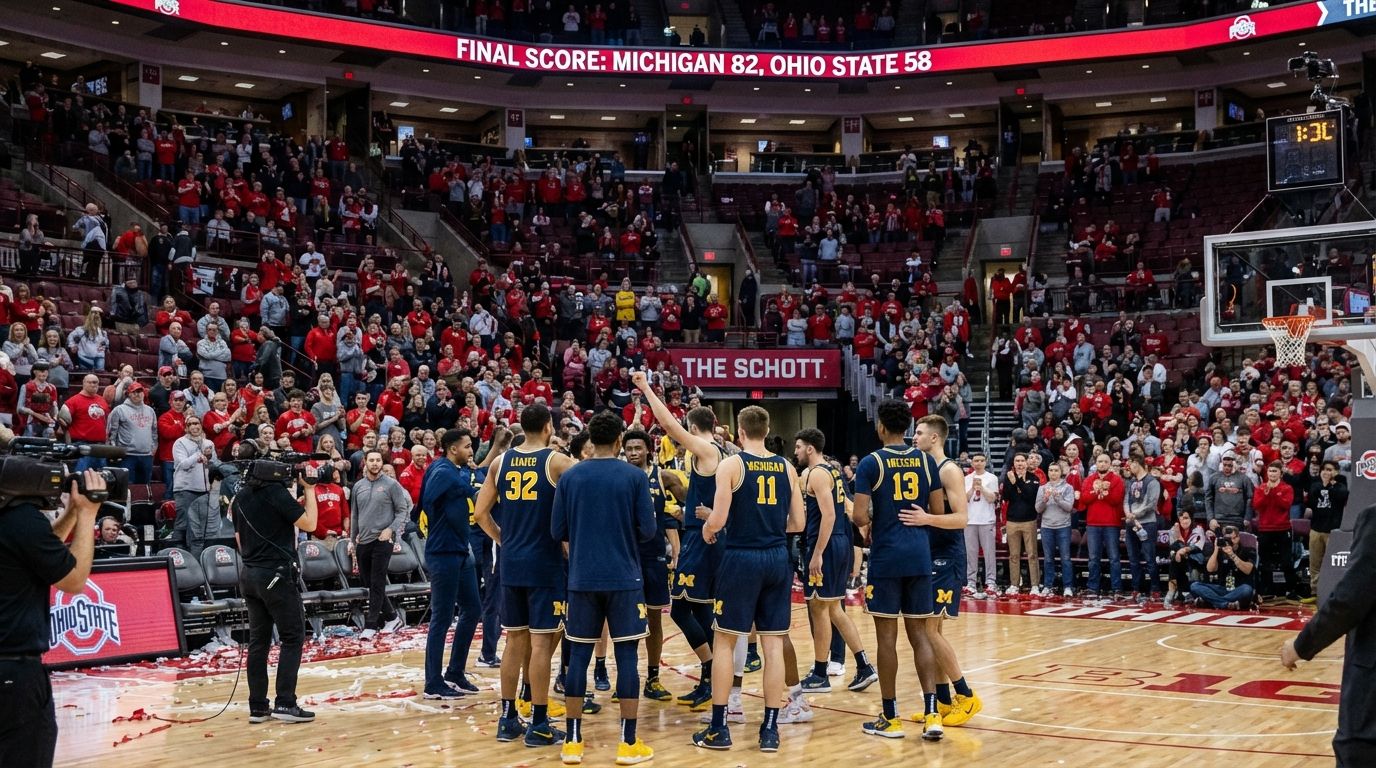
Walk into Mackey Arena on a February night and the building usually does the heavy lifting for Purdue. The crowd is loud, the sightlines are unforgiving to visiting shooters, and the Boilermakers tend to bully people early and hang on late. On Tuesday, Michigan walked into all of that and calmly took the air out of the place in about three minutes. The new No. 1 team in the AP poll didn’t just survive its first big test; it controlled No. 7 Purdue 91-80 and never trailed after the 12:50 mark of the first half. For a program that hasn’t worn the top ranking since the 2012-13 season, this was less a coronation than a stress test — and the Wolverines passed with margin to spare.
Purdue scored the first two baskets and, for seven minutes, looked like the home favorite it was supposed to be. Then L.J. Cason stepped to the line, hit a pair of free throws, and Michigan detonated a 16-0 run that flipped the entire script and muted a raucous building. From there, the Wolverines played like a team that understood both the opportunity and the responsibility that comes with that No. 1 next to their name. They built the lead to as many as 20 points before halftime and, more impressively, absorbed every Purdue push without ever surrendering the tempo of the game. If you’re looking for a single possession that captured the night, it was Michigan calmly carving up pressure, getting into a drive-and-kick sequence, and burying yet another open three while Purdue’s defenders chased shadows.
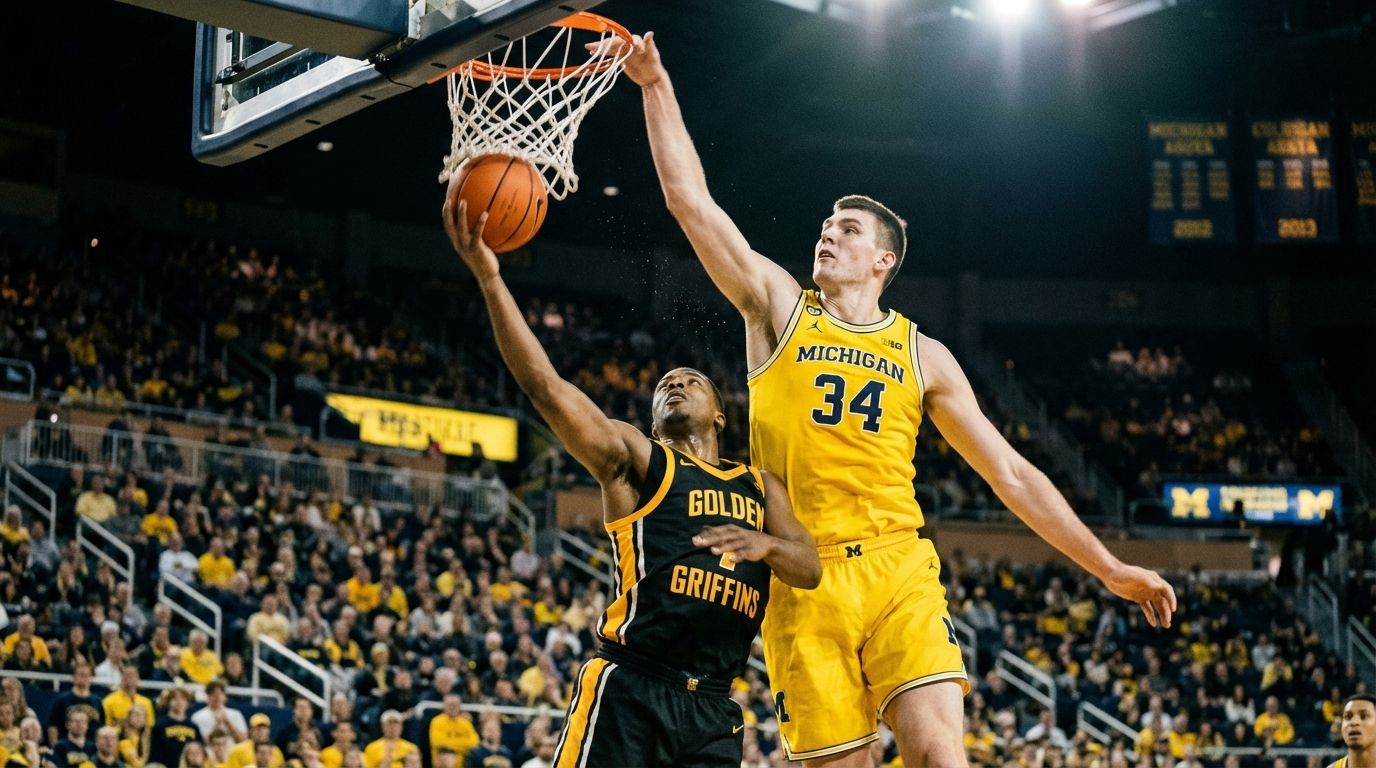
Michigan’s edge this season starts at the rim, and at 7-foot-3, Aday Mara is the kind of physical presence you can’t fake in a scouting report. In the first half, before foul trouble shrank his minutes, Mara turned the paint into a restricted zone for anyone in black and gold. He forced misses at the rim, triggered transition with outlets and tip-outs, and even initiated offense with sharp passes that forced Purdue to pick its poison. One sequence stood out: Mara altered a shot at one end, dished to Roddy Gayle Jr. for a layup, then came back to disrupt another attempt and eventually extended a possession that led to a Cason three. By halftime, he had stacked 10 points, eight rebounds, two assists and two blocks in just 13 minutes, a stat line that explained why Purdue’s staff was debating whether to send help and risk his playmaking.
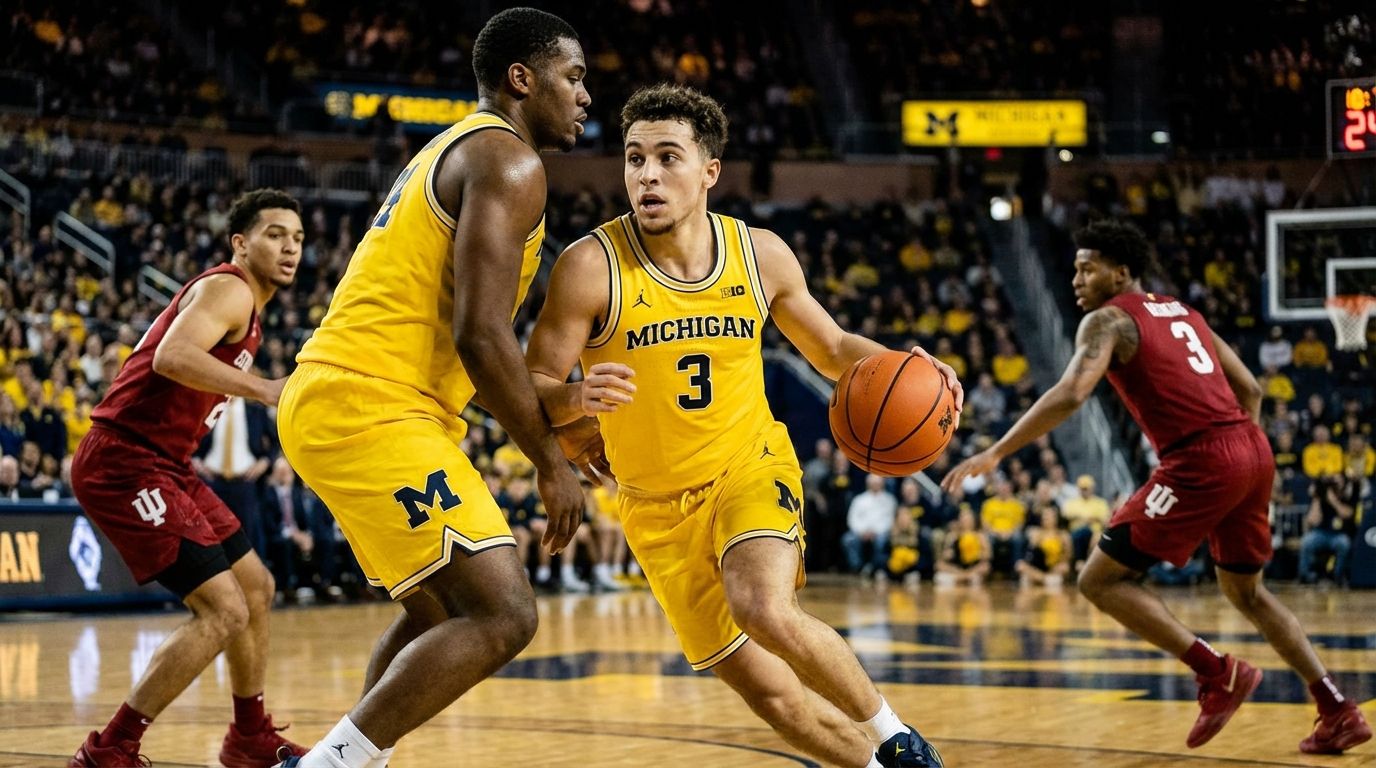
Of course, modern college basketball doesn’t let you live on size alone, especially in a road game against a top-10 opponent. Michigan paired its interior advantage with one of its best perimeter showings of the season, going 13-for-23 from beyond the arc. They missed their first four threes, then caught fire, draining eight of their next twelve before the break and repeatedly punishing late closeouts. This wasn’t just hot shooting luck; it was structure. When Purdue put two defenders on the ball, point guard Elliot Cadeau consistently made the simple, correct read — move it early, force rotations, attack closeouts and either finish or spray it out again. That’s not glamorous work, but it’s sustainable, which is what separates a February shooting night from an April blueprint.
Cadeau, a transfer from North Carolina, walked into a matchup that was supposed to belong to Purdue’s All-American guard Braden Smith and quietly stole the script. Smith, a preseason Player of the Year favorite, was held scoreless in the first half as Michigan crowded his space and forced him into traffic rather than rhythm jumpers. On the other side, Cadeau opened the second half like a player who understood the assignment: 12 points on 5-of-5 shooting in the first eight minutes after the break, each bucket arriving just when the building was threatening to wake back up. He finished with 17 points and seven assists, looking less like a caretaker and more like the engine of an offense that knows exactly where it wants the ball to go. His own description afterward was understated — he talked about exploiting openings in ball screens and trusting talented teammates — but the tape will read a little louder than that.
The more you zoom out on this Michigan team, the more the story shifts from stars to structure and depth. Cason came off the bench to score 13 points and share stretches in the backcourt with Cadeau, giving Dusty May multiple handlers who could survive pressure and still create advantages. Freshman Trey McKenney added another 13, including three timely threes that felt like emotional daggers whenever Purdue flirted with a run. The numbers underline the point: Michigan’s bench produced 34 points to Purdue’s 15, and, more importantly, there was no perceptible drop in execution when May subbed. That’s the trait that separates genuine title contenders from poll curiosities; the fourth and fifth options don’t just exist, they can carry you for five or six possessions when the obvious play is taken away.
Purdue coach Matt Painter didn’t sugarcoat what he saw. He pointed to tone-setting as the hinge of the game, crediting Michigan for dictating physicality and rhythm rather than merely reacting to the environment. He also zeroed in on the problem Mara posed: if you leave him alone, he can score or pass; if you send help, Michigan’s shooters start feasting. His postgame comments about Michigan’s depth — that most teams dip when they sub and Michigan simply doesn’t — sounded less like a standard compliment and more like recognition that, for this season at least, the margin for error against the Wolverines is razor thin. On a night when his own potential national player of the year couldn’t get loose, Painter was left to concede the obvious: Michigan is ranked No. 1 for a reason.
For Michigan, this was only the first exam in a brutal two-test week that continues with No. 3 Duke in Washington, D.C. There’s a temptation, in the media and in fan bases, to turn every No. 1 vs. top-five matchup into a referendum on who “deserves” the ranking, but Dusty May didn’t lean into that framing. He acknowledged the upside — attention, recruiting juice, a boost to the university’s brand — and then brushed aside the weekly poll drama with a single date circled: April 7, the night the season ends. That’s when being No. 1 actually means something. It’s a coach’s cliché, but it’s also an accountability test; if you’re measuring yourself against the postseason instead of the poll, you’re less likely to drift into the self-congratulation that quietly ruins promising seasons.
There’s an irony here that’s hard to ignore if you spend most of your time, as I do, looking for the seams in college basketball’s power structure instead of the seams in a 2-3 zone. Michigan’s rise this season isn’t about a secret NIL war chest or some shadowy booster collective bending the rules in the dark; on nights like this, it looks a lot more like competent roster-building, clear roles and actual player development. You don’t have to romanticize the system — the money is real, the inequities are real, and the accountability gaps are still wide — to acknowledge when a program wins because its pieces fit and its staff does the boring work well. In an era when the sport is too often defined by who can buy the loudest headline, Michigan’s performance at Purdue was a reminder that you still have to run good offense, guard your yard and accept that depth is earned, not purchased. Polls will wobble in the weeks ahead, as they always do, but if this is the version of Michigan that shows up in March, the rankings will be the least interesting thing about them.