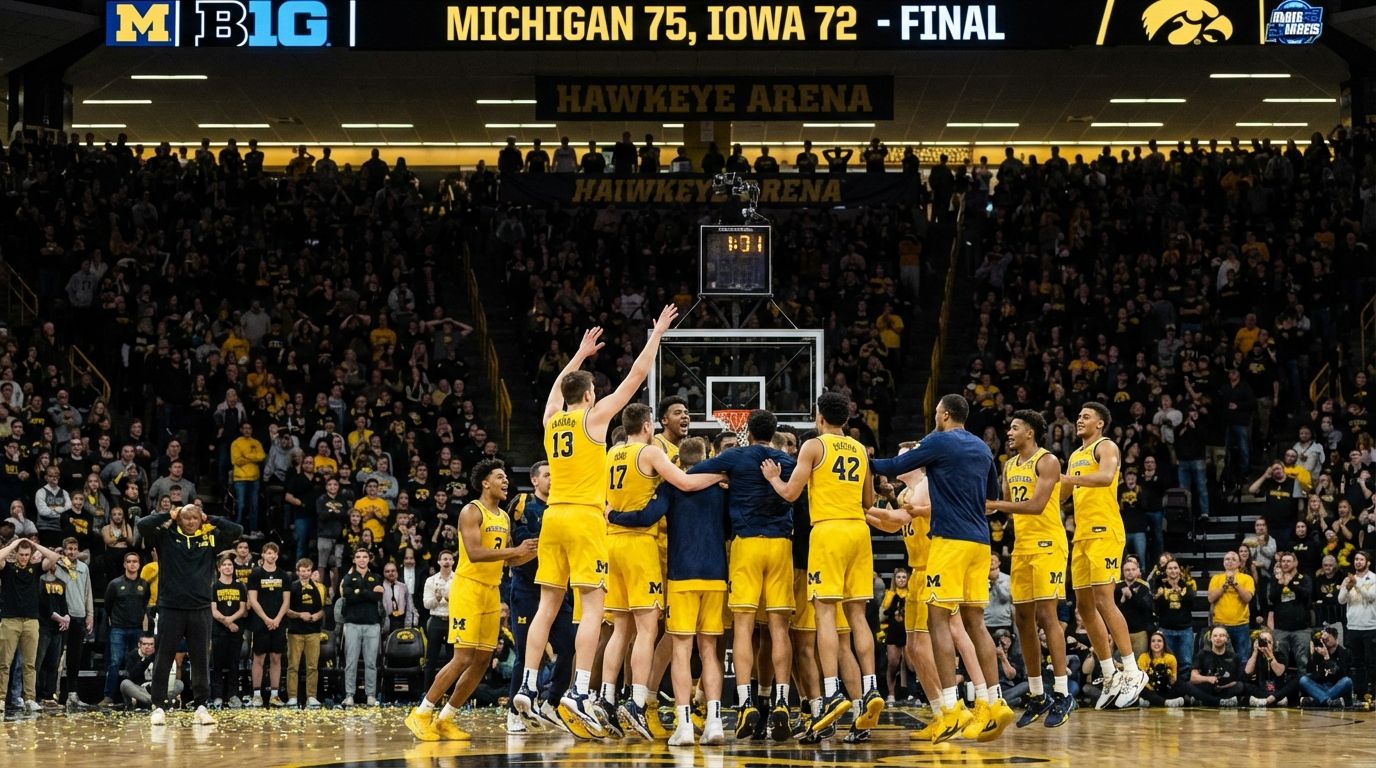
The thing about machines is that they aren’t supposed to feel anything, and yet this Michigan team plays like a whirring engine with a pulse. Inside Mackey Arena — a concrete bowl that usually swallows visiting teams whole — the Wolverines didn’t just survive the noise, they quieted it, possession by possession. Their 91-80 win over Purdue wasn’t merely a road upset or a statement game; it was the latest piece of evidence that Michigan has separated itself from a very good pack and is starting to look like something closer to inevitable. In February, when legs are tired and scouting reports feel like novellas, inevitability is the rarest currency in college basketball. Michigan is spending it freely right now.
To understand why Tuesday night felt so jarring, you have to rewind 13 months, back to another night in this same building when Michigan was the one getting run out of Mackey. The Wolverines trailed 44-15 in the first half that night, swallowed by the noise, the moment, and a Purdue team that looked as if it might never lose at home again. Assistant coach Mike Boynton would later admit it felt "impossible" to win here, the kind of word coaches usually save for private conversations, not on-the-record reflection. Fast-forward to now, and that word sits in a different part of the sentence: it’s starting to feel impossible for anyone to slow this Michigan group down for more than a few trips at a time. If last year’s visit to West Lafayette was a lesson in humility, this one was a master class in growth — the quiet, unglamorous kind that tends to happen far from television cameras and bracket projections.
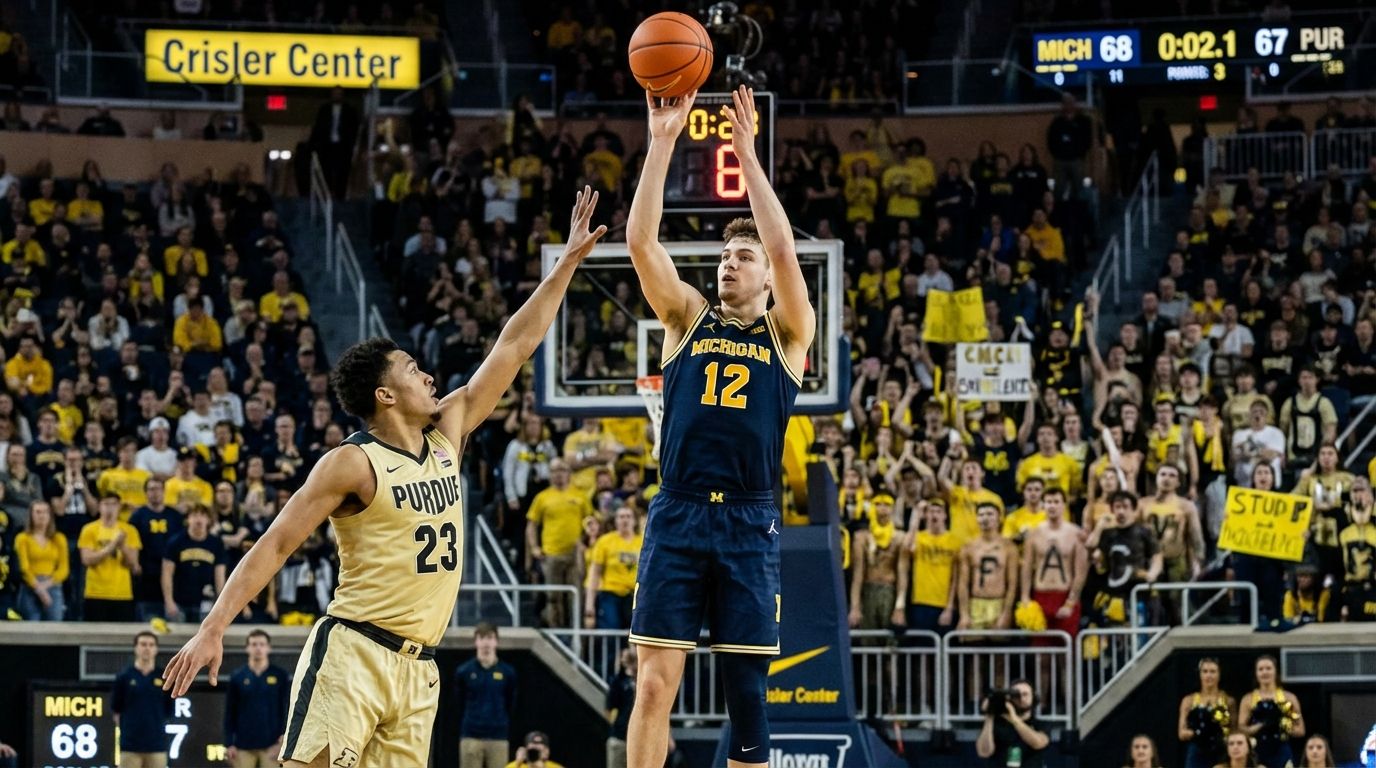
Michigan didn’t need a singular superhero to flip the script, which might be the most defining thing about this team. Six Wolverines scored between 10 and 17 points, seven hit at least one 3-pointer, and the offense flowed in such an egalitarian rhythm that it almost felt like watching a pickup run where everyone knows exactly which corner to fill. Their statistical profile backs up the eye test: 53% shooting from the field, 57% from three, and 1.31 points per possession on the road against a projected No. 2 seed is the kind of efficiency coaches file away in their private “if only we could bottle this” folder. They’ve now won six straight conference road games by double digits, tying a Big Ten mark that had been gathering dust since Illinois in the 1950s, and they’re 10-0 in the toughest quadrant of the NCAA’s résumé matrix. You don’t stumble into that kind of dominance; you build it, usually after you’ve been humbled enough times to know how fragile it is.
Of course, no modern college game is just about numbers, or even just about matchups. There’s always a story, a clip, a quote that tumbles out of someone’s phone and into an arena, and in this case it was a summer video of Yaxel Lendeborg at a bar, dropping an F-bomb-laced promise that Michigan would take down Purdue. By the time tipoff rolled around, the Paint Crew student section had weaponized the clip into a soundtrack, greeting Lendeborg with a wall of profanity and delight every time he so much as exhaled near the ball. The irony, as he admitted later, is that he’d practically forgotten the moment until the internet decided it was time to remember. In a different era, that kind of viral clip could have hung over a player’s head, but Lendeborg’s response — 13 points, seven assists, and a few 3-pointers that felt like emotional uppercuts — was a small reminder that today’s athletes live with a constant chorus and still have to find a way to hear themselves think.
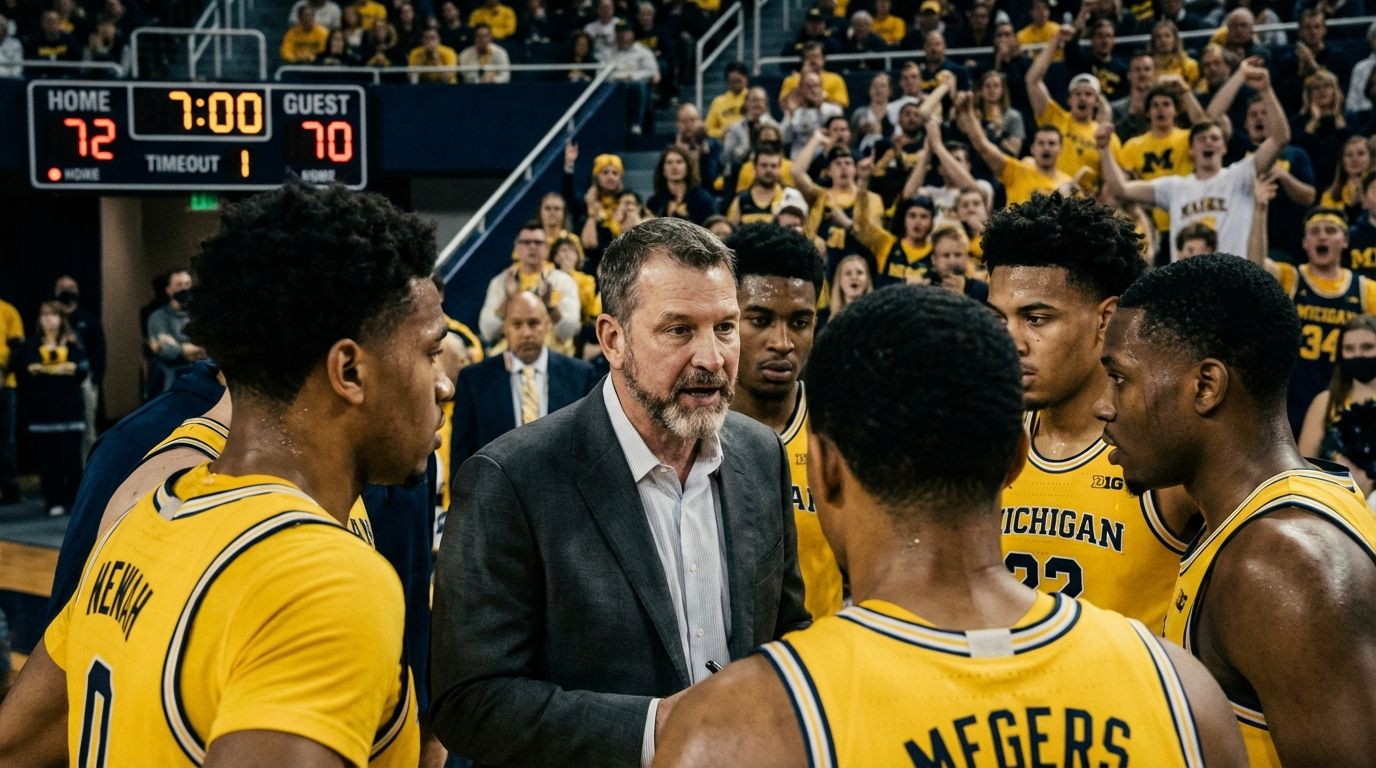
What stands out about Lendeborg, though, is that he doesn’t seem all that interested in being the main character, even when the plot tries to make him one. Head coach Dusty May described him as someone who "just wants to be one of the guys," and you can see it in the way Michigan plays: a series of give-and-goes, extra passes, and joyful counterpunches when opponents finally cut the lead to something like manageable. After the game, Lendeborg repeated a line that’s become a running joke — and maybe a quiet mission statement — in the locker room: "Our biggest strength is we don’t have a best player." Plenty of teams say that, usually when they lack a clear star; Michigan says it and then rolls out wave after wave of players capable of carving up a defense in their own way. They half-kid that they might be "the best team ever assembled," a line born after they won the Players Era event by 110 points over three games, but the way they keep answering every surge with a dagger three suggests there’s at least a sliver of sincerity in the joke.
If there is a center of gravity to all this, it might be May’s quiet refusal to let the No. 1 ranking turn into a story inside the room. He and his staff made an intentional choice not to bring it up with the team, and in an age when players can’t open an app without seeing their faces on some power ranking, that restraint feels almost radical. May insists he hasn’t heard his players talk about it in the locker room, on the plane, or in passing, which might be the greatest compliment you can give a group of 18-to-22-year-olds living in a world that measures everything in likes and reposts. The ranking matters, of course — Purdue circled this game as a last shot at a Big Ten title, and the number next to Michigan’s name guaranteed a playoff-level ferocity from the opening tip. But the Wolverines played like a team that sees No. 1 as a data point, not a destination, which is usually how you stay there.
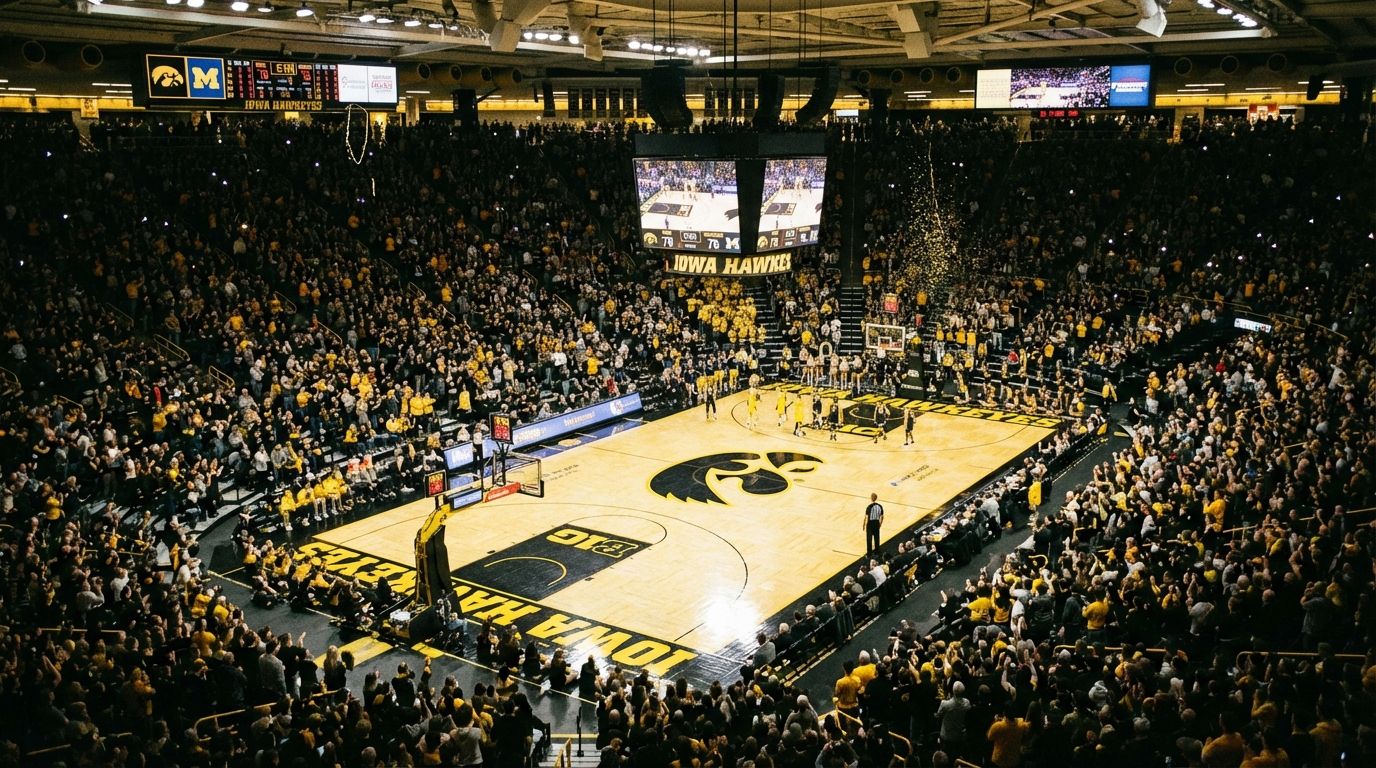
This is where the larger arc of the season comes into focus. For months, advanced metrics have quietly insisted Michigan was the best team in the country, even when the human polls disagreed after an early home slip against Wisconsin. They’ve now rattled off 11 straight wins, including road takedowns of top-10 Nebraska and rival Michigan State, while Arizona’s back-to-back losses cleared the final bit of traffic between them and the AP poll’s top rung. By the time the NCAA selection committee unveils its early top 16 seeds, Michigan should sit as the No. 1 overall seed, with a résumé that looks as sturdy as it feels inevitable. There’s a certain honesty in the way Painter, after watching his team chased for most of the night, called Michigan "the best team we’ve played," not because coaches don’t praise opponents but because he spelled out the part that doesn’t show up in a box score: "It’s the problems they cause."
And still, in college basketball, inevitability is always on a shot clock. Not far down the road — metaphorically if not geographically — waits Duke, another blueblood with its own orbit of expectations, ready to meet Michigan on a neutral floor in Washington, D.C. It’s the second half of what might be the season’s toughest two-game stretch, the kind of week that can either harden belief or expose hairline cracks. Michigan arrives having already logged 10 wins by 30-plus points, a stat that evokes the 1998-99 Duke team often mentioned among the best never to win a title, which is a handy reminder that history doesn’t hand out banners for February dominance. If the Wolverines handle Duke the way they handled Mackey, they’ll enter March not just as the No. 1 team on paper, but as the program everyone else measures themselves against — the machine with a heart that’s learned, the hard way, how to keep beating through the noise.