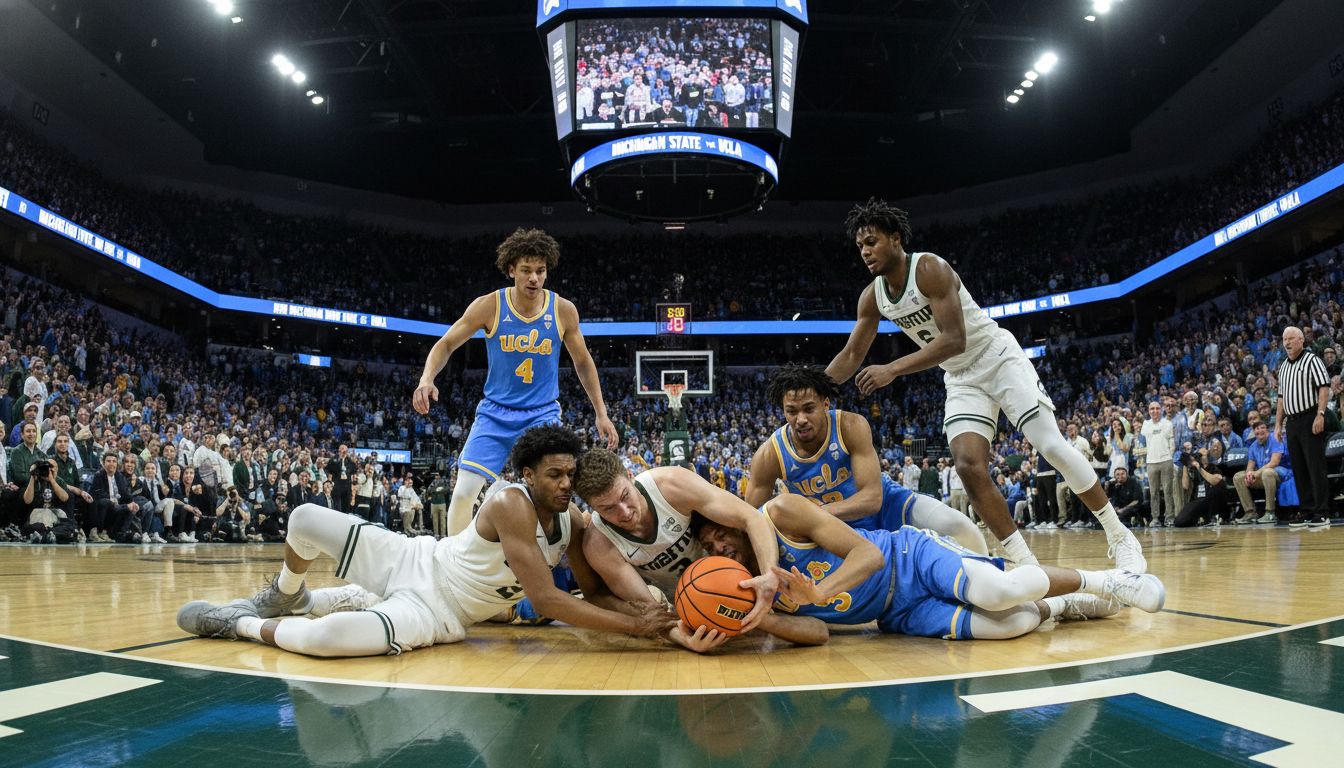
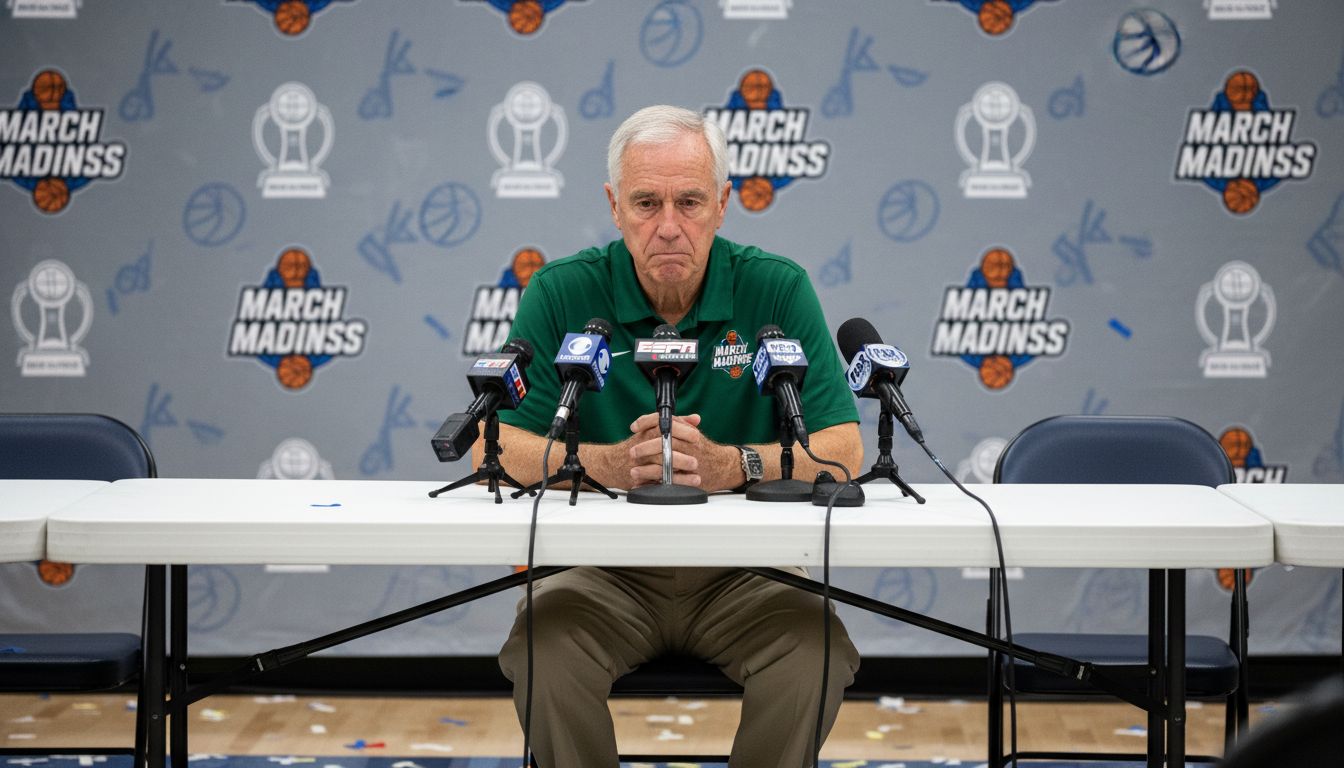
If you watch enough March basketball from a small Jesuit school up in Spokane, you start to recognize a particular look in a coach’s eyes after a tough loss. Tom Izzo had that look after Michigan State’s 88–84 loss to UCLA in the Big Ten quarterfinals. This was the same UCLA team the Spartans had thumped by 23 in East Lansing a few weeks earlier, which made Izzo’s postgame tone less angry and more unsettled. He kept circling back to effort and edge, the stuff every program that thinks of itself as blue‑collar and overachieving claims to value. From my couch in the Inland Northwest, his words sounded familiar—like something Mark Few might say after a rare night when Gonzaga gets out‑worked instead of out‑talented.
On the floor, this was UCLA from the opening tip, not the sequel to the February blowout in the Breslin Center. The Bruins led by 11 at halftime and stretched it to 15 with just over 15 minutes left, winning the loose‑ball and 50‑50 categories that Izzo usually takes personally. Michigan State did make it interesting late, carving the lead down to two in the final minute, but that furious charge was more desperation than identity. Trent Perry calmly knocked down six free throws in the final 40 seconds to ice it, the kind of poise that separates the teams still playing on Saturday from the ones explaining themselves on Friday night. Izzo called it an "almost valiant comeback" and admitted it would have been "too little, too late" given how thoroughly UCLA had dictated terms.
The numbers back up what the eye test suggested. UCLA guard Donovan Dent controlled the game with 23 points, 12 assists, six rebounds and four steals—a stat line that would make any WCC playmaker proud. Perry’s 22 points were the perfect complement, while Eric Dailey’s double‑double and four steals gave the Bruins their interior edge. Skyy Clark added 15 more, and it felt as if every time Michigan State threatened to tilt the momentum, one of those four had the answer. For the Spartans, Jeremy Fears Jr. did everything he could with 21 points and a game‑high 13 assists, but his playmaking never quite translated into the sustained stops Izzo demands in March.
If you zoom out from the box score, this game was about something subtler than shooting percentages. It was about how a program responds when it gets embarrassed—and how it handles doing the embarrassing the next time around. In February, Michigan State had run UCLA off the floor, and the night spiraled into sideshow: Bruins coach Mick Cronin ejecting his own player after a hard foul, and then shrugging off hostile chants aimed at former Spartan turned Bruin Xavier Booker. That kind of drama can either fracture a locker room or forge it, and on this Friday, it sure looked like UCLA chose the latter. Cronin, who hardly fits the Pacific Northwest mellow stereotype, clearly spent the last few weeks reshaping his team around toughness and response.
Izzo’s critique of his own team—"they played harder [and] tougher"—lands differently when it comes from someone whose entire brand is built on those traits. You don’t have to be a Big Ten lifer to hear the subtext: in March, your pedigree doesn’t defend a ball screen for you. As a Gonzaga alum who’s watched a so‑called "mid‑major" build its name by matching power‑conference physicality, I’m always intrigued when a heavyweight gets punched first and can’t quite reset. Michigan State is 25–7 and was tracking as a No. 2 seed in the West in early bracket forecasts, so this isn’t a crisis so much as a reminder that reputation doesn’t rebound for you. UCLA, sitting around a projected No. 7 seed, played like the team hungrier to prove it actually belonged.
There’s a temptation, especially in the Big Ten footprint, to treat any early‑tournament wobble as an existential referendum on a program. That’s probably overreacting here; Izzo’s track record in March earns him more than one off night of energy and execution. Still, when he says, "that doesn’t happen to my team very often," you can hear the gears turning about practice habits, rotations and who gets trusted when the other side throws the first punch. Every coach who’s built something sustainable—from East Lansing to Spokane—walks the line between holding veterans accountable and not blowing up the culture over one flat performance. This loss feels more like a sharp, uncomfortable nudge than a structural crack.
From UCLA’s side, this was the blueprint win you clip and save in the film room. Dent and Perry didn’t just fill up the scoring column; they dictated pace, controlled late‑game possessions and turned defensive pressure into points, exactly how you pull an upset in March. Dailey’s activity on the glass and in passing lanes gave the Bruins the extra possessions they needed to withstand Michigan State’s late push. If you’re a player in that locker room, you now have proof that the tougher, more connected version of yourselves travels—maybe even into a semifinal against a top‑20 Purdue team. For a league that loves to talk about depth and grind, this was UCLA actually embodying those clichés instead of just hearing them in press conferences.
Watching all of this from the Northwest, where we’re perpetually arguing that good basketball can live outside the power‑brand corridors, there’s a small irony in seeing UCLA win a game on grit rather than glamour. This is the same program that helped define college hoops glitz, now surviving conference‑tournament Friday by out‑working a Michigan State team that usually owns that identity. It’s a timely reminder that in March, style points don’t advance; stops, free throws and loose balls do. Whether you’re Gonzaga trying to justify a high seed from the WCC or UCLA trying to prove it’s more than February drama, the job description is the same. Show up harder the second time someone sees you.
The Big Ten bracket will move on without Michigan State in the semifinals, and UCLA will get its shot at Purdue, but this quarterfinal offers some useful takeaways as the bigger bracket looms. For the Spartans, the film will sting, yet it might end up being the kind of bruise that heals into sharper focus before the NCAA Tournament. For the Bruins, this is the kind of performance that can reset a season’s narrative from chaos and controversy to growth and resilience. Somewhere out here between the pines and the basalt, fans of another perennial March participant recognize that arc all too well. One off night or one breakthrough win never defines a program—but they do reveal, in 40 noisy minutes, how ready you are for the madness still to come.