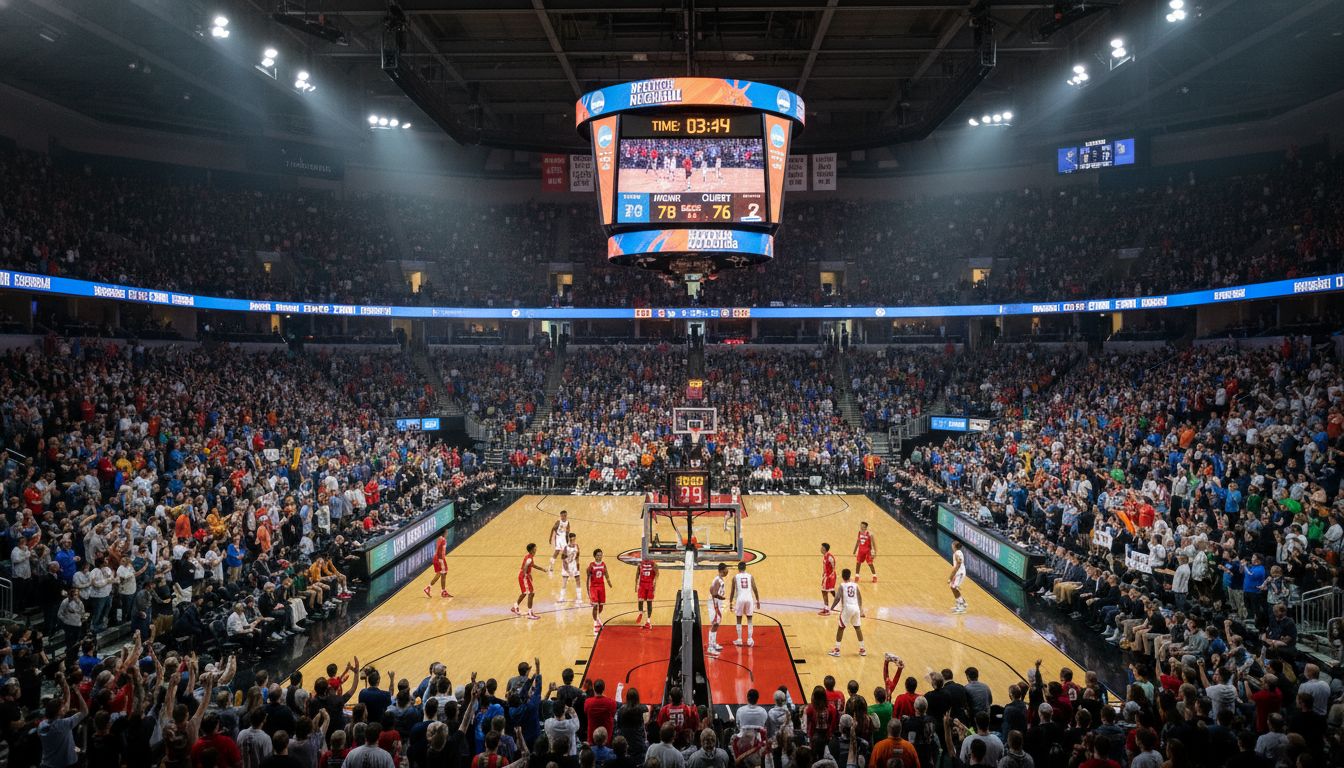
Some March days feel forgettable once the brackets are busted; this one belongs in the scrapbook. From my seat in Bloomington, where the echoes of 1976 still rattle the rafters, Sunday’s second round felt like one of those days when the sport reintroduced itself in full. We had bluebloods pushed to the brink, defending champions sent home, and more than one reminder that in March, experience and cohesion can still outduel raw talent. For a Big Ten lifer, it was also a fascinating snapshot of how our conference’s contenders are navigating a changing national landscape, from Purdue’s veteran steadiness to Iowa’s fearless underdog turn. Let’s walk through the key storylines from a Hoosier vantage point, where we respect good basketball wherever it’s played but always keep one eye on how it stacks up against the standards set in Assembly Hall.
We’ll start with Alabama, because when you hit 19 three-pointers in an NCAA tournament game, you earn top billing, even in Big Ten country. The Crimson Tide dismantled Texas Tech 90-65, turning a brief 2-0 deficit into a shooting clinic that would have made even the most old-school motion-offense devotee sigh and admit the three-point line isn’t going away. Latrell Wrightsell poured in 24 points, and Labaron Philon Jr. dished 12 assists as Alabama showcased the modern game in its purest form: spacing, pace and a green light from deep. They live and die by the three, leading the nation in long-range attempts and makes, and on this night they looked very much alive. Their reward is a date with Michigan, where Alabama’s perimeter barrage will collide with a Wolverines front line anchored by rim protectors Aday Mara and Morez Johnson Jr., a classic clash of stylistic eras that would make any basketball historian smile.
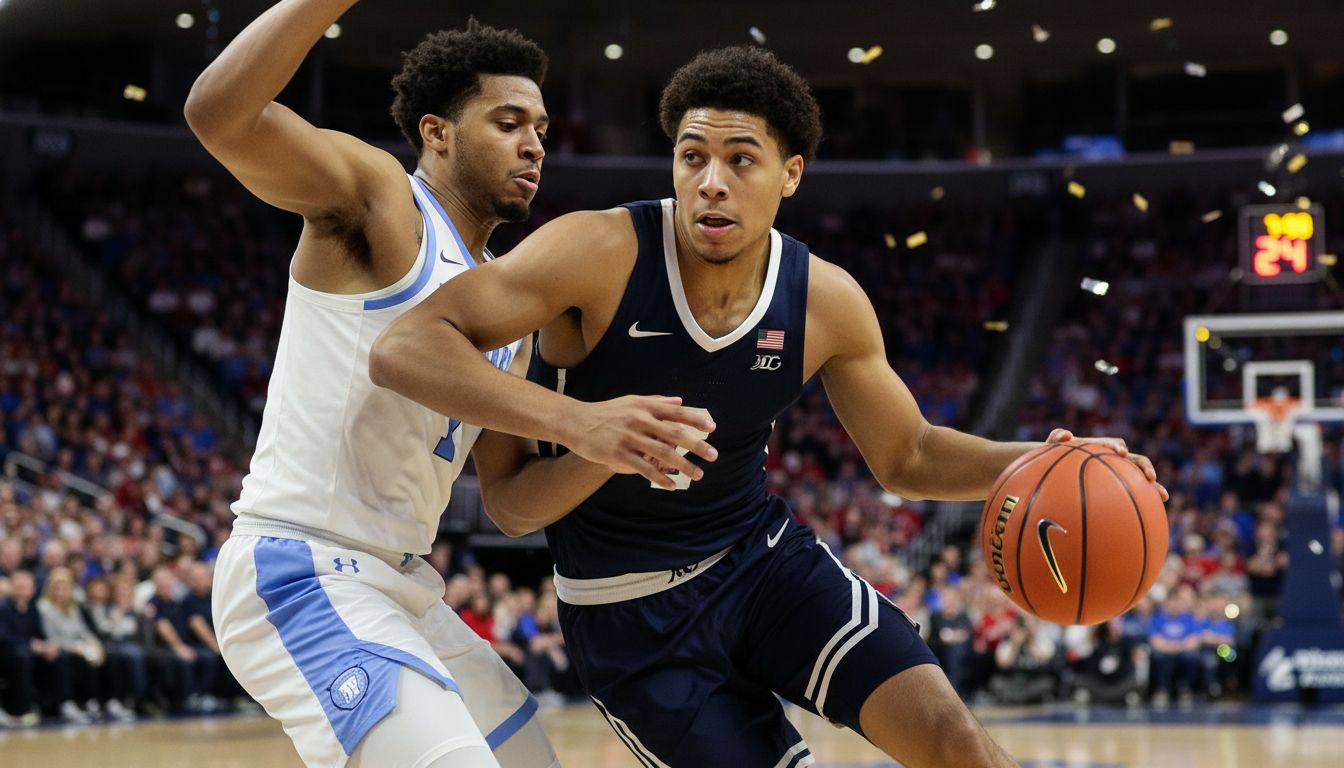
If Alabama represents the new, UConn reminded everyone that old-fashioned defensive toughness still wins in March. The Huskies methodically put away UCLA 73-57, using a late 9-0 run—and a timely technical foul on Mick Cronin—to turn a tense game into a comfortable finish. Alex Karaban was the star, scoring 27 points, hitting big shots from the perimeter and protecting the rim with a key block that helped trigger the decisive spurt. UConn controlled the glass 36-24 and dominated the paint 30-20, a combination that tends to travel well in tournament play, whether you’re in Philadelphia or the old Omni in Atlanta. Next up is Michigan State, and Tom Izzo’s history in March ensures that game will feel like a coaching clinic as much as a Sweet 16 matchup, with UConn needing the same disciplined defense on Spartans playmaker Jeremy Fears Jr. that they used to stifle UCLA’s Donovan Dent.
Arizona’s 78-66 win over Utah State offered a different kind of lesson: size and relentless pressure can wear down even the most game underdog. The Wildcats’ guards Jaden Bradley and Brayden Burries led the way with 18 and 16 points, but the real imbalance showed up on the glass, where Arizona held a 53-26 rebounding edge that would have made any old Big Ten bruiser proud. Utah State trimmed an 18-point deficit to four late, but Bradley’s repeated drives and Arizona’s parade to the free throw line—22 attempts in the second half alone—reestablished control. That’s what a physically exhausting style does in March: it may bend, but it rarely breaks if the whistle cooperates. Arizona now turns its attention to Arkansas and, more specifically, to slowing Darius Acuff Jr., arguably the breakout star of this postseason, without sending so much help that its own guards get into foul trouble.
On the upset front, Iowa’s 73-72 stunner over top-seeded and defending national champion Florida was the kind of result that had half the country scrambling for their brackets and the other half nodding in appreciation at Big Ten resilience. Alvaro Folgueiras hit the shot that will live in Iowa City lore, a go-ahead three with 4.5 seconds left that capped a day in which the Hawkeyes quietly controlled the game’s terms for long stretches. They matched Florida’s vaunted physicality in the paint, actually edging the Gators 32-30 inside and winning the fast-break battle 9-7, all while holding the tempo to a season-low 61 possessions for Florida. Tavion Banks led Iowa with 20 points, and four Hawkeyes finished in double figures, a balanced attack that echoed the old Big Ten credo that five connected players can topple one defending champion. Their Sweet 16 matchup with Nebraska is a rare conference rematch on this stage, and the numbers tell a simple story: when Iowa wins the free throw battle against the Cornhuskers, it usually wins the game; when it doesn’t, things tilt the other way.
Tennessee’s 79-72 escape against Virginia in Philadelphia was less about fireworks and more about composure, the kind that every coach hopes to bottle by March. The Volunteers nearly let a 14-point cushion evaporate, as Virginia capitalized on late mistakes to briefly take the lead, but Ja’Kobi Gillespie’s steady free throw shooting and a series of missed Cavaliers field goals preserved the win. Virginia freshman Thijs De Ridder was magnificent in defeat, scoring 22 points and grabbing five rebounds, the program’s best NCAA tournament line since De’Andre Hunter in the 2019 title run. For Tennessee, the defensive backbone remains Felix Okpara, who blocked four shots and deterred several more around the rim, continuing a season-long trend of opponents converting just 30% at the basket against him. That rim protection will be tested by Iowa State, a team that just outscored Kentucky 34-20 in the paint and thrives on attacking gaps, meaning Tennessee’s path to the Elite Eight runs straight through disciplined rotations and another strong outing from Gillespie and Nate Ament.
If you like your March with a bit of New York theater, St. John’s 67-65 win over Kansas delivered it in the final act. Despite shooting just 36% and nearly surrendering a 14-point lead, the Red Storm survived thanks to Dylan Darling’s buzzer-beating layup—his first basket of the game, which is a very March Madness sentence. Bryce Hopkins was the steadying force, scoring 18 points and hitting six of nine from three-point range, turning what had been an inconsistent perimeter team into a suddenly dangerous one from deep. St. John’s defense hounded Kansas into 16 turnovers, an effort that will need to be replicated against Duke, where the primary challenge will be finding enough size and length to bother star Cameron Boozer without fouling. Rick Pitino’s plan will lean heavily on Zuby Ejiofor and Dillon Mitchell defensively while hoping the newly rediscovered three-point touch continues; as any Indiana fan who has watched a hot Purdue team walk into Assembly Hall can tell you, shooting streaks can redefine ceilings in March.
Iowa State’s 82-63 dismantling of Kentucky was a reminder that pressure defense and smart guard play are still the great equalizers when the lights brighten. The Cyclones forced 20 Kentucky turnovers—the Wildcats’ most in an NCAA tournament game since 1993—and turned a shaky first half into a second-half surge behind Tamin Lipsey and Milan Momcilovic. Lipsey finished with 26 points, 10 assists and only three turnovers, a 3-to-1 assist-to-turnover ratio that has become the statistical barometer for Iowa State success this season. Without injured All-American Joshua Jefferson, they still scored 150 points per 100 possessions after halftime and shot 63% from the field, proof that system and ball movement can weather even significant personnel losses. Against Tennessee, the blueprint will be familiar: harass opposing ball handlers, turn steals into transition chances and trust that Lipsey’s decision-making will hold up against one of the nation’s most disciplined defenses.
Finally, in St. Louis, Purdue’s 79-69 win over Miami served as a case study in the value of continuity in an era of constant roster churn. Fletcher Loyer scored 24 points and Trey Kaufman-Renn added 19 as Matt Painter leaned heavily on his senior backcourt in the second half, leaving Loyer and point guard Braden Smith on the floor the entire way to steady the Boilermakers. In a season when so many teams have been fundamentally reassembled via the portal, Purdue’s core has matured together, and that shared experience has become a weapon as real as any set play. Kaufman-Renn’s late-season surge—20 points in the Big Ten tournament title game, 25 in the first round, and 19 with nine boards against Miami—paired with Loyer’s recent 19-for-35 three-point shooting stretch, has elevated the offense around the country’s most efficient system. Their next test is Texas, a team whose defense has improved but still rates in the bottom half of the SEC; with Purdue sitting in the national top 10 in three-point percentage against a Longhorn squad in the bottom third at guarding the arc, the numbers suggest that if C.J. Cox is healthy and the perimeter shooters stay in rhythm, the Boilermakers are well positioned to keep marching.
Taken together, this whirlwind Sunday offered a portrait of a sport still rooted in familiar truths even as strategies evolve. Threes and pace can level playing fields, as Alabama showed; size and rebounding still matter deeply, as Arizona and UConn reminded us; and in a transfer-heavy era, teams like Iowa State and Purdue prove that continuity and clarity of identity remain priceless. From an Indiana perspective, it was also a day to appreciate the Big Ten’s varied faces: Iowa as the fearless giant-killer, Purdue as the steady power, and league peers like Michigan and Michigan State looming in high-profile Sweet 16 clashes. The names on the jerseys change, and the offenses stretch further from the rim than anything Bob Knight drew up in 1976, but the essence is the same: poise under pressure, connected defense and shot-making when it matters most. For those of us who still feel a chill walking into Assembly Hall on a cold March night, this slate of games was a reassuring message that, even as the game modernizes, its core values—the ones we were raised on in Indiana—are very much alive in this year’s Sweet 16.