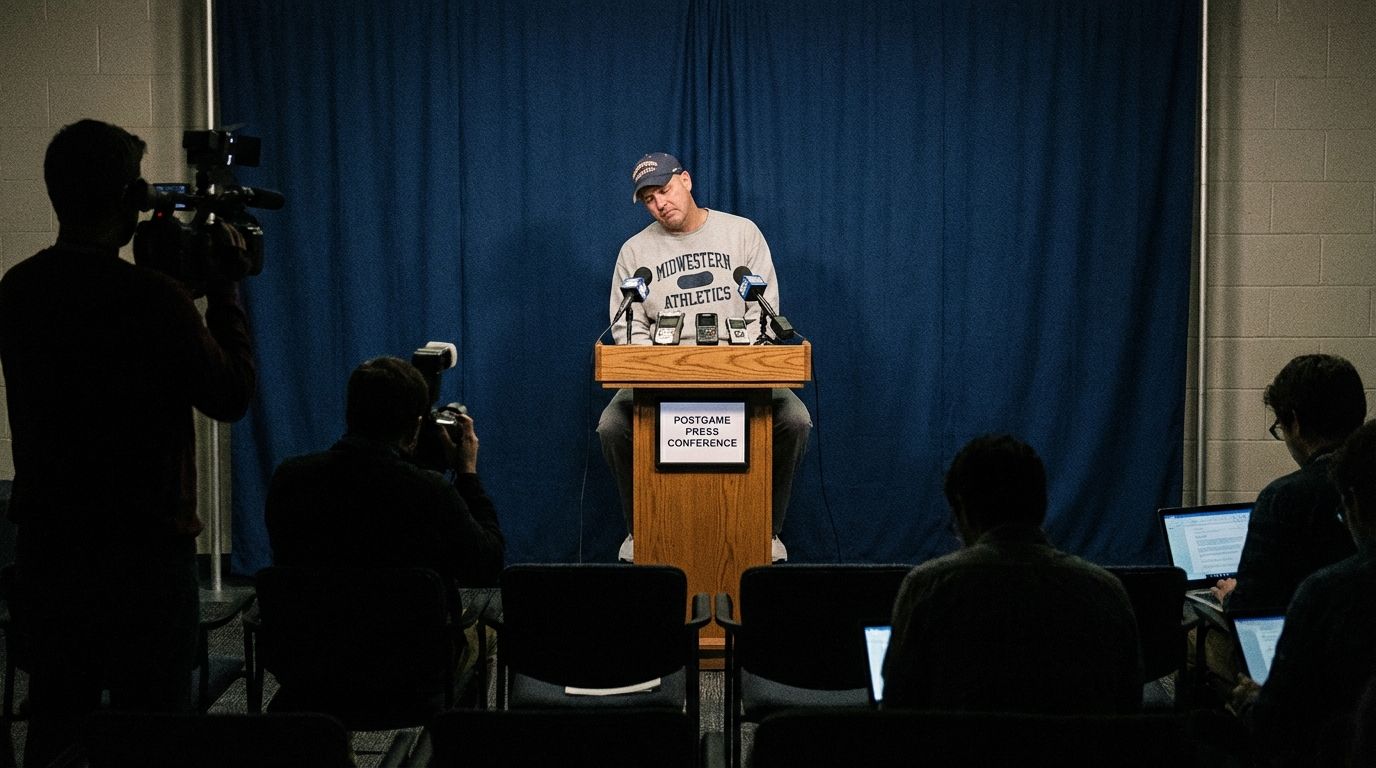
If you only checked the box score from UCLA’s 82–59 loss at No. 15 Michigan State, you’d see a December buy‑game gone sideways and move on. But if you watched the final five minutes, you saw something stranger: a head coach ejecting his own player before the officials could, then verbally swatting away a reporter in the postgame like a bad entry pass. It was Mick Cronin’s night in all the wrong ways, the kind of evening that lingers longer than one more double‑digit loss on a historic program’s ledger. From Spokane, where we’ve watched our own little Jesuit school grow into a national power by leaning on poise more than pyrotechnics, the whole thing looked less like old‑school toughness and more like a program straining under its own weight. This wasn’t just about a blowout — it was about how a leader handles the moments when the game, and the season, are clearly slipping away.
With just under five minutes left and the result effectively sealed, UCLA backup center Steven Jamerson — a former Michigan State student — grabbed Spartans big man Carson Cooper from behind on a dunk attempt. Cooper went down hard, Jamerson and Cooper went face‑to‑face, and everyone in the building knew the refs were headed to the monitor to sort out flagrant 1 or flagrant 2. Before the officials even finished their jog to the table, Cronin pointed Jamerson toward the locker room and ended his night on the spot. On one level, you can see the intent: send a quick, clear message that cheap shots have no place, especially from a player with obvious emotional history in that building. Tom Izzo even laughed afterward, saying, “I guess he upgraded that to a flagrant 2,” because in decades on the sideline he’d never seen a coach essentially pre‑empt the officiating crew.
The choice to self‑eject Jamerson was jarring because it unfolded inside a game that was already out of hand, the second straight 20‑plus‑point loss for UCLA — something the Bruins hadn’t endured since the mid‑1940s. When a blue‑blood is getting run off the floor, every sideline gesture gets magnified, and what might have played as firm accountability in a tighter contest came off instead as theater in a blowout. Was Cronin drawing a hard line on sportsmanship, or was he trying to reclaim control of a night that had long since slipped away? Coaches live in that gray area more than fans realize, toggling between teaching moments and optics, especially on national TV. From where I sit, if you’re going to make a stand with your team, you’d rather it be rooted in a calm huddle and a clear standard than in a moment that looks, to the outside world, like frustration boiling over.
Then came the postgame, where words can either cool things down or pour accelerant on a bad night. A reporter asked Cronin about Michigan State’s student section chanting the name of Xavier Booker, the former Spartan who transferred to UCLA in the offseason. Instead of brushing it off with a boilerplate answer — something like, “Student sections are creative, we’re focused on our locker room” — Cronin chose escalation. “I could give a rat’s ass about the other team’s student section,” he snapped, before telling the reporter, “I would like to give you kudos for the worst question I’ve ever been asked.” When the reporter pushed back, Cronin accused him of raising his voice: “I coach UCLA. I don’t care about Michigan State’s students. Who cares?”
On their own, those quotes are the kind of spicy sound bites that fuel talk radio for 24 hours and then fade; coaches and reporters jab at each other all the time. But in the context of back‑to‑back blowout losses and a fan base already restless, they land differently. UCLA doesn’t just sell wins — it sells an identity, a standard, Wooden’s shadow on the wall. When your head coach is openly berating questions and bristling at perceived slights, it can start to feel like the program is punching down instead of building up. We’ve seen plenty of animated sideline personalities in college hoops, but the ones who last usually know when to turn the temperature down, especially when the players are already taking the heat for their performance.
From a West Coast vantage point, there’s an extra wrinkle here: how programs choose to project toughness. In Spokane, Mark Few has built Gonzaga’s rise not on public eruptions but on an internal standard players feel every day, whether they’re beating a ranked opponent or grinding through a Tuesday practice in January. You don’t see many public ejections from the Zags bench, and you almost never see a press‑conference dust‑up become the story over the game itself. That doesn’t make one approach morally superior, but it does highlight that accountability doesn’t have to be loud to be real. Cronin clearly wants to be seen as the steward of toughness at UCLA; the question after a night like this is whether his message is still landing the way he thinks it is inside that locker room.
To be fair, it’s also true that modern college coaches operate under a brighter, harsher spotlight than ever. Every flagrant foul is replayed from five angles, every clipped quote hits social media in seconds, and student sections across the country have turned trolling into something like performance art. When you’re already getting drubbed on the court, it can feel like you’re also losing the perception game in real time. That doesn’t excuse Cronin’s prickly answers, but it does help explain why some coaches default to defensiveness when questions touch on anything that feels like mockery of their players. Some nights, it feels like the coach is trying to guard five shooters and the narrative at the same time, and that’s not a sustainable defensive assignment for anyone.
What lingers for UCLA isn’t just a bad loss in East Lansing; it’s the image of a coach whose frustration spilled into both his personnel decisions and his public comments. Inside Pauley Pavilion, they’ll tell you the standard is national contention, not damage control after historic losing margins. If Cronin turns this season around, this night will get framed as the moment he refused to let standards slip, even for a backup big in garbage time. If things continue to slide, the Jamerson ejection and the “rat’s ass” press conference will become Exhibit A in the case that the Bruins were fraying at the edges long before the final record made it obvious. Either way, this was one of those nights where the cameras caught not just the score, but the strain.
For the rest of us out here in the so‑called “mid‑major” world — a label Gonzaga politely left behind years ago but keeps pinned on the bulletin board for motivation — there’s a quiet lesson in all this. You don’t have to be a blue‑blood to carry yourself like one; you just have to handle adversity with the steadiness you claim as your program’s DNA. UCLA will be fine in the long run; history, recruiting base, and brand power are all on its side. But nights like this are reminders that banners on the wall don’t automatically translate to composure on the sideline. In a sport that loves chaos from November to March, the programs that truly separate themselves are the ones that stay calmest when everything around them is screaming for a reaction.
Maybe, months from now, this will be a footnote in a season that ends with UCLA back on stable footing, and Cronin laughing about the night he “upgraded” his own player’s foul. Or maybe it will mark the point when perception began to shift, when Bruins fans started wondering not just about offensive sets and defensive rotations but about the tone of the whole operation. Either way, the film from this game will get studied in more than just the coaches’ room — it will be replayed in living rooms, alumni groups, and yes, in rival fan bases up and down the West Coast. From here in Spokane, where we’ve learned that poise travels even when your shot doesn’t, the lesson feels pretty simple. On the worst nights, the scoreboard tells one story, but how you act when you’re losing tells the one people remember.