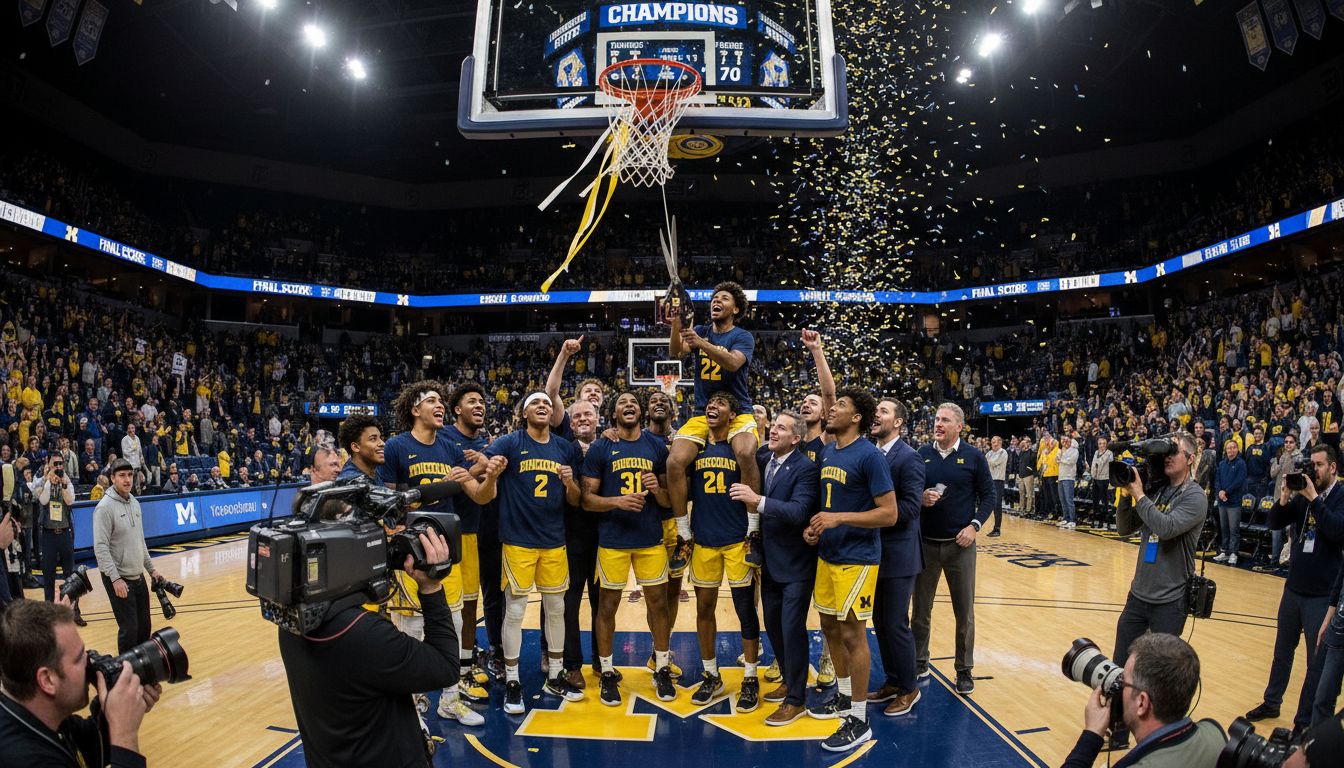
If you follow college hoops long enough, you learn two things: champions cut nets in April, but next season really starts the minute the confetti hits the floor, and nobody actually knows what any roster will look like once the portal and NBA decisions shake out. Michigan just bulldozed its way to a national title, one of the more dominant runs we’ve seen in a long time, and in the same breath we’re already talking about whether they can do it again. That’s modern college basketball – six weeks of musical chairs, a transfer portal that spins like a factory fan, and a lot of late-night arguing about "way-too-early" rankings we all swear we don’t care about and then read anyway. From where I’m sitting, with a coffee that went cold three hours ago and a lifetime of Big Ten scars, the 2026-27 picture looks like a mix of familiar powers, new-money programs, and a whole bunch of kids trying to decide between NBA backup minutes and staying on campus to cash NIL checks. So let’s walk through this top 25 the way you’d talk it out at the corner bar – not like a draft lab, but like a group of fans who still believe toughness, chemistry and a good screen matter as much as stars on a recruiting site.
We start at the top with Michigan, and there’s no arguing they earned the belt after that 37-3 steamroll of a season and a title game win over UConn that felt more like a statement than an upset. They won 29 games by double digits, which is the basketball version of working overtime every night and still showing up early the next morning – no shortcuts, just consistent beatdowns. The big question now is whether frontcourt anchors Aday Mara and Morez Johnson Jr., both late-first-round types, come back to defend the crown or head to the league while their stock is hot. With guards Elliot Cadeau and Trey McKenney likely returning and five-star freshman Brandon McCoy on the way, the Wolverines have enough backcourt firepower to stay nasty even if one big leaves. If both big guys return, though, we’re talking about a rare chance at a real back-to-back contender, the kind of thing that used to define blue-blood programs before the portal era started flipping rosters like used cars.
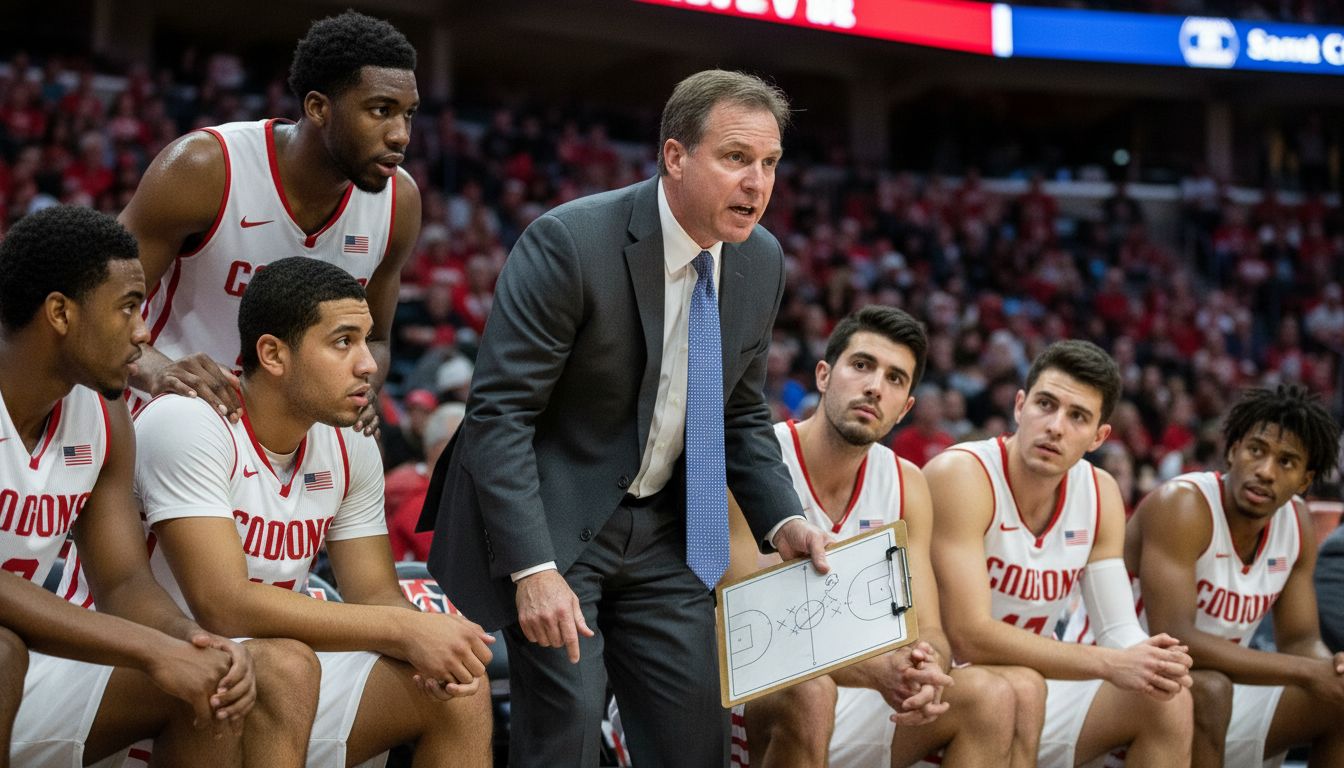
Right behind them sits Duke, living in its usual neighborhood of "loaded but unsettled" with half the roster penciled in and the other half in NBA limbo. Cameron Boozer and Maliq Brown are gone, while Isaiah Evans, Patrick Ngongba II and Dame Sarr are floating in that late-first, early-second gray area where NIL money and draft grades do battle. Coach Jon Scheyer once again has the No. 1 recruiting class, headlined by five-star talents Cameron Williams and Deron Rippey Jr., with Caleb Foster and the younger Boozer, Cayden, potentially stepping into bigger roles. On paper, it’s the same story as always: Duke has enough talent to win the whole thing, if the kids buy into roles and defend for more than a TV timeout at a time. Call me old-fashioned, but I still like veteran guards in March more than five-star mixtapes; Duke will need one of those older guys to be the steady hand when the bright lights hit.
Florida at No. 3 is a nod to something I’ll always respect: keeping a core together and letting it grow instead of shuffling the deck every offseason just because you can. If bigs Alex Condon and Rueben Chinyelu both return instead of chasing overseas money or bench minutes in the NBA, Todd Golden’s Gators will again have one of the toughest frontcourts in the country. With Boogie Fland running the show and wings Urban Klavzar and Isaiah Brown growing into bigger roles, Florida is one shot-making transfer away from feeling like a team that nobody wants to see in March. It’s a reminder that in the NIL world, a solid, well-paid college role can beat a two-way contract where you’re living out of a suitcase and seeing the floor twice a week. That’s not romantic, it’s just reality – and Florida’s continuity shows how programs can treat players like partners instead of just inventory.
UConn at No. 4 feels like muscle memory at this point, and honestly, they’ve earned it with three title game trips and two championships in four years. Even as Alex Karaban moves on and some familiar faces cycle out, the Huskies’ backcourt of Silas Demary Jr. and Solo Ball should return, with Jayden Ross and big man Eric Reibe ready for bigger roles. Add in top-35 recruit Colben Landrew and a solid, if not flashy, recruiting haul, and you’ve got another tough, layered roster that might start slower but grow into itself by February. They might not have the headliners they’ve had in recent years, but this is still a program that defends, shares the ball and doesn’t get rattled when the game turns into a fistfight in the paint. As long as those habits stay in place, UConn’s floor is higher than most teams’ ceilings, even if the roster isn’t quite as glamorous.
Arizona rounds out the top five, which is wild considering how Michigan ran them off the floor in the national semifinal, but that’s how strong the core still is in Tucson. They’re likely losing star freshmen Brayden Burries and Koa Peat to the NBA, along with Jaden Bradley and several key role players, but frontcourt pieces Ivan Kharchenkov and Motiejus Krivas are expected back. Top-five recruit Caleb Holt should walk into major minutes, and fellow recruit Cameron Holmes gives them another high-upside wing, though the Wildcats badly need a veteran point guard from the portal to tie it all together. Tommy Lloyd has shown he can win big with creatively built rosters, but this version feels more like a construction site than a finished house until a steady ballhandler signs on. Right now, Arizona looks like a freight train without a conductor – powerful, dangerous, but one wrong turn from jumping the tracks.

Farther down the list, you see the Big Ten’s identity crisis and strength all at once: Michigan State at No. 6, Illinois at No. 8, Nebraska way up at No. 18, Purdue at No. 14 and Iowa sneaking in at No. 25. Tom Izzo’s Spartans might finally have the old-school, deep, tough group he loves, with Jeremy Fears Jr. back to run the show and a front line of Coen Carr and Cam Ward that screams "we’re not afraid of contact." Illinois leans on a wave of returning European bigs like David Mirkovic and the Ivisic brothers, plus the skilled Andrej Stojakovic, and adds freshman Quentin Coleman to keep the talent pipeline full. Purdue, meanwhile, is turning the page from the Braden Smith–Fletcher Loyer era and leaning on C.J. Cox, a couple of breakout candidates and transfer Caden Pierce to keep that machine humming. Nebraska and Iowa tell my favorite kind of story: not blue-bloods, not recruiting darlings, just programs trying to stack good seasons the hard way – with development, smart portal adds and a little chip on the shoulder.
Outside the Big Ten, you’ve got a mix of new faces and familiar brands trying to rebuild on the fly, and this is where the portal and NIL really show their fingerprints. Houston at No. 10 is basically an annual trust fall with Kelvin Sampson, built on defense, toughness and the assumption he’ll find guards who can win close games no matter who leaves. St. John’s at No. 11 is a bet on Rick Pitino’s ability to work the portal like a veteran shop steward works a contract table, keeping some perimeter firepower while hunting for real size up front. USC at No. 17 and BYU at No. 22 are reminders that some schools are recruiting more like pro teams now, stacking future NBA wings and bigs, then hoping at least a couple of them stay long enough to build something cohesive. And then there’s programs like Saint Louis, TCU and Texas, sitting in that sweet spot where returning experience meets fresh talent, proving you don’t have to be a blue-blood to run a modern, high-powered program.
When you strip away the recruiting rankings and the fancy graphics, what really separates these top-25 teams isn’t just star power, it’s how well they manage this new reality where rosters are constantly in motion. Coaches now spend half their year game-planning and the other half recruiting their own players not to leave – that’s a grind that looks a lot like shift work, with less steel and more Zoom calls. Programs that treat players with a little loyalty, share the NIL pie fairly and build real roles instead of empty promises are the ones that tend to land near the top of lists like this. You see that in places like Michigan, Florida and Houston, where returning cores suggest guys feel valued enough to stay; you see the flip side in teams scrambling to replace three, four, five starters every spring. There’s no moral judgment in that – just a practical one: constant churn makes great stories rare and repeat success even harder to pull off.
So, what do we actually know about 2026-27 from this way-too-early board, other than that it’ll be wrong in 15 different ways by the time the ball tips in November? We know Michigan has a real shot to chase history if its big men stick around, Duke and Arizona are loaded but fragile, and UConn’s culture might be as valuable as any one player. We know the Big Ten is deep, if not dominant, with Michigan State, Illinois, Purdue, Nebraska and Iowa all built to scrap every night, even if none look like an obvious superteam yet. We know the portal, NIL and draft decisions will twist this list beyond recognition, but the teams that lean into toughness, continuity and honest communication with their players are the ones you can trust. And if there’s one thing that hasn’t changed, it’s this: come March, we’ll all be huddled around TVs again, yelling about which team was disrespected back in April by a list just like this – and loving every minute of it.