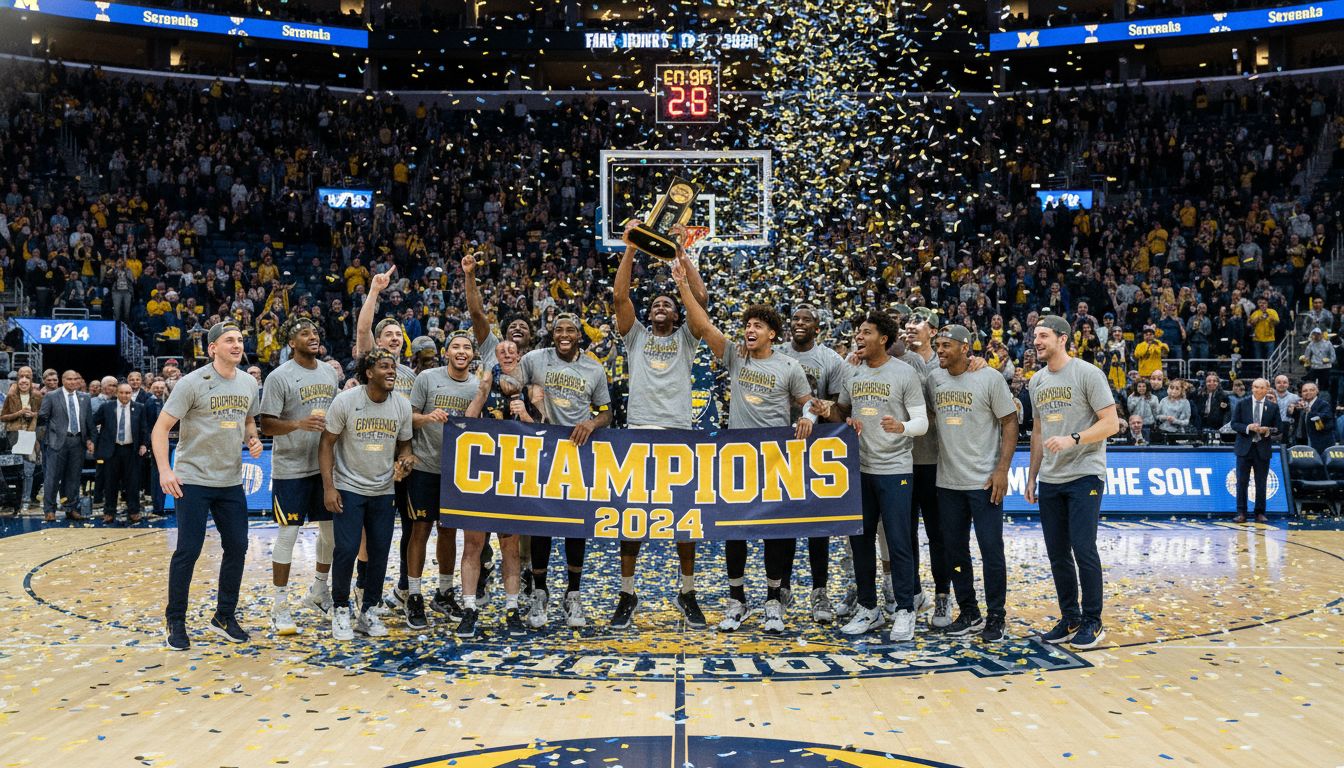
There are NCAA Tournament runs, and then there are campaigns that rearrange the furniture in the sport’s living room for a decade or more. Michigan’s 2026 march to the national title sits squarely in the latter category, a performance so statistically ruthless that even an old ACC traditionalist like me has to tip a Cameron-blue cap. Ending a 37-year title drought is impressive on its own; doing it by bludgeoning the field to the tune of plus-114 in scoring margin elevates the Wolverines into the narrow air reserved for true juggernauts. For context, only a handful of champions in the modern 64-plus team era have separated themselves this decisively from the bracket they shared. When you’re being mentioned in the same breath as 1990 UNLV, 1996 Kentucky, peak Jay Wright Villanova, and recent UConn, you’ve crossed from “hot run” into “historical artifact.”
Let’s start with the raw dominance, because in March, style points eventually harden into legacy. Michigan’s plus-114 point differential across six games ranks seventh all-time among champions and sixth since the field expanded in 1985, putting them in a club that usually requires NBA lottery rosters and a touch of intimidation before the opening tip. This was not a plucky underdog story; it was a methodical dismantling of opponents, more chess than roulette wheel. Even with an oddly off-kilter offensive showing in the championship game, the Wolverines still piled up 541 points for the tournament, the second-highest total ever for a champion behind only that famed 1990 UNLV group. If you’re scoring like Tarkanian’s Rebels and defending like an old-school Big Ten bruiser, you’re doing something correctly, even by the priciest prep-school standards of excellence.
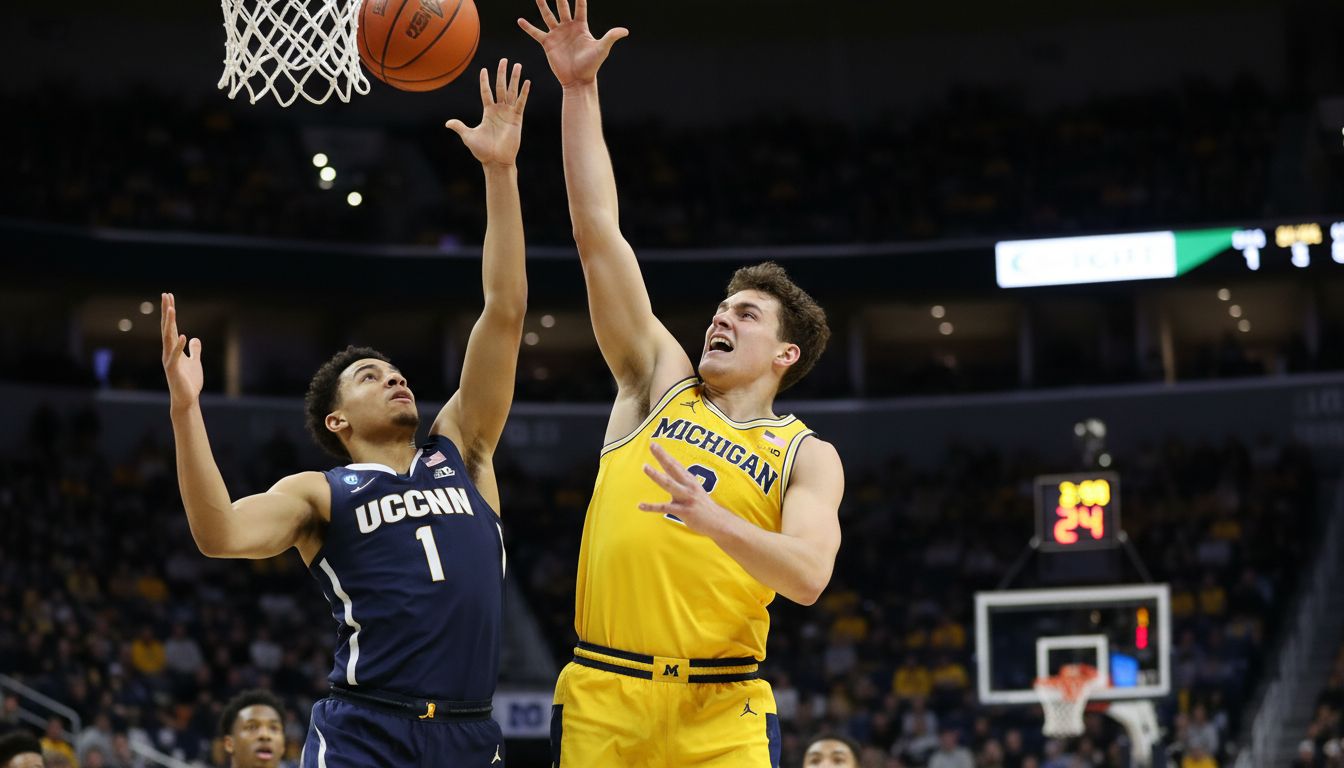
What makes this run particularly fascinating is that the title game itself was far from an offensive masterpiece for Michigan. They shot just 38.2% from the field, the weakest mark for a champion since North Carolina limped to the finish at 35.6% against Gonzaga in 2017. Most years, that kind of number gets you a polite handshake and a rueful postgame presser about shots not falling. Instead, Michigan’s defense turned what looked like a bad shooting night into an exhibit of control, holding UConn to its worst shooting performance in more than four years. You don’t see Dan Hurley teams get unplugged like that; entering the night, he was 11-0 in NCAA Tournament games beyond the second round, riding a budding dynasty and a program that was 6-0 all-time in national title games. Old money types appreciate rare assets, and in college basketball, “making UConn’s offense look mortal in April” is about as scarce as it gets.
The Wolverines’ defensive résumé gets even shinier when you zoom out from that 40-minute rock fight in Indianapolis. Each of their last four opponents posted a season-low field goal percentage against them, which suggests something more structural than mere “March magic.” This was a connected unit that closed space, contested without panicking, and dictated the terms of engagement from end to end. They did not just out-talent teams; they shortened the decision windows for opposing ball-handlers, took away rhythm threes, and turned drives into a series of second thoughts. In a tournament that often rewards chaos, Michigan advanced by suppressing it, forcing games into their preferred tempo and refusing to give up the easy run-outs that fuel Cinderella stories. For the Big Ten—a league more often roasted than toasted in March—this was finally a champion playing like one from the opening weekend onward.
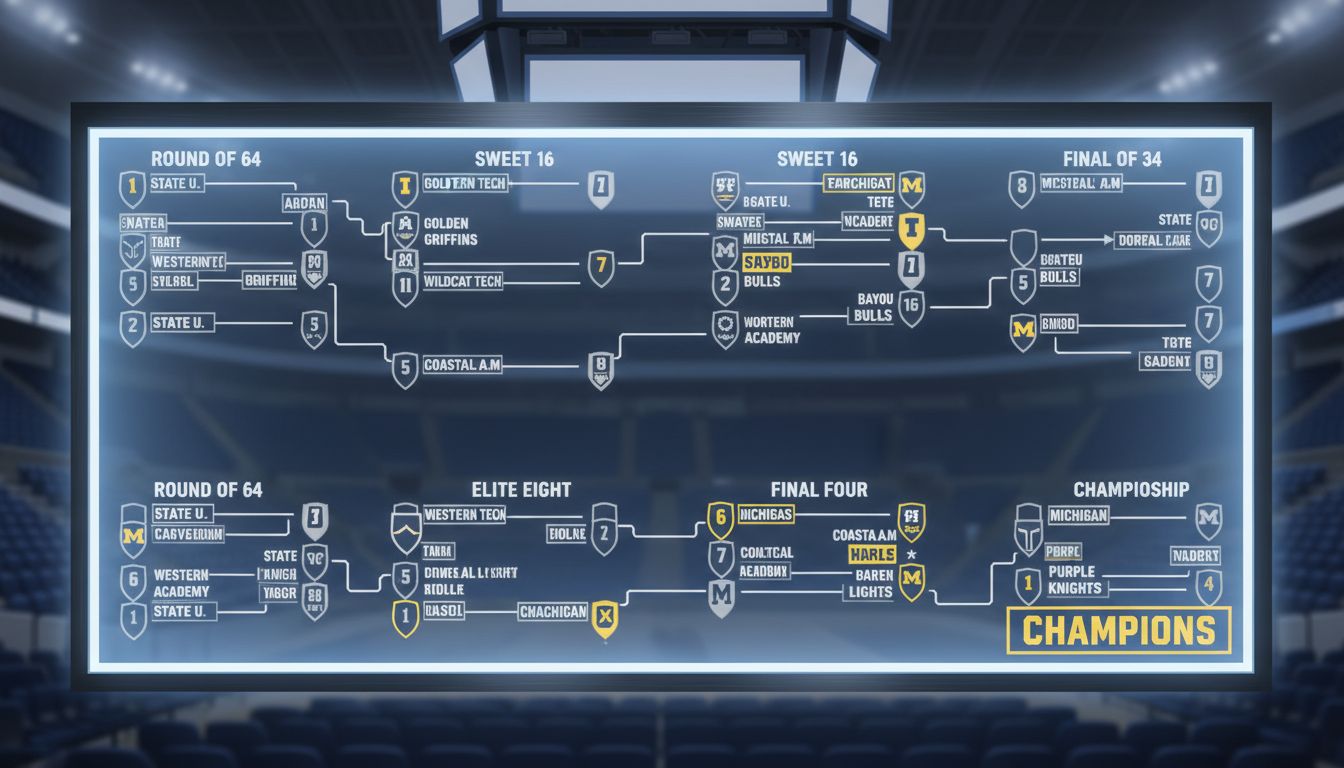
To appreciate how rare this is, you have to scan the list of recent blowtorch champions. UConn’s back-to-back dominations in 2023 and 2024 were marked by unrelenting double-digit wins, their offense operating like a metronome and their depth rolling wave after wave at overwhelmed opponents. Kentucky’s 1996 group overwhelmed people with NBA-tinted length and athleticism, winning its first four tournament games by at least 20 points and barely breaking a sweat until the banners were practically sewn. Villanova’s 2016 title push crystallized around that 44-point demolition of Oklahoma in the Final Four, a game that felt like a program announcing its arrival among the blue blood aristocracy. North Carolina’s 2009 team, by contrast, built its aura on consistency—six wins, all by double digits, against legitimate competition. The point is that truly dominant March champions usually either bludgeon you with talent, blitz you with shooting, or both; Michigan managed to echo those precedents while leaning hardest on its half-court defense.
In that light, the Wolverines’ plus-114 lands not as a statistical curiosity but as a signature, placing them in the same framed gallery as 2023 and 2024 UConn, 1996 Kentucky, 2016 and 2018 Villanova, 2001 Duke, and those other standard-setters. For a program that has flirted with the sport’s top shelf without quite joining it, this run feels like a formal application to the blue blood club’s board of trustees. As someone who grew up believing those meetings could be held in Cameron Indoor and nowhere else, I’ll grudgingly acknowledge that this résumé would pass even the crankiest committee’s review. Sustained margin, historic scoring totals, and a defensive identity that traveled from round one to Monday night—these are the markers that separate a charming champion from one that sets a bar for the next decade. It is one thing to win a title; it is another to leave future Selection Sundays being asked, “How close are they to 2026 Michigan?”

There’s also a Big Ten subplot worth noting, if only because the league’s March face-plant jokes had started to write themselves. For years, the conference piled up computer rankings, television windows, and stern January road atmospheres, only to sputter when the bracket turned the lights up. Michigan’s run rewrites at least part of that narrative, giving the league not just a champion, but a champion that looked the part. This wasn’t a fluky matchups path or a series of one-possession escapes; it was the sort of top-to-bottom authority we usually associate with ACC and Big East royalty. In that sense, the Wolverines didn’t just hoist a trophy—they gave the Big Ten a modern reference point, something for every future contender in Columbus, East Lansing, and West Lafayette to measure itself against.
From a coaching and tactical standpoint, the most impressive element of this run was Michigan’s ability to win different kinds of games without ever losing its identity. When the offense hummed, they were willing to run and leverage that historically high point total. When the shots went sideways, as they did in the title game, they simply tightened the screws defensively and trusted that their structure would outlast UConn’s talent. That kind of versatility is what every high-major program claims to chase on the recruiting trail, but it’s rarely realized in March, when pressure exposes any fissure in your scheme or locker room. Michigan’s six-game arc suggests a roster and staff that understood their roles with almost professional clarity, the kind of internal hierarchy that appeals to both NBA scouts and, frankly, to those of us who like our basketball programs run with a bit of old-world order.
So where does this leave Michigan in the broader historical conversation? They may not have the decades-long pedigree of a Duke, Kentucky, or Carolina, but this particular title run belongs in that top tier of single-tournament performances. You don’t luck your way into second-most points ever by a champion, a plus-114 margin, and four straight games of turning opponents into lesser versions of themselves. You earn it through months of habits that finally reveal themselves under the sport’s brightest lights. If the mark of a great champion is that they make very good teams look suddenly ordinary, then Michigan just authored one of the sport’s clearest case studies.
And for those of us raised on Cameron Crazies, Episcopal hymns, and the notion that basketball played at its highest level is equal parts art and discipline, there’s actually something reassuring about Michigan’s coronation. In an era obsessed with transfer portals, NIL deals, and instant gratification, this title felt refreshingly rooted in old principles: defend first, share the ball, don’t chase the highlight when the winning play is available. No, I’m not surrendering any Duke superiority here—one 2001 banner in Durham still says hello from the rafters—but I will admit that 2026 Michigan earned its place in the same neighborhood. If you care about the craft of the game, you can appreciate the Wolverines’ run as both a statistical marvel and a philosophical throwback. In other words, this was one for the historians, not just the highlight reels—and that, in my book, is the highest compliment you can pay a champion.