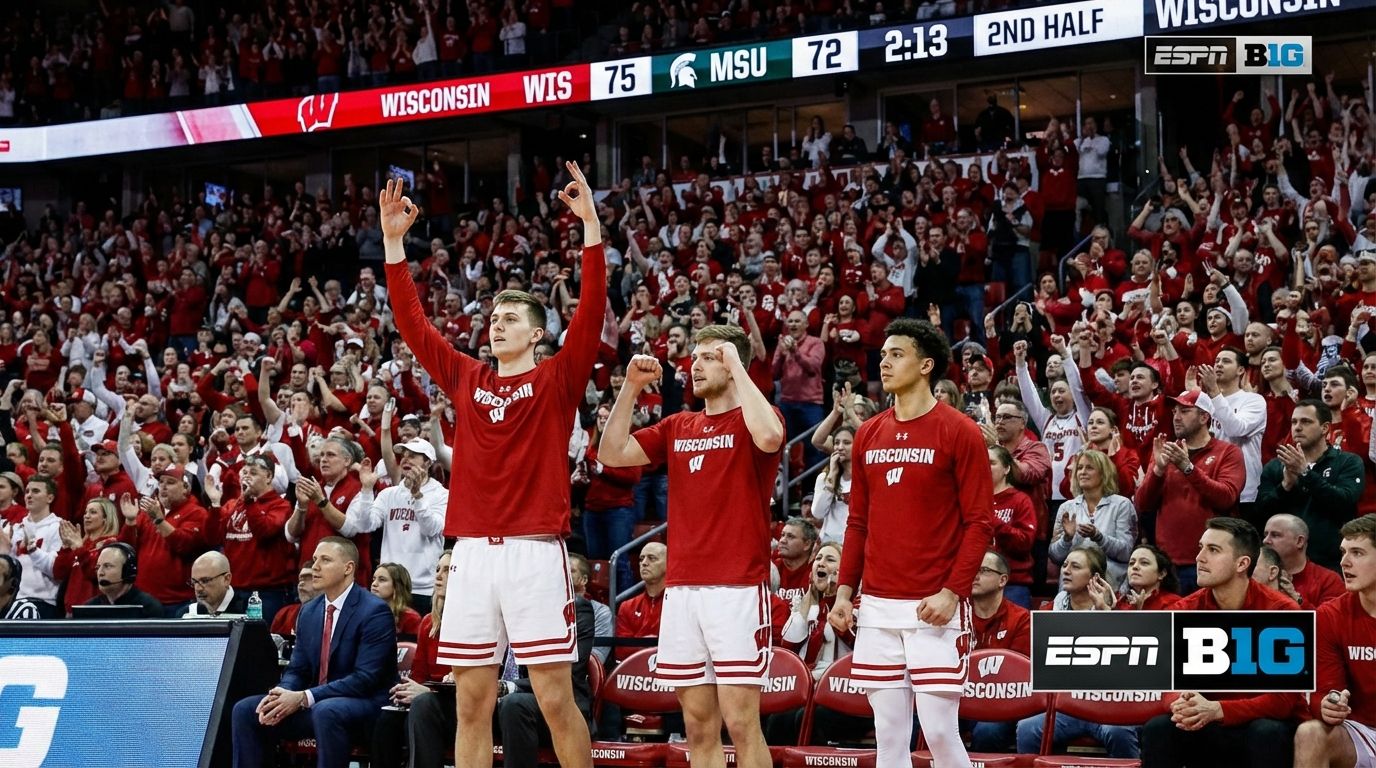
Every now and then, a mid‑February conference game carries the whiff of March, and Wisconsin’s 92–71 dismantling of Michigan State was one of those nights. From my perch in Durham, where we measure basketball seasons by banners and not bracketology, it was hard not to raise an eyebrow at what the Badgers’ backcourt just did to a Tom Izzo team with national title pretensions. Nick Boyd hung 29 points on 5-for-7 shooting from three, John Blackwell added 24, and for long stretches it looked less like Big Ten basketball and more like an ACC shootaround before the real defense starts. Still, results matter, and this one gave Wisconsin its third win over an AP top‑10 opponent — more than anyone else in the country at the moment. For a program often pigeonholed as plodding and methodical, this version of the Badgers is starting to look like the sort of high‑variance outfit no one particularly wants to see in a single‑elimination tournament.
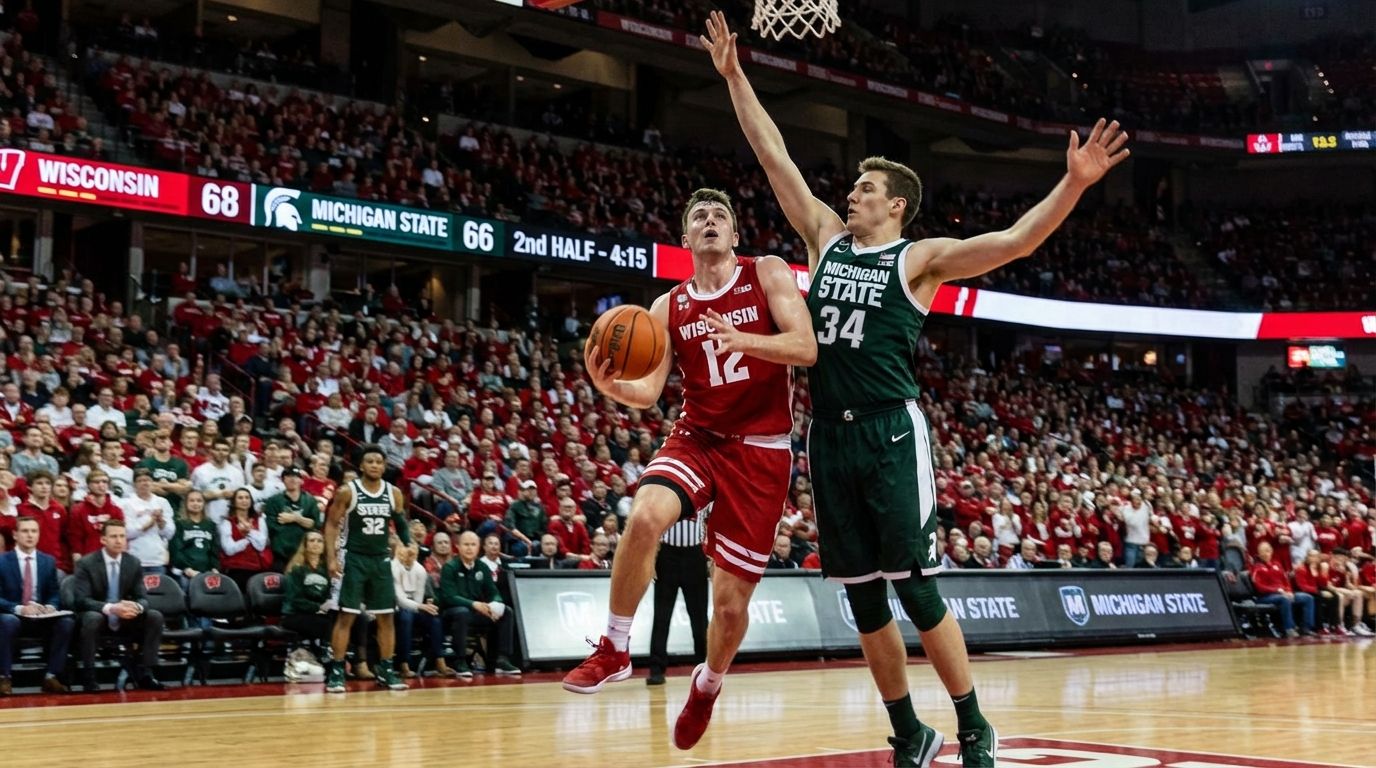
Wisconsin’s résumé is an exercise in contradiction, the sort of portfolio that would give even the NCAA selection committee’s spreadsheet enthusiasts a mild headache. The Badgers entered the night 17–7, with sparkling wins over No. 2 Michigan and No. 8 Illinois, yet they’ve also managed to lose to TCU, USC and Indiana — all outside KenPom’s top 30. Offensively, the metrics adore them: 18th nationally in adjusted offensive efficiency, powered by spacing, patient shot selection, and a backcourt willing to stretch the floor to the logo. Defensively, they are merely solid at 56th, which, in March, is usually the difference between a pleasant weekend in the second round and a trip to the second weekend. But when Wisconsin’s guards dictate tempo and the perimeter shots fall — 43% from deep against Michigan State — that offensive ceiling expands enough to offset a merely respectable defense, creating precisely the kind of volatility that makes March so delicious and so cruel.
Blackwell, in particular, offered a reminder that recruiting is as much art as science, and occasionally a touch of institutional arrogance. A Bloomfield Hills, Michigan native who was hardly a headliner on the prep circuit, he was overlooked by the very program he just torched — and by a Hall of Famer who now freely admits the mistake. Izzo, never shy with a quip of his own, joked this week he’d like to fire all his assistants over missing Blackwell, before conceding that he, too, saw the young guard and passed. On Friday, Blackwell needed only one half to prove the staff wrong: five quiet points before the break, then an eruption of 19 in the second, finishing 6-of-14 from the field, 4-of-9 from three, and firmly outplaying Spartan guard Jeremy Fears, who came in looking like an All‑American candidate. Blackwell has now scored 24 or more in all three of Wisconsin’s wins over AP top‑10 teams, a pattern that suggests this is not a one‑off shooting spell but the emergence of a guard who changes the geometry of the floor.
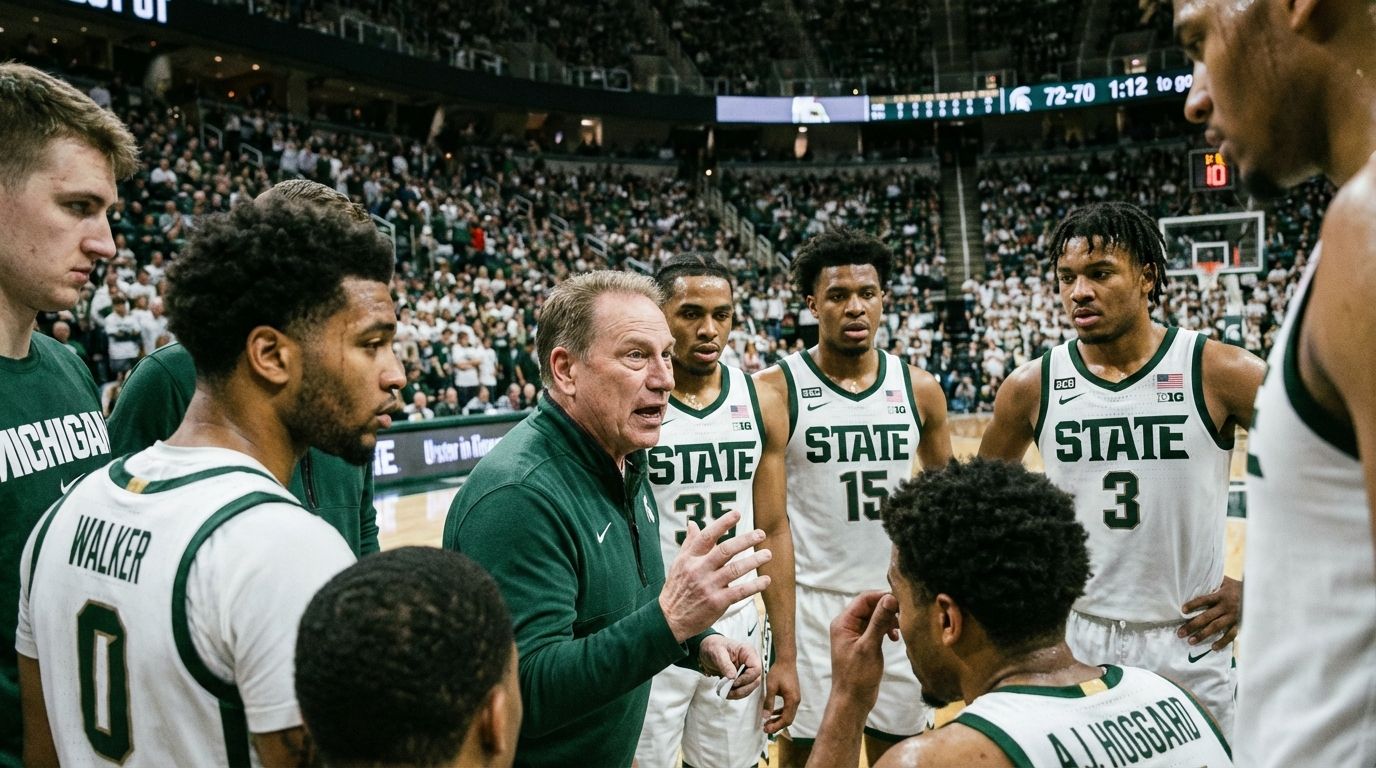
From Michigan State’s perspective, the more alarming storyline is not a single hot opponent, but a structural problem with how the Spartans are starting games. This was their fifth straight contest trailing at halftime, and the numbers are no longer a curiosity; they are a red flag. Over that stretch, Izzo’s group has been outscored by an average of 11.4 points in the first half, an untenable habit for a team with designs on playing into April. Yes, they’ve pulled off two comeback wins in that span, but against a confident, shot‑making Wisconsin backcourt, there was no second‑half rally to be found. If college basketball teaches anything, it’s that repeatedly spotting good teams double‑digit cushions is a fine way to book an early flight home from the NCAA Tournament.
The struggles of forward Jaxon Kohler only compound the issue for Michigan State. Once on track for an all‑conference type campaign, the 6‑foot‑9 senior has seen his production fade markedly since mid‑January. He has not topped 12 points since an 81–60 win over Indiana on January 13, and his three‑point percentage has drifted south from an unsustainably scorching 65% to under 41%. In Madison, Kohler managed only five points, all after halftime, and spent the entire first half without a field goal — precisely when the Spartans most needed stability. When a primary scoring option disappears for 20 minutes against elite competition, the math becomes brutal: the margin for error shrinks, rotations tighten, and even a coach of Izzo’s caliber finds himself playing uphill.
Stepping back from the particulars of one box score, this result underscores just how robust the top of the Big Ten has become this season. With Wisconsin’s win, six teams now sit at 10–4 or better in league play, with Michigan at 13–1 leading a tightly bunched pack that includes Illinois, Purdue, Nebraska, Michigan State and the Badgers. On any given night, that cluster seems capable of beating one another, a welcome change from years when one bruising frontcourt dictated the entire tenor of the league. Nationally, bracket projections reflect that strength: five of those six programs were sitting on No. 3 seeds or better in FOX Sports’ latest forecast, with Wisconsin projected on the 8‑line but clearly trending upward. For a conference that has not produced a national champion since 2000 — yes, Duke people keep receipts — this feels like the strongest and most balanced top tier the Big Ten has featured in quite some time.

The obvious question, at least outside Big Ten country, is whether this depth finally translates into that long‑awaited national title. Depth is admirable; banners, however, are the currency of the sport, and the league has repeatedly discovered that March does not particularly care about January NET rankings. What Wisconsin brings to this conversation is something the Big Ten has occasionally lacked: a team with an offense that can catch absolute fire while still being grounded in disciplined half‑court principles. They are not playing five‑out, free‑for‑all basketball; they are leveraging structure to create high‑value shots, which is why, when the threes fall, the margin of victory looks less like a grind and more like a blowout. For a neutral observer who grew up in an ecosystem where every spring ran through Tobacco Road, it is a fascinating contrast between traditional Midwestern physicality and a more modern, guard‑driven game.
Schedule context also matters as we look toward March. Wisconsin’s authoritative win over a ranked opponent was, conveniently, its last such test until a regular‑season finale at Purdue on March 7. Between now and then, the Badgers face five consecutive unranked teams, starting at Ohio State and then home to Iowa, the sort of stretch that can either solidify seeding or produce the kind of puzzling losses that committee members quietly frown upon. If Wisconsin can bottle this offensive rhythm, that run becomes an opportunity to nudge up the S‑curve and enter the Purdue game with both momentum and a better line on the bracket. Michigan State, by contrast, stares at a back‑loaded gauntlet, including trips to Purdue, Indiana and archrival Michigan, with home dates against UCLA and Ohio State offering only brief respite.
From a coaching perspective — and yes, some of us still hear an imaginary voice from the Cameron sidelines when we watch these things — the lessons here are both tactical and philosophical. Tactically, Wisconsin is a case study in maximizing a strong backcourt: trust your guards, space the floor, and accept that a slightly softer defense may be the price for putting your best offensive players in rhythm. Philosophically, Michigan State’s predicament is a reminder that pedigree and reputation do not spot you points at the opening tip; consistent first‑half engagement is not optional, even for Hall of Famers. The Big Ten’s collective surge is good for the sport, but the underlying question remains whether any of these programs can marry efficiency numbers with championship poise when the bracket actually drops. Until they do, the rest of us who grew up on cutting nets in April will watch with interest, admire the quality, and wait to see whether this year’s version is different from the last two decades of almost.
