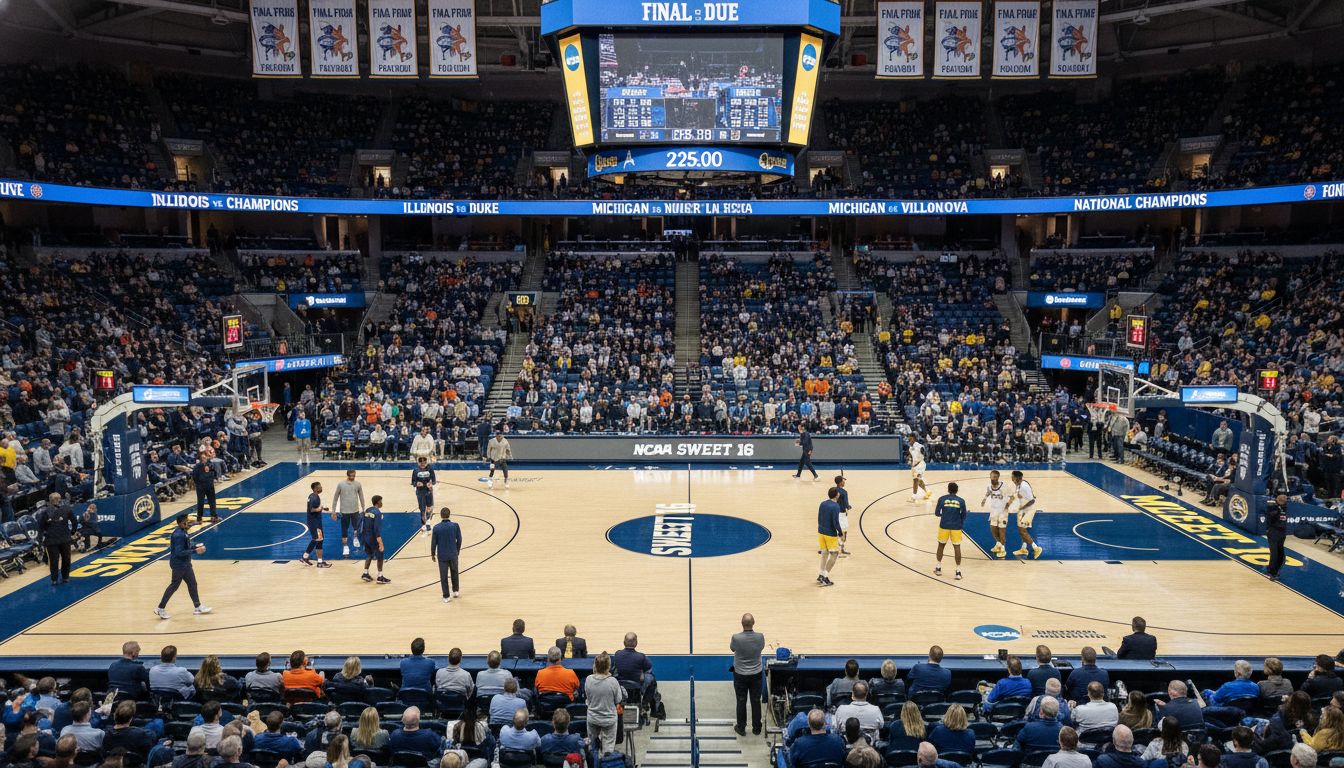
By the time the men’s tournament narrows to sixteen, the noise has a different pitch. The upsets are logged, the brackets are wounded, and what remains is a blend of inevitability and possibility: three No. 1 seeds still standing, plus a handful of teams who don’t particularly care what the seeding committee thought of them. Duke, Arizona and Michigan occupy their familiar places as heavyweights, while Illinois and a revived St. John’s try to turn recent history into something more lasting. On paper, this is a moment tailor‑made for bettors and bracket gamers, parsing efficiency numbers and line movements. But beneath the odds, there are quieter stories about identity, resilience and how teams carry the weight of expectation into one fragile weekend.
Consider St. John’s, back in the national conversation under Rick Pitino in just his third season, reaching the round of 16 for the first time since 1999. What’s surprising is not their presence, but the way they got here: through defense, not the swaggering offense people tend to associate with Pitino’s teams. This group has climbed into the top 10 in adjusted defensive efficiency, and their path included locking up Kansas star Darryn Peterson, who shot just 5-for-15 against them. Analysts who like the Red Storm against No. 1 seed Duke point to that identity—they can drag a game into the mud, shrink possessions, and trust their athleticism to make a five‑point run feel like a tidal wave. You can hear, just under the betting analysis, an appreciation for a team that has redefined itself without losing its edge.
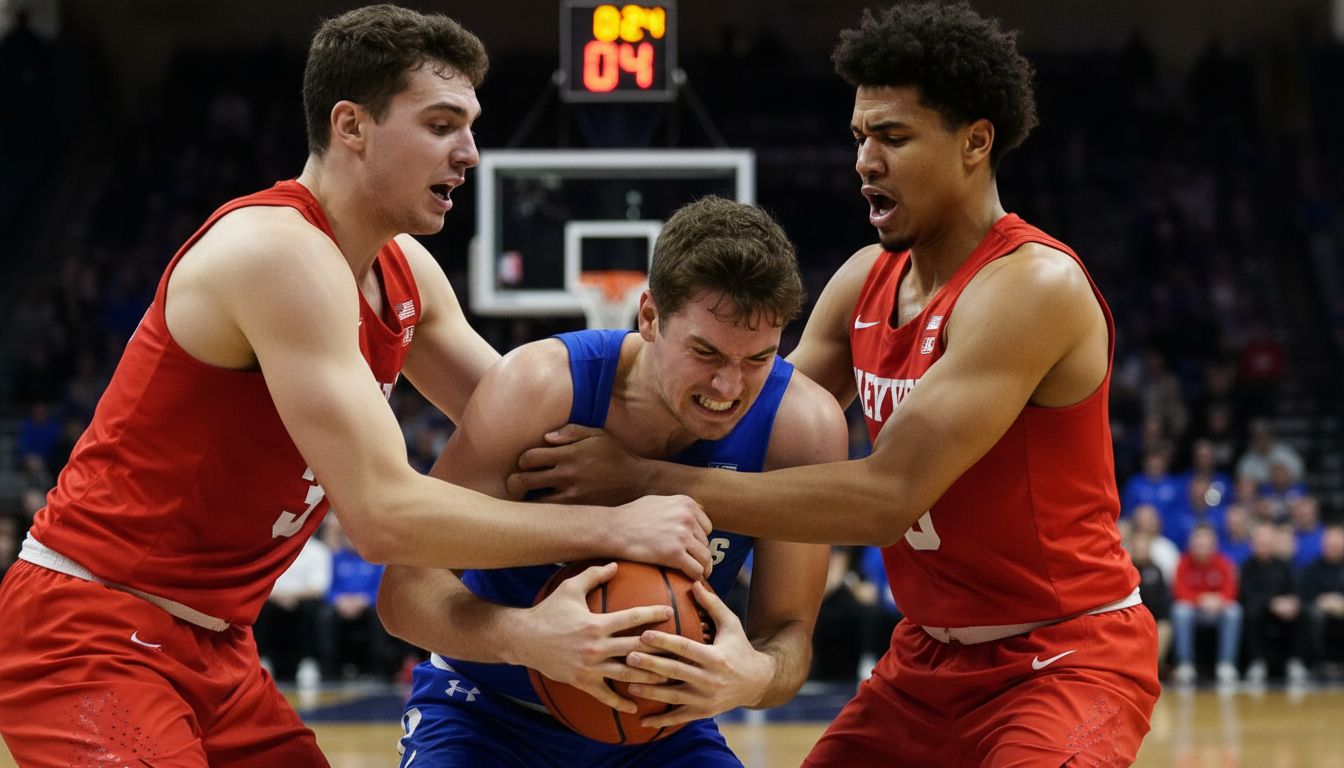
Across the aisle are those who see Duke as precisely the kind of machine built to punish hope. The Blue Devils bring the top‑ranked defense in the country and a lineup that’s both long and disciplined, with Dame Sarr and Patrick Ngongba II capable of smothering primary options like Bryce Hopkins and Zuby Ejiofor without racking up fouls. Their style forces opponents into late-clock heaves and an uncomfortable number of threes, a problem for a St. John’s offense that averages just 0.7 points per possession in those late situations and shoots 20% from deep in them. Add in a low total of 142.5—territory where Duke games rarely sail over unless the Blue Devils themselves explode for 100—and it’s clear why others back Duke to not only win but cover. Underneath the X’s and O’s is an old tournament tension: do you side with the emerging upstart’s story or the favorite’s overwhelming structure, and what does your answer say about what you value in sports?
If Duke–St. John’s feels like a clash of identities, Illinois–Houston is something closer to a philosophical debate. Illinois brings the dynamic, many‑layered offense, a group that has steamrolled its first two opponents by an average of 28 points and can score in ways that don’t rely on any single star or shot profile. Houston counters with its now‑familiar calling card: a tenacious, system‑driven defense that thrives on effort, physicality and making opponents uncomfortable from the opening tip. Some analysts lean toward the Illini, believing that, in March, versatility on offense wins over even the most suffocating defense, especially when a team has already shown it can survive—and thrive—against high‑level competition. Others note that Houston’s season splits are stark: 29‑0 in their 29 easiest games by analytics standards, but 1‑6 in their seven toughest, perhaps revealing a ceiling that toughness alone can’t raise. There’s a subtext here about ceilings and floors, and how much faith we put in a team’s ability to find an extra gear under pressure.

Michigan, meanwhile, occupies that slightly unfair space reserved for blueblood adjacent programs: a No. 1 seed whose path was considered favorable before the ball even went up, and then somehow became smoother. Florida’s early exit shifted the region’s balance, and now the Wolverines’ elite defense faces an Alabama team marked by inconsistency and a potential round of 8 opponent from Tennessee or Iowa State, both of whom struggle to match Michigan’s offensive efficiency. For some observers, this makes a Final Four berth feel less like a question and more like paperwork waiting to be stamped. Yet anyone who has watched March long enough knows how dangerous that thinking can be; all it takes is one cold stretch, one opposing guard who suddenly can’t miss, for a script to flip. The more we talk in terms of probabilities, the easier it is to forget that players carry their own anxieties and hopes into these supposedly inevitable outcomes.
One throughline in these conversations is the seductive authority of numbers. KenPom rankings, adjusted efficiencies, late‑clock scoring rates—these tools are invaluable and, frankly, a joy for anyone who loves the sport on a granular level. At the same time, they can obscure the human elements they’re built to summarize. A team like Houston, 1‑6 in its toughest tests, may not just be bumping against tactical limits; it may be wrestling with the psychological challenge of playing from behind against equally prepared foes. Illinois’ relative success in high‑leverage games hints not just at shot selection but at a locker room that has learned, over months, how to breathe together when the noise crescendos.

The betting conversation around St. John’s and Duke offers another lesson in perception. One camp sees the Red Storm’s defensive metrics and recent performance and imagines a team peaking at precisely the right time, worthy of an outright upset sprinkle. The other camp focuses on Duke’s ability to drag opponents into their least comfortable selves and views St. John’s Kansas win as more about Jayhawks’ missed shots than Red Storm dominance. Both readings can be technically accurate, but neither fully captures the emotional stakes for players who remember how long it has been since St. John’s mattered this much or who understand what it feels like to wear the Duke jersey in March, with all its inherited pressure. As someone who cares about the inner weather of athletes, I’m reminded that our interpretations can turn quickly into judgments, and that the truth of a team lives somewhere in the spaces between metrics and narratives.
For Big Ten fans, there’s also a regional pride element threading through all this. Illinois’ push toward a potential Final Four, bolstered by wins at Nebraska and at Iowa earlier in the season and only one regulation loss in roughly 100 days, feels like a referendum on the league’s ability to translate regular‑season grind into March success. Michigan’s projected path, meanwhile, offers a different kind of mirror: a program whose identity has been forged not just in offensive firepower but in sustained defensive excellence, now asked to meet expectations without stumbling over them. If both make deep runs, it shifts the conversation about the Big Ten from one of near‑misses to one of resilience; if they falter, the familiar questions about style of play and preparation will resurface, as they always do. Either way, the players become the medium through which broader narratives about conferences, coaching philosophies and even recruiting pipelines get written.
There’s an irony in how we talk about future bets and tournament paths as if they’re weather forecasts, when in reality they’re closer to family stories: part fact, part feeling, part wishful thinking. Analysts recommending Michigan to reach the Final Four or Illinois to emerge from its region are relying on real evidence—defensive stats, opponent profiles, historical trends. Yet their confidence also carries a hint of projection, a belief in how these teams ought to behave under pressure. As a writer drawn to athlete activism and mental health, I see an adjacent question: how do we talk about young players’ performances without flattening them into props for our predictions? Maybe the most honest way to engage with the Sweet 16 is to let ourselves hold both truths—that the numbers matter deeply, and that the people behind them matter more.
In the coming days, Duke or St. John’s will either validate or confound the models, Illinois and Houston will stage their own argument about offense and defense, and Michigan will either stroll or scrape its way toward that anticipated Final Four berth. Brackets will be redeemed or ruined, and futures tickets will either age gracefully or get mentally shredded long before the final buzzer. What will remain, long after the last net is cut down, are the memories lodged in players’ and fans’ bodies: the possession where a defensive gamble paid off, the timeout where a huddle steadied itself, the moment a team realized it wasn’t just happy to be here anymore. If there’s a quiet invitation in this round of 16, it’s to watch with curiosity rather than certainty—to let Illinois’ offensive creativity, Michigan’s defensive poise, St. John’s rediscovered edge and Houston’s relentless effort be more than lines on a betting slip. Somewhere between the data and the drama is why this tournament still stops us in our tracks every March, no matter how many times we’ve seen its magic before.