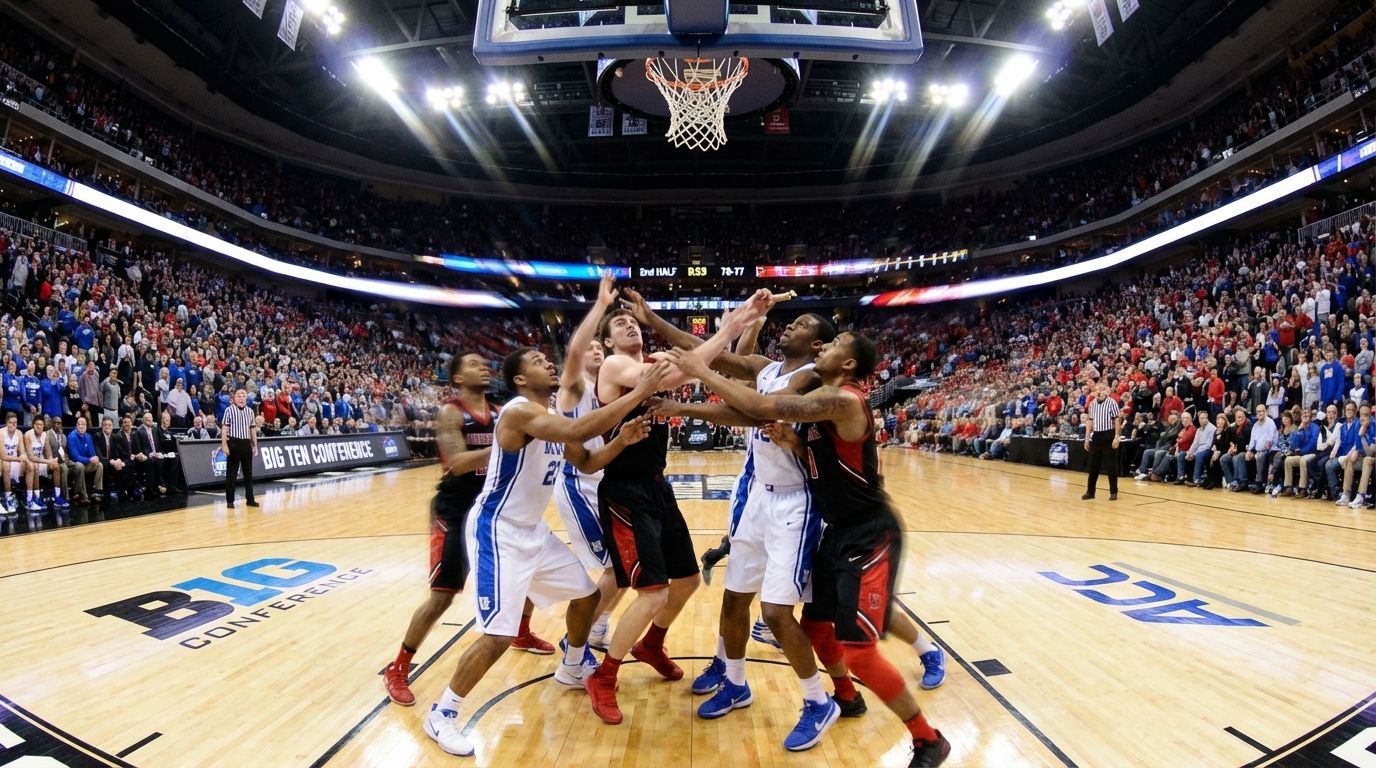
Banners don’t lie. You hang one, you’ve earned something real over four brutal months, not just three hot weeks in March. That’s why I still care more about who wins the league than who pops up as a trendy Final Four pick on Selection Sunday. Conference titles expose your habits, your character, your ability to wake up on a random Tuesday in February and win when your legs are dead and the gym is half-full. That’s where the separation starts to show this season – especially in the Big East and Big Ten, where the schedules are crooked, the margins are thin and a few pretenders are about to get exposed.
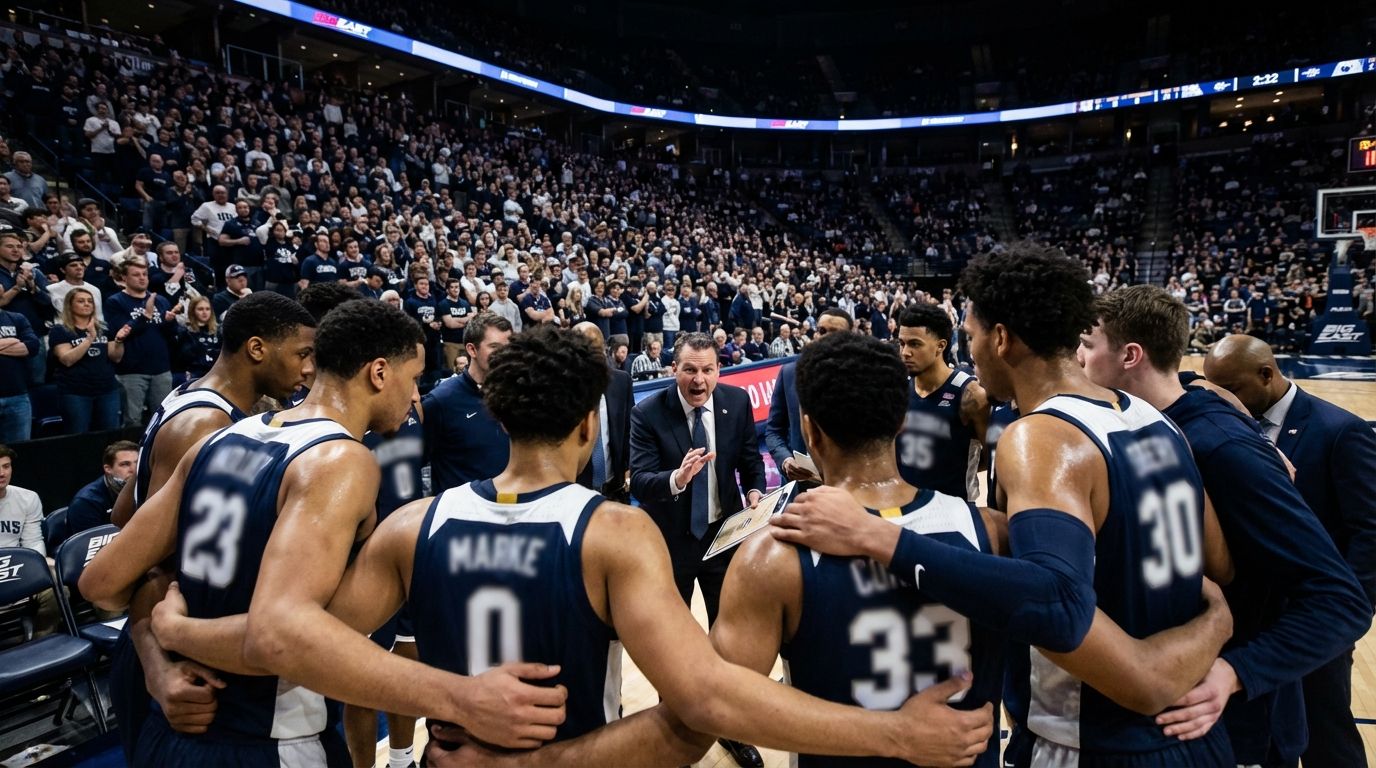
Let’s start in the Big East, where UConn walks around like the heavyweight champ but still fights like it’s trying to win the job. Dan Hurley’s group has the best balance in the league – shooters everywhere orbiting that Demary–Reed pick-and-roll, size on the glass, enough toughness to win ugly when the threes don’t fall. The model loves them for a reason, giving the Huskies better than a coin flip to finish on top, and I’m not arguing with the math. Turnovers and foul trouble are their bad habits, the kind that get you beat in March, but over an 18-game grind talent usually drags you through. If UConn tightens the screws on valuing the ball and defending without hacking, they don’t just win the Big East, they make it look inevitable by the final week.
St. John’s is the one trying to bully its way into a different ending. Ten straight wins, a statement over UConn, and a roster that looks like it was built out of a track meet – long, fast, and always in your face. Rick Pitino has the Johnnies playing like they’re late for a flight every possession, and over 40 minutes most opponents just tap out from the pressure. That style will steal them some games and keep this race alive, but it also demands discipline, and that’s where I have my questions. You can’t just overwhelm your way to a title; eventually somebody makes you execute in the half court, and we’ll find out if this group has more than just nitrous in the tank.
Villanova is hanging around on name value and guard play, but the math is cold-blooded: they basically have to win out to sniff a share. I like the backcourt – Lewis turning into a real problem, Perkins steady, Lindsay and Askew able to heat up – but there’s a difference between being dangerous for 20 minutes and being championship reliable for 20 games. A league race is a test of habits, not highlights, and Nova’s been too inconsistent in too many little areas. They’re the team you don’t want to see in a one-off at the Garden; they’re not the team you trust to stack wins from now until March. In this league, UConn’s depth and structure trump Villanova’s romanticism about its guard tradition.
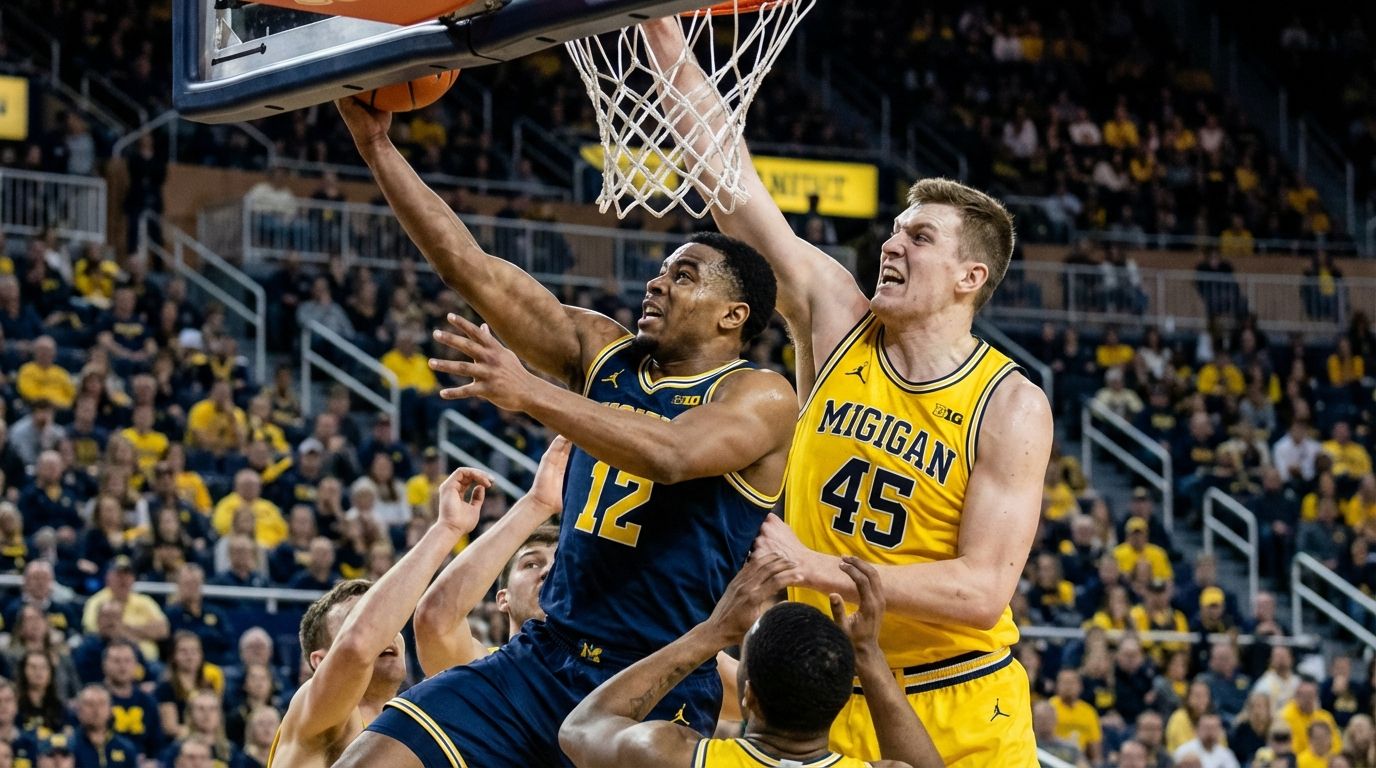
Shift to the Big Ten and Michigan looks like the bully with the biggest frame and the longest road. The numbers say the Wolverines are the class of the conference, and you feel it when you watch them – that pace, that size, the way they just keep coming at you until your bigs are gasping and your guards want no part of the paint. But banners don’t care what KenPom thinks; they care what you do in hostile gyms, and Michigan’s wobbly road history is the only reason this isn’t already over. Trips to Purdue, Illinois and Iowa are where we separate title DNA from pretty metrics, because that’s where toughness gets tested. If Michigan walks out of those three with its chin up and at least two wins, you can start stitching the letters on that banner.
Illinois is the purest example of offensive optionality in this race – different scorer every night, big wings, unselfish ball movement that makes the defense wrong over and over again. But health is non-negotiable at the top of a league this deep, and Brad Underwood is trying to navigate a title chase without all his weapons at full speed. Two overtime heartbreaks to Michigan State and Wisconsin didn’t kill them, but they exposed just how thin the margin is when Stojakovic and Boswell aren’t themselves. Illinois has a puncher’s chance because of its size and skill, but a puncher’s chance is all it is unless they get right before that late showdown with Michigan. In this league, you don’t bluff your way to the summit; you either bring your full roster or you watch somebody else cut the nets.
Nebraska is the story everyone wants to believe in – mentally tough, battle-tested, turning close games into platforms instead of excuses. The loss to Purdue showed how unforgiving this league can be but also reminded us how central Rienk Mast is to everything they do. When he looks like himself, they hum; when he doesn’t, they grind and hope. The reality is simple: the Huskers basically have to be perfect from here, and perfection isn’t usually on the menu for a program still learning how to live with expectations. They’re a nightmare matchup in March, but the hill for a regular-season title might just be one step too steep this time.
Purdue, on the other hand, knows exactly who it is and what it carries into every building – pressure, expectation and a schedule that could break a less secure group. Oddly, that might be the best thing for them. Being the hunter again, not the hunted, lets this group lean back into its natural edge instead of playing scared of the bracket ghosts from last March. They’ve got one of the toughest remaining slates, but they also have the tools to win every one of those games if they lock in. In a race this tight, the team that embraces the grind instead of complaining about it is the one that usually slips past everyone at the tape.
So who’s built for this and who’s just borrowing the look of a champion? In the Big East, I’m rolling with UConn’s structure over St. John’s chaos and Villanova’s nostalgia – the Huskies have the clearest identity and the most ways to win when their first option gets taken away. In the Big Ten, Michigan has the best shot to muscle its way to the top if it handles its road demons, with Purdue lurking as the veteran group nobody should be writing off. Conference titles are about accountability – to your habits, to your preparation, to each other – more than about any analytics model or highlight reel. By the time we hit March, the teams still standing at the top of their leagues won’t have the flashiest story; they’ll have the fewest excuses.