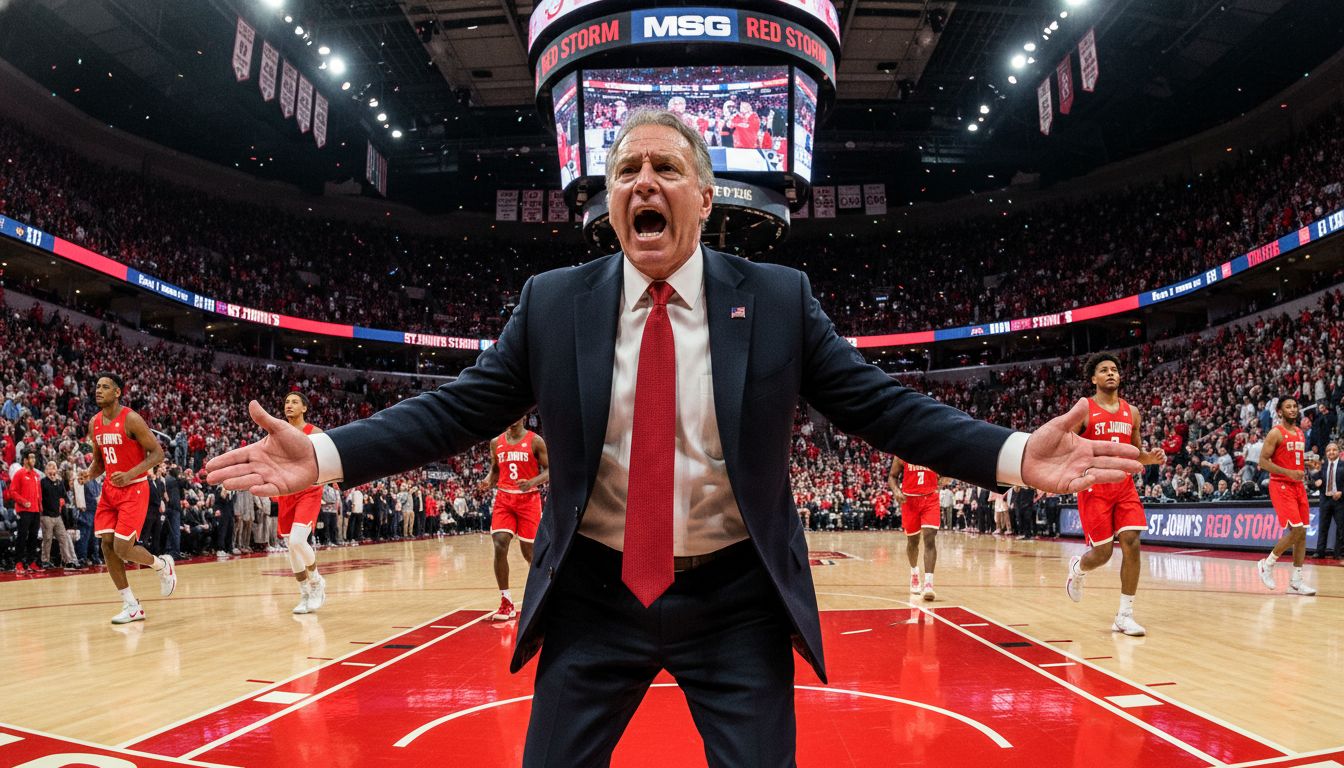
Rick Pitino’s new contract at St. John’s is more than a line item in an athletic department budget; it is a statement about belief, redemption, and what a university thinks it can be in men’s college basketball. With an extension through the 2029-30 season and a raise that makes him the Big East’s second-highest-paid coach behind UConn’s Dan Hurley, St. John’s has essentially pushed all its chips to the middle of the table. For a program that not long ago felt like a relic of 1980s Big East nostalgia, this is a striking pivot toward ambition and relevance. The school is betting that the coach who once defined the sport’s cutting edge can keep reinventing himself in Queens. For those of us raised on the old-school Midwestern gospel of motion offense and man-to-man defense, there is something familiar in a program doubling down on a coach as the culture-carrier.
The on-court case for this commitment is straightforward and, frankly, hard to argue with. In just three seasons, Pitino has led the Red Storm to an 81-25 record, three straight 20-win seasons, and back-to-back 30-win campaigns. St. John’s just completed a 30-7 season, climbed as high as No. 5 in the national rankings, and reached its first Sweet 16 since 1999. That tournament run ended with a loss to Duke, only the second defeat for Pitino in 14 Sweet 16 appearances, a reminder that for all the twists in his career, he remains one of March’s most reliable tacticians. Perhaps more impressive than any single stat is the way St. John’s has sustained its surge, winning 21 of its last 23 games and shedding the old reputation of inconsistency that once dogged the program.
Historically, the Big East has been a league that understands the power of a marquee coach, and Pitino’s renaissance at St. John’s fits neatly into that tradition. What distinguishes this chapter is the scale and speed of the turnaround. In consecutive seasons, the Red Storm became the first program in Big East history to win both the regular-season title and the conference tournament back-to-back. That is the kind of dominance we usually associate with programs that have had decades of continuity under one voice, not a group just three years into a new era. The school’s athletic director, Ed Kull, captured the institutional mood by emphasizing not just wins but culture, talking about Pitino’s impact on the community and his "vision" for student-athletes.
There is, of course, another layer to all of this, and it sits in the shadow of Pitino’s past. His firing from Louisville after the 2017 federal investigation into college basketball could have been the epilogue to a Hall of Fame career, a cautionary tale about excess in a sport already flush with it. Instead, Pitino rebuilt overseas in Greece, then at Iona, before arriving at St. John’s and climbing back into the national spotlight. You do not have to absolve every misstep to acknowledge the complexity of that arc; college basketball is full of figures whose legacies are part genius, part controversy, and Pitino is squarely in that lineage. St. John’s extension is, in practical terms, a declaration that the program is comfortable with that complexity so long as the present-tense culture and compliance hold firm.
For St. John’s, the commitment is also a financial and philosophical endorsement of how modern rosters are built. The program’s resurgence has coincided with aggressive investment in revenue sharing concepts and name, image, and likeness opportunities, tools that are now table stakes for competing at the top of the sport. The winning on the floor has reinforced the notion that, if a school wants March relevance, it must treat men’s basketball not as a nostalgic pastime but as an enterprise requiring sustained resources. In that sense, St. John’s is following the same general playbook that power-conference programs across the country, from the Big East to the Big Ten, have been forced to adopt. The days when a coach could simply roll the ball out, sell the campus, and hope the tradition spoke for itself are mostly gone; now, institutional faith tends to be expressed in both contract years and NIL budgets.
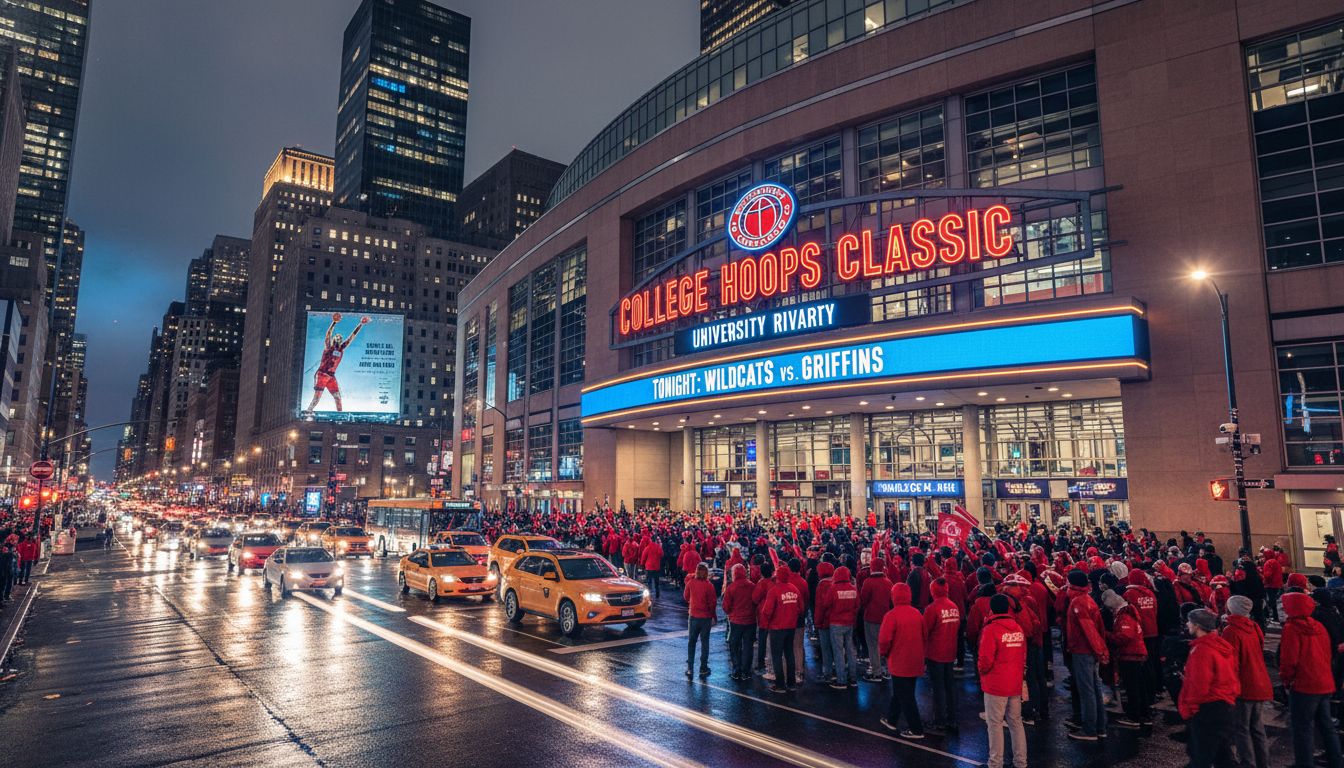
Culturally, the transformation in Queens has been just as striking as the numbers in the record book. The Red Storm have reestablished themselves as relevant in New York City, consistently playing in front of sold-out crowds at Madison Square Garden. That matters in ways that go beyond gate receipts; when the Garden is humming for a college game, the sport itself feels a little bigger on the national stage. For nearly a generation, St. John’s felt like a dormant storyline in that building, overshadowed by pro sports and other college brands. Now the program’s energy, noise, and visibility resemble what older fans remember from the heyday of the Big East, even if the cast of characters and the economics of the game have changed.

From a Midwestern vantage point, it is tempting to draw parallels between what Pitino is doing at St. John’s and the way certain coaches historically defined their programs in the Big Ten. Just as Indiana once wrapped its entire basketball identity around a particular voice on the sideline, St. John’s is allowing Pitino’s presence to reshape everything from recruiting to style of play to how the university talks about itself nationally. That approach carries risks, especially when the coach is 73 and the extension runs through the end of the decade. Succession planning, sustainability, and institutional identity after the coach eventually leaves are all questions that administrators have to be thinking about now, not later. At the same time, if a school believes it has a rare coach who can win big and elevate its profile, it is understandable that it would try to maximize that window while it exists.
In the broader landscape of college basketball, Pitino’s extension underscores how enduring coaching brands still shape the sport, even amid transfer portals, NIL deals, and frequent realignment debates. Players cycle through in a season or two, but a coach with a defined system, demanding standards, and a track record of winning can stabilize a program in ways that still resonate with recruits, donors, and fans. St. John’s is wagering that, for the next several years, Pitino’s name and methods will continue to carry that stabilizing power. If the past three seasons are any indication, that bet is grounded in more than nostalgia; it is supported by wins, banners, and meaningful March basketball. Whether the Red Storm can sustain this run deep into the decade will depend on how well they balance the personality of their head coach with the long-term health and identity of the program itself.
For now, though, the story is relatively simple: a once-dormant power in a storied conference has found new life under a coach who has already written multiple chapters in the sport’s history books. St. John’s has chosen to extend that partnership, to embrace both the competitive upside and the complicated narrative that comes with it. In doing so, the program has sent a message to its fan base, its players, and its peers across the country that it intends to remain a factor in the Big East and in March. The extension is not a guarantee of more banners, but it is a clear sign of institutional intent and confidence. In a sport where faith is often measured in seasons, St. John’s has committed to a longer view with Rick Pitino, betting that this era in Queens will be remembered as more than just a brief surge back onto the national radar.