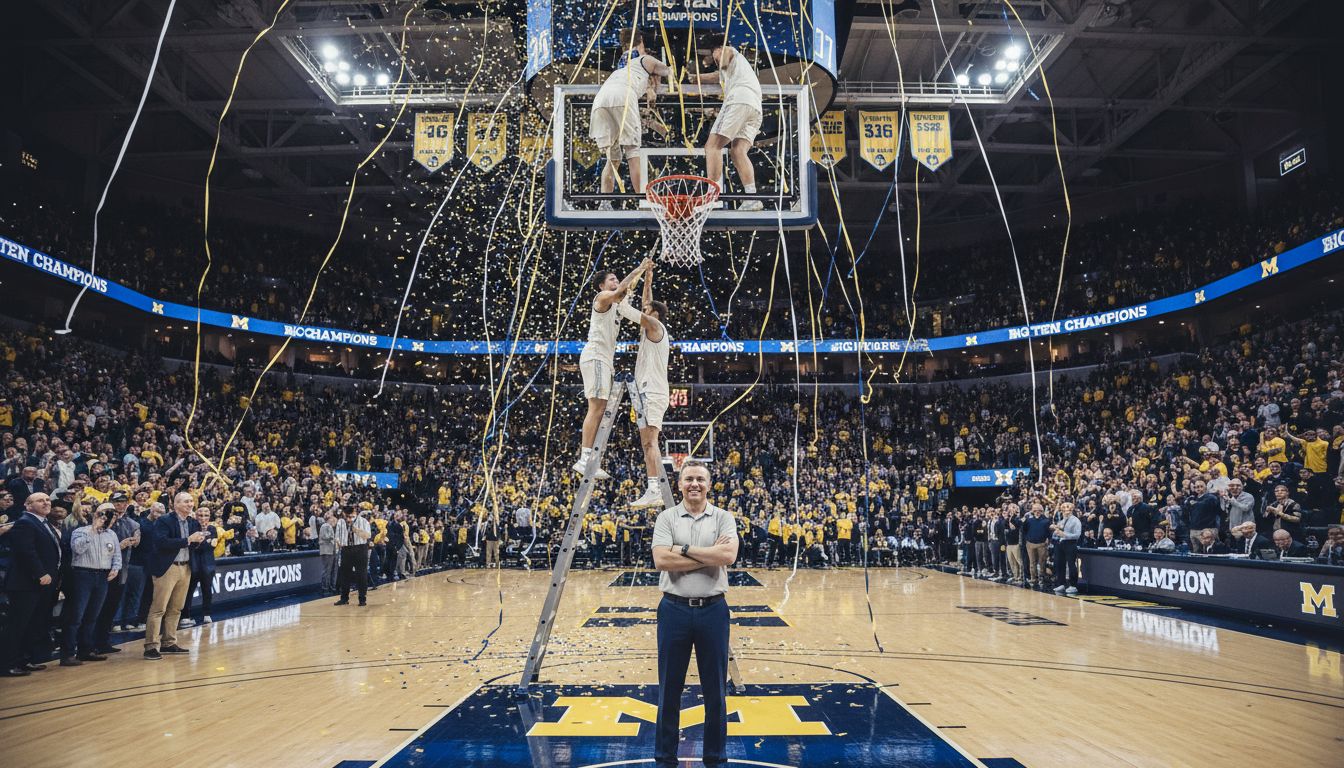
Dusty May did not so much inherit a program at Michigan as he inherited a moment, and he understood how dangerous moments can be in a sport awash in money and shortcuts. The Wolverines’ 2026 national title, sealed with a 69-63 win over UConn and a 37-3 record, will be remembered for its supersized frontcourt and its constellation of transfers, but it is really a story about how you build fast without cutting corners. In an era when boosters treat NIL like an off‑the‑books salary cap and the transfer portal like a clearance rack, May’s group of so‑called mercenaries looked suspiciously like something else: adults telling one another the truth and then living with the terms. That does not make Michigan morally superior; it just makes them interesting, because “we spent a lot” has become the default explanation for success and failure alike in big‑time college basketball. When you peel back the layers, what Michigan did this season is less about finding loopholes and more about finding fits, which, in a system addicted to shortcuts, is quietly radical.
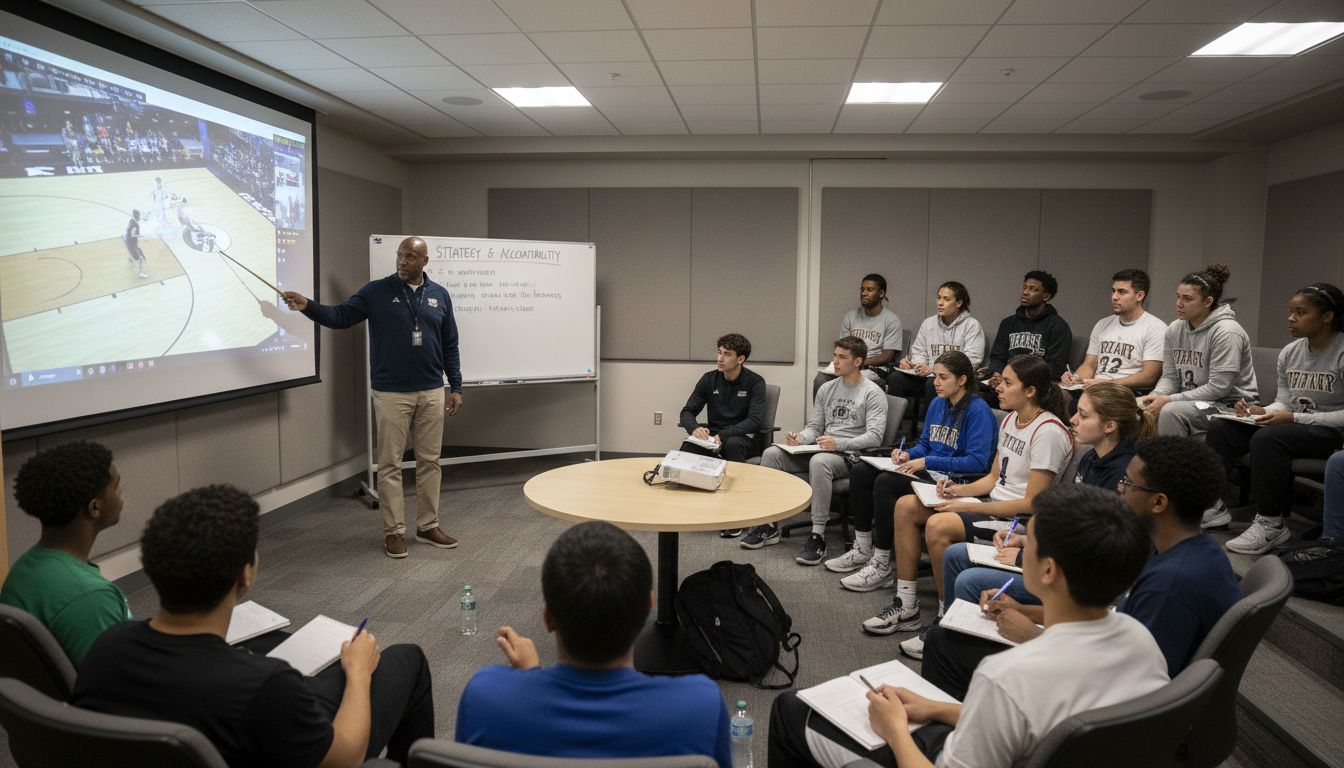
Start with Yaxel Lendeborg, the 6-foot-9 linchpin who nearly left for the NBA after UAB, then chose Ann Arbor when Michigan offered a seven‑figure NIL package and something harder to quantify: a development plan that sounded like actual work. Assistant Mike Boynton Jr. told him, bluntly, that he needed to get good at the things he was not yet good at, and that there would be film sessions when he struggled and accountability when he didn’t. Those are not the words of a staff promising a soft landing; they’re the words of a staff promising a mirror, and Lendeborg said yes anyway. He arrived, got hurt in the Final Four, hobbled through missed shots in the title game, and still insisted on defending, screening, passing and doing all the invisible stuff that never trends on social media. If you’re looking for a case study in how NIL can either distort incentives or, occasionally, sharpen them, start with a projected first‑rounder who elected to be coached hard for one more year instead of walking away early for a rookie‑scale contract.
Around Lendeborg, May assembled a frontcourt that would have driven old‑school position charts to drink: Morez Johnson Jr., Aday Mara and Lendeborg, three players who had all been centers elsewhere, suddenly sharing oxygen and touches. Johnson had been a high‑motor dunk machine at Illinois, the kind of player you pigeonhole as a rim‑runner until the NBA stops returning your calls, and he admitted he had started to fear his dreams were shrinking with his role. Mara, the 7‑foot‑3 Spaniard who grew up studying Pau and Marc Gasol, left UCLA because he wanted freedom, not a script that treated him like a prop in someone else’s system. In the portal, those stories are common; what’s rare is a coach who will tell three former centers that they will need to sacrifice shots, status and comfort in exchange for a chance to be something bigger together. Johnson said he was warned that the starting rotation would demand selflessness; he signed anyway, which tells you how powerful honesty can be as a recruiting tool in a marketplace that often runs on flattery.
Michigan’s roster, on paper, is not fundamentally different from other high‑end collectives; Kentucky and others reportedly pushed into eight‑figure budgets, Arizona and Duke had NBA‑heavy cores, and everyone is chasing the same finite pile of rings. The difference, as you talk to Michigan’s players and staff, is structural rather than sentimental: they built a system where doing less with the ball can mean doing more for the team, and where freedom is earned, not presumed. The Wolverines switched everything defensively, trusting bigs to chase guards, and on offense they essentially played unscripted, improvisational basketball that would have given certain old‑guard coaches hives. Aday Mara described it simply: they “just hoop,” without a diet of rigid play calls, and that looseness only works when the film sessions are honest and the pecking order is clear. You can hand players NIL deals and minutes, but you cannot hand them trust; that has to be built, brick by small brick, in locker rooms, film rooms and, in Michigan’s case, over slices of pizza and endless Mario Kart marathons.
The connective tissue here is not mystical chemistry but deliberate construction. May has been studying transfer ecosystems since he was a student manager at Indiana under Bob Knight, watching junior‑college standouts like Keith Smart, William Gladness and Rob Turner arrive from elsewhere and become linchpins. At Murray State, UAB, Louisiana Tech and Florida, he worked with transfers who flourished when they were finally treated as more than roster patches, and that institutional memory matters now that the portal has become college basketball’s unofficial free agency. What separates a functional portal era from a chaotic one is whether coaches use it as a shortcut or a second chance; May leans hard toward the latter, seeing flaws as traits to be leveraged rather than reasons to discard a player. That lens is not altruism; it is competitive advantage, especially when the NCAA’s 2025 blanket waiver suddenly made seasoned junior‑college products like Lendeborg eligible for one more year and NIL money gave them a reason to stay.
None of this erases the structural inequities around them, of course. The same system that let Michigan assemble a starting lineup of transfers, three of them projected first‑rounders, is the one that still hides NIL deals behind LLCs and booster collectives, with very little public accounting. We know Lendeborg’s package was described as seven figures, but we do not know who ultimately footed the bill, what strings are attached, or how much of that money is guaranteed if an athlete gets hurt in November instead of April. When players call themselves “mercenaries,” as Lendeborg did with a shrug and a smile, they are embracing the label that critics throw at them, but they are also gesturing at a truth: the schools and their silent partners are the real employers here, and the contracts are mostly handshake level. Michigan’s title should prompt celebration for what the athletes built together, but it should also raise the same old question: if everyone is getting paid except the people writing the checks and signing the waivers, who is actually accountable when something goes sideways?

Inside the locker room, the calculus feels different. Elliot Cadeau, the former North Carolina prodigy who lost his swagger in Chapel Hill, described Michigan as one of the most “connected” teams he has been on, the rare group that actually hangs out together off the floor instead of performing chemistry on camera. Team dinners at Dusty May’s house, a food‑truck churning out custom pizzas, cornhole games where the head coach and his son hold their own, and a Nintendo Switch humming in the corner during the Final Four – none of that shows up on a KenPom chart, but it shows up when a point guard starts 2‑for‑14 and is told at halftime not to stop shooting. Michigan’s staff did not weaponize misses; they contextualized them, even asking Cadeau to throw some shots off the backboard so Mara could attack the glass against Arizona’s length. There is a thin line between freedom and chaos in modern offenses, and this season the Wolverines walked it like acrobats who trusted the person spotting them more than they feared the fall.
The portal stories cut both ways. At UAB, head coach Andy Kennedy sat down with Lendeborg and, by his account, nudged him toward the next rung on the ladder, even offering to help find his next landing spot, which briefly made the player wonder if he was being pushed out. That discomfort is baked into a landscape where rosters flip annually and loyalty is often reduced to a slogan on a T‑shirt, but in this case, the hard conversation opened a door instead of slamming one. Lendeborg’s path – junior college, UAB, Michigan, then likely the NBA – is precisely what a functioning system should allow: upward mobility tied to performance, not pedigree. The danger, as always, is that for every Lendeborg whose gamble pays off, there are dozens of quieter exits, players who never find their Michigan and discover too late that transparency and honest feedback were luxuries, not norms.
For the Big Ten, Michigan’s championship finally ends a drought dating back to 2000 and will inevitably be spun as validation of the league’s spending and sophistication in the NIL arms race. That is convenient but incomplete. What Michigan proved is not that bigger checks automatically yield better banners; it proved that money without a plan is just noise, and money with a coherent identity can be transformative. Their “best team ever assembled” bravado in November sounded like typical preseason chest‑thumping, but the numbers – blowouts of San Diego State, Auburn and Gonzaga by a combined 110 points – suggest it was more scouting report than slogan. If other programs want to copy the model, they might start not with the size of the collective but with the clarity of the sales pitch: we will tell you the truth about your game, we will ask you to sacrifice, and if you still want in after that, then we might actually have something.
So where does that leave the rest of us, sifting through confetti and NIL chatter, trying to decide what this title means beyond a line in a record book? For one, it is a reminder that transparency and accountability are not enemies of winning; they are prerequisites, even in a marketplace that rewards cutting corners as often as it punishes them. Michigan’s transfers came searching for a home, not a loophole, and they found a coaching staff willing to put its philosophy on the record: see the best in people, build around it and live with the results. That may not cleanse the sport of its darker money or its quieter exploitation, but it does offer a counterexample to the idea that “everyone’s dirty, so nothing matters.” In a year dominated by cynicism about the portal and NIL, Michigan built a champion that looks, if you squint past the dollar signs, like something reassuringly old‑fashioned: a team that chose each other, told the truth often enough to make it stick and then played beautiful, accountable basketball when the lights were brightest.