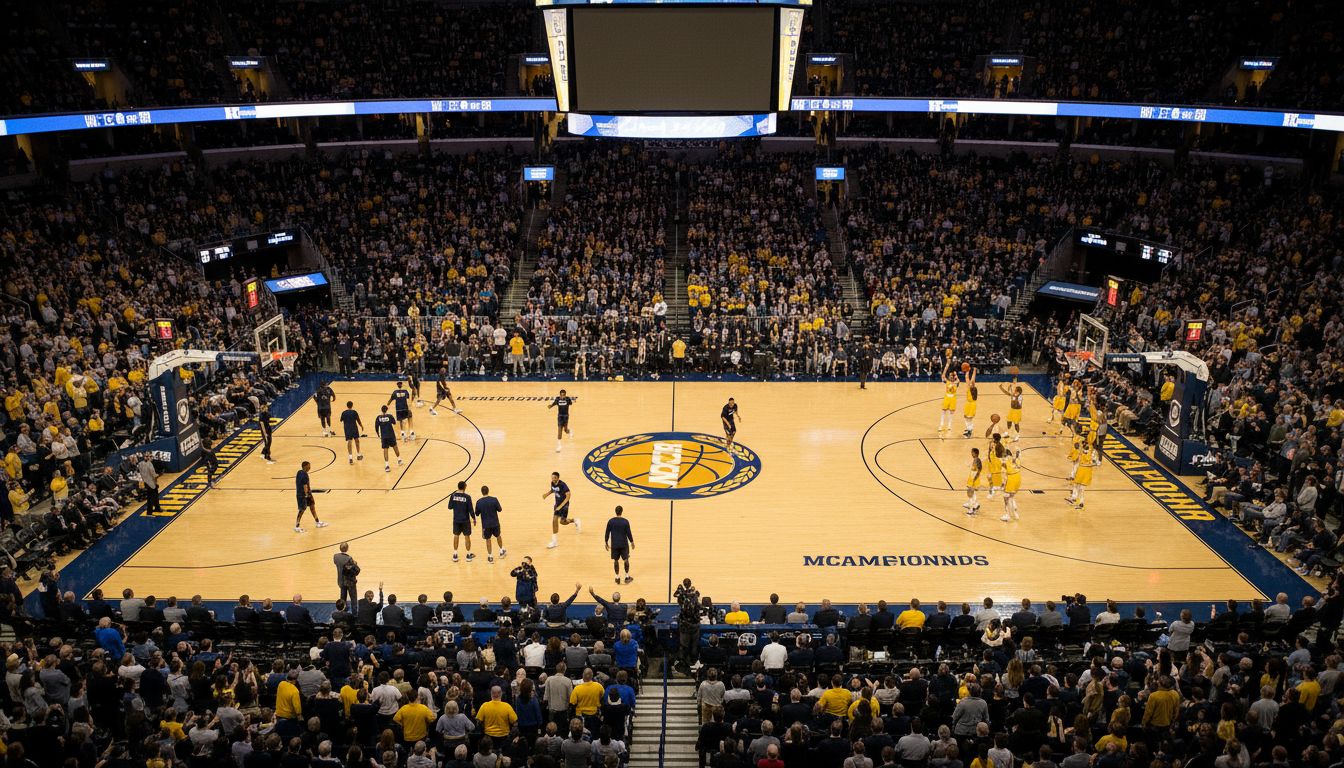
Indianapolis has seen its share of basketball pilgrimages, from high school sectional caravans to Final Fours that turn downtown into a sea of primary colors. But Monday night’s national championship between UConn and Michigan adds a new layer to the city’s hoops folklore. It isn’t just another title game; it’s a collision between an emerging modern dynasty out of the Big East and a Big Ten program chasing history of its own. For those of us who grew up measuring everything against 1976 Indiana, undefeated and immortal, title games in this state always come with a little extra weight. They remind us that college basketball is still, at its core, about continuity, culture, and the way a team can capture a region’s imagination for a few weeks each March.

On one sideline stands UConn, trying to do something that hasn’t been done since John Wooden’s UCLA machine: win three national championships in four years. Dan Hurley has turned the Huskies into the nation’s most ruthless March program, rolling to an 18-1 NCAA Tournament record and a 199-74 mark over eight seasons. This run, if completed, will sit alongside those old Bruins teams, the peak Duke years, and yes, those great Knight-era Indiana squads in any serious historical conversation. UConn’s success is not a one-off hot streak; it’s a system that marries old-school continuity with modern analytics and spacing. In an era when rosters churn like a washing machine, the Huskies still feel like a team that actually knows how each other breathes on a closeout.
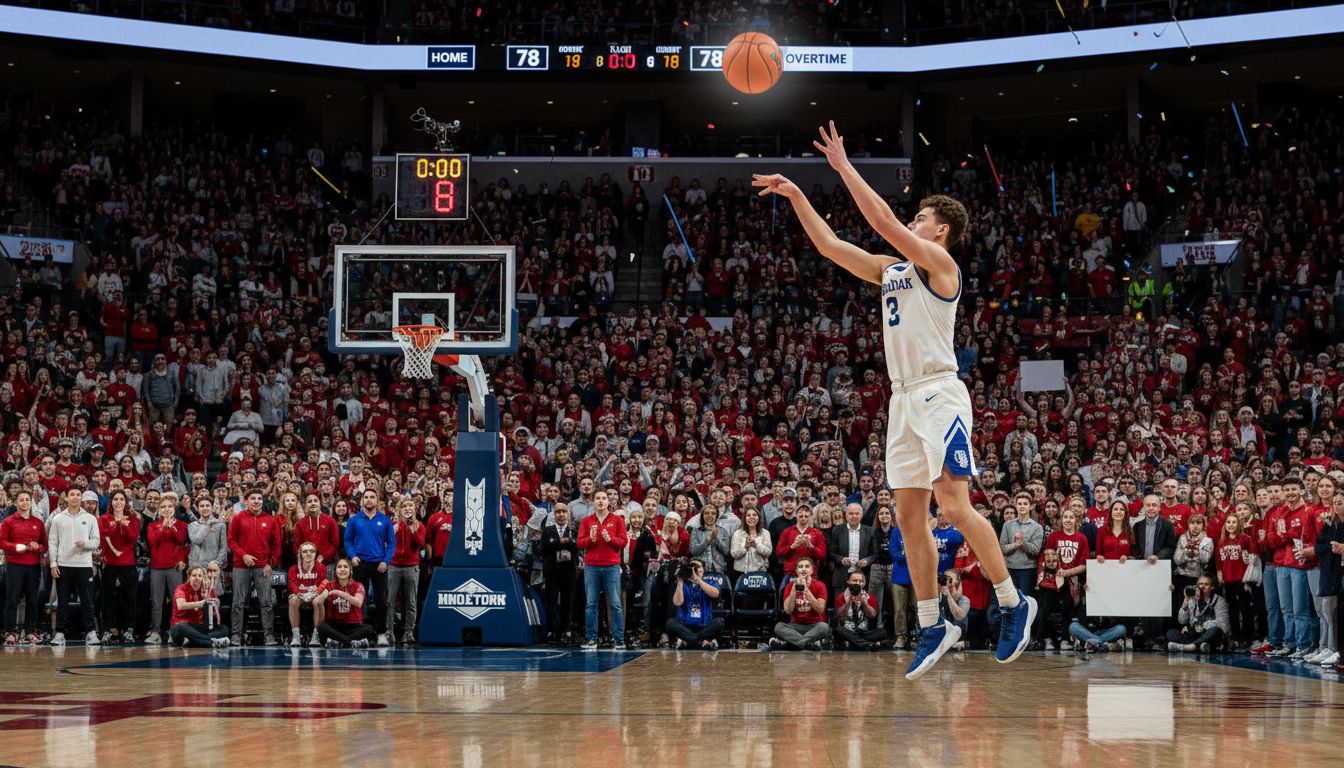
The face of that continuity is Alex Karaban, the rare four-year star in the transfer-portal age. He has already started on two national championship teams and never once went shopping in the portal, even as that became the norm. His comment—“I’ve never considered the portal”—reads almost quaint against today’s landscape, but it speaks volumes about how certain programs still sell development over quick fixes. If Karaban finishes with a third ring, he’ll become one of those players we talk about the way older Hoosiers still invoke Scott May or Quinn Buckner, shorthand for a program’s golden age. That’s the sort of legacy that makes staying feel like more than just an old-fashioned choice; it becomes a statement about what college basketball can still be.
Of course, this UConn team isn’t just about the seniors. Freshman Braylon Mullins wrote his own chapter with that 30-foot dagger to beat Duke, a shot that will live in Huskies lore as long as there are highlight reels. For those of us in Indiana, Mullins’ presence adds a local echo to this national stage: a kid born and raised in Greenfield, raised in a Michigan household, now trying to take down the Wolverines in his adopted UConn blue. He talks about his family and friends likely cheering for Michigan with the ease of someone who has already learned one of March’s core truths: sentiment is sweet, but matchups are what matter. In a state that still treats high school gyms like cathedrals, seeing an Indiana kid center stage in Indy—against his childhood team, no less—feels like a little wink from the basketball gods.
Michigan, meanwhile, arrives in this title game with less history at its back but a whole lot of momentum in its stride. The Wolverines haven’t cut down the nets since 1989, but they’ve bulldozed their way through this tournament, winning five games by an average of 22 points. They dismantled Arizona in the Final Four, leading by as many as 30 before cruising to a 91-73 win that sounded more like a December buy-game than a national semifinal. This has been a season-long surge, not a late fluke, and a win would tie the Big Ten single-season record for victories—no small thing in a league that has housed some of the sport’s proudest programs. For those of us who live in Big Ten country, Michigan’s push also carries the familiar undercurrent: can this finally be the year the conference turns regular-season muscle into a national title again?

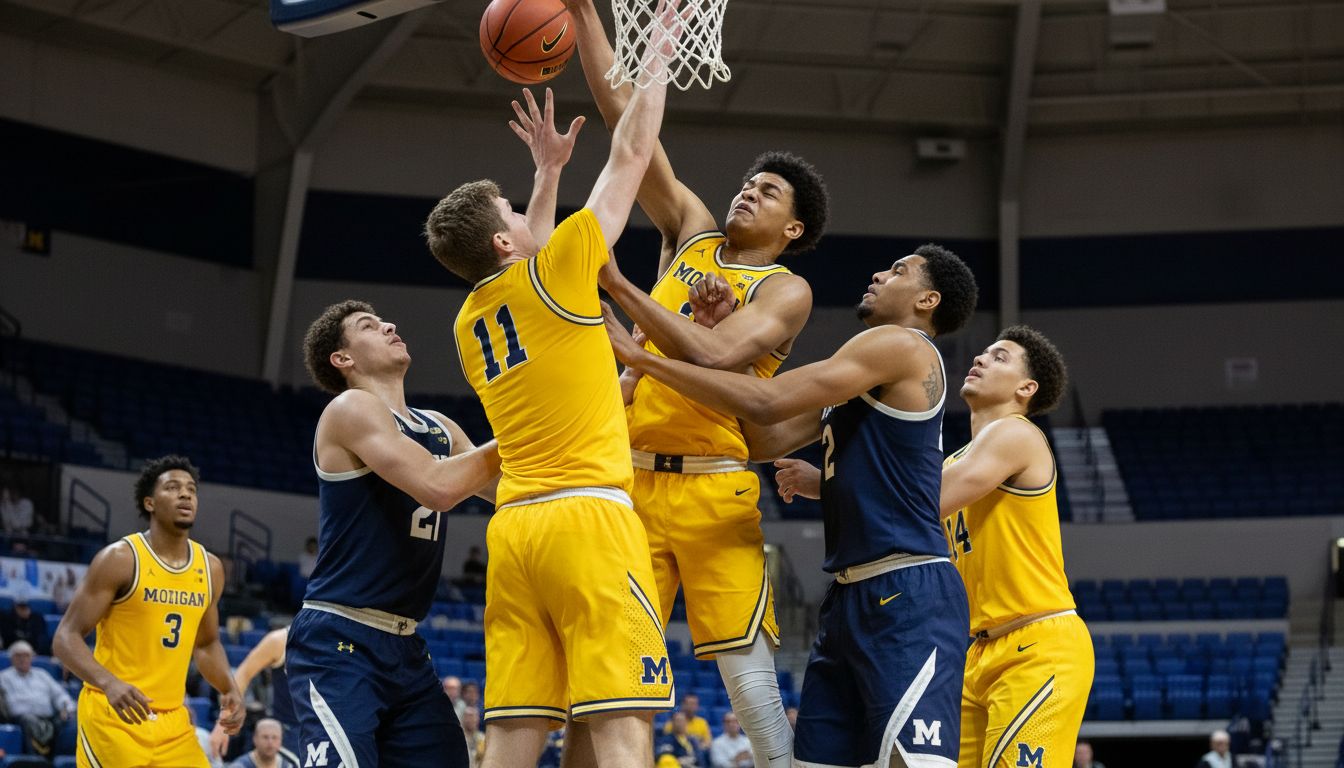
At the center of Michigan’s effort is senior forward Yaxel Lendeborg, who averages 15.1 points, 6.9 rebounds, and 3.3 assists, and plays like the fulcrum in a lineup built around size and versatility. He sprained his left MCL and rolled his ankle in the first half against Arizona, missing a large chunk of that game, and yet the Wolverines still overwhelmed the Wildcats. He’s expected to play Monday, but anyone who has watched March long enough knows there’s a gap between being cleared and being close to yourself. Michigan’s interior strength—Lendeborg alongside Morez Johnson Jr. and Aday Mara—has been its calling card, pounding opponents at the rim and controlling the glass. If Lendeborg is limited, that advantage shrinks, and against a machine like UConn, every small edge matters.
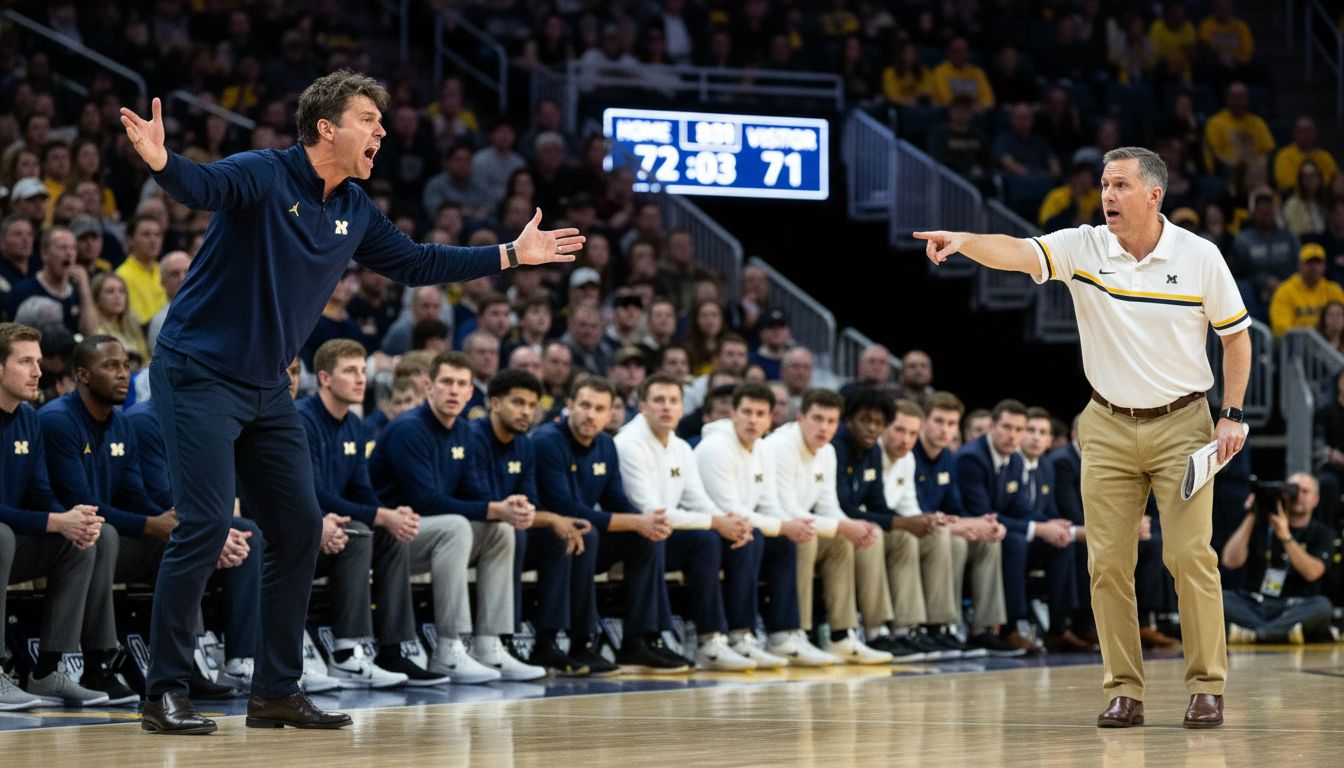
Dusty May, Michigan’s head coach, has quickly become one of the sport’s most intriguing figures, especially for those of us who follow the Big Ten coaching carousel as closely as the standings. He took Florida Atlantic to the Final Four in 2023 and now, in his first crack at a title game, has constructed a Wolverine team that looks like a case study in how to use the transfer portal well rather than desperately. Lendeborg from UAB, Elliot Cadeau from North Carolina, Johnson from Illinois, and Mara from UCLA form a portal-built core that has ripped off five straight 90-point games, the most ever in a single NCAA Tournament. Hurley praised May’s “eye for talent” and his ability to build culture, and that’s the real trick in all of this: adding pieces without losing an identity. If UConn represents the argument for staying and growing together, Michigan represents the argument that you can align transfers into something greater than the sum of their résumés.
In that way, this game is more than a battle for a trophy; it’s a referendum on the two dominant roster-building philosophies of the moment. UConn leans on continuity, internal development, and a core that has done its winning largely in one uniform. Michigan, by contrast, is the polished version of the portal era, a group of carefully chosen additions that clicked instead of clashed. Neither model is inherently more virtuous—this isn’t a morality play so much as it is a strategic one—but the winner will inevitably become the template ADs and coaches study in film rooms and boardrooms all offseason. From an Indiana moderate’s vantage point, the truth, as usual, sits somewhere in the middle: you need a program sturdy enough to keep players like Karaban, and nimble enough to spot and integrate a Lendeborg when the opportunity arises.
For Indianapolis and the surrounding basketball belt, Monday night is also a reminder of how the sport continues to evolve while still orbiting familiar touchstones. We still gather in downtown arenas, we still argue about conferences and legacies, and we still turn players into folk heroes based on a single March shot from 30 feet out. Yet the paths these teams took—one anchored in familiarity, the other in reinvention—tell us a lot about where college basketball is heading in the NIL and portal age. Some fans will watch hoping the Big Ten finally breaks through; others will tune in to see whether UConn cements itself as this generation’s defining power. Either way, it’s another chapter written on Indiana hardwood, and around here, that still means something more than just a neutral site.
In the end, whether you’re partial to Big East toughness or Big Ten tradition, this game offers something that should resonate with anyone who loves the sport. You have history on the line with UConn chasing Wooden’s ghost, a hungry challenger in Michigan trying to rewrite its own narrative, and a local Indiana story in Braylon Mullins threading through it all. You have contrasting philosophies, star players gutting through injuries, and a title that will echo through recruiting pitches and living rooms for years. As someone who still believes Assembly Hall on a good night can bend sound itself, I see Monday in Indy as another reminder that college basketball’s heart still beats loudest in places that understand its past even as they shape its future. And for all our debates about systems, seeds, and strategies, once the ball is tipped, it still comes down to the simplest question we’ve asked on courts across this state for generations: whose five can get one more stop, one more rebound, one more shot when it matters most?