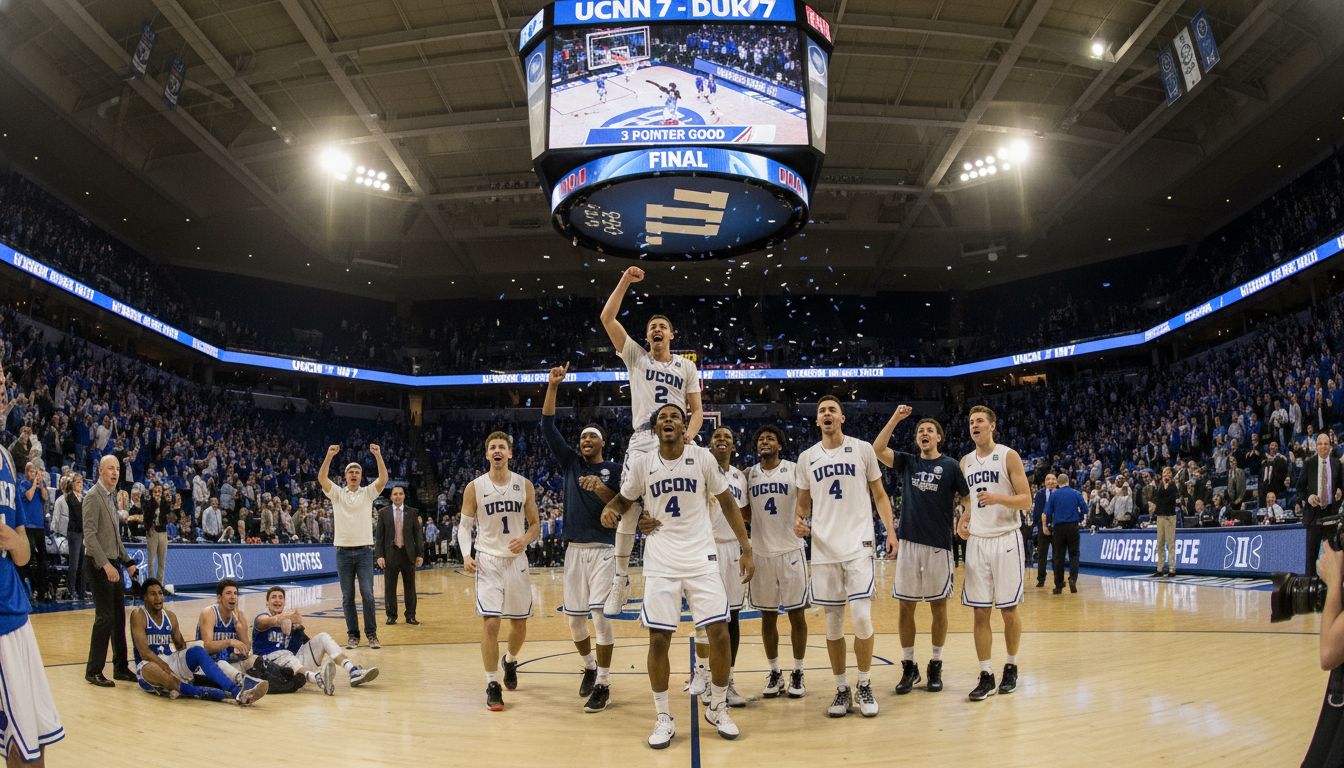
If you’ve watched enough March, you know there are comebacks, and then there are the games folks still talk about when the nets are long since cut down. UConn’s 73–72 Elite Eight win over Duke falls squarely in that second category. Down 19 in the first half, 1-for-18 from three for most of the night, the Huskies looked less like a No. 2 seed and more like a team running out of gas at the wrong time. Instead, they turned what should’ve been a Blue Devil coronation into what Dan Hurley called “another epic chapter in the UConn-Duke NCAA Tournament dramatics.” From a seat here in Big 12 country, it was a reminder of something we’ve seen often in Lawrence: talent can win you games, but culture is what lets you steal the ones you probably shouldn’t.
The first 20 minutes were about as one-sided as you’ll see in a regional final. Duke “punched us in the mouth,” Hurley admitted afterward, racing out to a 40–21 lead behind a freshman star turn from Cameron Boozer on both ends of the floor. UConn’s offense bogged down, the threes weren’t just missing, they were clanging, and the game had the feel of so many tournament blowouts where a proud program simply never finds its footing. If you tuned in late, you probably saw that halftime score and started flipping channels to check future opponents instead of focusing on the one in front of you. But behind that lopsided box score was something Hurley trusted: months of deliberately building a team that wouldn’t fold when things got ugly.
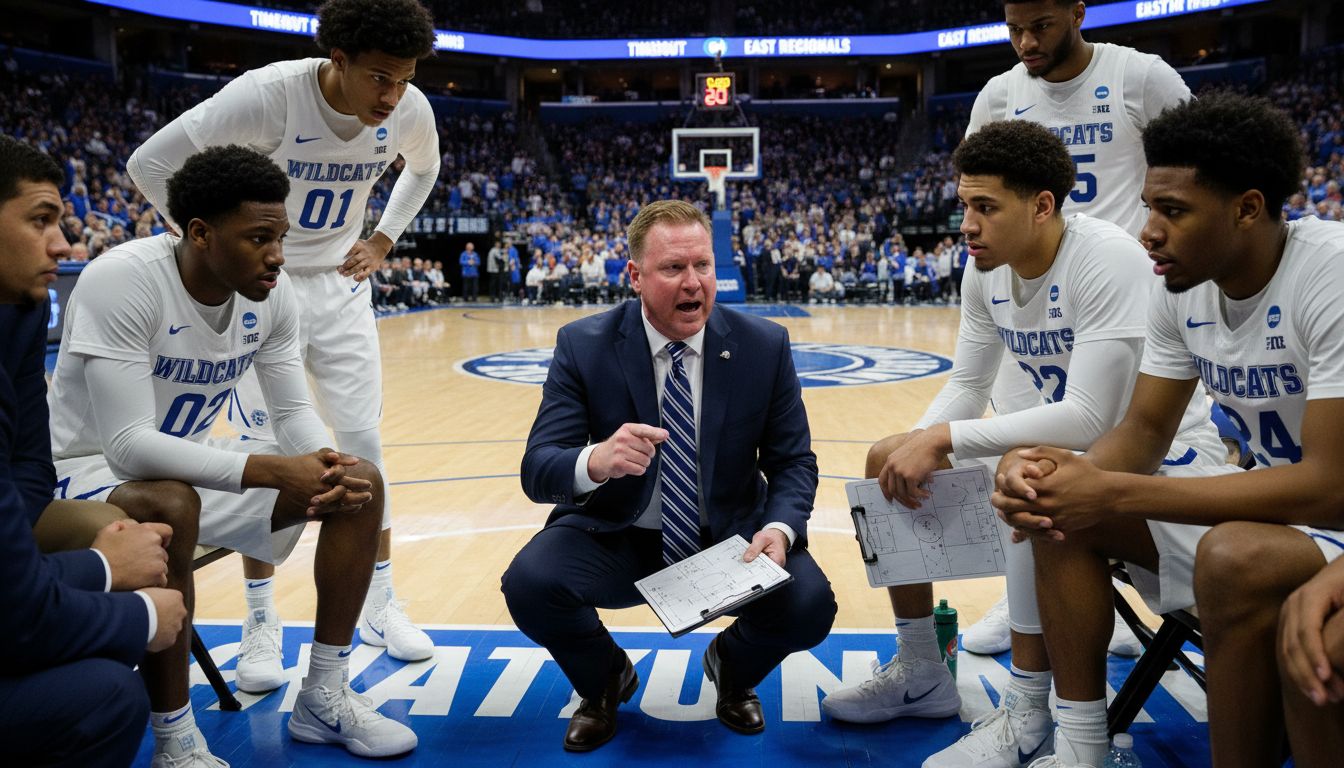
Hurley didn’t mince words about what he believes separates this group. “It takes a strong team … a tough team … tough men,” he said, and that wasn’t just postgame bravado. UConn has run an intense program all season, stressing players in practice, putting pressure on them to execute at game speed and game physicality, and demanding that they absorb coaching without flinching. That approach isn’t unique—Bill Self’s practices in Allen Fieldhouse have never been described as gentle—but Hurley’s point was that Sunday was exactly the kind of night all that daily grind is meant to prepare you for. When you’re 1-for-18 from three, there’s no magic play call; there’s only whether your roster has the poise and toughness to keep guarding, keep rebounding, and keep trusting the next shot.
The comeback really took shape in the final seven minutes, right about when most neutral fans were writing UConn off. Silas Demary Jr., playing on a high-ankle sprain that would’ve sidelined plenty of guys, buried back-to-back threes to finally knock Duke’s lead into single digits. If you’re looking for a symbol of Hurley’s “tough men” mantra, it’s Demary limping through the Big East Tournament, then turning around less than two weeks later to take and make critical shots on a national stage. Those threes didn’t win the game outright, but they changed the temperature in the building; suddenly, Duke’s comfortable cushion felt like something it had to protect instead of extend. From there, UConn’s belief—not its shooting percentage—became the most important stat on the floor.
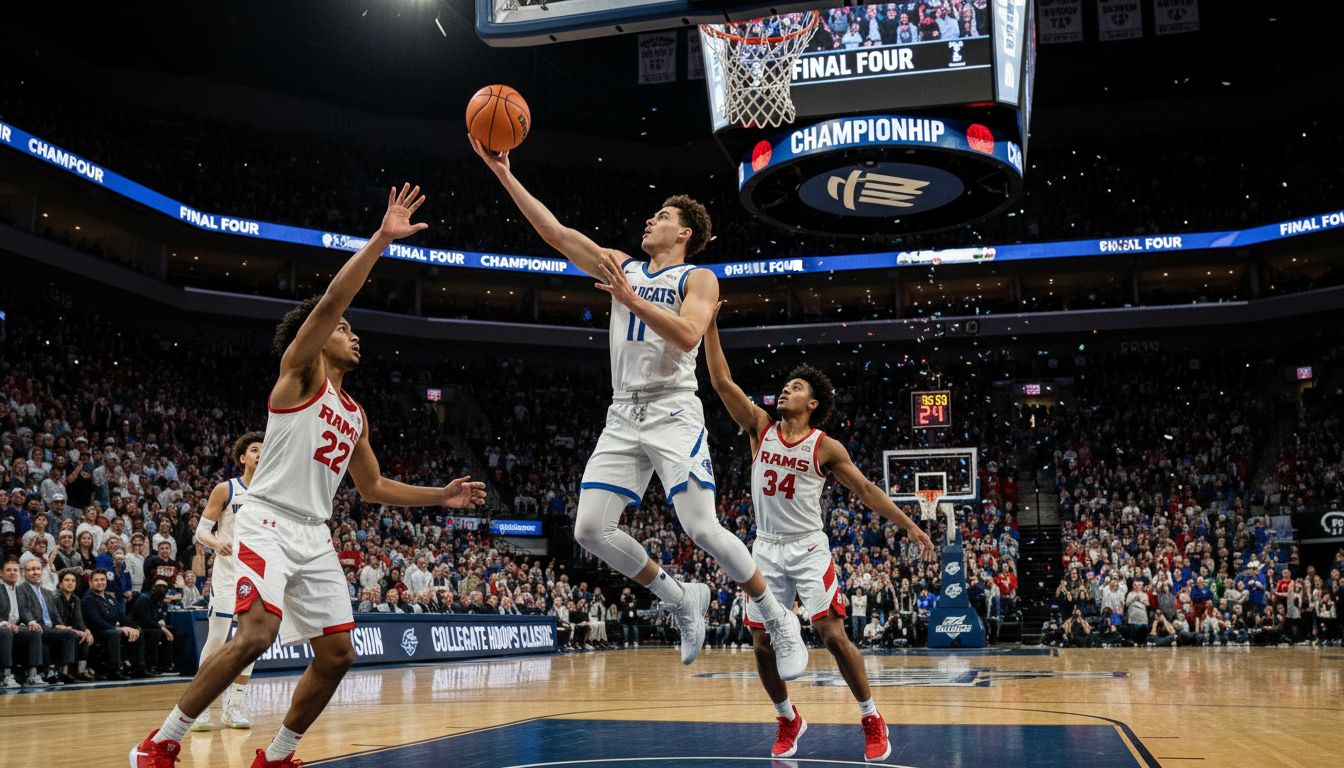
Tarris Reed Jr. followed with a strong layup, then delivered a sharp pass to Solo Ball for another bucket, a sequence that showed UConn could still generate quality looks inside even on a rough perimeter night. Ball then completed a three-point play that trimmed the deficit to two, the kind of old-school, through-contact finish that every coach in America quietly loves more than a step-back three. Duke steadied itself just enough to nudge the margin back to five and eventually held a two-point lead with the ball in the final seconds. At that point, any textbook coaching manual says you get the ball to a reliable free throw shooter, accept the foul, and try to win it at the line. Instead, UConn’s ball pressure disrupted the plan, and the Blue Devils tried to pass their way out of trouble rather than absorb the foul that was surely coming.
That’s where the game turned from a steady climb into a full-on heist. Cayden Boozer, trying to avoid the foul, floated a pass over two defenders that never should’ve left his hands. Demary got just enough of it to tip it, Braylon Mullins secured the loose ball, and suddenly UConn had a chance that didn’t seem possible ten seconds earlier. In that moment, Mullins had every reason to defer; he’d missed his first four threes, and veteran forward Alex Karaban had just hit one, standing ready as an obvious option. Mullins initially did the “right” basketball thing—he swung it to Karaban with about four seconds left—only to see the ball zipped right back to him, a wordless vote of confidence that said, in effect, "You take it."
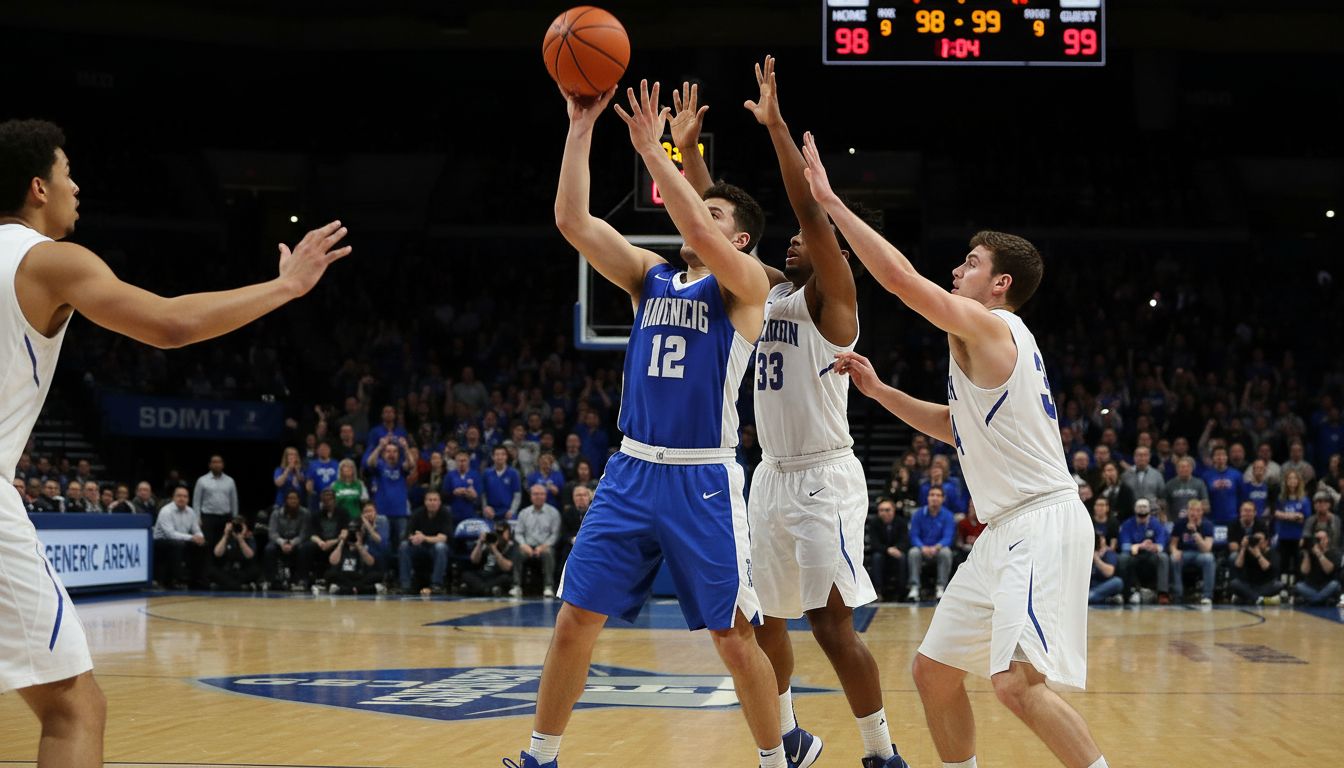
What followed is the kind of shot young players replay in their heads for the rest of their lives. Mullins rose up, released, and buried the decisive three that sent UConn to the Final Four and Duke home in disbelief. “It’s still a loss of words, still processing all [that] just happened,” he admitted afterward, sounding a lot like any college kid whose season just flipped from regret to elation in the span of a single possession. His shooting line for the night won’t hang in any museum, but he made the one that counted, which, in March, is all anybody truly remembers. If you’ve sat through enough cold shooting nights in a packed arena—whether in Storrs or in Lawrence—you know that sometimes the story isn’t who shot well; it’s who kept shooting with conviction when they absolutely had to.
Stepping back from the box score, this game was a case study in how programs construct identity. UConn didn’t suddenly discover a new offense in the final six minutes; it leaned into traits that had been rehearsed since the first brutal conditioning session in the fall. Hurley’s insistence on letting coaches coach hard, and players accepting that, is not always fashionable in an era where the transfer portal makes it easy to seek a softer landing. But there’s a through-line from that approach to what unfolded against Duke: guys playing through pain, defending as if every possession is the last, and trusting each other even when individual stats look ugly. From a Kansas vantage point, you can recognize the same blueprint that’s underpinned multiple eras of success in college basketball’s blueblood circles—culture, continuity, and standards that don’t waver when the shots do.
For Duke, this loss will sting not just because of the blown lead but because of the decision-making in the final sequence. The Boozer brothers are going to win a lot of games in Durham, but Sunday was a reminder that even elite talent has to learn late-game situational management the hard way. You don’t loop a pass over pressure when the foul is your friend, and you don’t let an opponent that’s been struggling all night even see a potential game-winner go up without putting them on the line first. Those are lessons that get drilled into players over time, and this particular group will carry the scars of that possession into future March runs. In that sense, UConn’s veteran toughness ran headfirst into Duke’s emerging star power, and the older, more battle-tested identity won out—this time by a single point and a single shot.
In the end, Hurley’s postgame comments about “strong men” and “a strong team” weren’t chest-thumping so much as a simple description of what we’d all just watched. In a tournament that often rewards the hottest shooting teams, this was a reminder that defense, physicality, and mental resilience still travel—and still win—even on nights when your perimeter stats would make you shield your eyes. Somewhere, in gyms from the Big East to the Big 12, coaches will clip this game as a teaching tape: don’t let a bad shooting night dictate your effort, and don’t assume a big first-half lead guarantees anything in March. Fans will remember Mullins’ shot, the wild swing from despair to celebration, and another chapter in a rivalry that has quietly become one of the sport’s most dramatic postseason matchups. And for those of us who’ve watched comebacks echo off the old barn walls in Lawrence, it felt familiar: when a program’s culture is right, you’re never fully out of a game—you’re just one stop, one loose ball, and one fearless shot away from rewriting the story.
Solo Ball's wrist injury, sustained in mid-December, has significantly impacted his shooting performance this season. Despite his struggles from beyond the arc, Ball's contributions in other areas were crucial to UConn's victory over Duke. Ball's steal and three-point play were pivotal in trimming Duke's lead, and his offensive rebound added pressure on the Blue Devils. His ability to adapt and contribute despite his injury exemplifies the toughness and resilience that define UConn's culture.