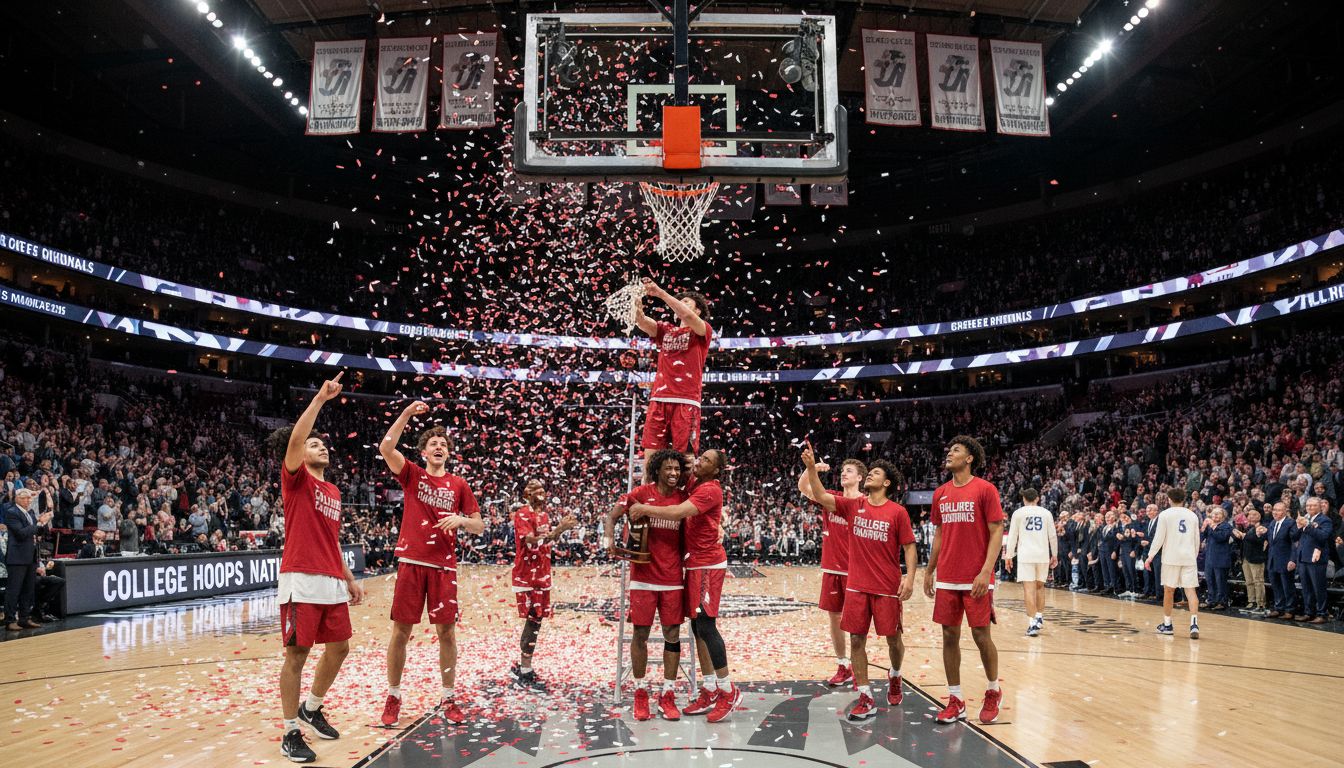
For three straight days in March, St. John’s played like a team that had made peace with pressure and decided to turn it into fuel instead. Inside the familiar glow of the Big East Tournament, the Red Storm didn’t just win; they led wire‑to‑wire in every game, closing their run with a 72–52 dismantling of UConn in the championship. On paper, it’s a clean story: a No. 1 seed beating a No. 2 seed for a second consecutive conference title under Rick Pitino, a 28–6 record polished just in time for Selection Sunday. But if you linger a little longer on the details, you start to see something else: a group of players writing themselves into a league’s long memory, one possession, one stop, one unglamorous rotation at a time. Tournaments like this are part bracket, part biography, and St. John’s just added a compelling chapter.
The bracket itself told a familiar Big East tale, equal parts grind and chaos. Providence opened with a 91–81 win over Butler, Xavier edged Marquette 89–87, and Georgetown slipped past DePaul 63–56, the kind of close, nervous games that remind you March doesn’t wait for anyone to get comfortable. Then the top seeds arrived, and St. John’s settled into its role as the favorite, dispatching Providence 85–72 and then Seton Hall 78–68 in the semifinals. Across the bracket, UConn looked every bit a national contender, blasting Xavier 93–68 before methodically putting away Georgetown 67–51. By Friday night, the script seemed set: two heavyweights, one title, and—whether anyone would say it out loud or not—NCAA Tournament seeding implications hanging over every possession.
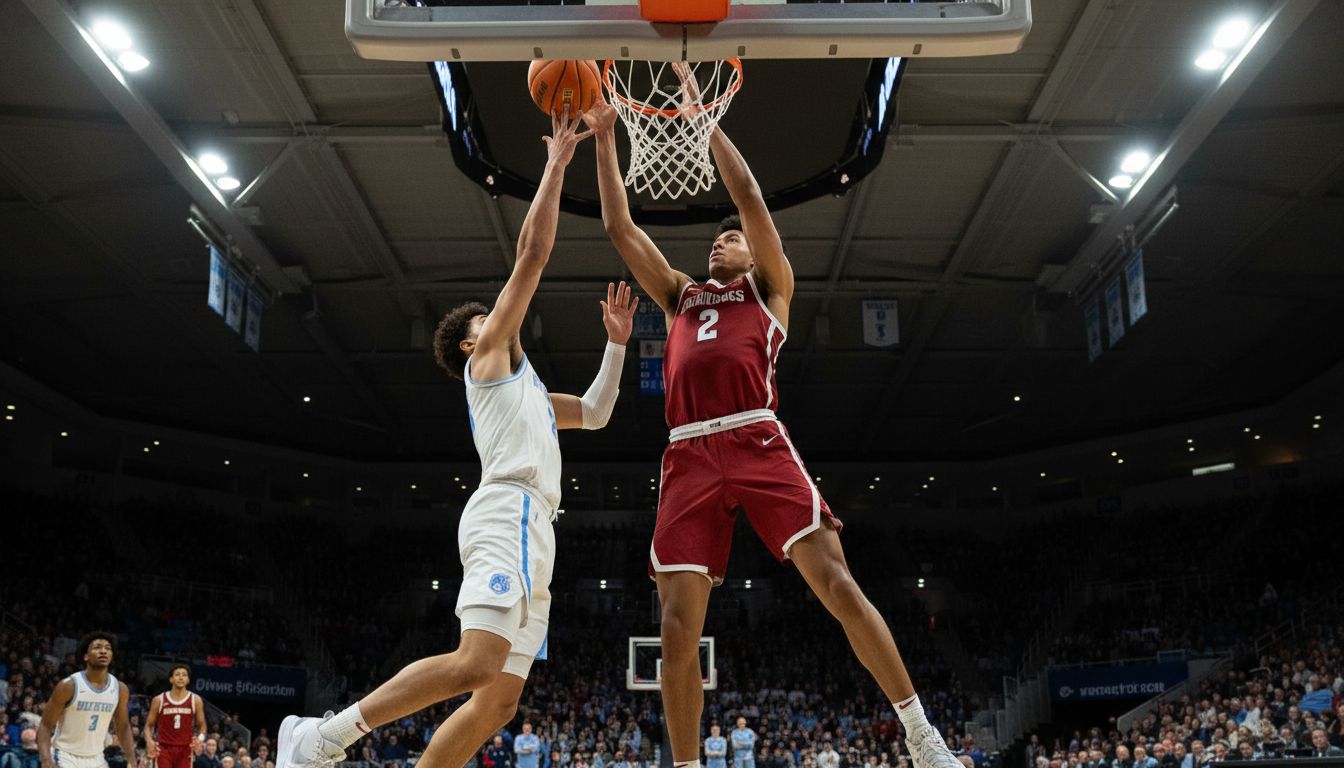
Saturday’s final, though, never quite became the back‑and‑forth epic some expected. Instead, St. John’s imposed its rhythm early and refused to surrender it, turning what was billed as a clash into something closer to a statement. The Red Storm defended with a kind of layered discipline that doesn’t always make the highlight reels but wins you friends in film rooms across the country. UConn, 29–5 coming in and angling for a final No. 1 seed line in the NCAA field, kept waiting for one of those patented surges that have defined its recent dominance. The surge never really came, and that absence may end up saying as much about St. John’s as any number in the box score.
If there was a single performance that crystallized the night, it belonged to Zuby Ejiofor, the St. John’s big man who had struggled in an earlier matchup with UConn. Players remember those nights—the ones when the game feels like it’s happening two beats too fast, when every misstep seems to echo. Ejiofor answered that memory not with bravado but with production: 18 points, nine rebounds, and seven blocks, a stat line that tethered the present to the past. Those seven blocks tied the record for the most in a Big East title game, a mark set by Patrick Ewing back in 1984 when Georgetown defined intimidation in the paint. Anytime you share space in the record book with Ewing, you’re not just having a good night; you’re stepping into the conference’s living history.
There’s a quiet poetry to performances like Ejiofor’s, especially when you consider what we don’t see: the film sessions after that previous UConn game, the conversations with coaches, the late‑night texts with family back home reminding him who he is beyond a stat line. In locker rooms around the country, players will tell you the same thing in different words—March is as much about memory as it is about momentum. You carry the weight of what happened last time, of what people said you couldn’t do, and if you’re lucky, you get 40 minutes under bright lights to rewrite the story. For St. John’s, this title game felt like a collective rewriting, a refusal to let one team or one brand monopolize what excellence in the Big East looks like. That’s not anti‑UConn so much as it is pro‑possibility, a reminder that dynasties can coexist with upstarts and that there’s room for more than one kind of power in this conference.
Meanwhile, the rest of the league lived out its own smaller dramas, the kind that don’t always lead on television but matter deeply to the people wearing the jerseys. Providence’s 91 points in the opener, Xavier’s two‑point survival against Marquette, Georgetown’s upset of Villanova—these are the games that send fan bases home hoarse and proud, even if they don’t end with nets being cut down. In a sport that often elevates only the champions, there’s something quietly radical about remembering the near misses and almosts, the seniors who won’t see another March but left something behind anyway. When you listen to players talk about their seasons, they rarely lead with seed lines; they talk about bus rides, shared apartments, the trainer who kept them on the floor. The bracket is the visible record; the lived season is everything underneath.

With the confetti swept up, attention now shifts to Selection Sunday, where St. John’s 28–6 résumé takes its place alongside UConn’s 29–5 body of work and Villanova’s steadiness in what is expected to be a three‑bid Big East. On the surface, it’s an exercise in math and precedent, in quad‑one wins and net rankings, but beneath that is a more human calculation. These are young men who have spent months moving between campus, practice, and arenas, often far from home, their lives dictated by class schedules and scouting reports. For some, the NCAA Tournament will be a long‑awaited national stage; for others, the committee’s verdict will mark an abrupt end, followed by a different kind of uncertainty about futures in basketball or beyond. We talk about bubble teams; they live it as a question about what comes next.
As someone who cares as much about who athletes are as what they do on the floor, I find weeks like this both exhilarating and sobering. The spectacle is real—the roaring crowds, the brackets blooming across office printers—but so are the quieter stories we don’t always center: the kid calling home in two languages after a win, the player carrying the weight of being the first in his family to attend college, the one rehabbing in the shadows so a teammate can have his moment. Big East history is rich with stars, but it’s also rich with those unsung contributors who turn practices into crucibles and locker rooms into communities. When we talk about athlete activism, we usually point to statements and protests, but there’s also a quieter activism in the way these players insist on their full humanity in a system that too often reduces them to assets. A title game like St. John’s vs. UConn doesn’t erase those tensions, but it does offer a rare national moment where the labor and the joy are on display together.
Looking ahead, St. John’s will enter the NCAA Tournament as a team that has already passed several character tests: responding to earlier setbacks, sustaining focus as the hunted rather than the hunter, balancing individual ambition with collective purpose. UConn, for its part, will carry the sting of this loss into a bracket it still has every tool to navigate deep into, provided it can treat the Big East final not as an indictment but as a mirror. The rest of the conference will scatter into different postseason paths or into off‑seasons that, if we’re honest, can be just as defining as any game. In those months, players will decide whether to transfer, turn pro, stay put, or simply step away, each choice a small act of self‑determination in a sport that rarely pauses to ask what they want. If there’s a through line from Madison Square Garden to all those quieter decisions, it’s this: the games may be finite, but the search for voice, agency, and meaning—for teams and for individuals—keeps going long after the final horn.