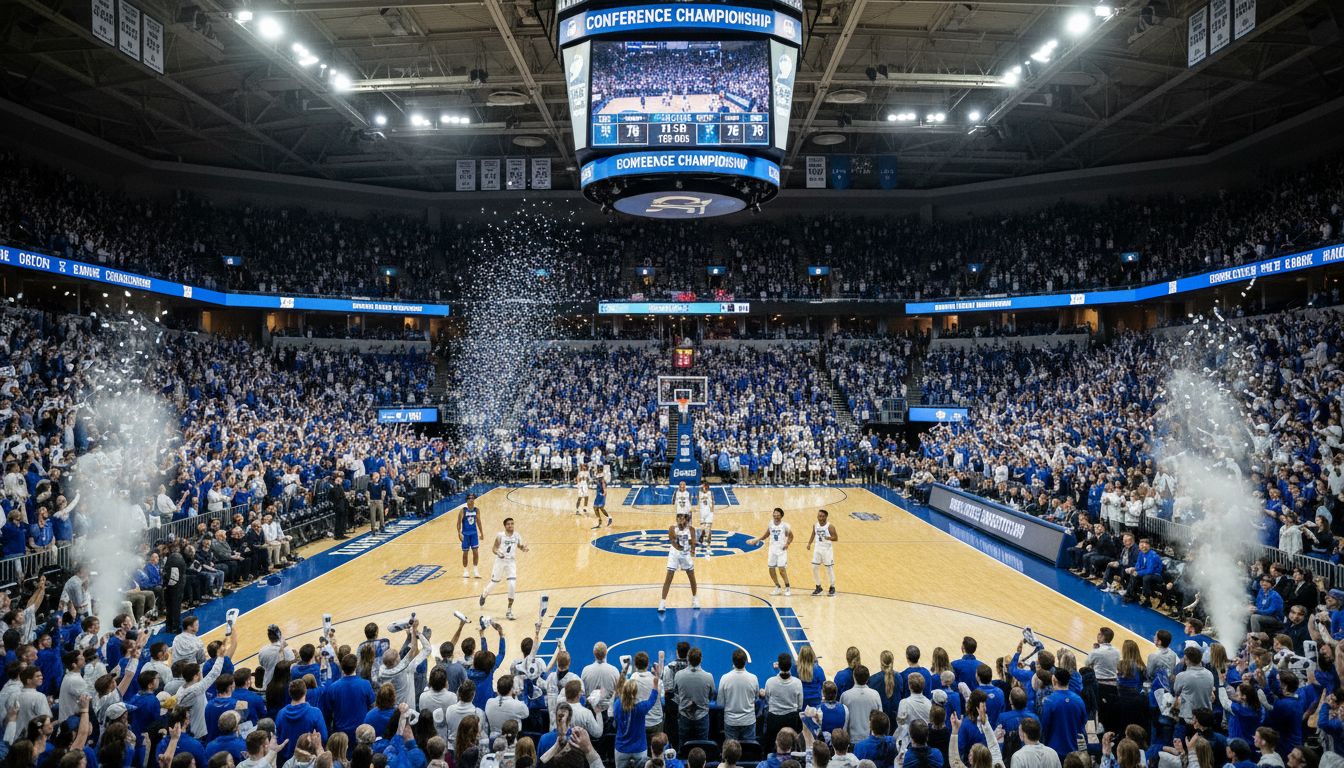
Championship Week always feels a little like trying to land a plane in a crosswind: everyone’s headed for the same runway, and not everyone is going to stick the landing. This Saturday slate is overloaded with title games and semifinals, but three matchups carry a little extra voltage: Houston–Arizona in the Big 12, UConn–St. John’s in the Big East, and Duke–Virginia in the ACC.
Most of the programs involved already have their NCAA bids locked up; they’re fighting for seeding, bragging rights, and in a few cases to prove that February results weren’t a fluke. Around them, smaller leagues are playing straight sudden death—win the conference tournament or watch March Madness from the couch.
Let’s walk through the headliners, what’s at stake, and how the numbers frame the day without getting lost in the betting jargon.
Start with Houston and Arizona, two teams that play like they’re allergic to easy possessions but go about it in slightly different ways. Arizona comes in 31–2 after surviving a draining fight with Iowa State, the kind of physical game that can take a half-step out of your legs 24 hours later.
Houston, 28–5, cruised past Kansas and held the country’s No. 14 team to 47 points, which is the basketball equivalent of putting a padlock on the rim. Arizona did beat Houston 73–66 back on Feb. 21 and has ripped off eight straight wins, so the Wildcats know they can solve that defense.
Even so, one major projection model gives Houston the edge in 57% of its simulations, essentially calling the Cougars a value play as a slight underdog.
If you don’t live in the gambling world, that 57% figure is simply another way of saying this matchup is closer to a coin flip than the casual fan might think. Arizona’s record suggests a juggernaut, but Houston has been every bit as imposing lately, with five straight wins by at least seven points and an identity built on guarding like every possession decides the mortgage payment.
The fatigue factor is worth watching; Arizona had to empty the tank against Iowa State, while Houston’s relatively stress-free win over Kansas let the Cougars spread minutes and keep their starters fresher. This late in March, legs can matter as much as schemes.
Whichever team handles that short turnaround better probably cuts down the nets, and we may see something tighter and more defensive than the earlier February meeting.
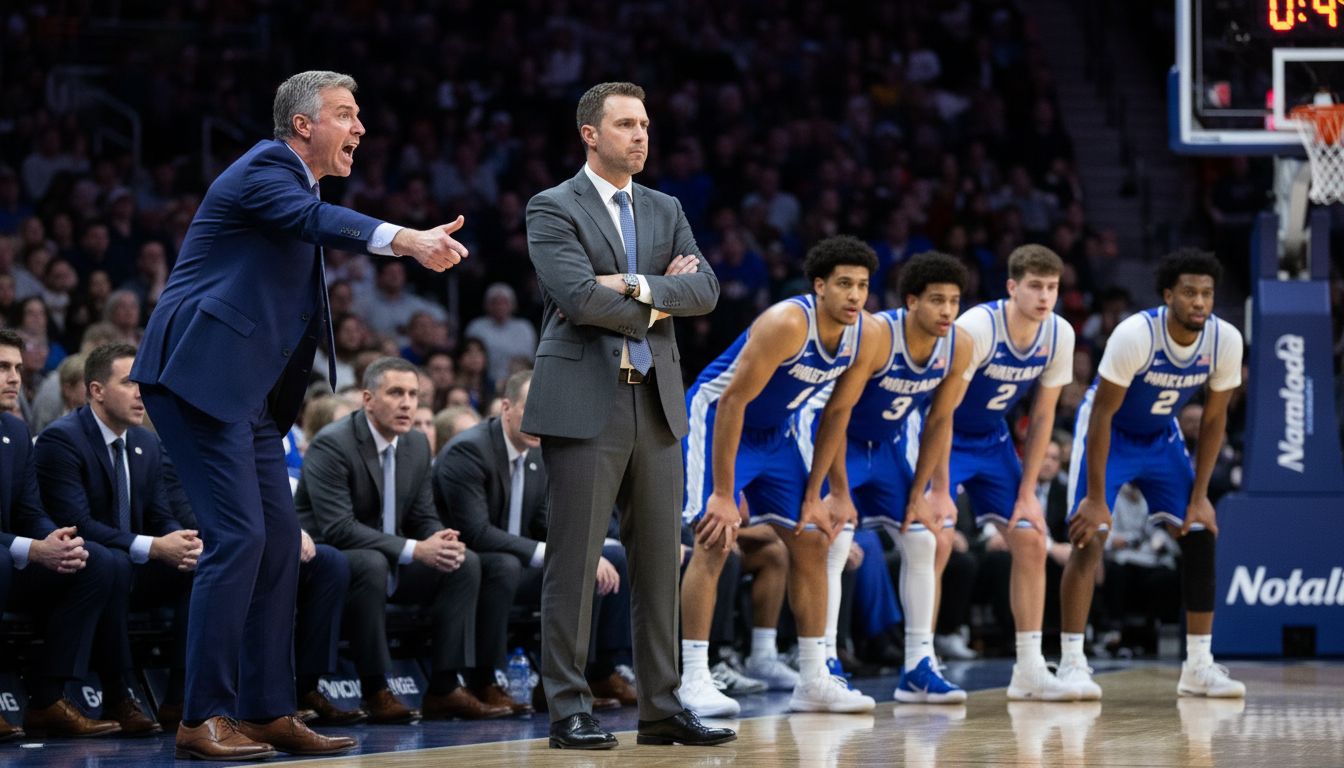
In New York, the Big East gives us a rematch with a healthy dose of history and a little bit of whiplash. UConn opened the season 22–1, then hit a patch of turbulence, dropping three of its last 10 to sit at 27–4—still elite, but no longer untouchable.
St. John’s has been one of the league’s steadiest climbers at 27–6, taking 18 of its last 19 games and handing UConn an 81–72 loss along the way. Of course, UConn promptly answered that with a 72–40 demolition of the Johnnies on Feb. 25, which is about as loud a reminder as a defending power can give.
A prominent simulation model now leans back toward the Huskies, projecting them to cover a modest 2.5-point spread in roughly two-thirds of its run-throughs and win by an average of eight.
Strip out the spread and what you’re really looking at is a question of which version of each team shows up under the Garden lights. Is it the St. John’s group that dictated pace and rhythm in the first meeting, or the one that got knocked off its axis in the rematch?
Is it the early-season UConn machine or the more uneven group we’ve seen recently? In tournament play, coaches talk constantly about 'identity,' and this is one of those nights when both benches will find out how firmly that identity is set.
From a neutral seat, it’s also a quick study in the modern Big East power structure, with UConn and St. John’s testing whether this is a one-year spike or the start of a longer tug-of-war.
Down in the ACC, Duke and Virginia offer something a little different: the promise of high-level defense paired, somewhat surprisingly, with big offensive numbers. Duke is 31–2 and riding a 10-game winning streak that includes a 77–51 home rout of the Cavaliers on Feb. 28.
Virginia, 29–4, has quietly won every other game in its last 14 and has scored at least 70 in all but one of those victories, a notable uptick for a program known more for grinding than running.
Both teams sit around 82 points per game on the season, and while they don’t abandon their defensive principles, the tempo and shot-making have turned their meetings into more open affairs.
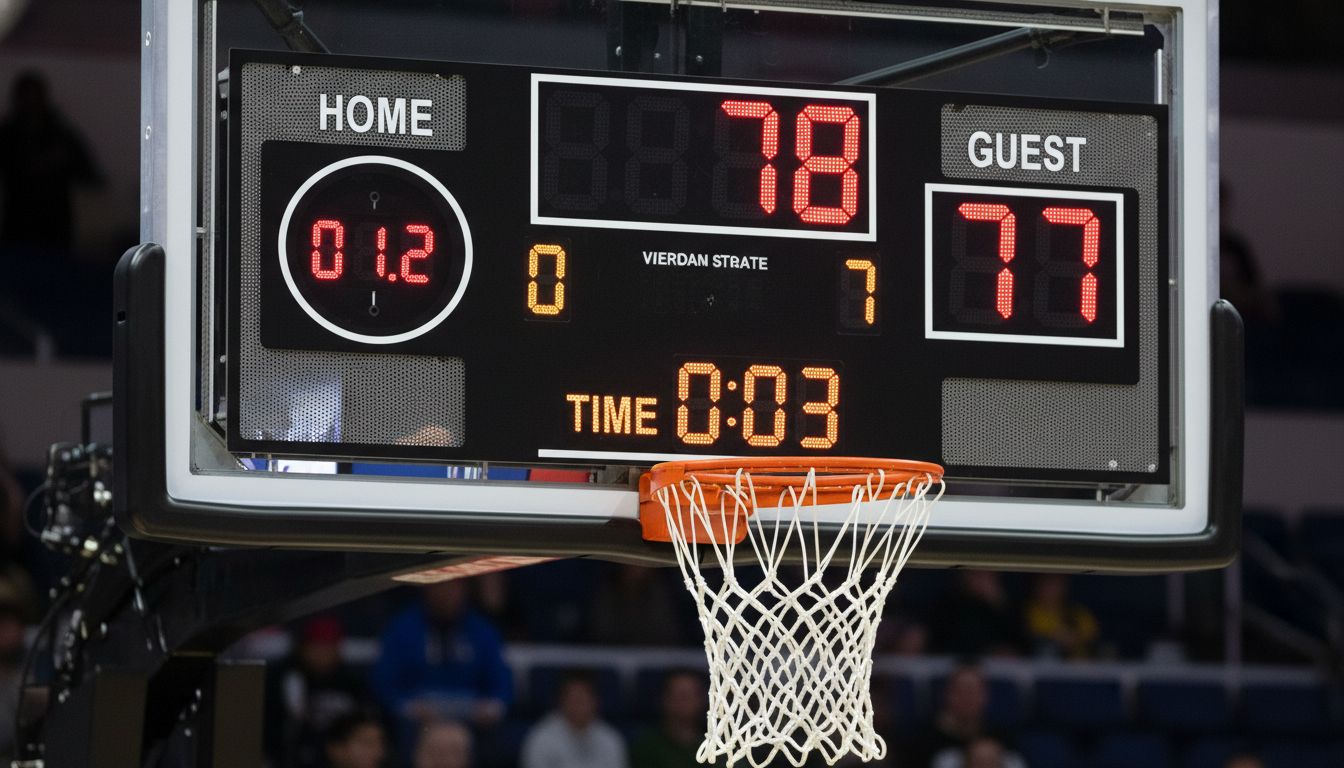
One model projects close to 150 total points here and sees the over on 137.5 hitting nearly 79% of the time, a number that would’ve made old-school ACC purists blink twice.
Beyond the numbers, this Duke–Virginia matchup is another case study in how programs evolve without losing their core philosophies. Duke isn’t just rolling out NBA-level talent and letting them freelance; there’s real structure underneath the stars.
Virginia hasn’t torn up its slow-it-down playbook, but the willingness to push for easier offense has given the Cavaliers a needed second gear. In March, that matters, because you can’t bank on winning four or five straight rock fights—at some point, you have to manufacture points when your defense isn’t perfect.
For all the statistical talk, this is also where coaching trees and adjustments show up, with staffs that know each other’s habits trying to stay one move ahead.
While the marquee leagues soak up the attention, there’s a quieter kind of desperation playing out in the MAC, SWAC, Big West and Conference USA. Toledo and Akron, Prairie View A&M and Southern, Hawaii and UC Irvine, Kennesaw State and Louisiana Tech—all of them are effectively in single-elimination for their entire season’s dream.
Unlike the big brands, these programs aren’t debating whether they’ll be a No. 2 or a No. 4 seed; they’re fighting just to get their name on the bracket. That pressure can produce some of the cleanest basketball you’ll see and, occasionally, some of the messiest, because nerves don’t check the betting lines before tipoff.
If you only track the sport once March begins, these games are the reminder that for most of college basketball, 'Championship Week' is more lifeline than warm-up act.
As for the betting side of all this, the models provide structure but not certainty, and anyone who’s watched a 19-year-old miss two front ends in the last minute knows exactly how fragile a projection can be.
Systems that simulate a game 10,000 times are useful tools, not crystal balls; they reflect how teams have played, not how they will play on any given Saturday.

In recent weeks, one prominent model has ridden a hot streak on over/unders and sides, the sort of run that tends to draw new followers and fresh skepticism in equal measure.
The truth, as usual, lives in the middle: the data is a smart starting point, but the games are decided by humans, not spreadsheets. If you’re along for the ride, treat the numbers as a guide rail, not a guarantee, and remember that the story on the court is always the main event.
By Sunday night, nets will be cut, brackets will be argued over, and at least a few coaches will be privately fuming about whistles, bounces and blown assignments.
Houston, Arizona, UConn, St. John’s, Duke and Virginia will almost certainly hear their names called regardless of Saturday’s outcomes, but the way they play will shape how much faith anyone has in a deep run.
For the smaller-conference winners, this is where their season either blooms into March or disappears into what-ifs. Championship Week doesn’t answer every question—no week in this sport ever does—but it does narrow the field and sharpen the focus.
And if history is any guide, by the time we get to the NCAA Tournament, one of these teams we’re dissecting by the numbers will be busy writing a story that blows right past the projections.
As the Final Four approaches, UConn stands out as a traditional powerhouse among the remaining teams, joined by San Diego State, Miami, and the Cinderella story of Florida Atlantic. UConn's path to the Final Four has been marked by strong performances from key players like Adama Sanogo and Jordan Hawkins.
San Diego State's defensive prowess will be tested against Florida Atlantic's perimeter shooting, while Miami's dynamic guards aim to challenge UConn's defense.
Predictions lean towards UConn's depth and defensive strength as pivotal in their matchup against Miami, while Florida Atlantic's resilience could pose a challenge to San Diego State.
The tournament's outcome remains uncertain, but UConn's historical success and current form make them a formidable contender for the national title.