February always exposes who you really are in college hoops, and this week’s AP Top 25 is basically a mirror with harsh fluorescent lighting. From November through January, top-5 teams were almost automatic on the road at 26-4, but this past weekend they went 0-3 away from home. UConn, Illinois, and Duke all took their lumps, and yet somehow Duke is the lone top-five survivor while Houston and Iowa State crash the party alongside unbeaten No. 1 Arizona and a rolling Michigan. The poll didn’t just shuffle at the top; it lurched, with risers like Houston and St. John’s and big drops from Gonzaga, BYU, and Vanderbilt reminding us how thin the margin is once conference play heats up. As someone watching this from Hartford with a Husky blue tint on the glasses, I’ll keep it neutral on the numbers, but I won’t pretend UConn’s slip didn’t sting.
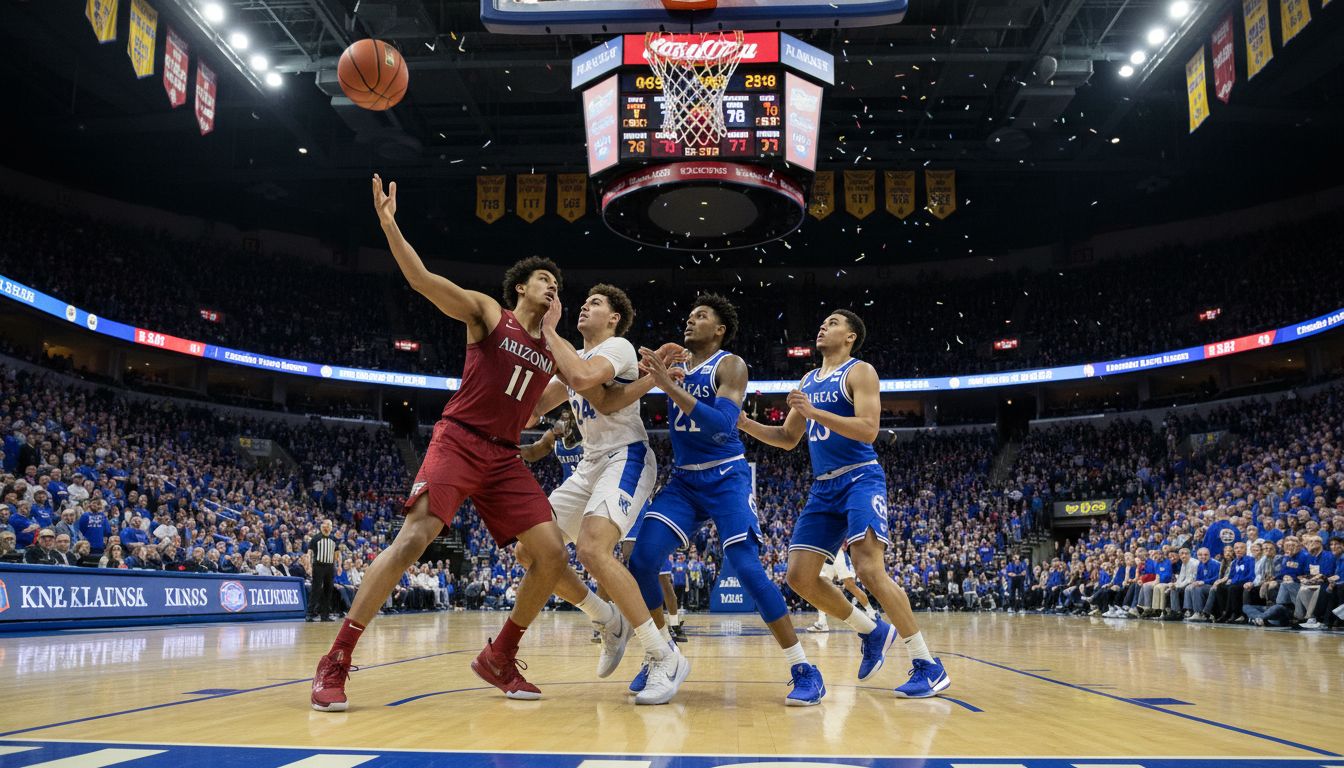
Let’s start with Arizona, because 23-0 in a power league in 2026 isn’t just impressive, it’s borderline throwback dominant. The Wildcats have logged 50 or more paint points in 10 games this season, which is wild in an era obsessed with spacing and threes; that’s old-school bullying dressed up in modern tempo. They head into Allen Fieldhouse next, where Kansas is hosting a No. 1 team at home under Bill Self for the first time, which feels impossible given how long he’s been there. The last time a No. 1 Arizona team walked into Lawrence, they smacked Kansas by 17 back in 2003, so there’s some history and maybe a little déjà vu hanging over this matchup. If you’re a bracket watcher, that Arizona-at-Kansas tilt is the kind of February game that doesn’t decide the title but absolutely shifts how we talk about who’s built for March.
Michigan sitting at No. 2 with a 22-1 record is another reminder that some brands don’t stay down forever, even if they disappear for a bit. The Wolverines already have 12 wins by 20-plus points, their most since the 1988-89 national title season, which is about as strong a historical echo as you can get without hanging a banner. They’ll hit the road to Northwestern next, and while that won’t make many casual fans circle their calendars, it’s the exact kind of trap game that tells you whether this group is just front-running or truly professional about its habits. Then there’s Houston at No. 3, climbing five spots and looking every bit as defensive as their reputation suggests, having held seven different opponents to their season low in points. When only Michigan State and Duke have more such defensive ‘season-low’ games on the board, you know Houston is living in that uncomfortable space where every possession feels like a dental appointment.
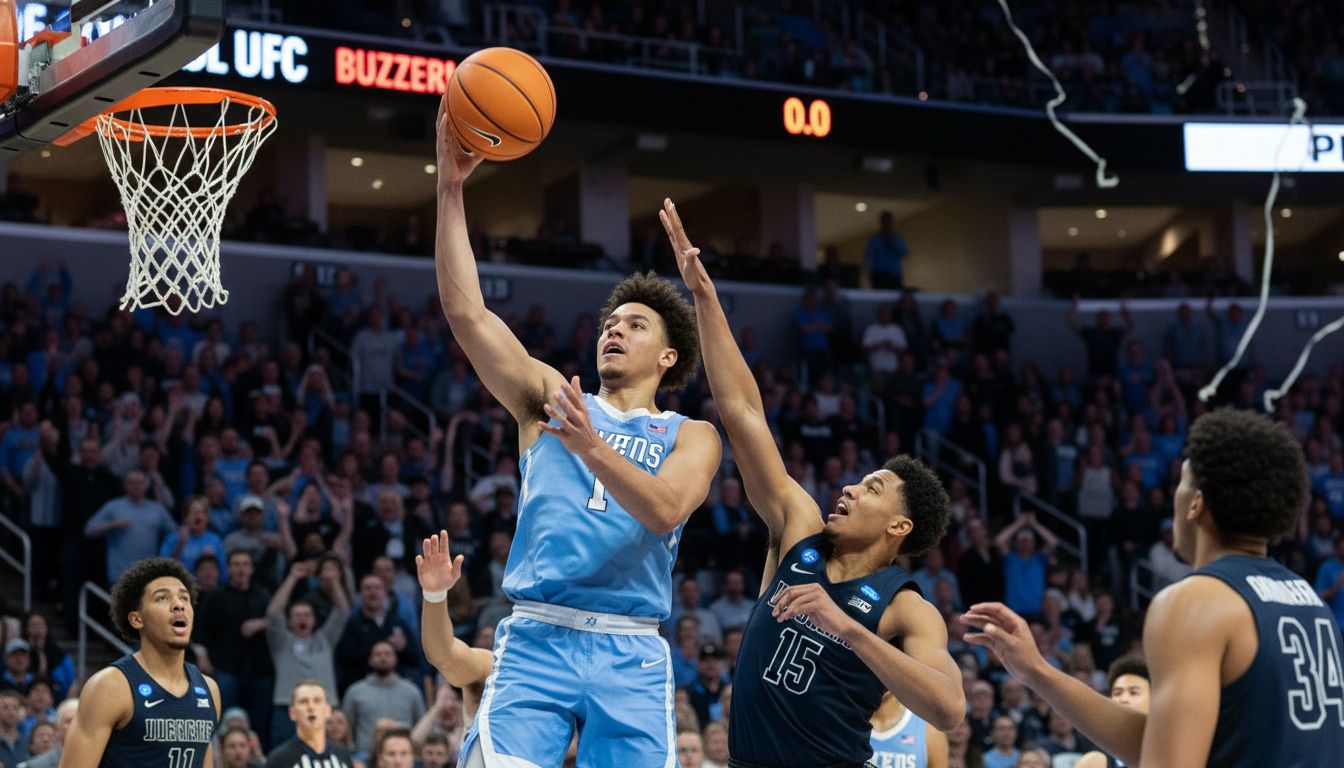
Duke at No. 4 is still standing in the top tier after the buzzer-beating heartbreak against North Carolina, but the details matter here. Freshman Cameron Boozer has stacked five straight road games with at least 20 points, the longest such streak by a Division I freshman since Cam Thomas at LSU a few years back, and that kind of production travels even when the rest of the team doesn’t. North Carolina, up to No. 11, literally led Duke for 0.4 seconds in that game, the smallest lead time for a win in Division I this season, and turned a 13-point deficit into their largest comeback versus Duke in at least 25 years. If you needed a reminder why people romanticize this rivalry, there you go: 39 minutes and 59.6 seconds of stress for less than a half-second of joy. From a neutral perch, you respect the drama; from a Big East seat, you mostly just appreciate that all this chaos might keep the national attention from obsessing over Durham for once.
At No. 5, Iowa State keeps doing very Iowa State things, led by Milan Momcilovic extending his streak of home games with multiple threes to 18, a very modern way of saying he’s automatic in Hilton. UConn drops from No. 3 to No. 6 after the loss at St. John’s, snapping an 18-game win streak that ranked as the third longest in program history and felt, to Husky Nation, like the continuation of the 2023-24 tidal wave. The loss was a gut check more than a referendum; February road games in loud old buildings are where even championship-level teams get punched in the mouth. St. John’s, now up to No. 17, gave Rick Pitino his first win over a top-10 team with the Red Storm, and as a Big East lifer, I have to admit there’s something fitting about Carnesecca rocking again, even if the price was UConn’s streak. If anything, that result underscored what we learned from the back-to-back titles: the margin for error is slim, but the process matters more than any one night in Queens.
Nebraska at No. 7 and Illinois at No. 8 keep the Big Ten heavily present in the top 10, each carrying very different stories. Nebraska has already matched last season’s win total and piled up six road conference wins, the most in school history, which is the kind of incremental build you like to see from a program trying to rewrite its identity. Illinois, meanwhile, just had its three-game win streak snapped in an overtime battle at Michigan State, where star freshman Keaton shot just 2-for-16, a brutal 12.5% from the field that reminds you how up-and-down first-year stardom can be. Kansas at No. 9 looks more vulnerable than in some of Self’s peak years, but the chance to host Arizona as the AP No. 1 gives them a stage to change that narrative in a hurry. Michigan State rounds out the top 10, finally snapping an 11-game skid against top-5 opponents with that win over Illinois, a milestone that feels more like a course correction than a fluke for a program with that much institutional muscle.

Further down, the poll turns into a collage of comeback stories, quiet dominance, and a few warning lights blinking on the dashboard. Gonzaga falls to No. 12 despite Graham Ike putting up scoring gaps reminiscent of Adam Morrison-era usage, which tells you the bar for that program has climbed so high that anything short of perfection looks like slippage. Florida at No. 14 rides Rueben Chinyelu’s SEC-best 14 double-doubles, their best output since Al Horford’s days, while Virginia at No. 15 is back to its 20-wins-in-23-games efficiency that whispers "don’t forget about us" every March. Saint Louis at No. 18 quietly becomes one of the nation’s best records at 23-1, matching the best 24-game stretch any A-10 team has had in two decades, proof that you can still build something serious outside the power leagues. On the other side, BYU’s four-game losing streak and Gonzaga’s slide are subtle reminders that even well-structured programs can wobble when the margins tighten and the conference step up hits.
The back end of the rankings carries its own kind of chaos energy, with teams either making their case as dark horses or fighting to prove they belong. Miami (Ohio) at No. 23, sitting undefeated at 24-0 and averaging 92.8 points per game, is a scoring fever dream and an example of how offensive identity can carry you through a schedule, even if the national spotlight lags behind. Louisville at No. 24 gets efficiency fireworks from Sananda Fru, who’s already had three perfect shooting nights on at least five attempts, something no other ACC player has done more than once. Kentucky sneaks back into the poll at No. 25 with three comeback wins of 14-plus points this season, two against Tennessee, which feels very on-brand for a program that always seems to find new ways to make its fan base age in dog years. If there’s a through line to teams in this tier, it’s resilience: they’ve all taken punches, but they’re still standing in the Top 25, which is often how you survive the first weekend of the tournament.
If you zoom out, this week’s AP poll is really about what happens when the comfort of November home games gives way to hostile crowds, travel fatigue, and the subtle pressure of knowing every loss reshapes your seed line. Top-5 teams going 0-3 on the road in February isn’t a stat that predicts doom, but it does remind us that dominance is context-dependent; even elite teams look mortal when you take them out of their own gym. For UConn, Houston, Arizona, and the rest of the would-be contenders, the next month is less about style points and more about problem-solving on the fly: how do you win when your legs are heavy, the whistle feels tilted, and the threes aren’t falling. From where I’m sitting in Hartford, watching the post-championship version of UConn navigate familiar Big East minefields, the lesson feels almost spiritual in a cultural Catholic way: you don’t get a dynasty without a few nights of suffering in places like Queens or Omaha. And if history is any guide, the teams that learn the most from these February bruises are the ones that look oddly calm when the brackets drop and everyone else is panicking.