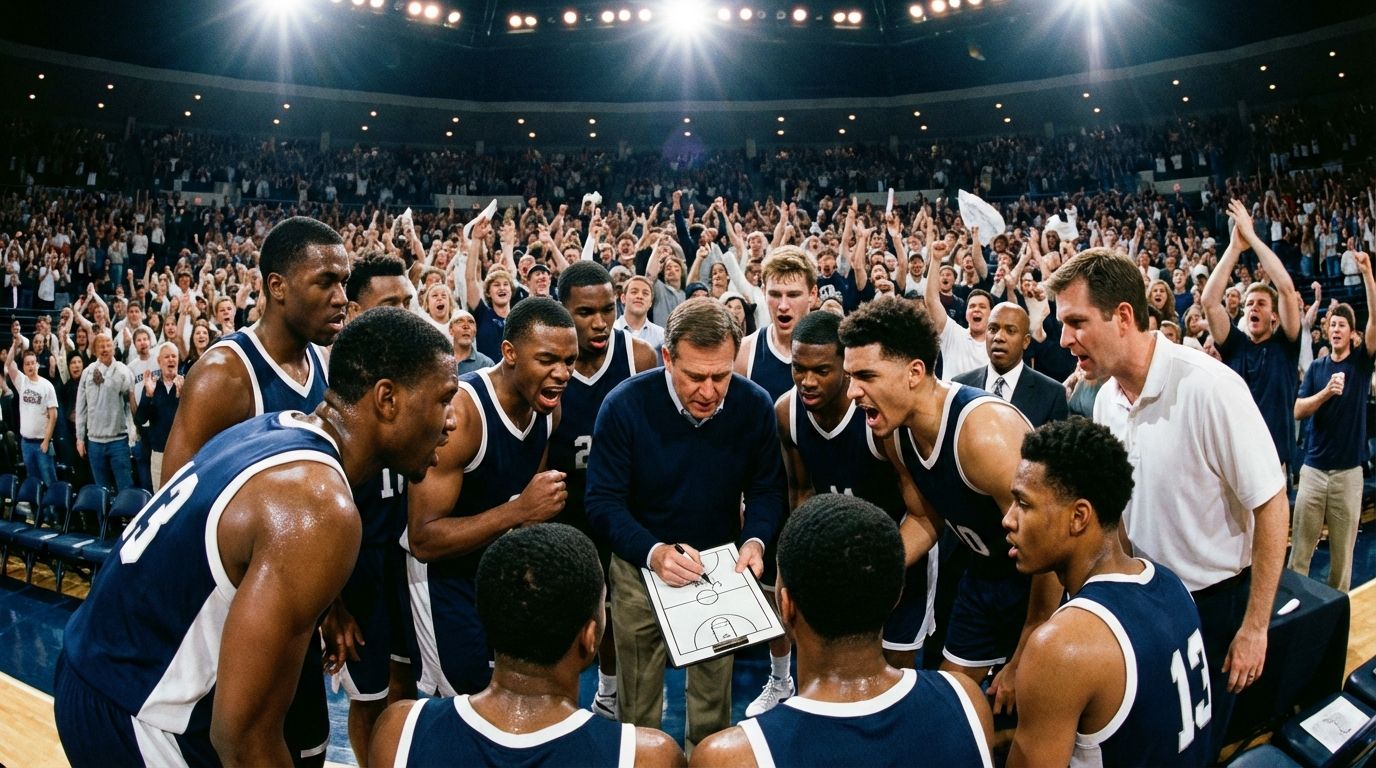
There’s an odd calm that settles over the college basketball world right before March, a quiet hum beneath the highlight reels and hype clips, where the real degenerates — the futures bettors and spreadsheet nerds — go to work. Instead of obsessing over who cuts down the nets in April, there’s a subtler market that rewards patience and probability: betting on who simply survives long enough to reach the national semifinals. It’s less about mythology and more about math, about teasing out small structural edges in a system designed to be chaotic. From my small Paris apartment, half a world away from the noise of American sports talk radio, I find that distance clarifies things: you see the NCAA Tournament not as destiny but as a probability experiment with a marketing budget. So let’s talk about three teams — UConn, Purdue, and Alabama — less as heroes and villains and more as portfolios of strengths, flaws, and narratives that the betting market is constantly mispricing.
Start with UConn, the sometime darling of this season’s futures market, suddenly treated like yesterday’s news because of a stumble against St. John’s and the perception that the Big East is having a down year. In betting terms, that shift in public mood is a feature, not a bug: indifference often creates value, especially when the underlying profile of the team hasn’t meaningfully changed. Strip away the recency bias and UConn still looks like a contender built on the sort of balance that tends to travel in March: hovering just outside the top 20 in offensive efficiency while ranking firmly in the top 10 defensively. That kind of two-way solidity usually puts you on the short list of teams that can navigate five or six different styles in as many games, from slow, bruising slugfests to track meets decided at the three-point line. If the usual March heuristic is "trust teams that are elite on both ends," UConn sits close enough to that threshold that dismissing them over one conference loss says more about our impatience than their ceiling.
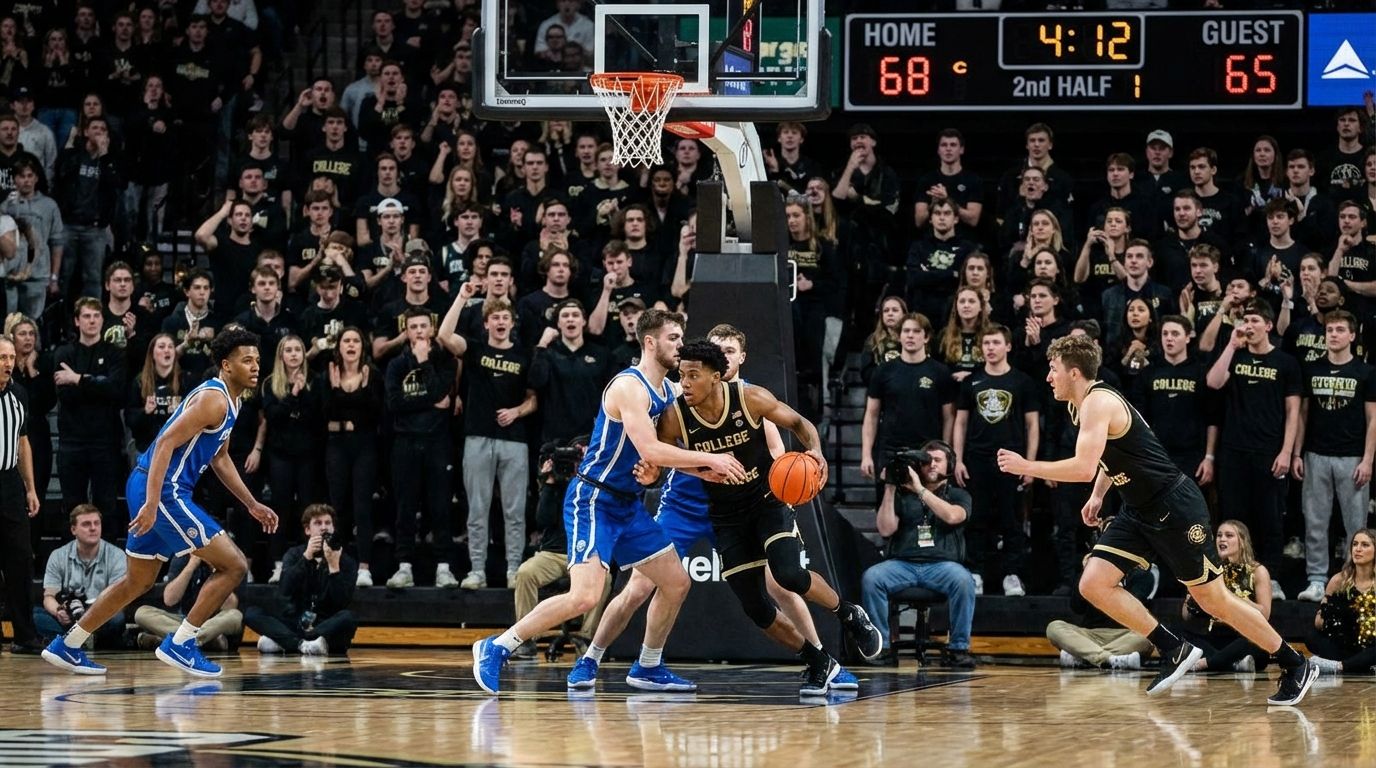
The conference question, though, is worth interrogating, because the Big East’s relative weakness this year is often framed as a fatal flaw instead of what it actually is: an ambiguous variable. Yes, a softer league schedule can leave a team under-tested compared with programs that grind through the Big 12 or Big Ten gauntlets, and there’s a Gonzaga-shaped file folder of examples where dominant regular seasons didn’t translate into titles. But coaching, preparation, and institutional memory matter, too, and Danny Hurley’s track record in March suggests that familiarity with the pressure cooker is at least a partial antidote to any conference-level softness. The Huskies still defend, still rebound, still generate turnovers — the unglamorous forms of labor that decide tournament games when jump shots abandon you for no good reason. Their glaring weakness is more specific and more mundane: free throw shooting hovering around 70%, the sort of flaw that feels trivial until you’re watching a one-possession game in the final minute and every missed front end feels like a small moral failing.
If UConn offers the comfort of structure, Purdue is a more volatile proposition, a team that has looked alternately terrifying and strangely mortal depending on which night you happen to tune in. Coming off a blowout loss at home to Michigan, they don’t exactly scream "buy now" to the casual observer, which is precisely why the futures market tends to cool at the exact moment the long-term profile remains intact. On paper, Purdue is built the way you’d etch a tournament threat in a lab: elite on offense, sound enough on defense, experienced, careful with the ball, and battle-tested against one of the toughest schedules in the country. They’ve had their stumbles, particularly when stepping up in class against teams like Iowa State, Illinois, and that same Michigan juggernaut, and those losses are real, not footnotes. But context matters: in a single-elimination format, you don’t need perfection, you need a path, and Purdue’s statistical backbone suggests they’re one favorable bracket away from hanging around the second weekend and beyond.
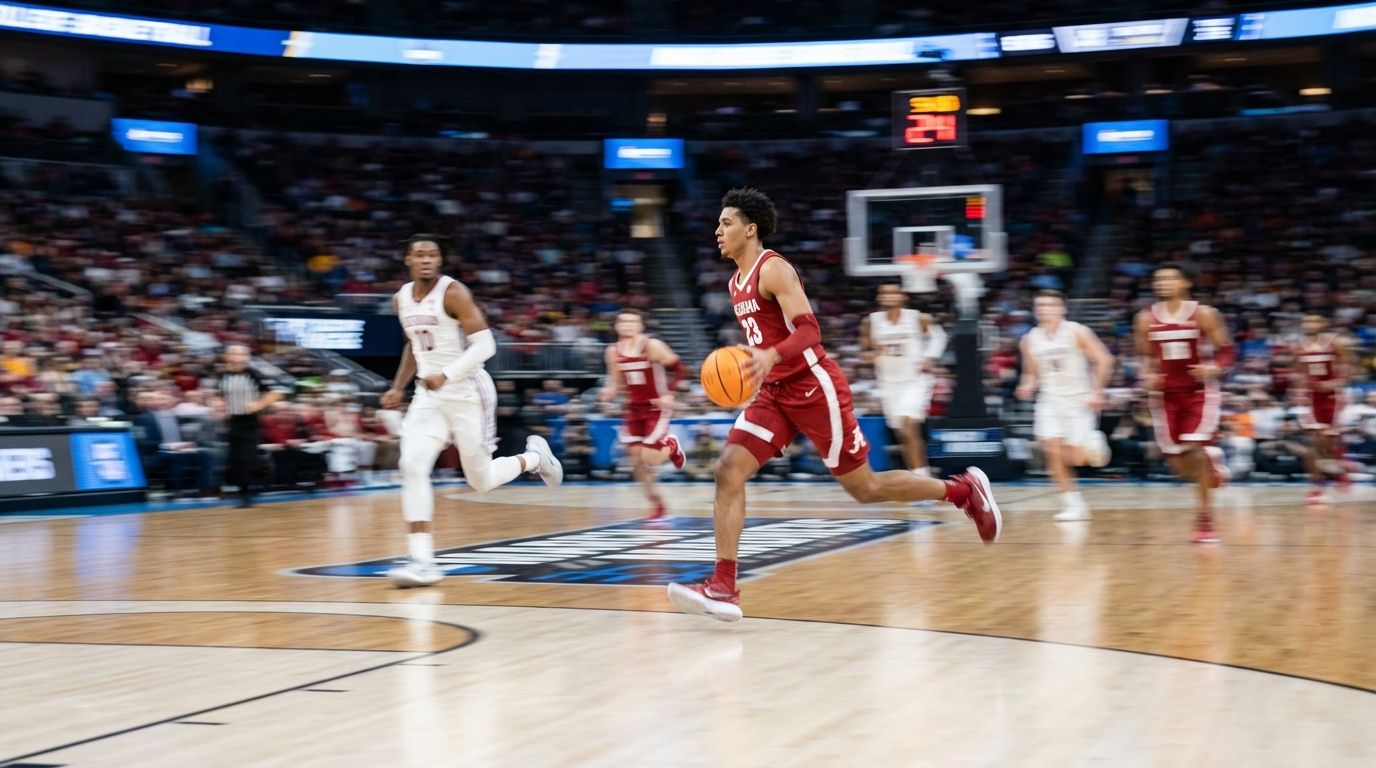
What makes Purdue interesting is not just their efficiency profile but the way they embody a familiar March tension between aesthetics and results. They’re not always pretty, but they are methodical: they rebound, they shoot from the perimeter with confidence, and they protect possessions like they’re guarding state secrets. In a tournament that regularly devolves into late-game coin flips, not turning the ball over becomes a kind of quiet radicalism, a refusal to hand the game away for free. Having a veteran core steeped in close games against high-caliber opponents might not guarantee survival, but it does mitigate the panic that kills teams when the underdog hits a couple of threes and the crowd decides it wants chaos. If UConn feels like a calculated re-entry point for value, Purdue is the slightly uncomfortable position you hold because the data says "yes" even when your gut remembers every time they’ve let you down in March.
Then there’s Alabama, an almost perfect case study in the seduction and danger of offensive fireworks in a tournament environment. The Crimson Tide can drop 90 or 100 points on almost anyone, and there’s a visceral thrill in watching a team treat shot clocks like vague suggestions rather than constraints. For futures bettors, that offensive ceiling is intoxicating: on the right night, against the right defense, they can simply overwhelm an opponent before halftime. But basketball, unfairly, still requires you to defend and rebound, and that’s where the Alabama profile shifts from exhilarating to deeply suspect. When a team routinely wins track meets but struggles to impose itself on the glass, especially against physical, elite rebounding opponents like Tennessee and Florida, it signals a soft underbelly that better-balanced teams will happily target.
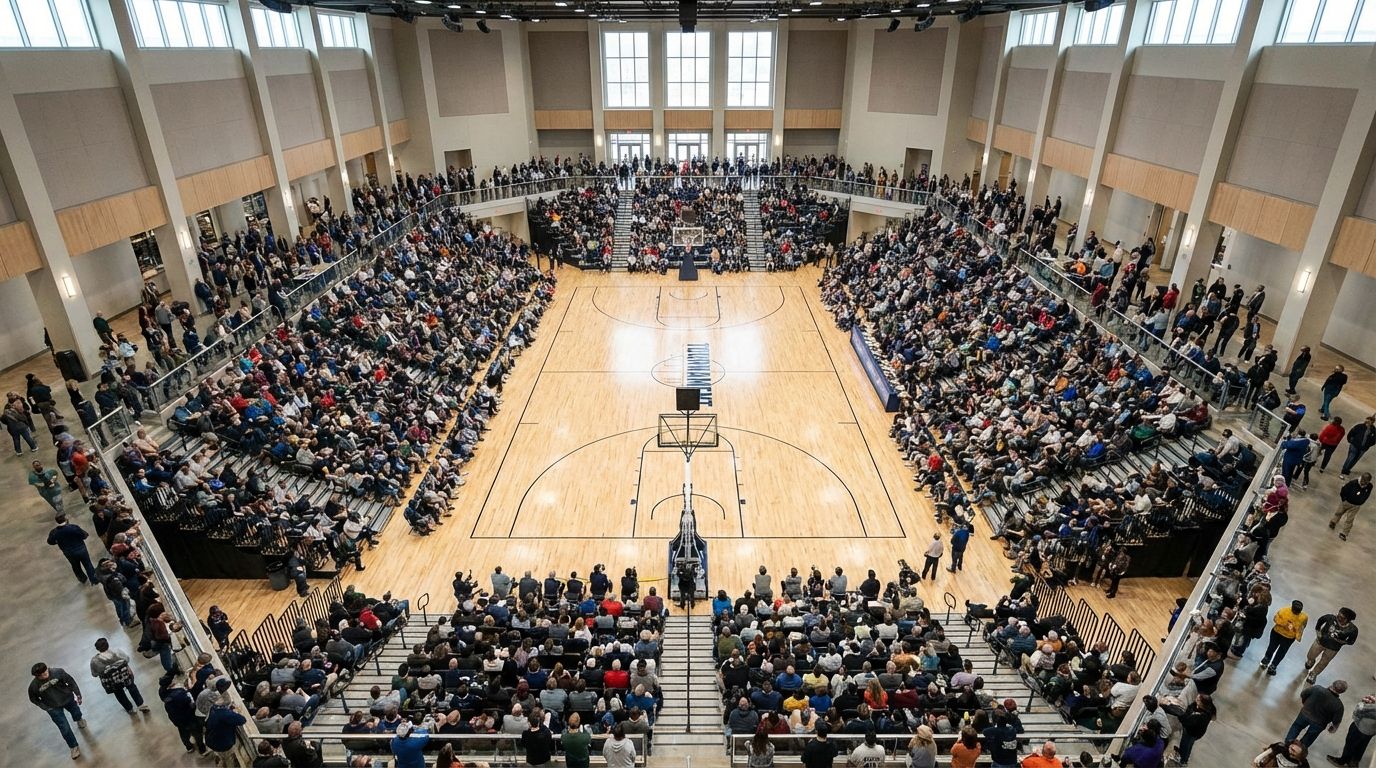
Alabama’s recent history against those SEC bullies is instructive: repeated losses built on getting pushed around in the paint, outworked on the offensive glass, and forced into relying on their jump shooting to a degree that borders on dependency. That’s not a moral failing; it’s simply a structural one, and structures tend to hold under pressure far more reliably than narratives about "momentum" or "clutch genes." In a bracket that may well include powerhouses like Duke, UConn, Michigan, or Houston — all of whom can rebound, defend, and execute in the half court — Alabama’s lack of balance feels less like a quirky identity and more like a hard cap on their ceiling. Yes, they can absolutely catch fire and win a couple of games; the sport is cruel and random enough to allow that. But when you zoom out and think in terms of probabilities instead of highlight packages, penciling them into the second weekend feels like optimism, while imagining them in the national semifinals starts to look like wish-casting.
Underneath all of this is a bigger point about how we talk about futures, and frankly how we talk about sports more broadly. The betting discourse tends to frame teams as good or bad investments in a way that flattens nuance and smuggles in a kind of market determinism: as if the odds themselves were an oracle instead of a reflection of public perception, institutional power, and algorithmic guesswork. From a far-left, systems-oriented lens, what jumps out isn’t just whether UConn is mispriced or Alabama overrated, but how the whole machinery of hype and wagering keeps us focused on individual programs instead of the structures that advantage some and marginalize others. That doesn’t mean you can’t enjoy the game within the game; it just means being honest that even our conversations about "value" are shaped by who gets visibility, which conferences are canonized as strong or weak, and which styles of play are romanticized. If there’s a small act of resistance available to the fan or bettor, it’s to insist on seeing these teams not as destiny-bound brands but as complex systems of labor, strategy, and yes, vulnerability.
So where does that leave us heading into March, other than mildly sleep-deprived and over-caffeinated. UConn looks like a buy-low candidate in the national semifinal market, a team with a near-elite statistical profile and a coaching staff that has already proved it can navigate the chaos. Purdue sits in that uneasy but intriguing zone where the underlying numbers justify faith, even if the emotional memory of past tournaments urges caution. Alabama, for all its offensive joy, feels more like a team to watch and enjoy than one to anoint as a likely semifinalist, unless you’re deliberately embracing long odds and high variance. And maybe that’s the quiet lesson buried beneath all the models and metrics: in a tournament designed to manufacture uncertainty, the closest thing to an edge is not certainty but clarity about what a team is, what it isn’t, and how comfortable you are living with that ambiguity.