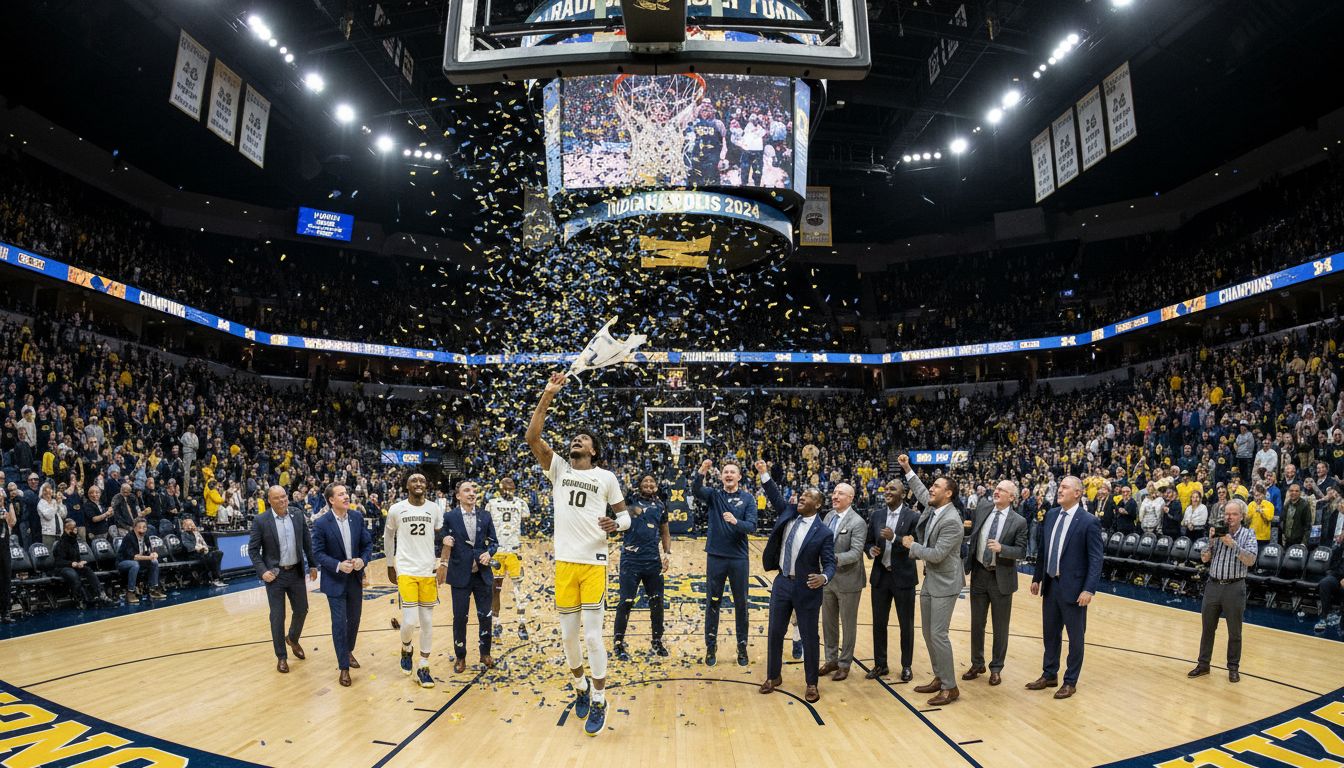
Michigan didn’t just beat UConn for a national title; the Wolverines outlasted them, which is a different kind of compliment. In a 69-63 grinder in Indianapolis, Dusty May’s team leaned on what it has been all year – long, heavy, and stubborn about who it is. This wasn’t the free‑flowing 90‑point track meet we saw earlier in the tournament, and that’s precisely why it matters. Championships are won when the game tilts away from your comfort zone and you still refuse to blink. On Monday night, Michigan blinked less.
If you trace this run back, you land on Elliot Cadeau’s November line in Las Vegas: “We’re the best team ever assembled,” right before Michigan buried Gonzaga by 40. That kind of declaration usually ages poorly in college sports, where egos, injuries and schedules tend to have the last word. Instead, it became the organizing principle of the season. The staff did what good staffs do: they questioned everything quietly, then doubled down loudly once the film told them the jumbo frontcourt and paint‑first identity could work. From there, the Wolverines played with the conviction of a group that had already decided how the story would end.
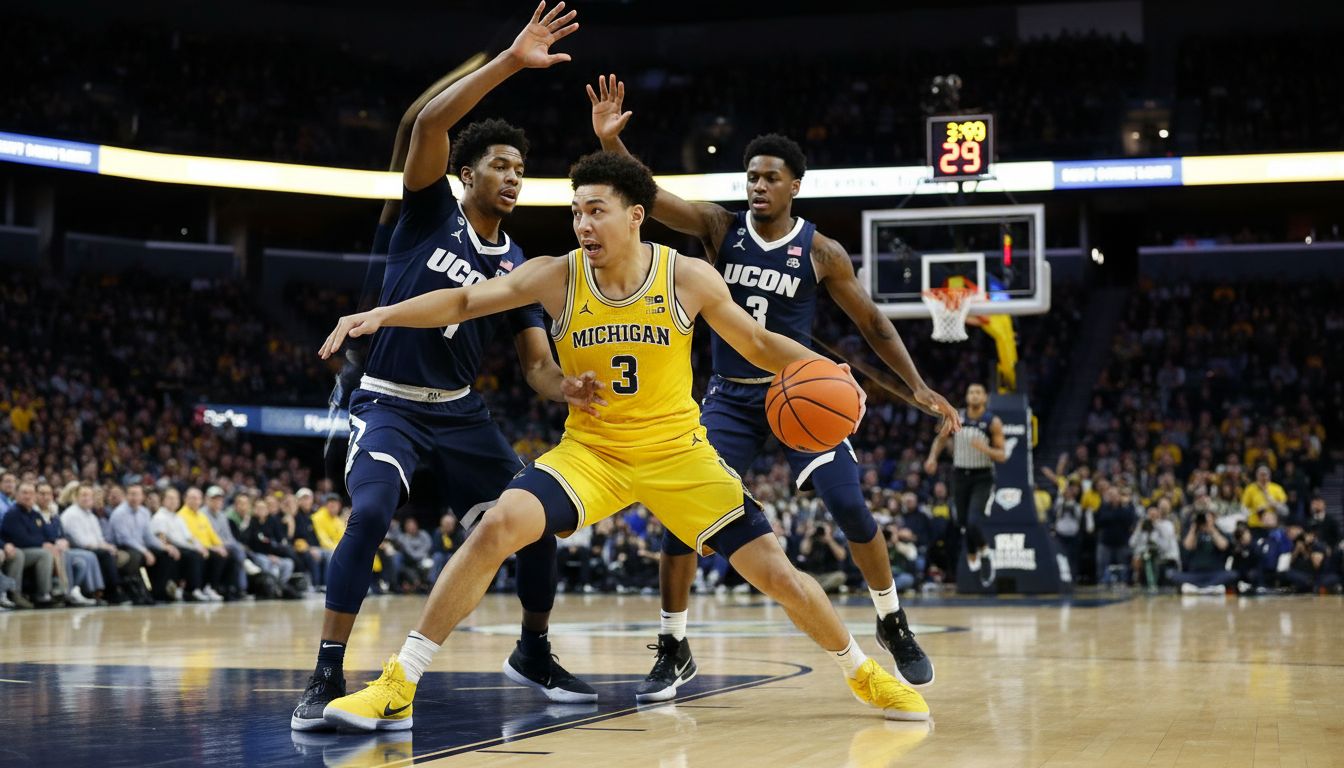
The final never looked like that Gonzaga blowout. UConn did the early dictating, choking off transition and turning Michigan into a half‑court jumper team that couldn’t buy one from deep for most of the first half. The Huskies fed Tarris Reed Jr. on script, but Aday Mara’s length turned those touches into contested, uncomfortable attempts. At the same time, Michigan’s All‑American engine, Yaxel Lendeborg, was playing on a bad knee and ankle and looked it – one bucket in 20 first‑half minutes, and plenty of frustration. When your best player says on live television at halftime that he feels weak and soft, you usually don’t script a happy ending.
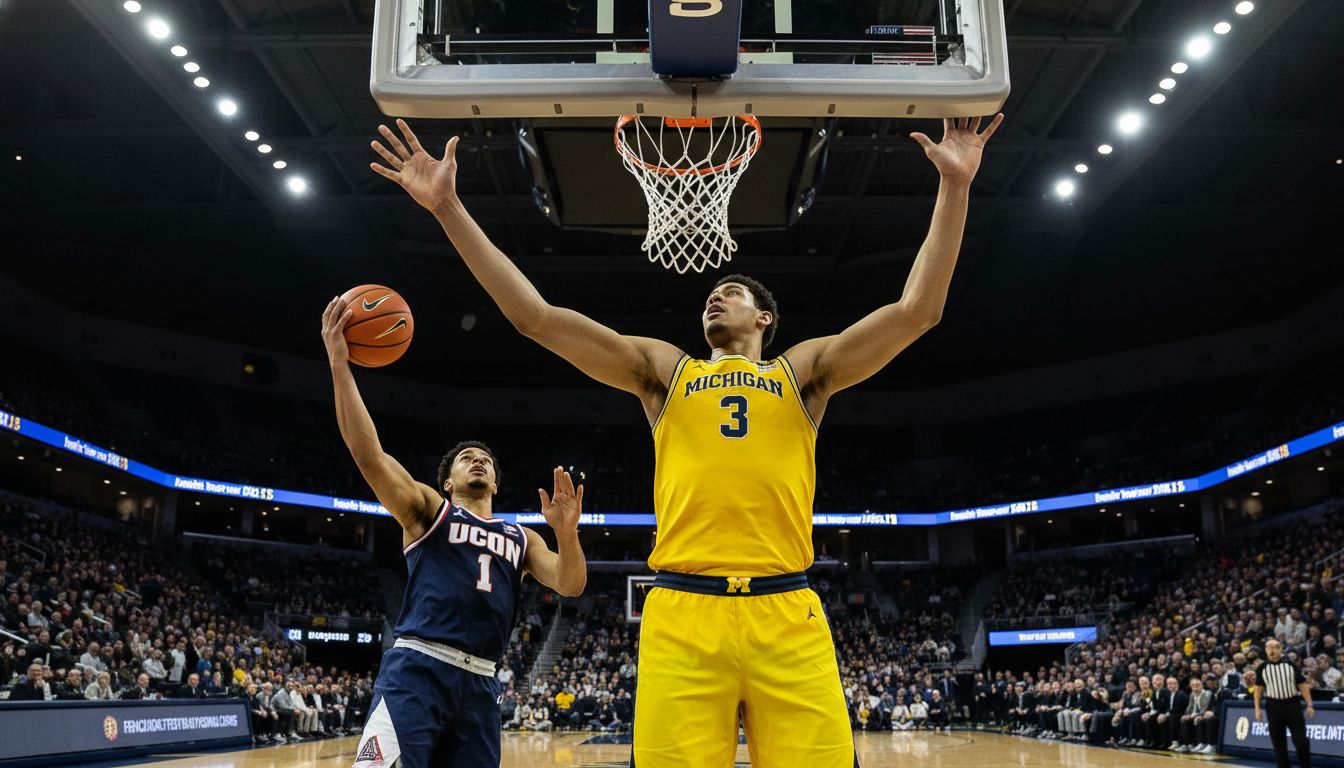
The second half turned when Michigan stopped worrying about aesthetics and leaned all the way into physics. The Wolverines had 61 combined points in the paint and at the free throw line to UConn’s 34, a simple, stubborn math problem the Huskies couldn’t solve. Mara didn’t replicate his semifinal explosion, but he erased Reed’s postseason momentum and altered enough shots that UConn went through a stretch of 13 straight missed threes and a pile of rim attempts that never quite got clean. Morez Johnson Jr. quietly stacked a 12‑point, 10‑rebound double‑double, the sort of line that wins you banners and gets you a passing mention once the confetti falls. UConn coach Dan Hurley put it plainly afterward: they were legit, they were tall, and they made the rim feel like a postage stamp.
Cadeau’s arc is the human spine of this story. After two rocky years at North Carolina, he arrived in Ann Arbor with a reputation that had more questions than exclamation points. On Monday, he played like someone tired of auditioning. He attacked gaps, lived in the lane, drew contact and hit the one three you have to hit in a title game – the late dagger that pushed the lead to double digits and forced UConn out of its comfort zone. When he talked afterward about being down on himself a year ago and now holding the Most Outstanding Player trophy, it was less a redemption speech and more the sound of a player finally catching up to his own belief.
This Michigan group is being sold as a “Monstars” outfit, which is convenient shorthand but a little lazy. Yes, the size is real, and yes, they changed games simply by showing up in the lane with arms everywhere. But the more interesting piece is the decision not to flinch when the formula had every opportunity to crack. An overtime escape against Wake Forest, a tight win at TCU, a Big Ten title‑game loss to Purdue – those are the moments when coaching staffs are tempted to reinvent the wheel. May and his assistants went the other way after a long conference‑room autopsy: they came out more convinced the original plan would work. There’s a lesson there for every athletic department that treats one bad week like a referendum.
Even inside the game, that theme held. At halftime, with Michigan up four but wobbling, veteran forward Will Tschetter pulled the group together and delivered the kind of huddle that never makes the box score but often decides it. The message, by teammates’ accounts, was simple: we haven’t played our best, and we’re still in control, so stop drifting and remember who you are. That’s not exactly Hollywood dialogue, but locker rooms tend to run on blunt truths, not speeches. Michigan came out of the break playing like a team more interested in getting stops and paint touches than proving a point to the outside world.
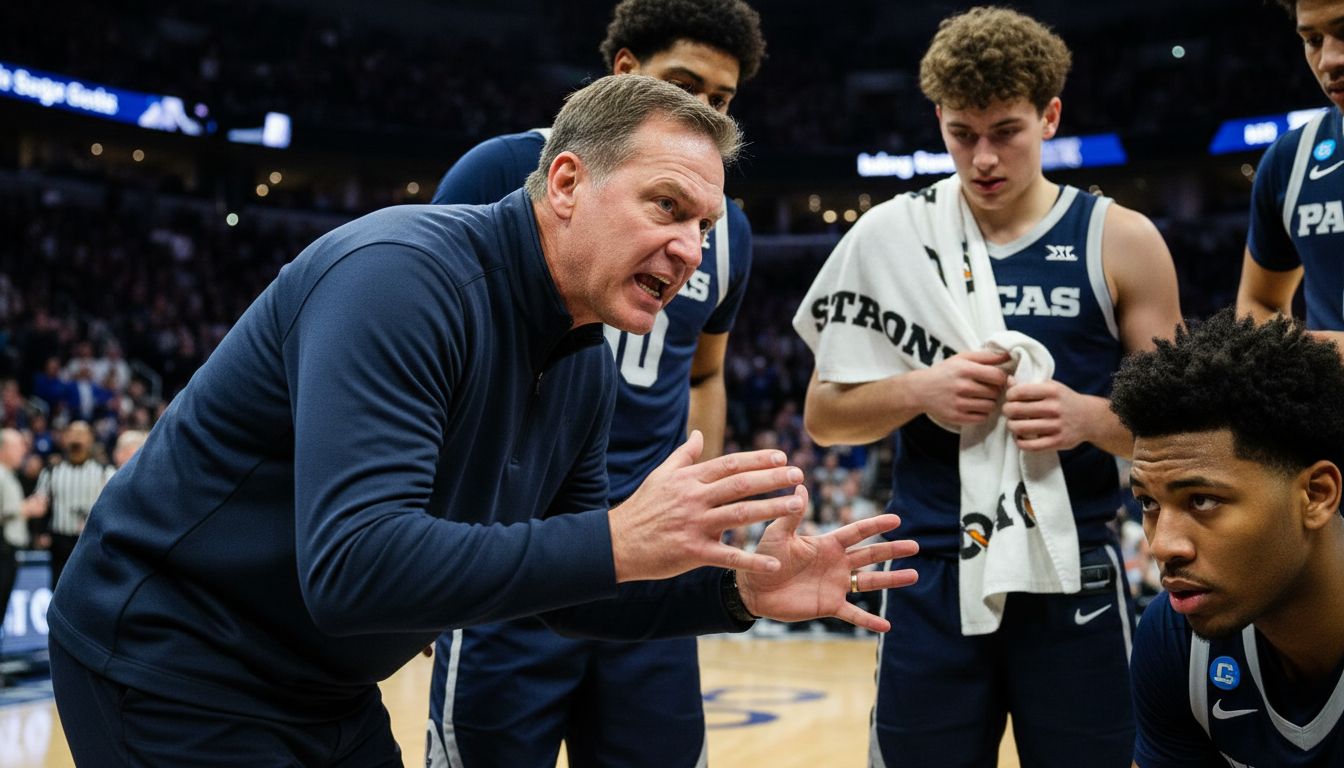
For UConn, this is less a collapse than a hard reality check against a roster specifically built to punish their weak spots. Foul trouble returned at the wrong time, with Solo Ball piling up whistles and Silas Demary Jr. fouling out just as the Huskies needed stability. The threes they’d been living with all March stopped falling, and there was no easy way to manufacture points at the rim against Michigan’s front line. When a staff as detail‑oriented as Hurley’s is reduced to saying, in essence, “They were just better,” that tells you plenty about the matchup. You can be a great program and still run into the wrong team at the wrong time.
Strip away the confetti, and this title is about a program choosing identity over panic. In an era when rosters flip yearly and systems are treated as disposable, Michigan committed to a way of playing – big, physical, unapologetically inside‑out – and lived with its bad nights rather than chasing a new personality every time a game got dicey. That kind of institutional patience isn’t glamorous, and it doesn’t trend, but it’s how you hang something permanent from the rafters. The Wolverines will get the way‑too‑early No. 1 tags and the “superteam” headlines now; that’s the tax you pay for being right about yourselves in public. Underneath all of that, this was a season defined by a quieter choice: staying the course when it would have been much easier, and much louder, to tear it up.