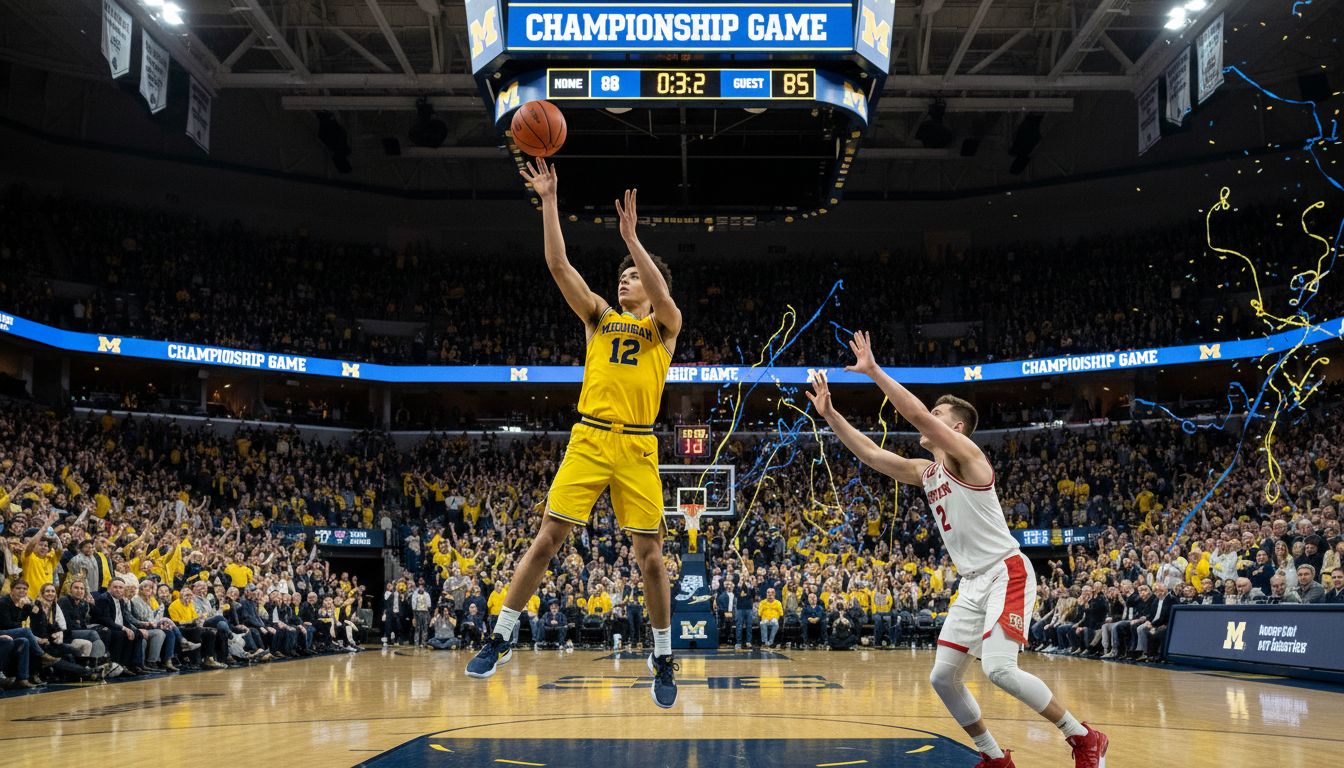
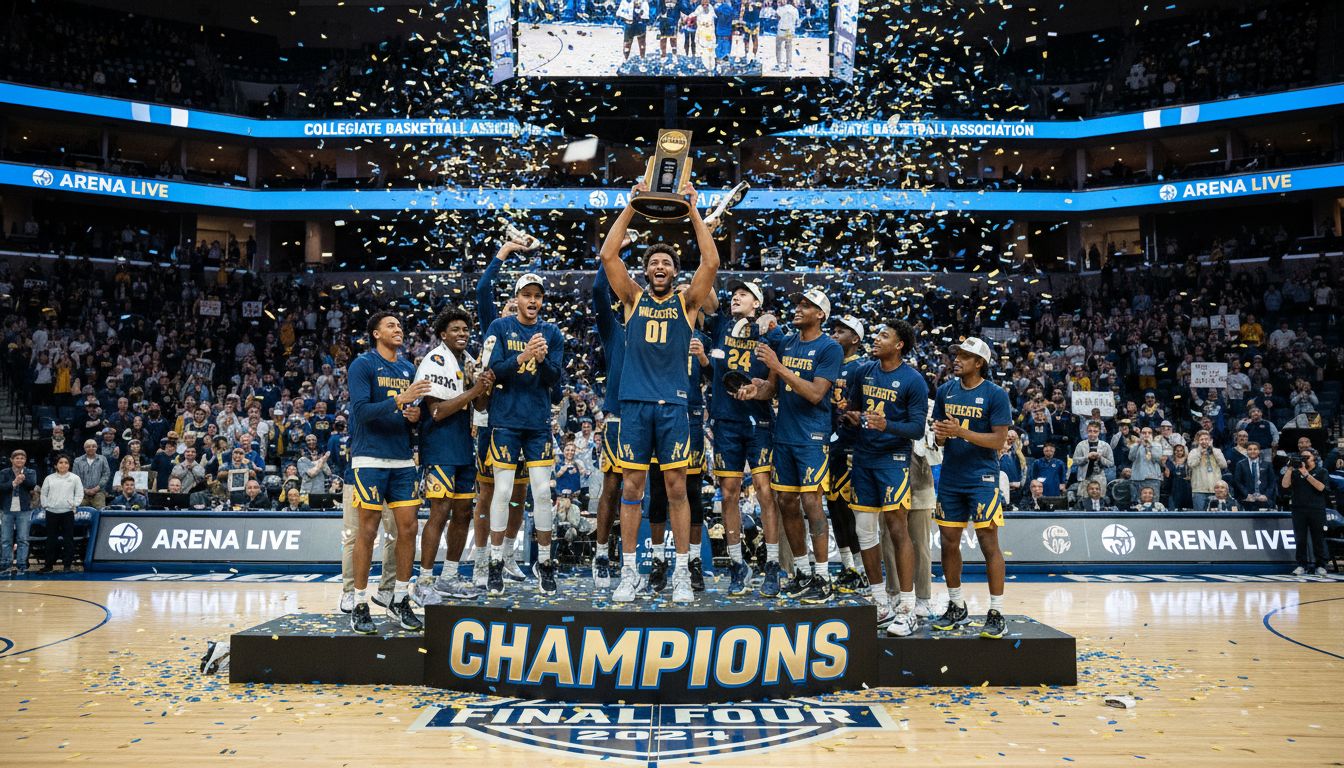
If you follow Carolina basketball long enough, you get used to living with ghosts. Most winters in Chapel Hill, they wear argyle, they’re left-handed, and they pull up at the elbow like it’s a birthright. But every now and then, one of those ghosts puts on another shade of blue, and you have to decide what to do with that feeling. That’s where I found myself watching Elliot Cadeau — yes, that Elliot, the former North Carolina point guard once dared to shoot by entire scouting reports — raise a trophy in maize and blue as the Most Outstanding Player of the Final Four. His Michigan Wolverines had just ended UConn’s bid for a modern dynasty, 69–63, and if you care about the ACC, the Big Ten, or just the psychology of young athletes, Cadeau’s arc is worth sitting with for a minute.
On paper, the story is simple enough. Cadeau spent two seasons at North Carolina, running the offense, leading the team in assists as a freshman, and shooting just 27.4% from three (39-of-142). Opponents circled his name on the scout as a non-shooter; Alabama literally built its 2025 Sweet 16 game plan around daring him to fire from deep. That gamble worked, at least in the box score and the bracket: North Carolina’s season ended with a thud, and the national narrative settled quickly on Cadeau as a limitation instead of a foundation. From a distance, it reads like just another transfer-portal breakup, one more data point in an era when rosters move faster than the ink can dry on commemorative posters.
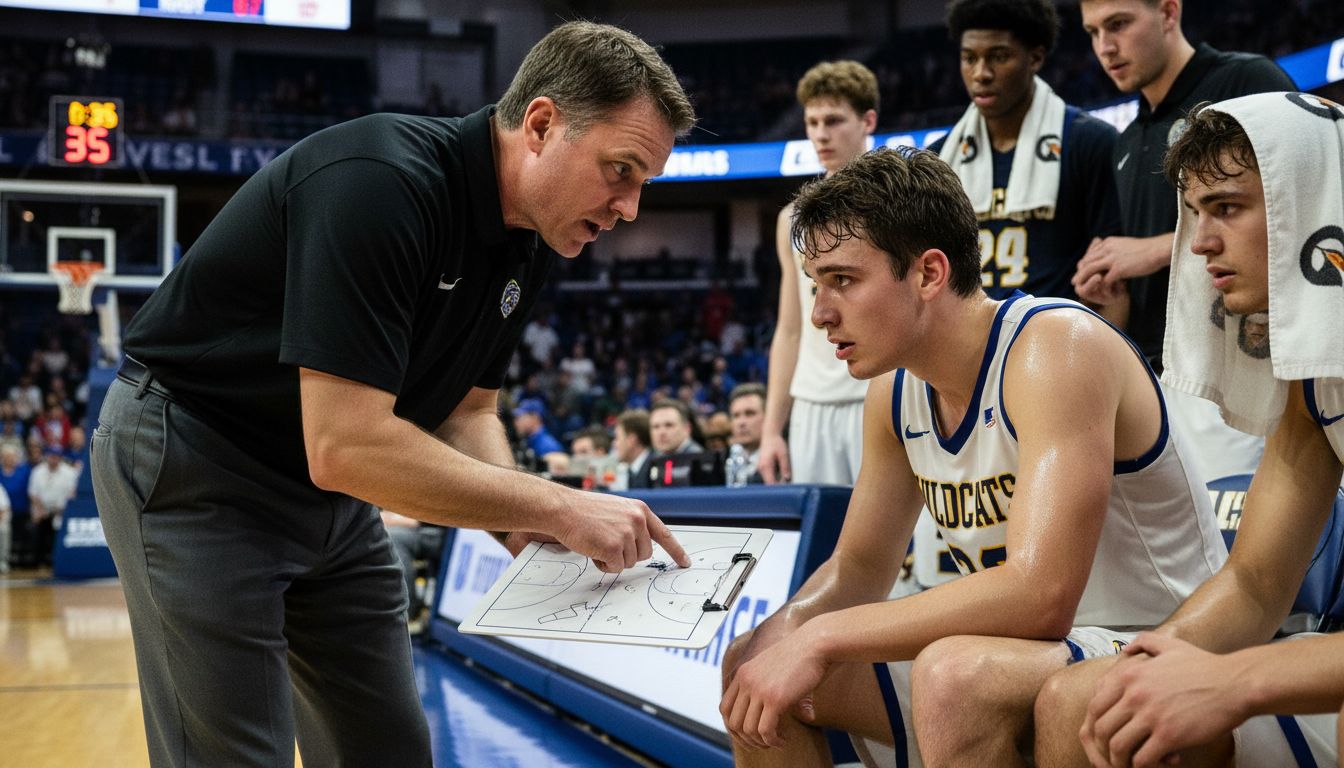
But zoom in, and what you see looks less like a clean break and more like a young point guard caught between expectation and development. At Carolina, Cadeau was asked to be both conductor and completed symphony — to create for others while also punishing defenses that ignored him. When the shot didn’t come around quickly enough, the public verdict arrived right on schedule: he was the problem, the ceiling, the reason March ended early. Anyone who has ever taught, coached, or advised a 19-year-old knows how reductive that narrative is, and how corrosive it can be when it gets repeated on talk shows and timelines. The portal gave Cadeau an exit, but it also offered something harder to quantify: a chance to find a staff that believed his shooting wasn’t a fixed identity but a skill still in process.
Enter Dusty May and Michigan, a program that hadn’t hung a national title banner since 1989 and a coach looking for a true point guard "quarterback" to unlock a talented roster. May and his staff had watched Cadeau in high school and prep ball and saw what they believed was still there on film: court vision bordering on savant, feel for tempo, and just enough touch to project a leap as a shooter. Crucially, they didn’t treat that leap as a wish; they built it into the plan. Cadeau describes it simply: a coach who believed in him and "let me shoot whenever I wanted" — in practice first, and then, progressively, under brighter and brighter lights. For all the ink we spill on schemes and analytics, sometimes the underlying mechanism is as old as coaching itself: consistent trust, extended over time, with room to fail without being permanently labeled a failure.
That slow, mostly invisible work is what made the moment with 12:56 left against UConn so striking. Michigan was clinging to control of the game, UConn making its predictable run, the kind of push that has buried so many opponents over the last four years. The ball swung to Cadeau on the perimeter, and—just like Alabama once hoped he would—he was wide open. A year ago, that shot was a test he seemed doomed to fail; this time, it was a question he’d already answered in empty gyms and film sessions. He rose, no hesitation, and drilled Michigan’s first three of the night, nudging the lead into double digits and, effectively, shifting the emotional balance of the title game.
You can frame that sequence as a tidy basketball metaphor — growth, resilience, redemption — and it is all of those things. But it is also a reminder that our culture still struggles with giving young athletes room to be learners. Cadeau heard the noise; he said as much on Instagram Live after the title game, not exactly in Sunday-school language. You may not love the phrasing, but buried in that raw edge is something very human: a 20-something who absorbed years of public doubt and finally had a platform to say, in essence, that those takes were incomplete at best. For those of us who care about the so-called "student" in student-athlete, his story raises uncomfortable questions about how quickly we turn developmental checkpoints into verdicts, especially in revenue sports.

There’s a temptation, especially around Chapel Hill, to view Cadeau’s success at Michigan as an implicit indictment of North Carolina — proof that his potential was "missed" or mishandled. Reality, as usual, is messier. Player development is not a straight line, and fit is not a moral category. Sometimes the academic, cultural, and basketball ecosystems that shape a player’s first stop aren’t the ones that can best support their next leap. Michigan offered Cadeau something he needed right now: a coach who doubled down on his strengths, a system that gave him on-ball reps, and a locker room that trusted his decision-making even when the box score didn’t immediately reward it.
From a broader lens, Cadeau’s arc is one of the more compelling transfer-portal success stories we’ve seen in this young era. It shows the portal at its best: not just as a marketplace for instant contenders, but as a second-chance lab for players whose narratives were written too early. His journey complicates the easy talking points about loyalty and quitting; leaving one program doesn’t preclude doing the hard work of reinvention. Michigan didn’t just inherit a finished product; they partnered in rebuilding his game and, just as importantly, his confidence. In return, he delivered what point guards dream about and coaches quietly chase their whole careers: a national title and a postseason run that will sit at the center of program lore for decades.
So where does that leave those of us still draped in Carolina blue, watching a former Tar Heel cut down nets somewhere else? If you’re looking for a clean emotional script, you won’t find one here. It’s possible — and frankly healthy — to feel the sting of seeing a player thrive elsewhere while also feeling genuine admiration for the work he put in to get there. Cadeau’s story doesn’t diminish Carolina’s tradition or the values Dean Smith built this community on; if anything, it underscores an old Smith-era truth: the game is ultimately about people, not just programs. If we believe that, then a young man finding his game, his voice, and his joy in a different jersey is something you tip your cap to, even if you do it with a sigh and a glance at the rafters in the Smith Center.
In the end, Michigan gets its long-awaited second title, the Big Ten snaps a drought dating back to 2000, and Elliot Cadeau walks away as the Most Outstanding Player on the sport’s biggest stage. North Carolina, for its part, will keep recruiting elite guards, keep evolving its own approach to development, and, yes, keep sending players into the portal and welcoming some out of it. That’s the modern landscape, whether we romanticize the past or not. What Cadeau has shown — for coaches, fans, and the players quietly grinding on underappreciated weaknesses — is that identity in college basketball is more fluid than ever, and that the right mix of belief, structure, and stubborn self-belief can turn a perceived flaw into the pivot point of a championship. If you love the college game, that’s a future worth rooting for, even on the nights when the celebration colors aren’t quite the shade of blue you grew up with.