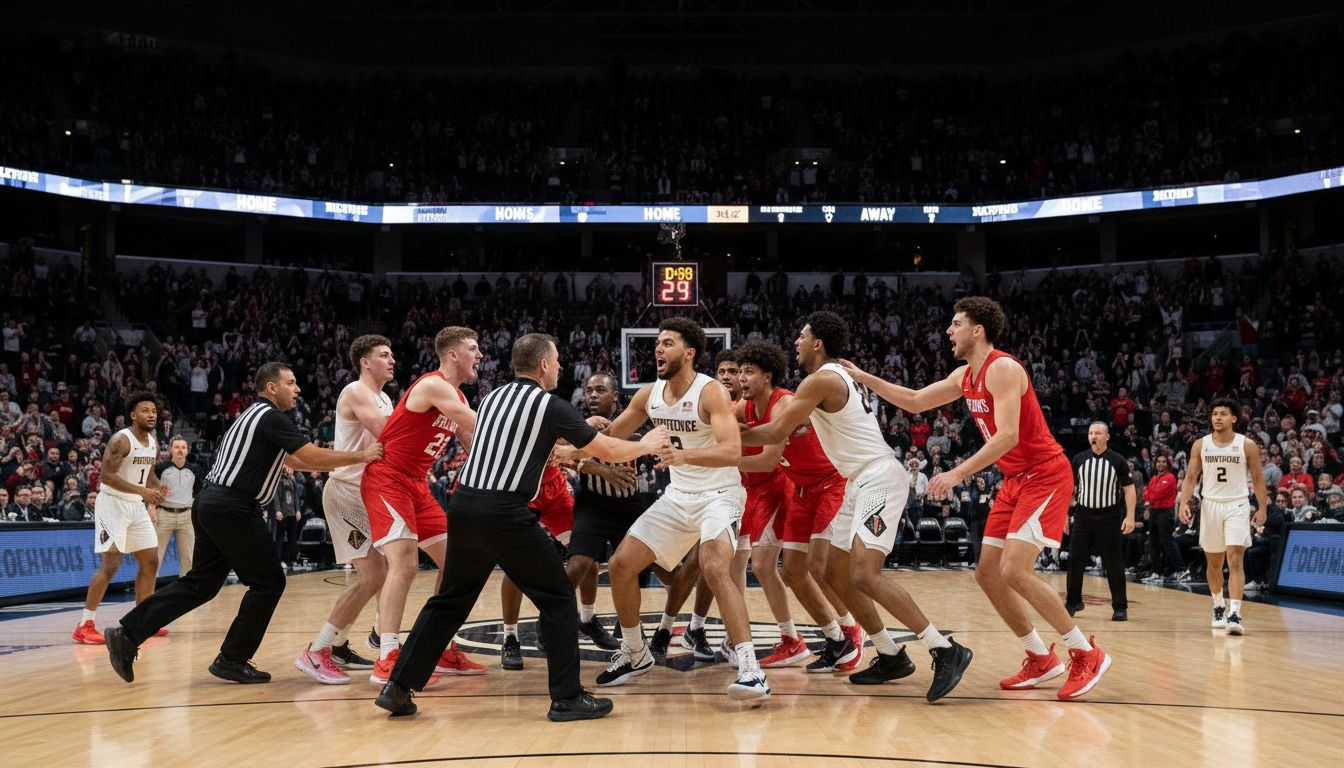
Valentine’s Day is supposed to be about hearts and flowers, but in the Big East it turned into fists and flagrants. Providence and No. 17 St. John’s gave us an ugly, extended brawl after a hard foul by Duncan Powell on Bryce Hopkins, the former Friar now starring for the Red Storm. Six players got tossed, the officials spent nearly 20 minutes sorting it out, and whatever “love” was in the building left with the first shove. Moments like that always force us to ask what we want college basketball to be: theater with edge, or chaos with a TV contract. Somewhere between those two is the sweet spot, and on a day packed with statement wins and brutal collapses, the sport spent 12 hours wobbling on that line.
Let’s start with the fight, because that’s what everyone’s talking about at the barbershop and in the group chats. Bryce Hopkins’ return to Providence was emotional before the opening tip; he’s the kind of transfer whose exit doesn’t just move numbers on a roster, it hits a fan base in the pride. Powell’s flagrant-2 wasn’t just a bad basketball play, it was a reminder that the transfer portal era has blended rivalry and resentment into a volatile mix. You can’t legislate out every hard foul, but the Big East now has a responsibility to send a clear message with suspensions that this kind of escalation is a line you don’t cross. Intensity is the soul of conference play, but when a 20-minute review becomes the main event, everybody loses—from the players on tape to the kids in the stands trying to fall in love with the game.
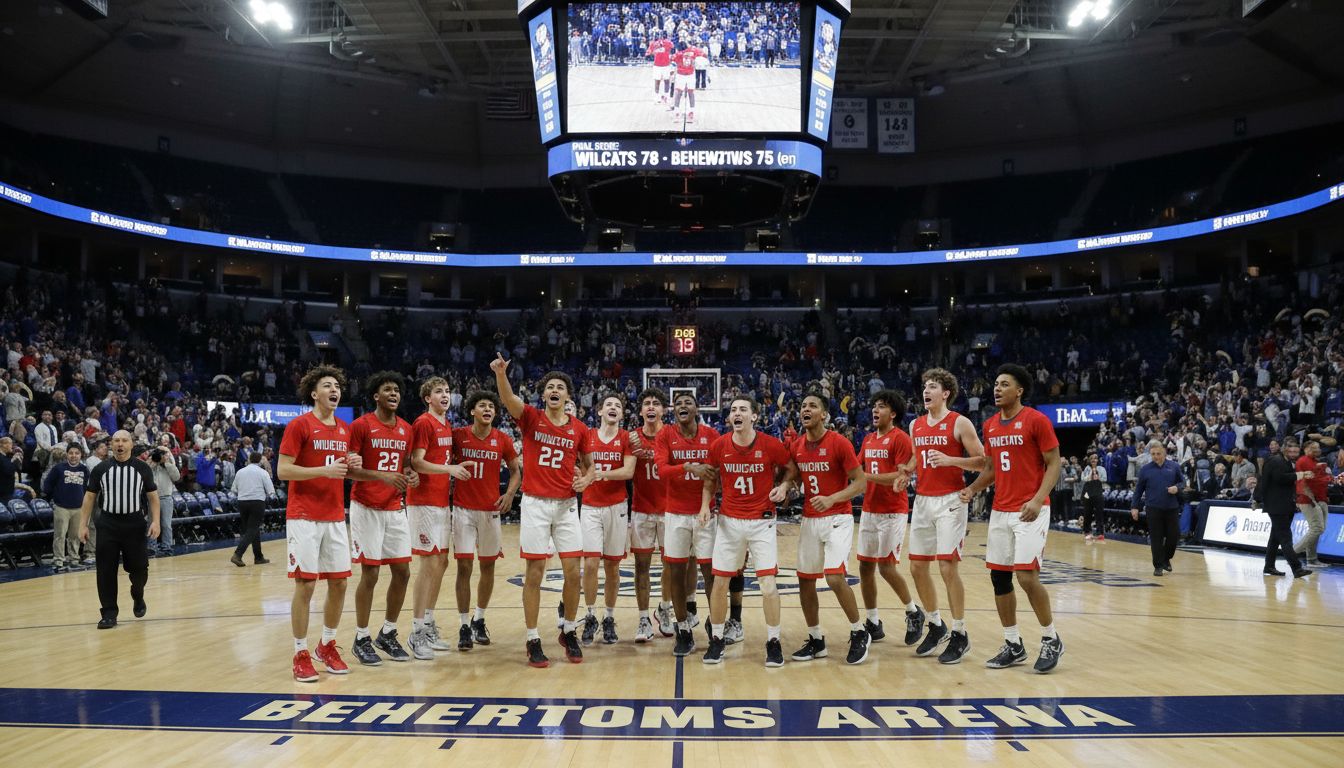
On the floor, though, St. John’s did what good teams have to do after chaos: they settled in and handled business. In a game that easily could’ve spiraled, the Red Storm kept their composure better than the Friars and walked out with the kind of road win that hardens a March résumé. For Providence, the story is darker; this isn’t just about an ugly clip on social media, it’s about a team that let emotion override execution in a pivotal league game. Big East basketball has always been physical and loud—that’s part of the charm—but if the brand becomes more about brawls than ball movement, it stops being a proving ground and starts being a cautionary tale. The league office doesn’t just need to review the tape; it needs to protect its identity before the highlight shows do it for them.
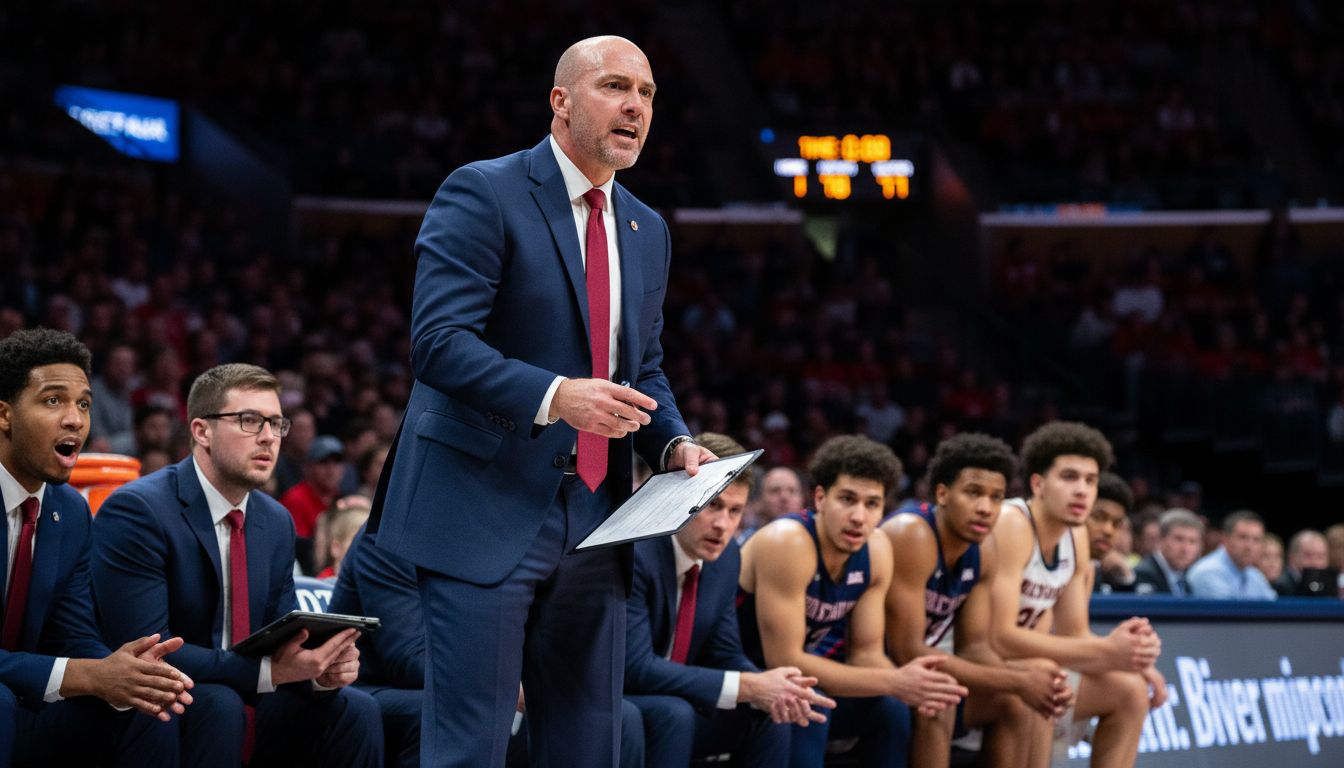
Step outside the Big East for a second and the day looked like a mini March. No. 16 Texas Tech walked into Tucson and knocked off No. 1 Arizona in overtime, stacking yet another win on what might be the nastiest résumé in the country. When you’ve already beaten Houston and Duke and then you erase a late seven-point deficit on the road, that’s not a fluke, that’s a profile. Arizona, playing short-handed without Koa Peat in the second half, suddenly looks mortal after two losses in a week, clearing the path for Michigan to slide into the top spot after its demolition of UCLA. Polls aren’t everything, but they’re a weekly mirror, and right now that reflection says the “dominant No. 1” era for this season is over before it really started.
Elsewhere in the power leagues, we saw the full emotional spectrum of college hoops in about three hours. Duke reasserted itself as ACC royalty with a wire-to-wire win over Clemson inside Cameron, the Boozer brothers and Isaiah Evans playing like they grew up practicing game-winners in that gym. Iowa State smothered Kansas, getting real help from its supporting cast instead of asking Milan Momcilovic and Joshua Jefferson to do every single thing on every single possession. Rob Wright III turned BYU-Colorado into his personal showcase, dropping 39 with ruthless efficiency—12-of-16 from the field and perfect from deep—while basically dragging his team through overtime by sheer will. And down the bracket, we watched NC State cough up a seven-point lead in 55 seconds, the type of collapse that sticks to a program’s reputation long after the box score disappears.
If you care about Selection Sunday—and I absolutely do, I treat the bracket like some folks treat the church bulletin—days like this reshape the edges of the field. Ohio State’s loss to Virginia, paired with Northwestern’s slide, threatens to leave the Buckeyes without a single Quad 1 win as March approaches, which is basically begging the committee to leave your name off the line. Virginia Tech gave back nearly all the goodwill it earned by beating Clemson, getting run out of its own building by Florida State in a Quad 3 landmine you just cannot step on. Texas moved the other direction, stacking a fourth straight win and another quality victory to inch off the bubble, while Georgia and Auburn melted toward it with ugly, ill-timed SEC losses. Meanwhile, Navy—yes, Navy—keeps quietly rolling at 21-6 with a road win at Colgate, reminding us that while the cameras live in the power leagues, the joy of March is everybody showing up to the same dance.
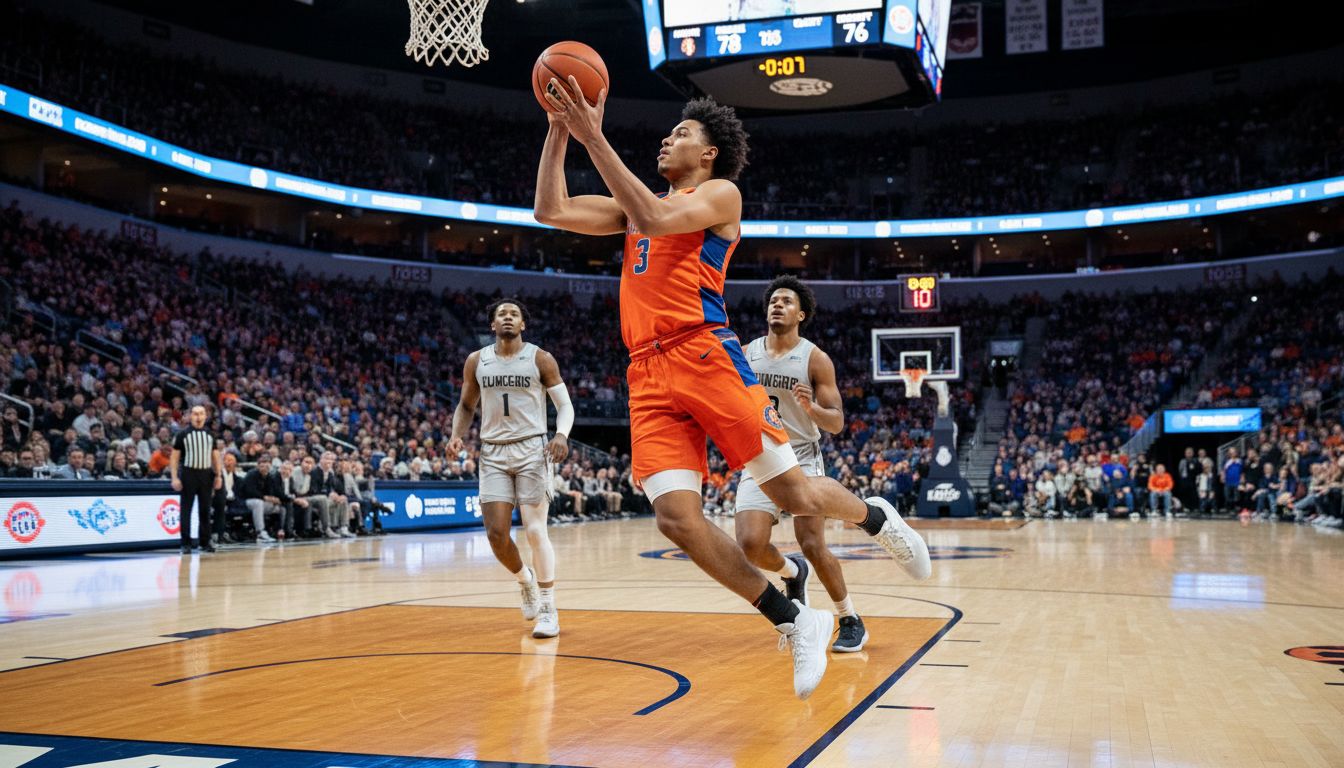
The SEC, in particular, looked like a family reunion where only one cousin showed up on time with their life together. Florida, last year’s national champ but not last year’s regular-season king, is suddenly running the league at 10-2 and looking every bit like a team ready to defend its crown in a real way this time. A&M is riding another trademark skid, Auburn is spiraling without Keyshawn Hall, Georgia is coughing up bracket equity, and Texas is clawing its way out of the mess like somebody who finally found the right GPS address. In that chaos, the Gators’ consistency matters; they’ve turned early-season close losses into lessons instead of scars, and that’s what separates March threats from March cameos. If you’re building a bracket today, Florida isn’t just an SEC favorite; it’s one of the few teams playing with a clear, ascending identity while everyone else is still arguing with the mirror.
All of this sits inside a bigger, messier conversation about what college basketball is turning into in the portal and NIL era. You’ve got transfers like Bryce Hopkins walking back into old buildings as villains, freshmen like Darryn Peterson and Mikel Brown Jr. carrying the weight of projected draft slots and fan expectations, and programs living and dying by metrics like WAB that most casual fans have never heard of. On one hand, the talent spread is beautiful—Texas Tech knocking off No. 1 on the road, Navy owning its league, BYU finding a star in Wright III—and it keeps more campuses buzzing deep into February. On the other, the volatility shows up in ugly ways: brawls that overshadow the game, late-game meltdowns from teams trying to protect fragile résumés, and young players treated more like short-term investments than students with long-term futures. The challenge, for coaches and conferences and yes, for us as fans, is to demand both accountability and humanity without dulling the edge that makes this sport feel like two hours of live-wire energy.
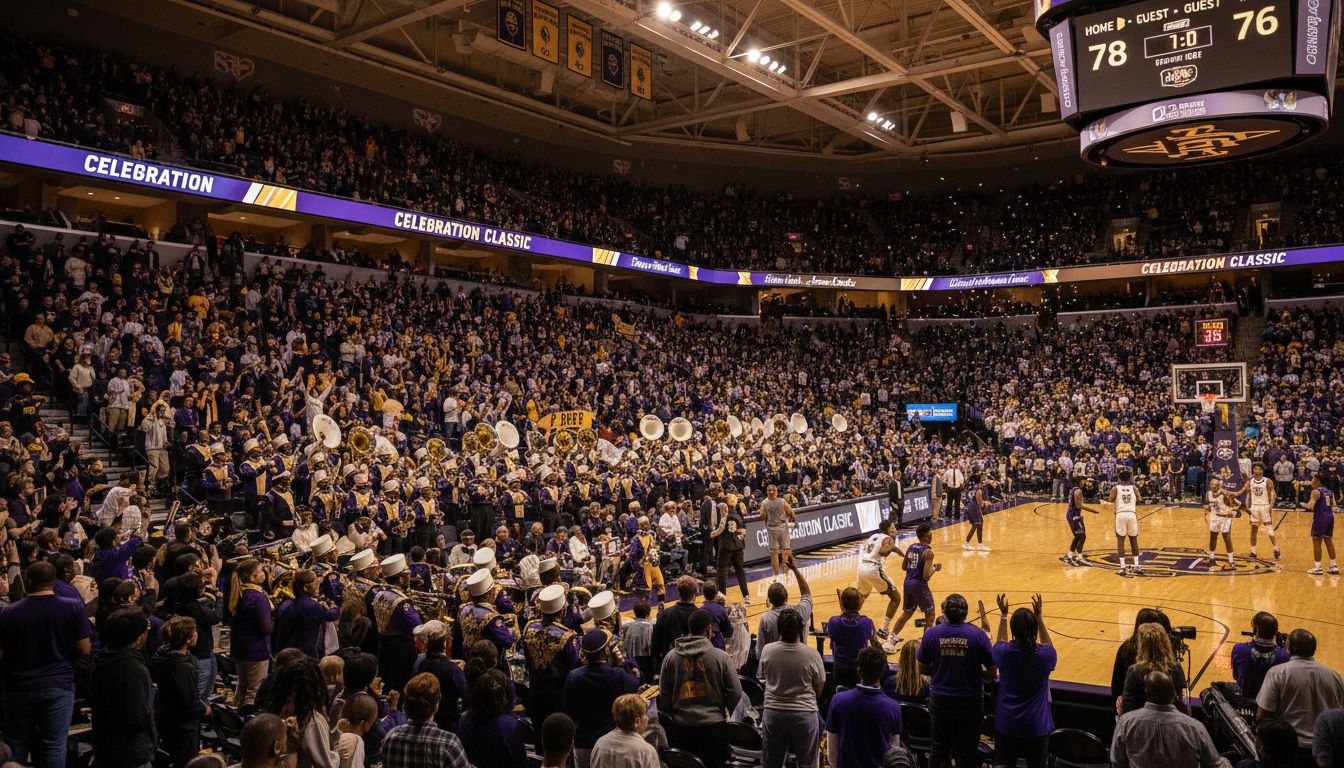
As someone who proudly reps an HBCU degree, I can’t help but watch Saturdays like this and think about visibility and value. The energy we pour into breaking down Florida’s WAB or Kansas’ rotations is the same energy that can elevate a Norfolk State or a Texas Southern when they steal a bid and scare somebody in round one. The chaos at the top of the sport this year should be an invitation to widen the lens, not narrow it—if No. 1 isn’t safe at home, then there’s no excuse not to schedule and spotlight the programs folks like to pretend are just “first weekend stories.” When we hype March Madness, we’re really hyping possibility, and that belongs as much to the small-budget gyms and HBCU band-filled arenas as it does to the blueblood cathedrals. So enjoy the Big East bruises and the SEC bubble drama, but save some love for the teams grinding in smaller fonts on the ticker; they’re writing chapters in this story too, with less margin for error and just as much heart.
By the time the smoke cleared—literally in Oklahoma’s case, where a popcorn fire stopped play mid-game—we were left with a familiar feeling for mid-February: nobody’s safe, everybody’s exposed, and the season’s biggest questions are still wide open. Is Florida the most complete SEC team or just the one handling chaos the best right now? Can Arizona shake off a brutal week and reset before March erases the margin for error? Will the Big East get ahead of its own narrative and make sure the next St. John’s–Providence headline is about shot-making and stakes, not swinging and suspensions? Whatever the answers, days like this are why I keep my weekends free: college basketball at its best is unpredictable, imperfect, and entirely alive—and if we’re honest, that’s exactly why we can’t look away.