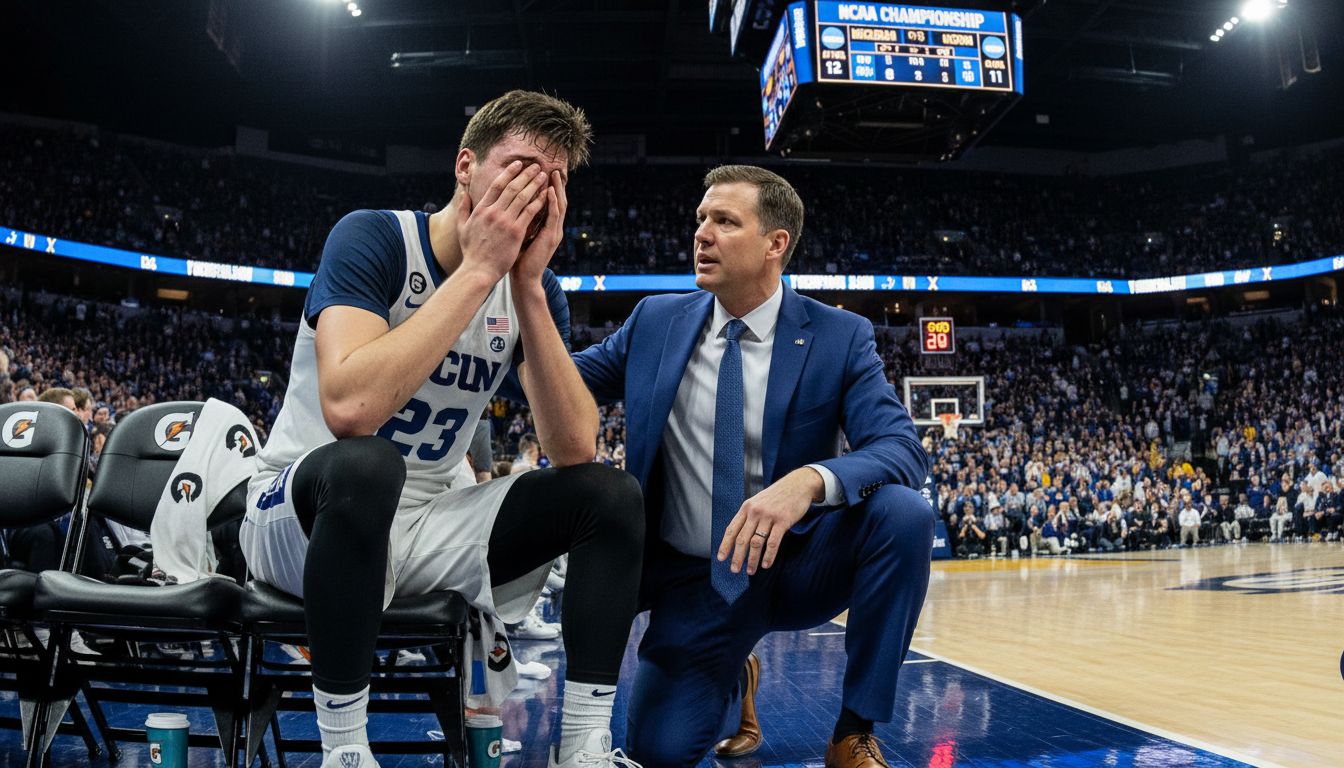
If you only watched the trophy presentation, you’d think Michigan’s 69-63 win over UConn was a coronation and a clean break with history. But zoom in, and the more interesting story is on the other bench: Dan Hurley with his hand on Alex Karaban’s shoulder, a coach trying to hold together a player who just ran out of college basketball clock. This wasn’t just another loss; UConn was a few made shots away from joining John Wooden’s UCLA in that rare, dusty archive of three titles in four years. Instead, they walk off as two-time champs who almost pulled off the impossible, which is honestly a much more human, and maybe more relatable, ending. Dynasties are fun, but watching people process heartbreak in real time tells you more about what this sport actually is.
On paper, this game was supposed to be Michigan’s track meet. The Wolverines had sprinted through the tournament, dropping 90-plus in every game like it was a group chat dare. They were the favorite, the fun offense, the team that made analytics people type in all caps. Yet UConn did what they’ve quietly done better than almost anyone over the last few years: they dragged the game into the mud and made every possession feel like a midterm you forgot to study for. Michigan didn’t score a single point in transition or off turnovers in the first half, shot 38% overall, and still somehow won because UConn’s shooting picked the worst night possible to go ice cold.
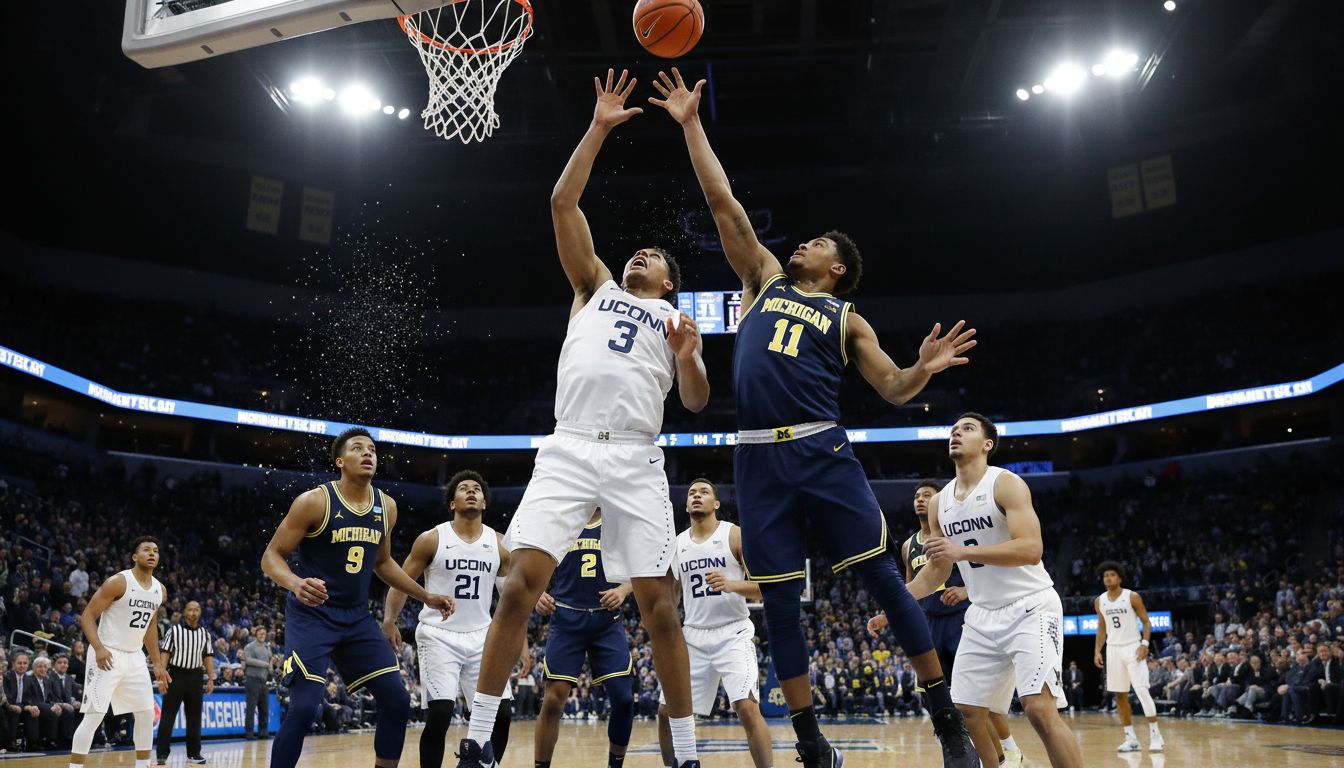
If you’re a UConn fan, the box score reads like a slow-motion cringe. The Huskies shot just 31% from the field, went 4-for-18 from three after halftime, and still had a real shot because they pounded the glass like it was a full-time job. Twenty-two offensive rebounds, 19 second-chance points, and a defensive effort that held the tournament’s cheat code of an offense under 40% should be the ingredients for a banner night. Dan Hurley knew it too, which is why he bristled at the old cliché that losing in the title game is somehow worse than bowing out earlier. “That is the biggest bunch of crap,” he said, and he’s right; pretending a Final Four exit hurts less is just emotional load management. If you’re here, you wanted to be here, and UConn went out on the biggest stage playing their style, living with the makes and misses.
At the center of all this is Alex Karaban, who quietly became the most successful player in UConn history without ever really feeling like a “look at me” star. Karaban leaves with 126 wins, two national titles, and one last almost, which might torment him this week and turn into a badge of honor five years from now. He came back to Storrs for a shot at a third ring, not because it made sense for some draft board, but because he believed this specific team could do something historic. That’s very college basketball-core: choosing vibes, continuity, and a campus over the clean, linear path of “maximize your stock and bounce.” In an era where we talk about players like they’re crypto, Karaban felt refreshingly analog—low-drama, high-impact, just hooping and stacking wins.
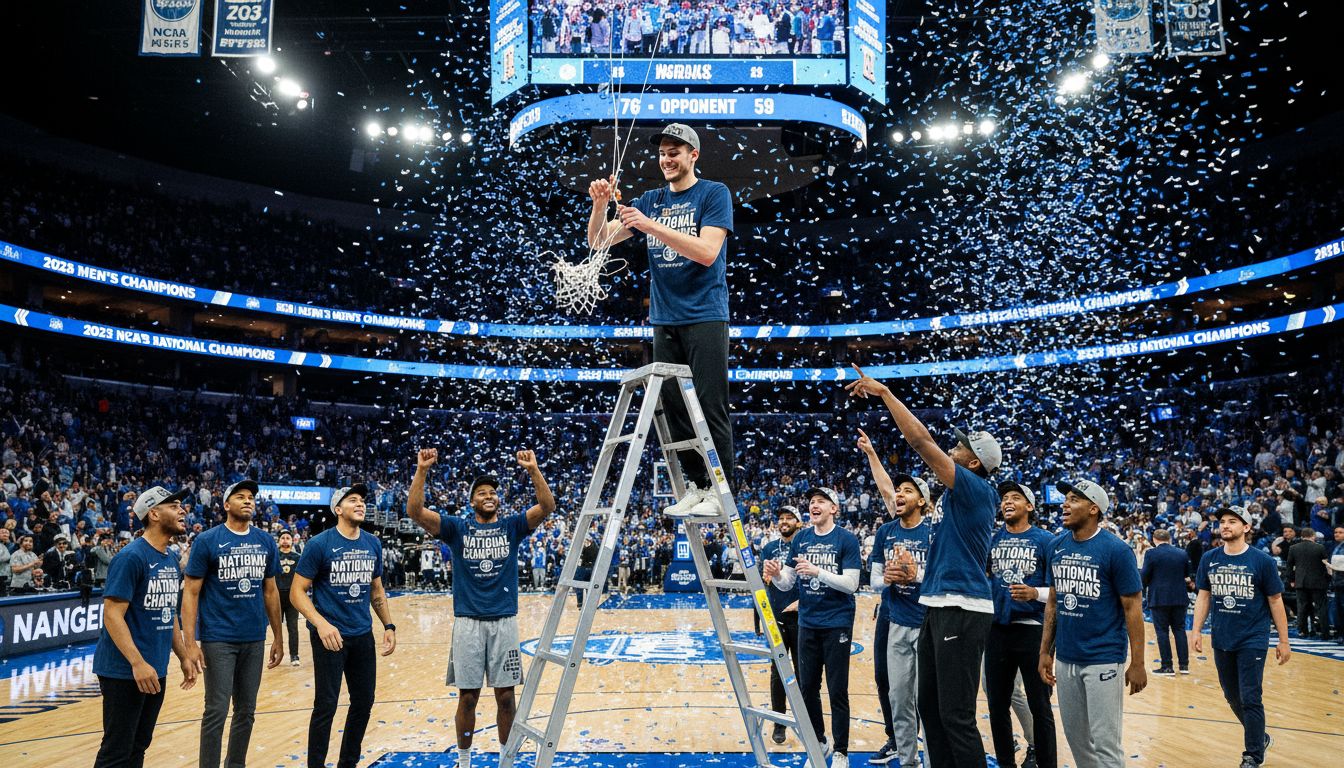
You could hear the conflict in his voice after the game. He talked about hurting “a lot right now,” about coming back to win that third title and falling short, but he also zoomed out in a way a lot of adults don’t manage under less pressure. He framed his career as leaving UConn “in a better place” than when he arrived, and for once that didn’t sound like a media-coached line; it sounded like someone who understands legacy as more than rings and draft slots. Karaban being the winningest player in program history means he didn’t just witness the rise—he was architecture. When Hurley says, “This guy changed my life,” that’s not just a compliment; that’s a recruiting pitch built on truth.
Because let’s be honest: UConn is now sitting in that rare air Hurley talked about, the “premier program” tier everyone claims but very few inhabit. Three title game appearances in four years, two national championships, and a near miss for a third is not a cute run; that’s a statement about infrastructure, buy-in, and a culture that survives roster churn and portal drama. Hurley’s sideline energy gets most of the memes, but the real story here is that players like Karaban keep choosing this program and then growing inside it. In a sport that’s increasingly transactional—NIL deals, transfer waivers, brand calculators—UConn has somehow built something that still feels like a college team first and a content machine second. That doesn’t mean players shouldn’t chase the bag; it just means there’s still room for a version of college hoops where joy, continuity, and growth aren’t just hashtag copy.
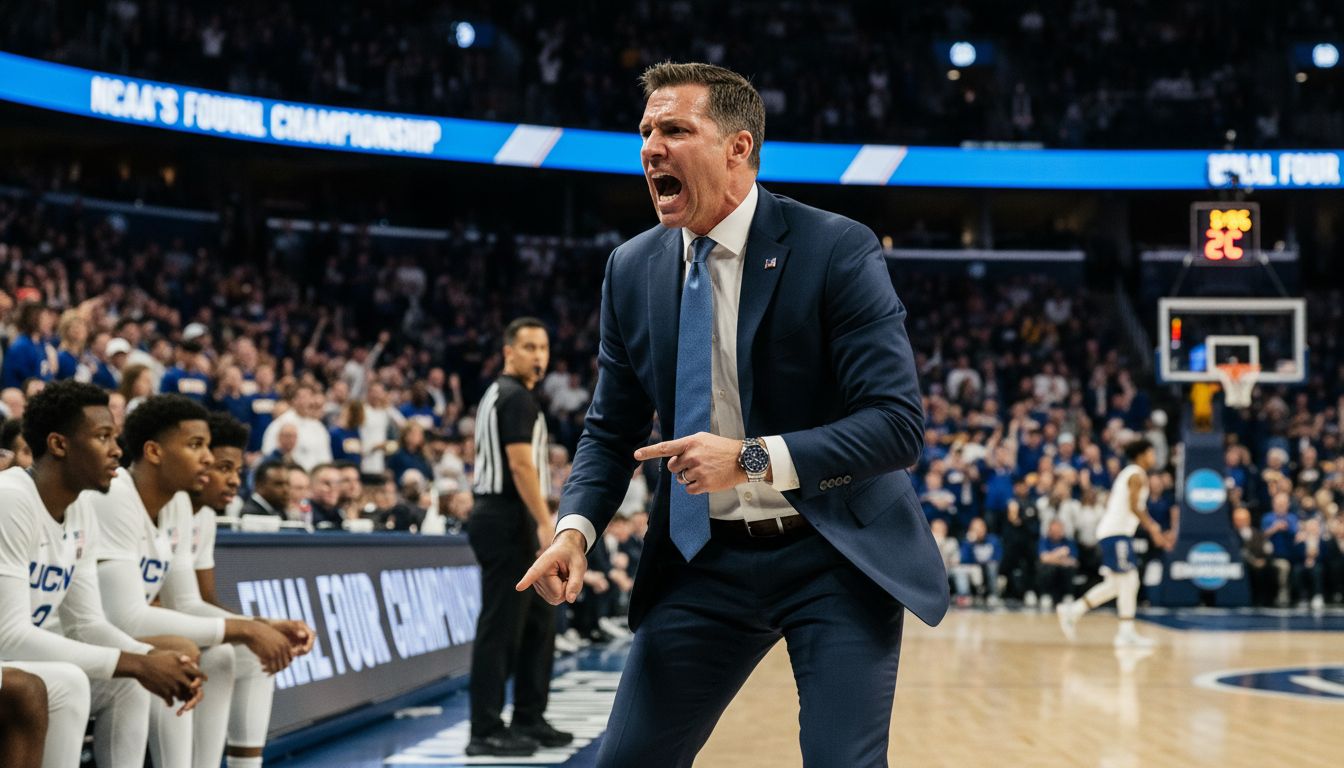
If you strip away the confetti and the sound bites, this game becomes a reminder of why people keep orbiting around March even as the sport changes under our feet. You had Michigan, a juggernaut offense finally pushed out of its comfort zone, and UConn, a dynasty-in-progress that did everything right except the part where the ball goes in. You had a coach fighting tears while defending the value of heartbreak, and a player trying to make peace with the fact that his story ends not with a three-peat, but with a very human almost. We love to talk about champions because it’s easy, but the teams that fall just short are often the ones that tell us who they really are. In that sense, UConn and Alex Karaban didn’t lose the night; they just gave us the most honest version of what it means to care about something you can’t fully control.
So yeah, Michigan gets the banner and the highlight montages, and they earned every bit of that. But on the other side, UConn walks away having proven they belong in every dynasty conversation, not because they won three in four years, but because they scared history and made it sweat. Karaban leaves as a program legend, Hurley leaves with another data point for his recruiting pitch, and the rest of us leave with a reminder that sometimes the most resonant sports stories end in tears instead of trophies. If you’re counting rings, this was a miss; if you’re counting meaning, it was a lot closer than the final score suggests. And for a sport that has always lived somewhere between heartbreak and hysteria, that feels exactly right.