If you spend your winters down here in SEC country like I do, you probably hear plenty about Kentucky drama, Auburn’s pressure defense and whoever the latest blueblood is up in the ACC or Big Ten. What you don’t hear much about is the Big West, a league that tips off when a lot of folks in Alabama are already putting the kids to bed. But if you care about March Madness — and I mean really care, bracket-nerd, stay-up-for-the-late-game care — you need to know this conference. It’s one of those true mid-major grinders where one weekend in March decides everything, and where the line between first place and fourth is thinner than the barbecue line outside Jordan-Hare on a Saturday night. So let’s walk through this thing like we’re scouting a nonconference opponent: who’s good, who’s dangerous, and who can absolutely wreck your bracket from way out on the Pacific.
The Big West is basically California’s neighborhood league with a couple of out-of-state guests, most notably Hawaii, which is about as west as you can get without falling into the ocean. Right now there are 11 teams in the conference, and only eight earn a ticket to the league tournament in March, so even just making it to that bracket is a fight. The top two seeds don’t just get a pat on the back — they get a straight shot into the semifinals, which is a massive advantage in any one-bid league where everybody’s bunched together. Seeds three and four get quarterfinal byes, which still matters, but those top two lines are where the power really lives. From an SEC lens, think of it like getting a double-bye in Nashville: you’re fresher, your legs are better and your margin for error is a whole lot wider.
On the men’s side, Hawaii and UC Irvine are locked in a proper tug-of-war at the top, tied at 10-4 in league play and already having split their head-to-head series. Hawaii stole the first meeting by a single point, 67-66, and Irvine answered with an 87-76 overtime win the second time around, which tells you these two programs are about as evenly matched as it gets. Just behind them you’ve got UC Santa Barbara lurking at 10-5, then a group of teams within a game or two — Cal State Northridge, UC Davis, Cal State Fullerton, UC San Diego and Cal Poly — all fighting over position and survival. Everybody else is down in the standings and, at least for now, on the outside of that eight-team tournament cut line: Long Beach State, UC Riverside and Cal State Bakersfield. In other words, there’s not a dominant Kansas or UConn here; it’s more like a league full of slightly flawed teams that can all punch each other in the mouth on the right night.
From the numbers side, Hawaii is the only men’s team cracking the top 100 in the NCAA Evaluation Tool, barely sneaking in at No. 99, with UC Irvine at 119 and UC San Diego and UC Santa Barbara also sitting in that top-150 range. Hawaii leans on defense like a veteran SEC squad that knows shots come and go but stops travel, ranking in the top 40 nationally in defensive efficiency while sitting way down the charts on offense. UC Santa Barbara is basically the mirror image — strong on the offensive end, leaky on defense — while Irvine and San Diego live in that middle ground where they’re good at most things without being elite at any one of them. That balance is why this race feels so wide open; KenPom and NET don’t really separate these teams much, and when the efficiency profiles look that similar, seeding and matchups in the conference tournament become the whole story. Get one of those top two seeds, skip two rounds of landmines and all of a sudden your odds of dancing go way up, even if you’re not scaring anybody on paper.
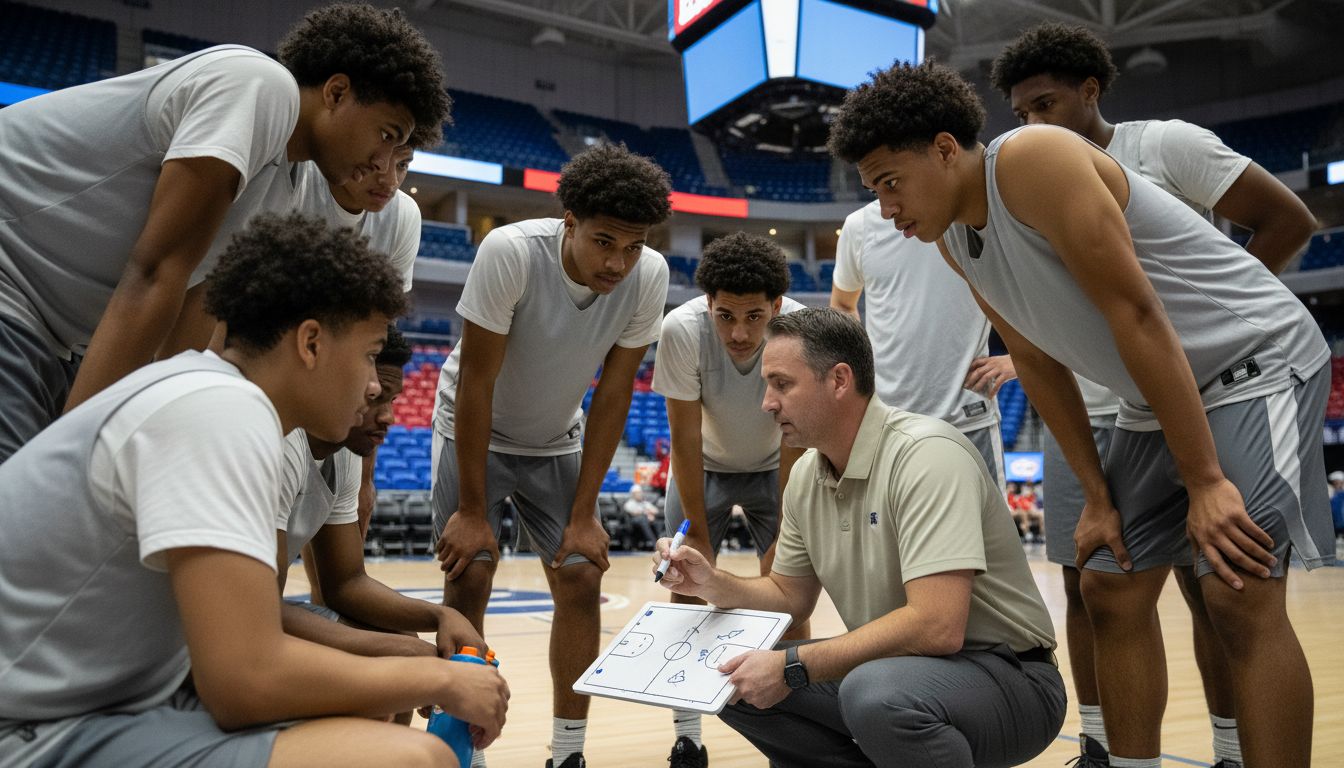
Talent-wise, the league has some names you’ll want to at least recognize when you’re half-watching a Big West title game on the Friday night of Championship Week. Hawaii rolls out four of the conference’s top-20 players in Player Efficiency Rating, led by seven-foot senior center Isaac Johnson, who anchors that defense and gives them a real rim presence. He’s joined by senior guard Quandre Bullock and forwards Harry Rouhliadeff and Gytis Nemeiksa, giving the Rainbow Warriors about as experienced and balanced a core as you’ll see at this level. UC Irvine counters with the league’s best overall player this season in senior forward Kyle Evans, whose PER tops the conference and whose game fits that classic mid-major star mold: efficient, versatile and relentless. UC San Diego chips in with multiple top-20 PER guys as well, and when you put it all together, you’re looking at a league where the top teams don’t have five-star recruits, but they do have grown men who’ve been in college weight rooms for four years and know exactly who they are.
Flip it over to the women’s side and the picture shifts, but the stakes stay the same: one bid, one golden ticket. UC San Diego is out front in the standings at 13-2, with UC Irvine right behind at 12-2 and UC Davis and Cal State Fullerton close enough to make this thing uncomfortable. UC Santa Barbara and Hawaii are hanging in that next tier, while UC Riverside and Cal State Northridge round out the current projected tournament field despite being under .500 in league play. At the bottom, Cal State Bakersfield, Long Beach State and Cal Poly are struggling, but in a conference tournament setting, all it takes is a hot week and a couple of off nights from the favorites to turn the thing upside down. We’ve seen that script in the SEC plenty of times; the uniforms may be different here, but the math is the same.
Nationally, the computers only really have eyes for UC Irvine’s women, who sit around the low-70s in NET and qualify as a true bubble team if things break perfectly. UC San Diego may be leading the league, but it lives down in the 130s in NET, with Santa Barbara, Davis, Hawaii and Fullerton all floating somewhere in the top 200 and everyone else well below that line. That gap tells you the selection committee is probably only calling this conference’s name once, and the safest bet is still the automatic bid going to the tournament champion rather than anyone sneaking in at-large. Within the league, though, Irvine has carved out an identity that travels: it’s the only team averaging more than 100 points per 100 possessions on offense, it knocks down threes at a high clip and it rebounds well enough to survive the misses. Hawaii, Irvine and UC San Diego all defend at a high level by Big West standards, but the Anteaters combine that defense with modern spacing and shooting, which is why the metrics keep circling their name.
Individual standouts on the women’s side deserve some spotlight, too, because they’re the kind of players who can swing a one-bid league by sheer force of will. UC Riverside’s Hannah Wickstrom is a bucket by any standard, sitting sixth in all of Division I in scoring at over 23 points per game and leading the conference in PER by a mile. Her team’s record isn’t pretty, but a guard who can fill it up like that makes the Highlanders a terrifying matchup in a tournament setting where one hot shooting night can erase three months of seeding. Cal State Fullerton’s Cristina Jones is another problem, ranking second in PER while averaging 16.5 points and 9.4 rebounds as a freshman, and also hounding people defensively with her ability to generate steals. Then there’s UC Davis center Megan Norris, one of the country’s elite rebounders and a classic do-everything post who scores, passes, blocks shots and just generally wrecks whatever offensive rhythm you thought you had when you drew up the scouting report.
So what does all this mean for those of us watching from SEC country, maybe flipping channels between an Auburn game and some late-night Big West action? First, it’s a reminder of why March is the most democratic month in American sports: Hawaii, Irvine, San Diego, Santa Barbara — none of them are crashing the Final Four, but one of them is going to get 40 minutes on national television with a chance to break somebody’s heart. Second, leagues like this are where you see the purest version of college hoops: older rosters, tough travel, no safety net and coaches who know one bad week can define their whole year. From an Auburn fan’s perspective, it also makes you appreciate how far programs in power leagues have come in terms of depth and resources, while still respecting just how dangerous these so-called mid-majors can be when the bracket comes out. If you’re filling out your picks this spring, don’t just look at the seed next to the Big West champ; check how they defend, how old they are and whether they’ve already survived a season full of coin-flip games — because those are the teams that don’t flinch when the lights get bright.