If you follow college basketball long enough, you learn that the sport has a mischievous streak. It saves its best chaos for the weeknights when you’re half-grading papers, half-watching a late tip, and suddenly the crawler at the bottom of the screen makes you sit up straight. Wednesday night was one of those nights: three ranked teams, all with national aspirations, walked into what looked like routine games and walked out as case studies in how fragile power really is in this sport. Portland stunned No. 6 Gonzaga in the West Coast Conference, Minnesota outlasted No. 10 Michigan State in the Big Ten, and Oklahoma State ran past No. 16 BYU in the Big 12. On paper, it’s just a line of scores; on the floor, it was a reminder that in college hoops, resources, reputation and recruiting rankings can all melt away in forty minutes.
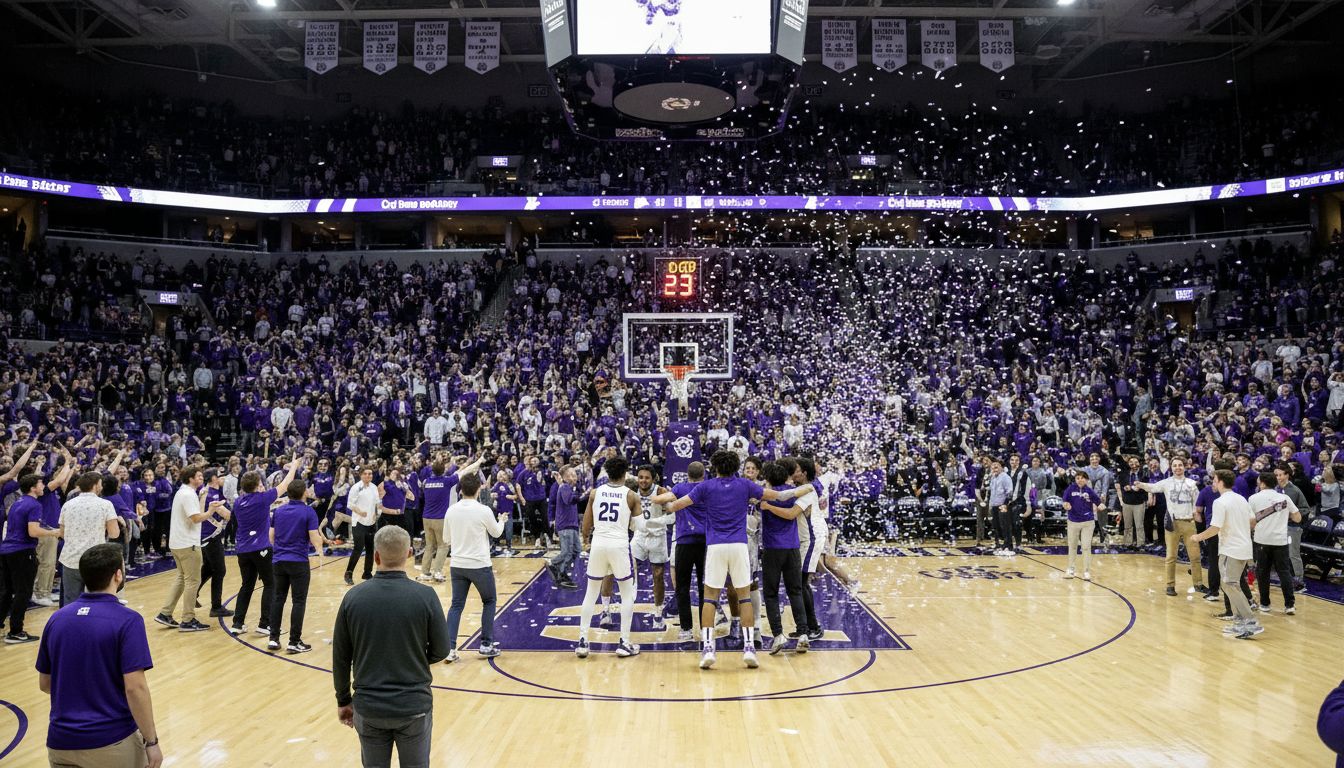
Let’s start in Portland, where the upset wasn’t just an upset; it was a historical correction of sorts. For three decades the WCC has mostly functioned as Gonzaga’s personal fiefdom, a power structure any ACC fan recognizes from watching Duke at its peak. Portland’s 87-80 win over the sixth-ranked Zags was the largest upset in a WCC game in 30 years and the Pilots’ first win ever over a top-10 opponent. Guard Joel Foxwell turned the Chiles Center into his own lab, dropping 27 points and eight assists while orchestrating an offense that shot 51.6% in the first half and an absurd 69.6% after the break. Even more telling than the shooting numbers, Portland outscored Gonzaga 40-26 in the paint, bullying a program that usually makes its living doing that to everyone else. When a so-called mid-major not only wins but wins by beating you at your own identity, that’s not a fluke; that’s a lesson.
From my little corner of Chapel Hill, I’m always watching for how programs treat their so-called "neighbors" in conference play. Gonzaga’s dominance has lifted the WCC profile, yes, but it’s also flattened the sense that anyone else can truly dream big. Nights like this matter because they recalibrate that imagination, not just for Portland but for every smaller program that’s told, implicitly and explicitly, to know its place. The sight of students flooding a 4,852-seat arena after the buzzer reminded me of old Carmichael days, when the intimacy of the building made joy feel louder and more democratic. There’s a quiet equity in those moments: the budget lines and NIL collectives fade, and what’s left is a campus full of students sprinting toward a shared memory.
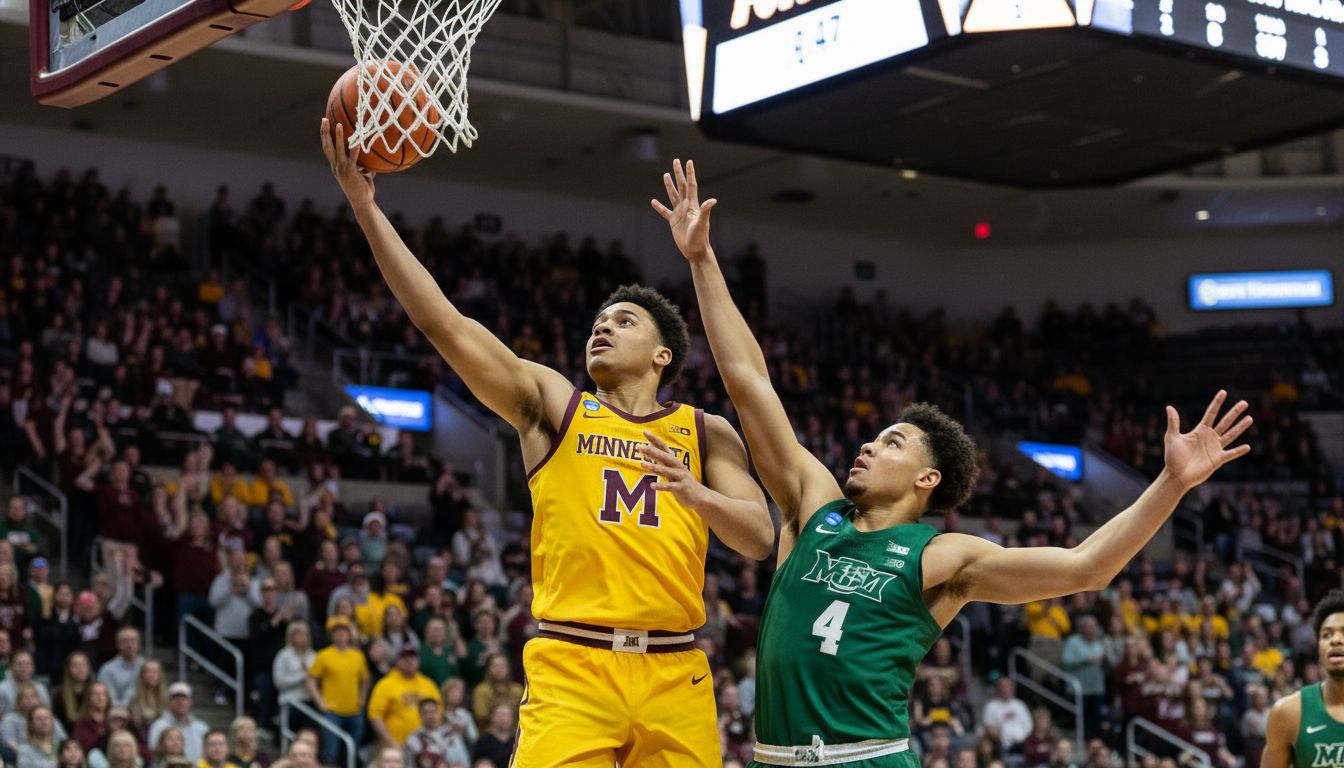
In Minneapolis, Minnesota’s 73-71 win over No. 10 Michigan State followed a more familiar Big Ten script but with a twist. The Golden Gophers built this upset from the defensive end, holding the Spartans to just 21 points in the first half, their lowest-scoring half of the season. Coming out of the locker room, Michigan State looked more like the team we’re used to seeing in March, pouring in 52 second-half points behind forwards Coen Carr and Jordan Scott. But every time Sparty made a push, Minnesota had an answer, never quite relinquishing control even as the game tightened to a one-possession affair in the final 20 seconds. All five Gopher starters finished in double figures, led by Jaylen Crocker-Johnson’s 22 points and seven boards, the kind of balanced, workmanlike stat line coaches love but algorithms tend to underrate. If Portland’s upset was a shock to the system, Minnesota’s felt more like a union meeting: five starters, equal-opportunity scoring, and a collective refusal to yield the floor.
We talk a lot about "culture" in college hoops, sometimes as a euphemism for recruiting advantages and sometimes as code for toughness. What Minnesota showed is a version of culture that looks awfully close to what I still think of as the Carolina Way: everyone touches the ball, everyone defends, and ego takes a backseat to the possession in front of you. That’s not romanticism; it’s pedagogy. When five starters all carry part of the scoring load and still commit to guarding, you’re seeing the kind of shared responsibility we like to preach in classrooms but don’t always reward on draft boards. Michigan State will be fine; Tom Izzo teams usually are. But nights like this reveal that a top-10 ranking is descriptive, not prophetic. You still have to show up, value each possession, and treat an 11-point halftime deficit like the structural problem it is, not a temporary inconvenience your talent will erase.
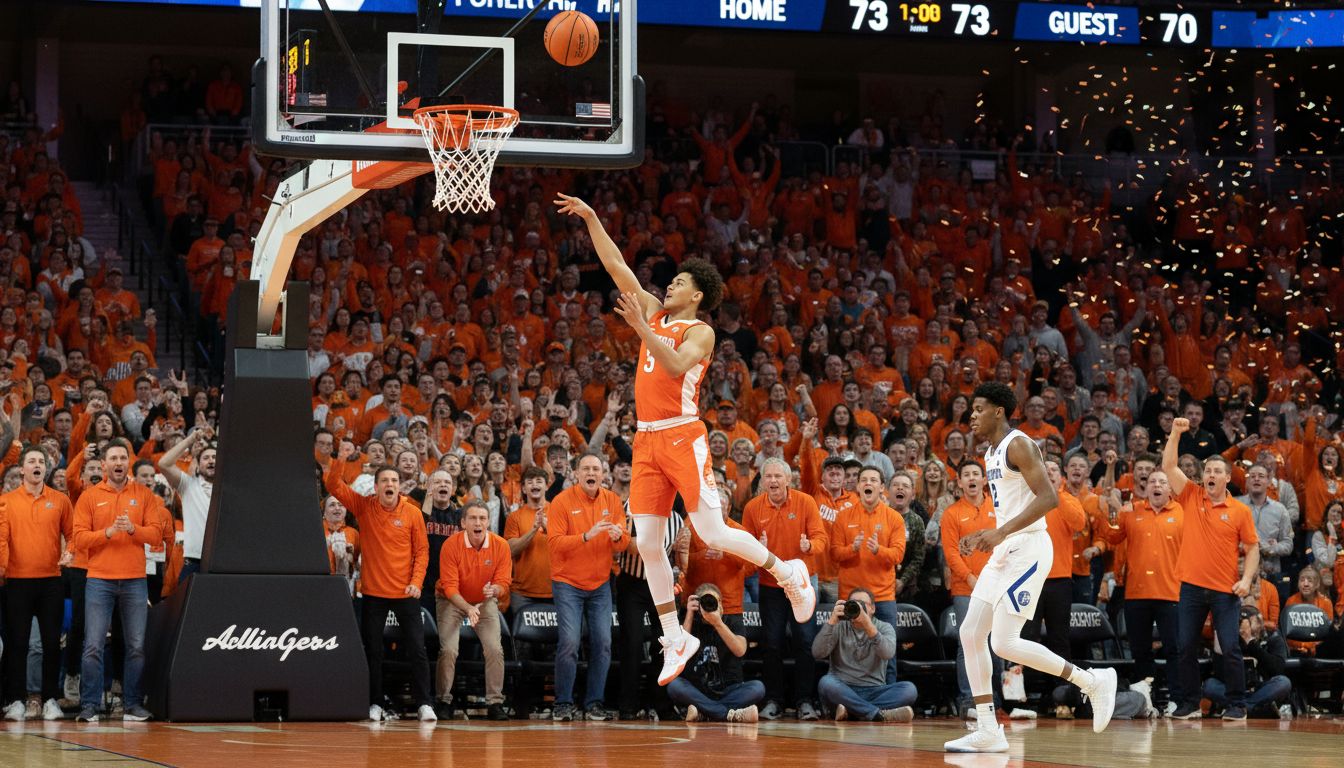
The third upset of the night, Oklahoma State’s 99-92 win over No. 16 BYU, had the rhythm of a Big 12 track meet with a few teachable pauses built in. The Cowboys and Cougars went into halftime tied at 41, the kind of deadlock that usually favors the deeper, more seasoned ranked team after the break. Instead, it was Oklahoma State guard Anthony Roy who seized the tempo, exploding for 30 points and burying a dagger three that finally pushed the margin to double digits with under five minutes to play. BYU star AJ Dybantsa countered with 36 points of his own, but much of the stretch run turned into a free-throw parade that favored the home side and ended in a court storm at Gallagher-Iba Arena. It’s easy to reduce a game like this to "Roy beat Dybantsa," but that erases the context that matters: BYU’s third straight road loss, all to ranked teams, and the psychological tax of playing from behind the narrative every time you leave your own gym.
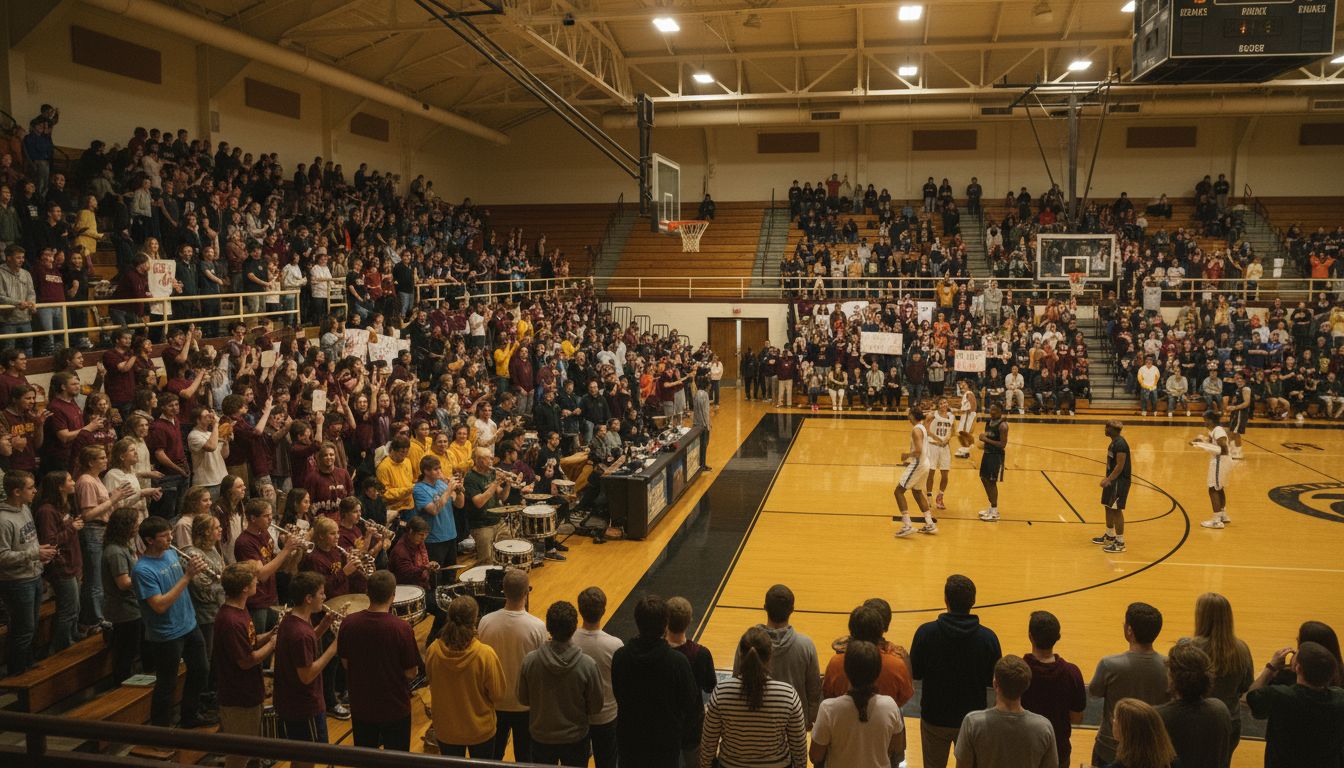
From a broader lens, what tied these three games together wasn’t just rankings or court storms; it was geography and power. You had a WCC program in Portland rewriting its ceiling against the league’s empire, a Big Ten middle-of-the-pack team reminding a blue-blood-adjacent Michigan State that history doesn’t guard anybody, and a Big 12 squad defending its home floor against the newest member of the club. College basketball, for all its talk about tradition, is in the middle of massive realignment, with schools hopping conferences like rental cars, chasing media deals that rarely trickle down to the lecture hall. On nights like this, though, the sport feels wonderfully small again: a bandbox arena here, a chilly Midwestern gym there, a rowdy Big 12 crowd insisting that their building, not their brand, will decide the outcome. As an educator, I can’t help but see these games as data points in a larger study on competitive balance and the way institutional power gets challenged, briefly but meaningfully, by collective effort and good scouting reports.
It’s also worth noticing what we didn’t talk about on this particular Wednesday. No NIL drama drove these storylines, no transfer portal saga dominated the broadcast, and nobody’s draft stock was the primary frame. Instead, we were talking about rotations, shot selection, rebounding margins and defensive game plans — the basketball parts of college basketball that too often get drowned out by the industry surrounding it. That doesn’t mean the structural issues don’t matter; they do, deeply, especially if you care about student-athletes as students first, as Dean Smith insisted we should. But there’s value in nights where the game, in all its messy, democratic unpredictability, takes center stage. For a few hours, the court becomes not a marketplace but a classroom, and all the old hierarchies are held up for questioning.
Will Portland’s win fundamentally reshape the WCC, or Minnesota’s surge rewrite the Big Ten’s pecking order, or Oklahoma State’s statement change how BYU travels? Probably not in any permanent way, at least not this season. Gonzaga will adjust, Michigan State will recalibrate, BYU will eventually steal one on the road, and the rankings will shuffle as they always do. But if you’re paying attention, you file nights like this away because they reveal something about why we keep coming back to this sport. For all the money and branding and bracketology, college basketball still leaves room for the unranked, the overlooked and the under-resourced to have their say. And on a random Wednesday in February, three different gyms across the country reminded us that when the ball goes up, reputations sit down. As someone raised on the notion that no program — not even the one in light blue — is above being outworked on a given night, I find that humbling in the best possible way.