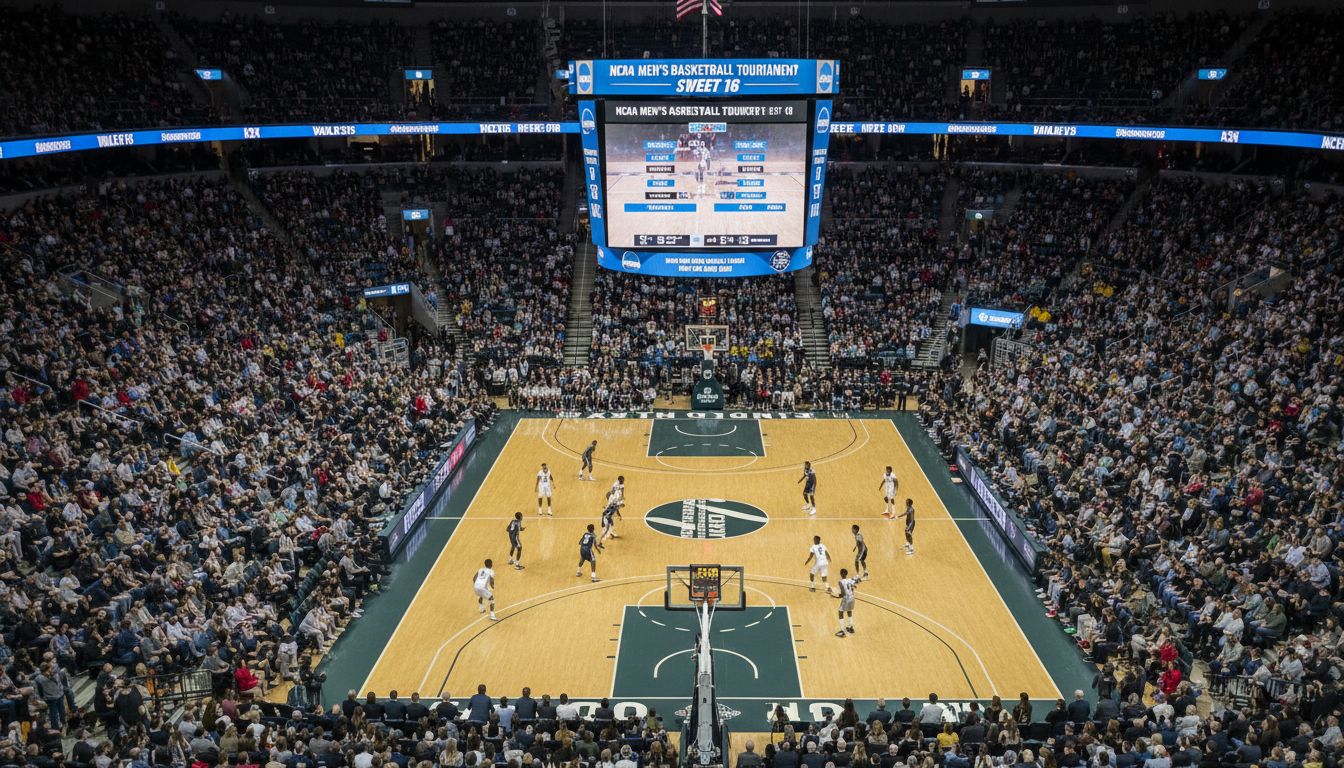
Every March, we pretend the NCAA tournament is a wide‑open fairy tale until the bracket quietly reminds us who actually runs the sport. This year’s Sweet 16 is another power-conference gated community: 16 brand-name programs, zero true Cinderellas, and a whole lot of television inventory protected from small‑school chaos. If you like meritocracy, you can call that the best teams rising; if you’re a little more cynical, you might notice how neatly that aligns with money, resources and seeding politics. Either way, the field we’re left with is less about underdog romance and more about which heavyweight is structurally built to survive four more games when the whistle, the math and the nerves all tighten up. Let’s walk through the remaining teams not as a hype list, but as a stress test: whose strengths actually scale in late March, and whose flaws are just waiting for a competent opponent and a cranky officiating crew to expose them.
Start with Arizona, the nominal top dog by performance, not branding. What separates the Wildcats right now isn’t just talent or tempo; it’s a boring, deeply unsexy weapon: free throws. Arizona has turned getting to the line into a core identity, averaging more than 26 attempts per game and piling up 72 freebies in just two tournament outings. In a sport where three minutes of ref whistle can swing a season, a team that cashes in from the stripe is essentially inflation‑proof — when the jumpers stop falling and the nerves kick in, they’re still generating points on a dead ball. Fans groan about “ref shows,” but Arizona’s advantage isn’t some conspiracy; it’s discipline and physicality baked into the offense, the kind of edge that travels even when their legs or shooting percentages don’t.
Michigan might be the closest thing this field has to a lab‑grown champion: size, spacing, shooting, defense and NBA‑grade talent at multiple positions. Aday Mara initiating offense from the top of the arc with two other projected first‑rounders spacing around him is the kind of nightmare that makes opposing coaches stare too long at the hotel ceiling fan. They shoot 37% from three, defend at a top‑three national level and have only three losses all year, which is basically college basketball’s version of a clean credit score. The question with a group this loaded is less whether they can win and more whether they can handle being expected to win every single night when Alabama comes in playing like a team with nothing to lose and plenty to prove. Michigan has more ways to beat you than anyone else in the bracket, but March is full of rosters that looked unbeatable on paper until somebody punched them first and they realized they’d been living in a talent bubble.
Duke is supposedly the safest blue‑blood bet, the No. 1 overall seed with the best player in the country in Cameron Boozer and a long history of getting every camera angle and talking‑head segment tilted in their direction. Strip away the logo for a second, though, and what you’ve got is a team leaning heavily on one superstar and one emergency breakout in Isaiah Evans while two important pieces, Caleb Foster and Patrick Ngongba II, are less than fully healthy. Boozer has been absurd — 41 points, 24 boards and 18-of-19 from the line so far — but the deeper you go in the tournament, the harder it is to win four more games when your margin for error lives in the training room. Evans stepping into a primary role has been the difference between “vulnerable 1‑seed” and “legit contender,” which is both a tribute to his emergence and a red flag about how thin Duke gets if the whistle or the matchup takes either star out of rhythm. The Blue Devils are good enough to win the whole thing, but they’re also one bad Boozer night or one more injury tweak away from looking very mortal, no matter how often the graphics package reminds you of their pedigree.
On the other end of the style spectrum sits Houston, a team that treats the calendar like a cheat code. Under Kelvin Sampson, February isn’t a grind; it’s the activation switch, and once it flips, the Cougars turn into a defensive boa constrictor that slowly squeezes the aesthetics out of every game. Since Feb. 1, they’ve lived near the top of the defensive efficiency charts, and over their last three wins they’ve held opponents to just over 50 points per game while quietly shooting the three at a 42% clip. Emanuel Sharp and Kingston Flemings get the headlines, but Houston’s real star is the system: physically punishing defense, grown‑man rebounding and enough shooting to make you pay for every lazy closeout. In a bracket full of teams that want to run, flair and tweet about their offensive rating, Houston’s whole identity is making you hate the sport for 40 minutes and then glancing up to see you’ve scored 49.
Illinois, Purdue and Iowa State sit in that fascinating middle tier where the numbers say “title threat” but the branding and fan imagination still lag behind. Illinois has spent most of the year with the country’s most efficient offense, detonating second‑half runs that feel more like an NBA team catching fire than a college roster going on a streak. Keaton Wagler has looked unfazed by the moment, carving up defenses as a freshman while the Illini keep posting scoring clips that would make the Denver Nuggets nod in approval. Purdue, meanwhile, has quietly become the scariest offense in the country over its last six games, shooting over 50% from the field, hoisting threes like the Warriors and rebounding their misses at a terrifying rate. Iowa State, missing its All‑American Joshua Jefferson, has rebuilt itself around Tamin Lipsey’s command performance, turning defense and turnover pressure into easy paint points and proving that if your point guard owns the pace, you don’t always need a full roster of stars.
Then you’ve got the programs that have built their identities less on clean analytics and more on accumulated scar tissue. Tom Izzo’s Michigan State squad is once again driven by a commanding point guard in Jeremy Fears Jr., who leads the nation in assists and has dragged the Spartans’ offense into shape while they quietly develop a top‑15 defense. UConn, the defending power that looked wobbly midseason, is back to winning ugly and unapologetically, with Braylon Mullins growing up fast, Alex Karaban dropping a career‑high 27 on UCLA and Tarris Reed Jr. giving them a bruising presence inside. Rick Pitino’s St. John’s group doesn’t profile like an offensive juggernaut at all, but they just punched Kansas out of the tournament by forcing turnovers, grinding possessions and trusting that somebody like Bryce Hopkins would have a shooting night out of nowhere. What unites this tier isn’t style; it’s psychological equity — teams and coaches who have lived in late March enough to be comfortable when the game slows, the whistles get weird and nerves start cashing checks talent alone can’t cover.
Strip away the seed lines and logos and you’re left with a pretty simple question: whose game scales when you can’t script the night? Arizona’s whistle‑magnet offense, Michigan’s matchup-proof length, Houston’s defensive misery machine and the offensive heavy artillery of Illinois and Purdue all look incredibly sustainable under stress. Duke’s health, Alabama’s off‑court turbulence, Iowa State’s reliance on Lipsey without Jefferson and Nebraska’s first‑time‑here glow all introduce variables that math can’t entirely smooth over. Texas and Iowa have already overachieved relative to expectations, which makes them dangerous in a different way: teams playing found money hoops don’t always follow the narrative arcs TV producers prefer. If you’re filling out a second‑chance bracket, bet less on brand loyalty and more on which teams have a clear, repeatable way to win when the gym is tight, the refs are whistle‑happy and everybody’s playing on short rest.
The beauty — and occasional cruelty — of this Sweet 16 is that it’s light on fairy tales and heavy on structural truths. Big‑time programs with real resources, deep staffs and NBA‑tracking talent have muscled their way to the front, while the mid‑majors everyone tweets about in January are back home watching like the rest of us. You don’t have to love that to acknowledge it; in a system built to reward the biggest machines, the most interesting question isn’t whether an underdog can sneak through, but which of the giants actually has staying power once the ball goes up. Arizona, Michigan, Duke, Houston and Illinois all have credible paths to a title, but so do tougher, less glamorous outfits like Purdue, UConn and Iowa State that are content to win games that won’t make the highlight reels. However the bracket breaks, the next two weeks will be a referendum not on narrative but on architecture — who’s built to take a punch, live at the line, win when they’re not pretty and, when necessary, make the whistle work for them instead of against them.