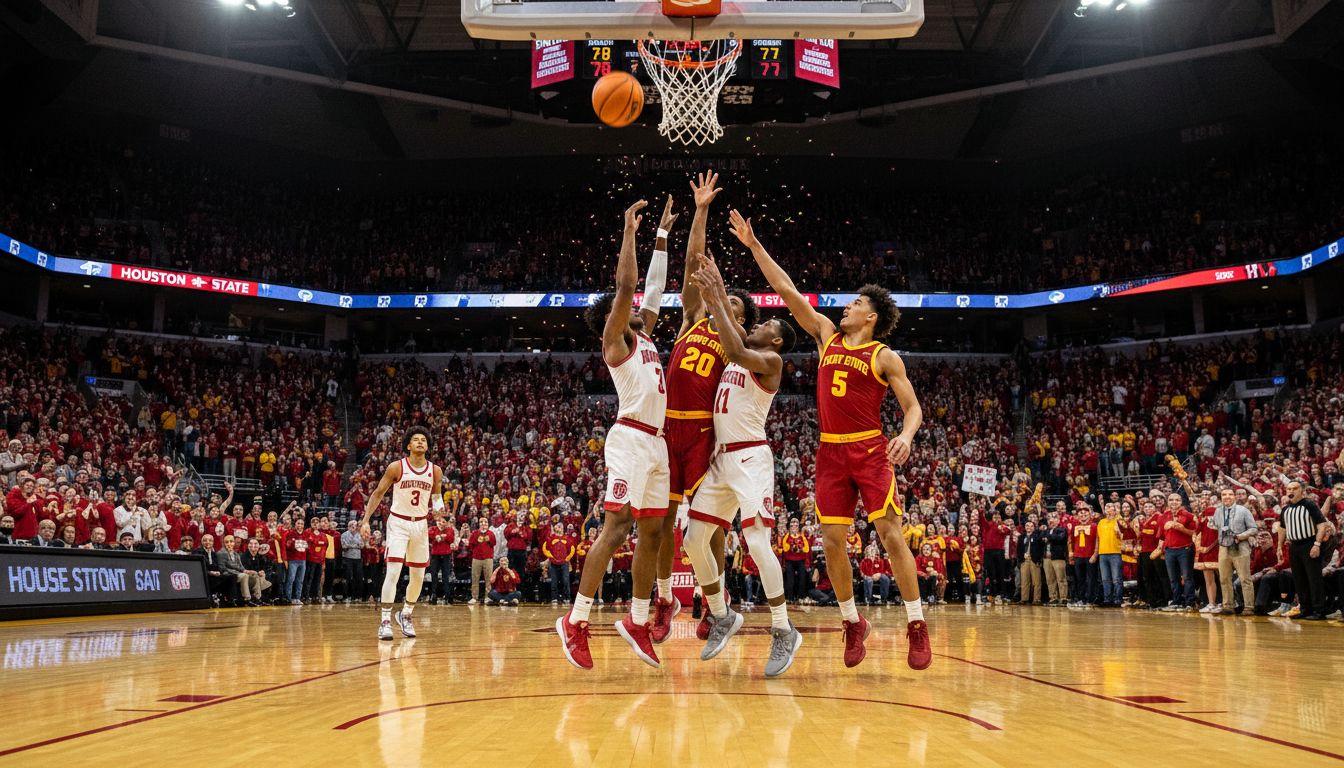
You want to know when the real season starts in college basketball. It’s not November tournaments in the Bahamas, and it’s not when the conference standings first hit the ticker. It starts on nights like this: Houston walking into Ames, into one of the nastiest gyms in America, with a No. 1 seed and its whole reputation on the line. This isn’t just another Big 12 game; this is a separation game between teams that hope they’re contenders and teams that can prove it on demand. March doesn’t care about your preseason hype, your recruiting rankings or your social media clips it cares about what you do when the building is shaking and everybody in the building wants you to fail.
Right now, Houston is sitting on that fourth No. 1 seed line in the bracket models, holding onto it like a rebound in traffic. They’ve got quality wins Arkansas, Texas Tech, a tough one at BYU before the injuries hit and the metrics like them enough to keep them in rare air. But there’s a difference between looking like a one seed on paper and walking into Hilton Coliseum and leaving with your chest out. A win over Iowa State would be worth roughly 0.90 Wins Above Bubble, which is nerd-speak for this is the one that actually moves the needle. You stack that kind of road win on top of an already strong résumé, and now we’re talking about a team that isn’t just a high seed, but a legitimate national title barometer for everybody else.

The funny thing about this race for the top line is that Houston isn’t chasing some imaginary standard. They’re chasing UConn, a team that’s already punched heavyweights like Illinois, Kansas and Florida in the mouth and walked away grinning. UConn’s résumé is rock-solid, and they’ve done it in big moments against real programs, not just racking up empty calories at home. So when we talk about Houston trying to solidify itself, we’re really talking about whether the Cougars can step into the same room as the Huskies and not look out of place. You want that conversation, you win this kind of game, in this kind of building, under this kind of pressure.
Iowa State, by the way, is not just a prop in Houston’s story. The Cyclones are trying to carve out their own claim in this bracketology food chain, and they’ve got something Houston can’t buy: a home crowd that turns every possession into a test of character. You don’t just play Iowa State; you survive them, you manage your emotions, you hold your huddles together when the noise hits a different octave. That’s where I always look beyond the numbers. Show me how your point guard responds after a 9–0 run the other way, show me whether your coach has a set he trusts when the offense is stuck in the mud that’s the stuff that separates the grown men from the teams just happy to see their name on the bracket.
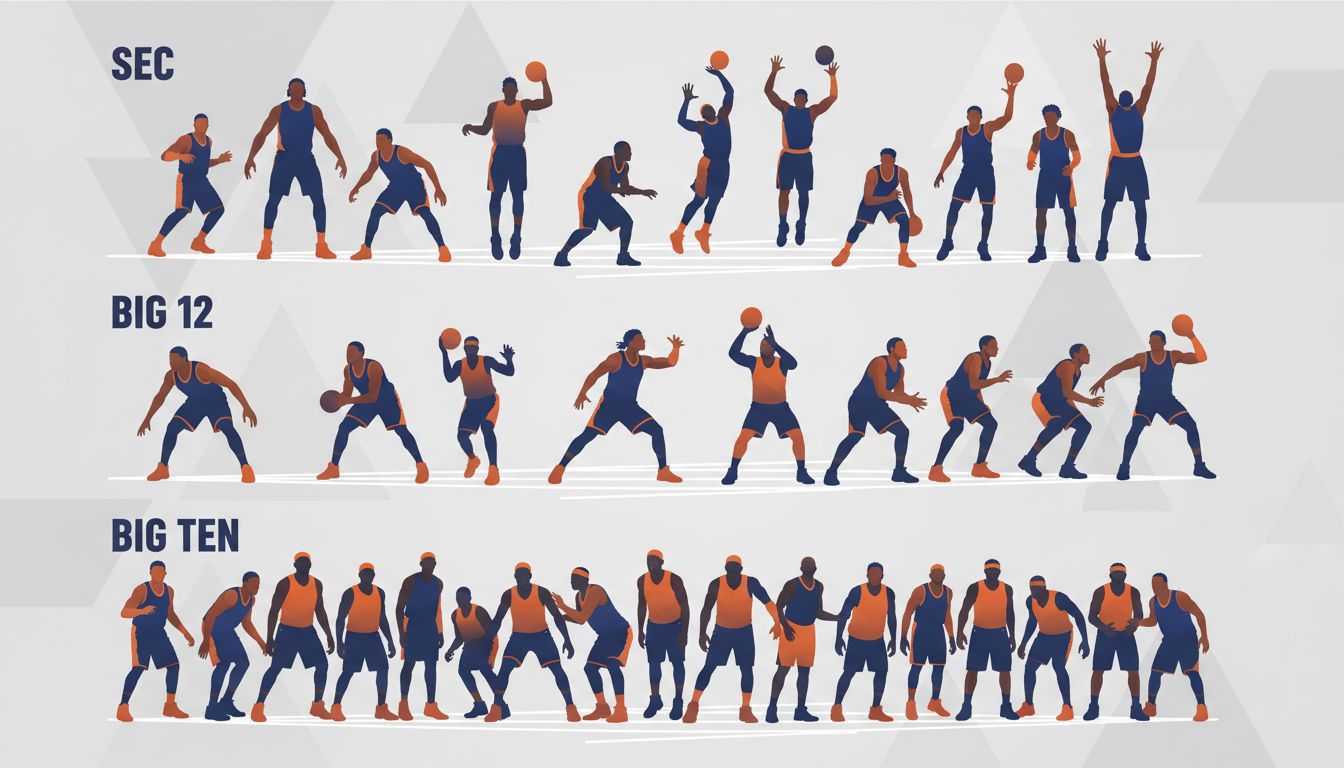
Zoom out from Ames and you see the bigger picture: the top two seed lines are basically a weekly stress test of who actually has championship DNA. The SEC, for all its chest-thumping and 11 projected bids, doesn’t have a single team sitting on that top or second line right now. That’s not an accident; that’s a consequence of inconsistency, of four-game losing streaks from teams like Auburn and Texas A&M, of too many so-called contenders drifting toward the bubble instead of closing strong. Missouri and Georgia are clinging on as Last Four In material, while Texas has needed a four-game heater just to crawl up to a nine seed. Quantity is cute for a league office press release, but March cares a lot more about quality at the top.
The Big Ten is right there with 10 bids, the Big 12 and ACC have eight each, and then there’s the Big East, still punching above its weight with fewer teams but real muscle at the top. This is what conference consolidation and all these made-for-TV nonconference matchups have created one giant blender of high-major games where everybody has played everybody, and the Selection Committee has to pretend it can untangle the mess. On one hand, that’s great for us: more heavyweight games, more nights like Houston-Iowa State. On the other hand, it turns the bracket into a jigsaw puzzle where half the pieces are rematches we’ve already seen in December or January. And the committee, whether they admit it or not, is stuck choosing between clean storytelling and respecting the actual seed lines the teams have earned.
The principles are pretty simple on paper, even if they’re a nightmare in practice. If two conference teams played once, they can see each other again as early as the second round. If they met twice, you’re supposed to hold that matchup until the Sweet 16. Three meetings, and you don’t want the fourth until the Elite Eight. Nonconference rematches are supposed to be avoided in the First Four and the first round, and only "attempted" to be avoided in the second round, which is Selection Committee code for we’ll try until the bracket math starts fighting back.
Here’s where the accountability piece comes in: the committee has always leaned harder toward keeping teams on their natural seed line than twisting the bracket just to dodge a rematch. And they should. You earn a résumé over four months, bus rides and back-to-backs, hostile crowds and injury stretches. If that body of work says you’re a three seed, you don’t suddenly become a four just because somebody is tired of seeing you play another conference opponent. Coaches and players talk all the time about controlling what you can control this is the NCAA’s side of that same coin, and frankly, they get it right more than they get credit for.
So what does all this mean for Monday night in Ames. It means Houston isn’t just fighting Iowa State; it’s fighting for leverage over every conversation that’s coming in March. Win, and you plant your flag on that No. 1 line and force the committee to treat you like a standard, not a question mark. Lose, and suddenly the door swings open for somebody else to grab that last top seed while you’re left explaining away another missed opportunity in a big-time environment. In a month, when people are yelling about regions, rematches and so-called disrespect, remember nights like this. This is where seeding is earned, respect is settled, and the difference between contender and pretender stops being a talking point and becomes a scoreboard.