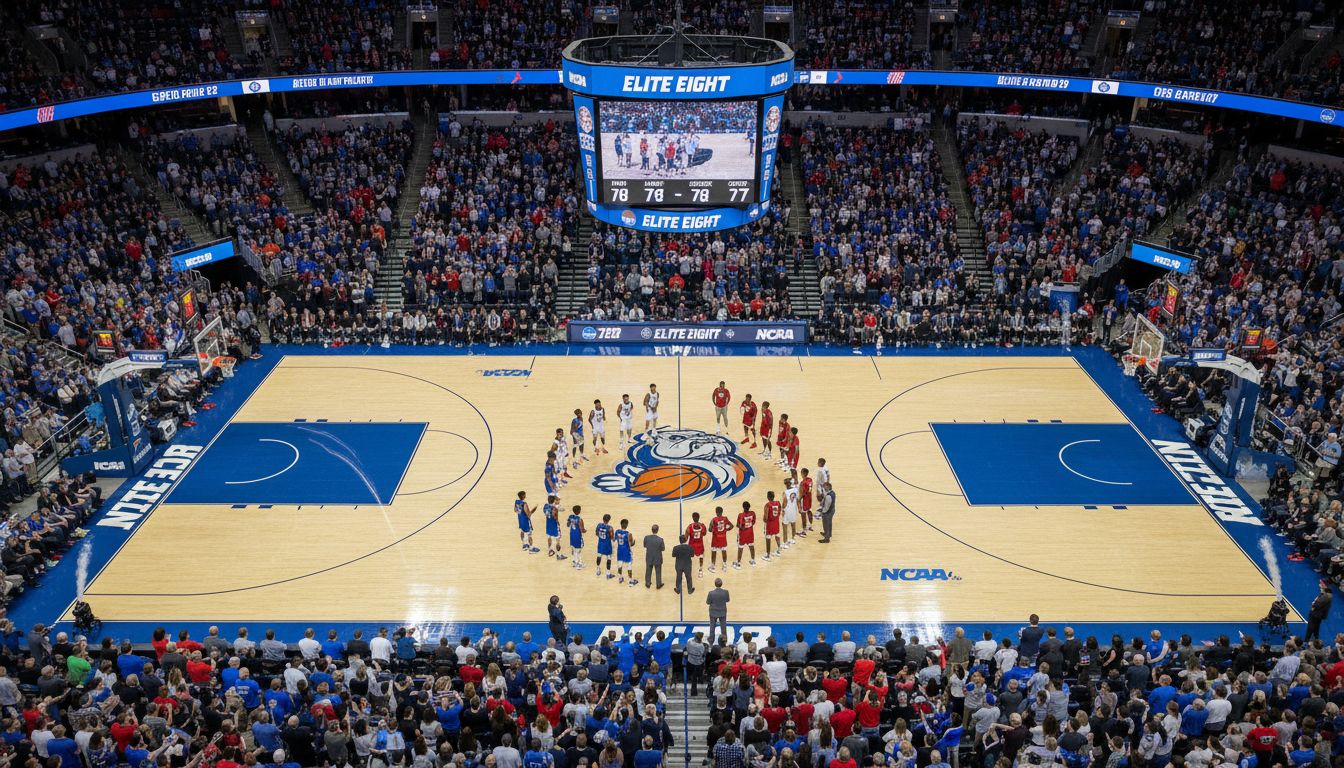
Every March, the bracket turns into a Rorschach test for how we see college basketball, and this year’s men’s Elite 8 is no different. You’ve got blueblood brands, late‑blooming contenders, and a No. 9 seed from the heartland trying to crash the party—exactly the kind of chaos that makes the sport feel alive. Looking over the current lines, I’m less interested in telling you what to bet and more interested in what these numbers say about how oddsmakers, and the public riding with them, really feel about each team. The spreads and moneylines are like an honesty serum for the tournament: they strip away sentiment and force us to confront who’s actually trusted when the lights get hot. So let’s walk game by game through this Elite 8, using the odds as our guide—and with one eye on the hardwood, one eye on the long‑term stories we’ll still be telling a decade from now.
We start with No. 9 Iowa against No. 3 Illinois, where Illinois is sitting as a 6.5‑point favorite and around a -290 moneyline, with Iowa a +235 underdog and the total at 138.5. Those numbers tell you the books respect Iowa’s run but don’t quite believe in a third straight upset against a high‑end opponent. Remember, Iowa took out the defending national champion and 1‑seed Florida in the Round of 32, then followed that with a win over Big Ten rival Nebraska in the Sweet 16. If you’ve ever watched a lower seed find itself over the course of a weekend—think of some of those classic Big East runs where a team suddenly looks like it’s been mis‑seeded all year—you know the profile here: a confident group playing free, with nothing to lose. Still, Illinois already beat Iowa on the road during the regular season, 75–69, which quietly backs up the favorite’s case: this isn’t just about seeding, it’s about a matchup they’ve already shown they can handle.
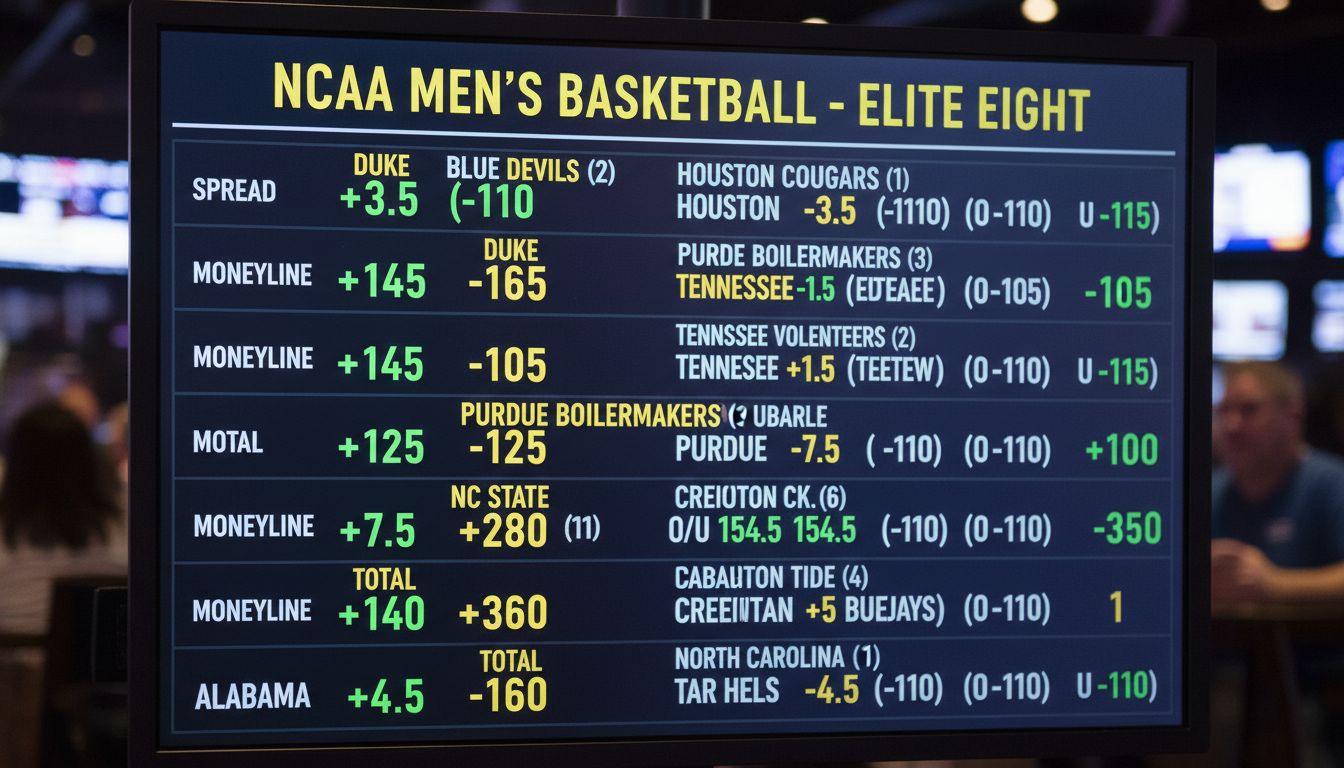
Illinois’ side of the ledger is boosted by what it just did to Houston in the Sweet 16, pulling away for a double‑digit win over a 2‑seed that has been one of the country’s toughest outs for years. That kind of statement win usually tightens a locker room’s belief and widens the gap between the public’s affection for an underdog and its willingness to actually back it with money. If you’re trying to read this from a pure basketball standpoint, the number suggests oddsmakers trust Illinois’ balance and ceiling more than Iowa’s shot‑making heroics. Upset runs are fun, but they’re also draining—legs get heavy, scouting reports get sharper, and variance tends to cool off when you’re facing the same league opponents who know your tendencies. That’s why a line near a full three possessions feels fair: it bakes in Iowa’s momentum but assumes Illinois’ overall profile is more sustainable in a third straight high‑pressure game.
On the other side of the Saturday slate, you get a true heavyweight matchup: No. 2 Purdue against No. 1 Arizona, where Arizona is a 6.5‑point favorite, roughly -270 on the moneyline, and the total is a fairly high 151.5. If Iowa–Illinois is about whether Cinderella can keep dancing, Purdue–Arizona is about whose preseason and postseason stories finally sync up. Purdue opened the year as a national title favorite, stumbled to eight regular‑season losses, and then stitched together an impressive Big Ten Tournament run capped by a win over Michigan to grab a 2‑seed. Arizona, by contrast, grew into its role, winning the Big 12 Tournament and dismantling Arkansas in the Sweet 16 like it was a tune‑up rather than an elimination game. The spread tells you that, right now, Arizona is being graded as the more complete and consistent product, even if Purdue arrived with more hype back in November.
The 151.5 total in that game also quietly speaks to style: the market expects pace, shot‑making, and very little fear from either side when it comes to playing in space. Elite college offenses are increasingly built around NBA‑style principles—spread pick‑and‑roll, four‑out spacing, quick decisions—and both these programs have leaned into that evolution. From a pipeline perspective, this matchup is catnip for anyone who likes projecting which guys will be in summer league jerseys in a few months; the talent level is high enough that one breakout performance could swing both the game and a draft stock. When the number sits at Arizona -6.5, it effectively asks whether you believe Purdue’s ceiling, the one it flashed during the conference tournament, is real enough to hang with the version of Arizona that just ran through the Big 12 postseason. If you’re skeptical, you probably land on the Wildcats as justified favorites; if you think Purdue’s rough regular season masked a team that’s finally figured out its identity, that plus‑money looks a little more tempting.
Sunday’s portion of the Elite 8 bracket is still waiting on clarity, with one regional final coming from the winner of Tennessee–Iowa State against the winner of Michigan–Alabama, and the other emerging from a pod featuring Michigan State or UConn against Duke or St. John’s. With no official numbers yet, what we really have right now are templates rather than lines: defensive slugfest potential on one side, blue‑blood and conference‑brand narratives on the other. A possible Tennessee–Iowa State winner against a Michigan–Alabama survivor sets up as a classic contrast of styles regional, with high‑level defense and toughness likely colliding with tempo and shot‑making. Meanwhile, the other side of the bracket has the potential to feel like a throwback and a reboot at the same time: UConn and St. John’s carrying Big East DNA into a showdown with legacy ACC name Duke or a battle‑tested Michigan State program. If you’re from the Northeast and grew up on Big East basketball, that quadrant practically writes its own nostalgia, even before the first spread goes up on the board.
From a neutral perspective, what makes this Elite 8 compelling isn’t just which teams might cut down the nets, but how they represent different models of building and sustaining a program. You’ve got Arizona and Purdue, high‑major powers trying to convert preseason expectations into actual banners, and Iowa, the upstart showing how dangerous a confident backcourt and a hot week can be. In the still‑to‑be‑set matchups, you have defense‑first outfits like Tennessee and Iowa State that win by grinding possessions into dust, countered by programs like Alabama and Michigan that are more comfortable with the game in the 70s or 80s. Layer in the potential for a UConn, Duke, or St. John’s to punch through and you start seeing the sport’s current ecosystem: legacy brands, resurgent powers, analytical darlings, and spoiler candidates all sharing the same stage. The odds, imperfect as they are, give us a snapshot of who’s trusted in each category and who still has to prove it over 40 minutes.
If you’re looking at these lines from your couch in Hartford—or really, anywhere with a soft spot for Big East lore—it’s hard not to see this Elite 8 through the lens of conference pride and long‑term culture. The Big Ten’s presence here, with Iowa and Purdue both lurking, raises the old question of whether regular‑season gauntlets help or hurt when it’s win‑or‑go‑home time. Arizona’s surge out of a deep Big 12 underscores how quickly the balance of power can shift when leagues add or lose heavyweights. And lurking in the background is the reality that these games are auditions, not just for Final Four berths, but for NBA looks and recruiting pitches: every big March moment becomes a clip in some future prospect’s living room. In that sense, the spreads and moneylines matter less than the stories the teams write over the weekend—stories that will shape how we talk about this season, this era, and who really owns the moment when March tilts toward April.