If you’d told my 20-something self in the Dean Dome upper deck that one day we’d have a postseason event built explicitly around name, image and likeness money, I probably would’ve adjusted my Walkman and asked you to speak up over the pep band. Yet here we are in 2026, with the College Basketball Crown returning to Las Vegas for its second year, an eight-team tournament where the stakes are as much financial as they are bragging rights. Played across two major arenas on the Strip, televised nationally, and populated by teams from power conferences, the Crown sits at a fascinating intersection of old-school March drama and the new NIL era. It’s not the NCAA Tournament, and it’s not pretending to be, but it is quietly becoming an important stage for players, programs, and networks navigating what college basketball looks like now. Think of it as a postseason lab: part competition, part showcase, part experiment in how we value student-athletes’ labor in real time.
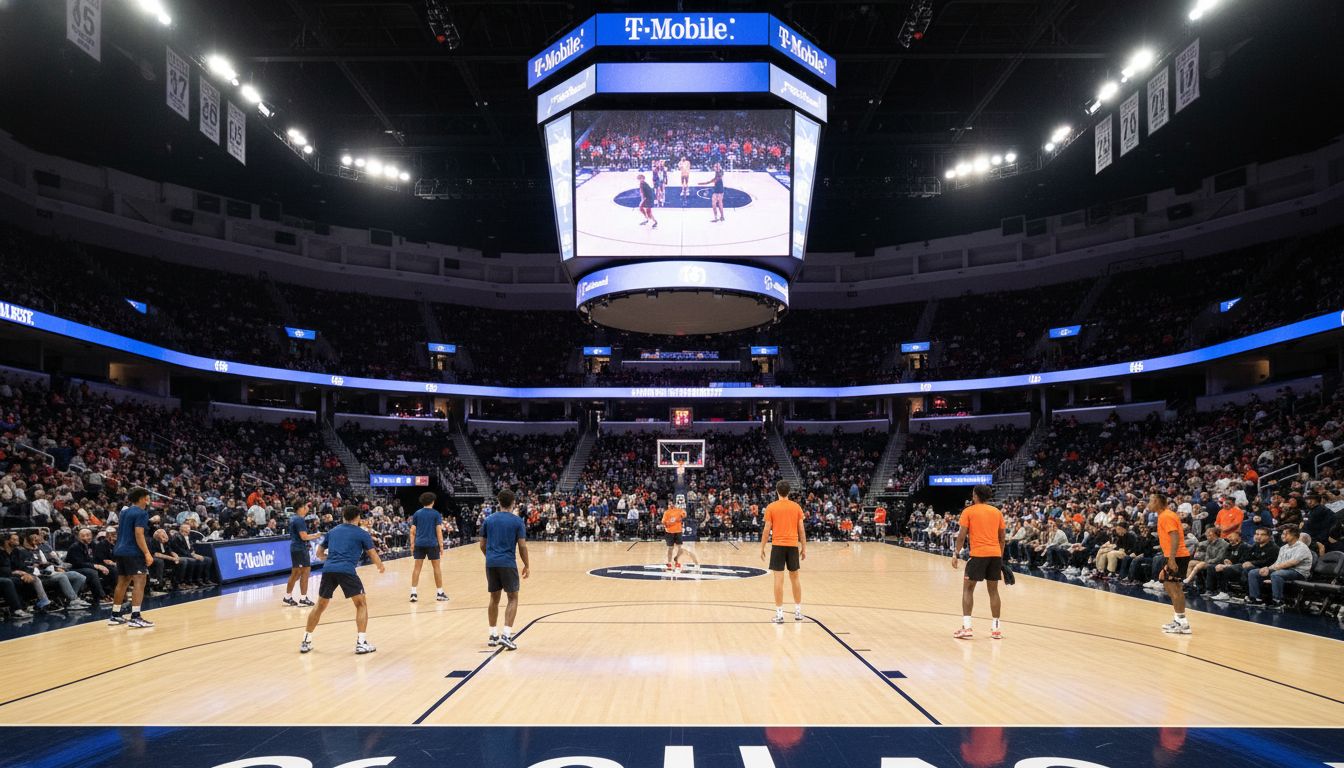
This year’s field is compact but strong: eight teams, six automatic bids and two at-larges, all chasing both a trophy and NIL dollars. The automatic berths go to the top teams in the NCAA Evaluation Tool (NET) from the Big Ten, Big East and Big 12, a reminder that this event is tethered to the sport’s traditional power structure even as it tries something new. The 2026 bracket drops into Las Vegas on the first week of April, just as the emotional dust of the NCAA Tournament is settling and fans are either soothing heartbreak or riding a high. Quarterfinals are at the MGM Grand Garden Arena, with the semifinals and championship shifting to the T-Mobile Arena, the now-familiar backdrop for big-time hoops on the Strip. If it feels a little surreal that college players are wrapping up their seasons under the same neon glow that used to symbolize everything amateurism was supposedly not, that’s because the sport is still catching up to its own reality.
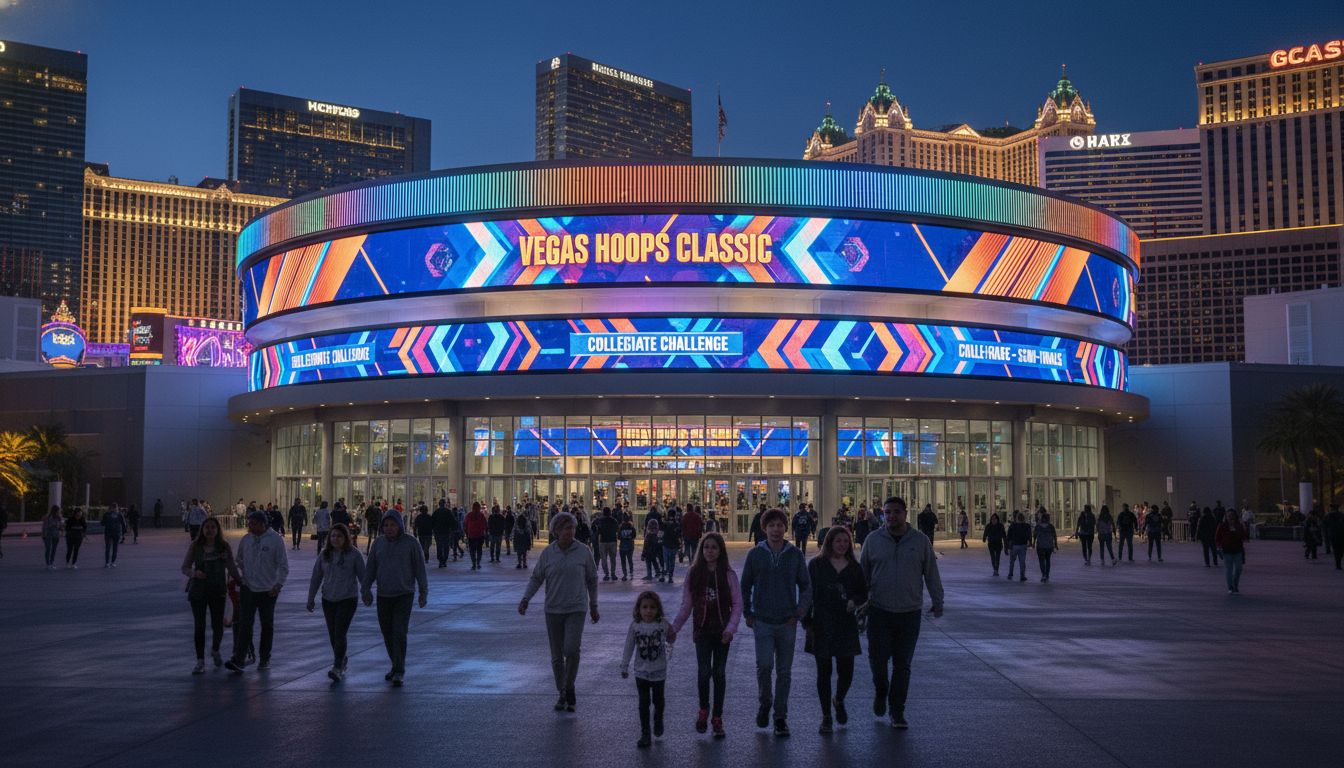
The schedule spreads out over five days, giving the event room to breathe rather than cramming it into a blur. On Wednesday, April 1, the Crown tips off with Oklahoma facing Colorado at 8 p.m. ET on FS1, followed by Baylor taking on Minnesota at 4:30 p.m. ET, also on FS1. Thursday, April 2, brings Stanford vs. West Virginia at 8 p.m. ET and Rutgers vs. Creighton at 4:30 p.m. ET, again both on FS1. Winners move on to Saturday’s semifinals, played at 1:30 p.m. ET and 4 p.m. ET on FOX, with the championship set for Sunday, April 5, at 5:30 p.m. ET, also on FOX. It’s a neat little window after the NCAA chaos but before the long quiet of the offseason, giving players another national stage and fans one more excuse to delay thinking about football depth charts.
For the Big 12, the Crown represents something more than just a bonus tournament; it’s another proving ground in a conference that already feels like a weekly gauntlet. West Virginia, in particular, walks into Las Vegas carrying the identity of a league known for physical defense, difficult road trips, and fan bases who act like every possession is a referendum on their way of life. In a field that also includes brands like Baylor and Oklahoma, the conference’s presence in the Crown underscores how seriously programs are taking this event as a competitive extension of the season. From a coaching perspective, it’s a space to give returning players heavy minutes in pressure situations while still respecting those who are eyeing the NBA Draft or testing the transfer portal. From a player’s perspective, especially in the Big 12, it’s both a reward and an opportunity: one more chance to compete, one more shot at adding value to a rapidly shifting athletic résumé.

The NIL component is what truly differentiates the Crown from the alphabet soup of postseason tournaments that have popped up over the years. Here, players aren’t just competing for a line on a banner; they’re competing for real, structured compensation tied to their performance and visibility during the event. As someone who grew up hearing long lectures about amateurism and the "purity" of the college game, I find it refreshing—if overdue—that we’re at least honest about the economics now. The Crown doesn’t fix broader inequities or fully resolve the tension between education and commercialization, but it does acknowledge that players’ labor has market value. Done well, this kind of tournament can model a healthier ecosystem where athletes share more directly in the revenue they help generate, even as we continue to wrestle with fairness across sports, genders, and schools with vastly different resources.
Of course, holding the event in Las Vegas is its own layered statement. On one hand, it’s a modern basketball hub with NBA, WNBA, and college events all converging on the city, plus world-class arenas, hotels, and media infrastructure. On the other, Vegas remains a symbol of gambling, spectacle, and money—three things that used to be treated like taboo words in NCAA offices, at least in public. Now we have a postseason college tournament there, openly tied to NIL dollars, airing nationally on FOX and FS1, and marketed as entertainment as much as competition. You don’t have to be cynical to see both the opportunity and the risk: there’s real potential for growth, exposure, and financial benefit for players, but also a need for guardrails so that the drive for content and revenue doesn’t swallow the well-being of the student-athletes at the center of the show.
From a fan’s seat—especially one that’s usually painted Carolina blue—this whole enterprise raises familiar, important questions about balance. How do coaches ensure that a late-season NIL-tied event doesn’t become another obligation that wears players down academically and physically? How do schools treat this as more than a cash grab or recruiting sizzle reel and instead fold it into a broader commitment to player development and education? And how do we, as viewers, resist the temptation to view athletes as content producers in a never-ending season, rather than as students whose lives extend far beyond the box score? These are not questions the Crown can answer alone, but the tournament gives us a very public, very televised case study in real time.
In practice, the Crown could become a kind of bridge between eras. For traditionalists, it still looks and feels like postseason basketball: neutral floor, single-elimination pressure, fan bases traveling, and brackets to obsess over. For those of us who’ve long argued that players deserve a meaningful share of the revenue they generate, it’s a tangible example of how incentives can be built into the existing competitive structure. The Big 12 teams involved—Oklahoma, Baylor, and West Virginia—are walking advertisements for how a high-level league can lean into this new model without abandoning the core of what makes college basketball compelling: regional pride, player growth, and the occasional underdog run. If the Crown sustains itself, we may look back at these early Vegas editions as the awkward but important building years, the way we now talk about the early days of conference tournaments or the initial expansion of the NCAA field.
None of this means the College Basketball Crown is destined to become a beloved institution; plenty of ambitious postseason experiments have come and gone with barely a footnote in the media guide. Its future will depend on whether players genuinely feel it benefits them, whether coaches see it as a meaningful competitive stage rather than a scheduling burden, and whether fans embrace it as something more than background noise after the Big Dance. What it already offers, though, is clarity: a visible reminder that the era of pretending college sports are untouched by money is over, replaced by a still-uneven but more honest conversation about value and agency. In that sense, the 2026 Crown in Las Vegas is less a radical break from tradition than a spotlight on where the game was already heading. And as long as we keep the focus on the people in the uniforms—and not just the logos on the court or the networks on the mic—there’s room here for this new chapter of college basketball to honor the best parts of its past while finally being honest about its present.