Nexus of Truth

Arizona’s first loss at home this season turned into a double hit: a 78-75 overtime defeat to Texas Tech and a concerning lower-leg injury to star freshman Koa…

Arizona’s First Gut Check: Koa Peat’s Injury, Texas Tech’s Statement, and What Comes Next

Arizona’s first loss at home this season turned into a double hit: a 78-75 overtime defeat to Texas Tech and a concerning lower-leg injury to star freshman Koa Peat, who missed the second half. Despite strong performances from big men Tobe Awaka and Motiejus Krivas and a late seven-point lead, Arizona’s offense stalled down the stretch, while Texas Tech’s JT Toppin delivered a historic 31-point, 13-rebound, zero-turnover performance, aided by clutch shooting from Donovan Atwell. The loss follows Arizona’s earlier defeat at Kansas, ending a 23-0 start and ushering in a brutal upcoming stretch that includes BYU, Houston, Iowa State and a Kansas rematch. The article explores how Peat’s health and Arizona’s response to this skid will shape both their March seeding and the program’s broader identity in an era defined by NBA pipelines, NIL dynamics and grueling Big 12 competition.

Arizona Wildcats98%Texas Tech Red Raiders97%BYU Cougars70%

Bias Analysis

The article maintains a generally neutral, analytical tone while subtly reflecting a Northeast progressive, Big East-aware voice that values player health, long-term development and program culture alongside wins and losses. It does not take partisan political stances, but it does frame decisions around player welfare and modern NCAA-to-NBA dynamics as important, which reflects the author’s priorities without overtly favoring or attacking any program or conference.

Conference nostalgia / regional framing:The article lightly elevates Big East and Northeast perspectives by referencing Madison Square Garden as "our living room" and citing UConn as a model program. This could implicitly suggest those programs and regions are a gold standard without deeply engaging counterexamples from other regions.(Score: 3.5)
Player-welfare emphasis:The narrative prioritizes Koa Peat’s long-term health and NBA future when discussing Arizona’s decisions, subtly framing cautious return-to-play management as the ideal standard. Programs that take a more aggressive competitive approach might be viewed less favorably by implication.(Score: 4)
Star-player / NBA-pipeline focus:The piece centers heavily on Peat’s status as a projected first-rounder and on NBA pipeline considerations, which can underplay the importance of non-star players or four-year contributors to program identity and success.(Score: 3)
Arizona’s First Gut Check: Koa Peat’s Injury, Texas Tech’s Statement, and What Comes Next

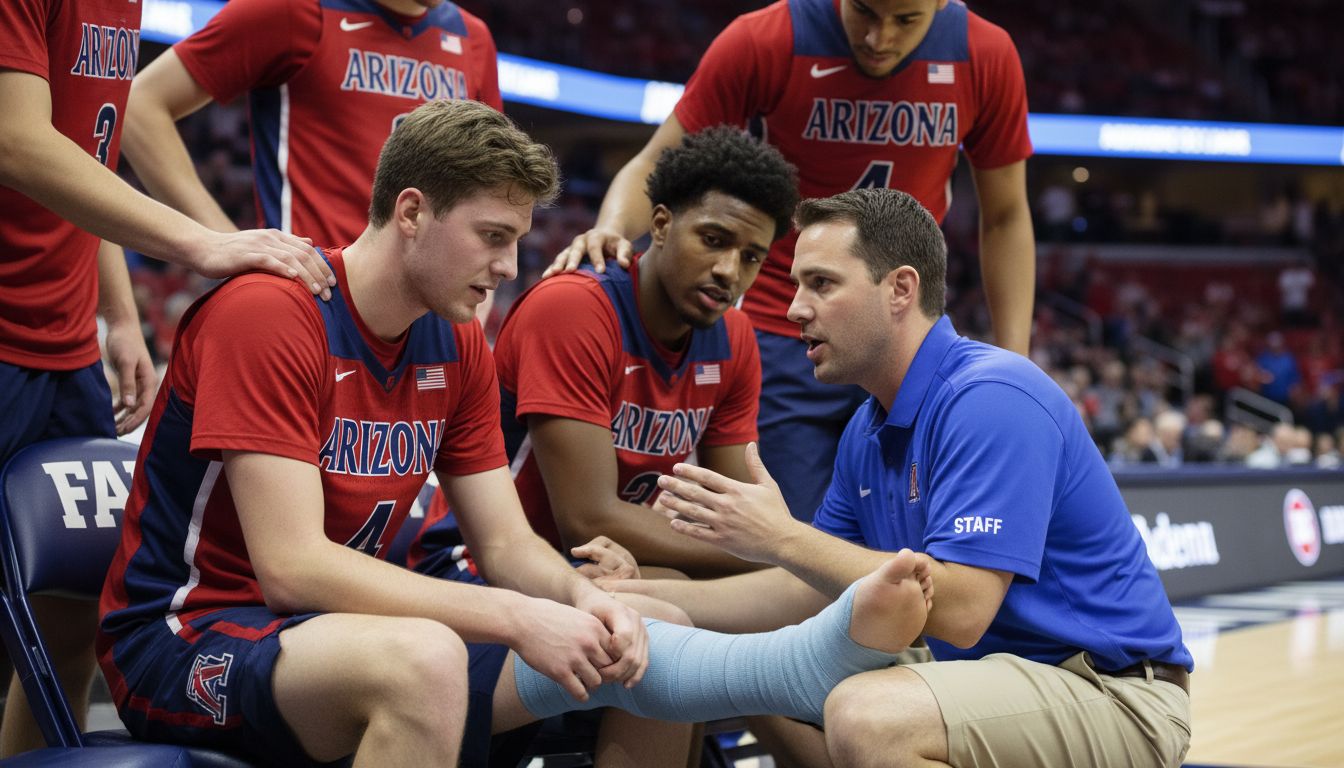
If you’ve watched enough March runs, you know seasons don’t really get defined by the easy nights; they’re shaped by what happens when everything suddenly gets hard. That’s where Arizona found itself in Tucson, dropping a 78-75 overtime heartbreaker to Texas Tech and, more importantly, losing star freshman Koa Peat for the second half with what coach Tommy Lloyd called a “lower leg deal.” For a team that opened the year 23-0 and looked like it might just cruise to a 1-seed, Saturday wasn’t just a loss, it was their first real gut check. You could feel the whole building tense up once Peat didn’t come back out of the locker room; that’s what happens when your projected first-rounder suddenly disappears from the rotation. Arizona still had enough talent to win this thing, and that’s exactly what makes the ending sting even more.

Let’s start with Peat, because in modern college hoops, your lottery-adjacent freshmen are the engine of your ceiling, even if they aren’t lighting up the box score every night. He only logged 11 minutes in the first half, finishing with two points and a rebound, on the heels of a six-and-five night in the loss to Kansas. On paper that looks like a lull, but if you’ve followed enough one-and-done types, you know these midseason dips are almost baked into the development curve. What matters is availability, and that’s suddenly in question as Arizona heads into the teeth of its Big 12 schedule. Lloyd was deliberately vague postgame, saying only that testing was underway and they were still figuring out the extent of the injury, which is coach-speak for: everyone’s nervous, no one’s panicking publicly yet.

Arizona’s First Gut Check: Koa Peat’s Injury, Texas Tech’s Statement, and What Comes Next

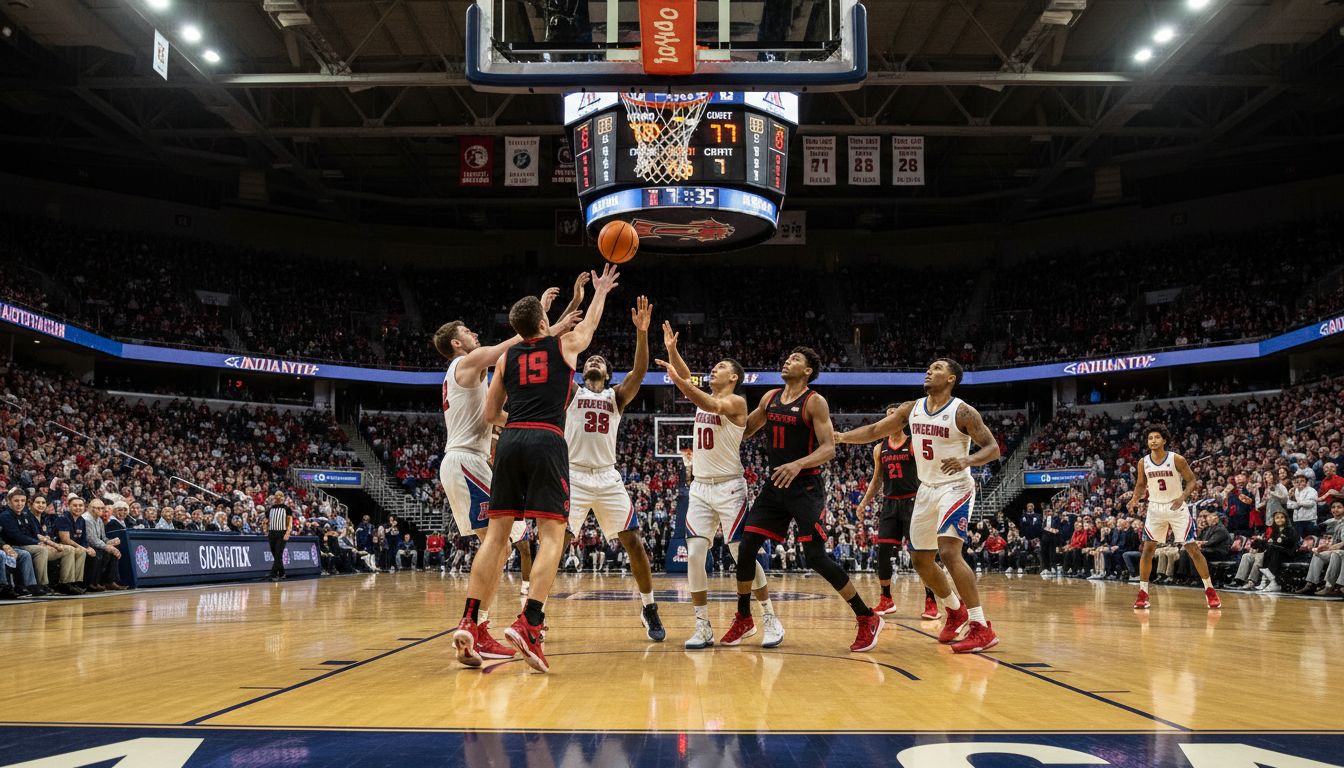
To Arizona’s credit, the frontcourt didn’t fold when Peat went out; it doubled down. Lloyd rolled with Tobe Awaka and Motiejus Krivas together up front, and both bigs answered the call like old-school, back-to-the-basket anchors. Awaka put up 16 points and 12 boards, Krivas matched with 10 and 11, and for long stretches of the second half it looked like the Wildcats were going to bludgeon their way out of trouble. That kind of next-man-up response is what you want to see from a locker room with championship aspirations — it’s the same culture you see in programs that play into April, where role guys don’t blink when their minutes spike. The problem wasn’t whether Arizona had enough to survive without Peat; it was whether they could execute late like a No. 1 team is supposed to.
With 3:29 left in regulation, it looked like they could. Thanks to timely buckets from guard Brayden Burries and more production inside from Krivas, Arizona stretched the lead to seven and had the McKale Center buzzing like the scare was over. Then the offense just… stopped. They didn’t make another field goal the rest of regulation, surviving only because Ivan Kharchenkov drilled two cold-blooded free throws with 16 seconds left to force overtime. If you’re Tommy Lloyd, that closing stretch is the film session that’s going to feel the longest — not because guys missed shots, but because a veteran, top-ranked group let the game’s tempo and composure tilt to the visitors when it mattered most.

Arizona’s First Gut Check: Koa Peat’s Injury, Texas Tech’s Statement, and What Comes Next

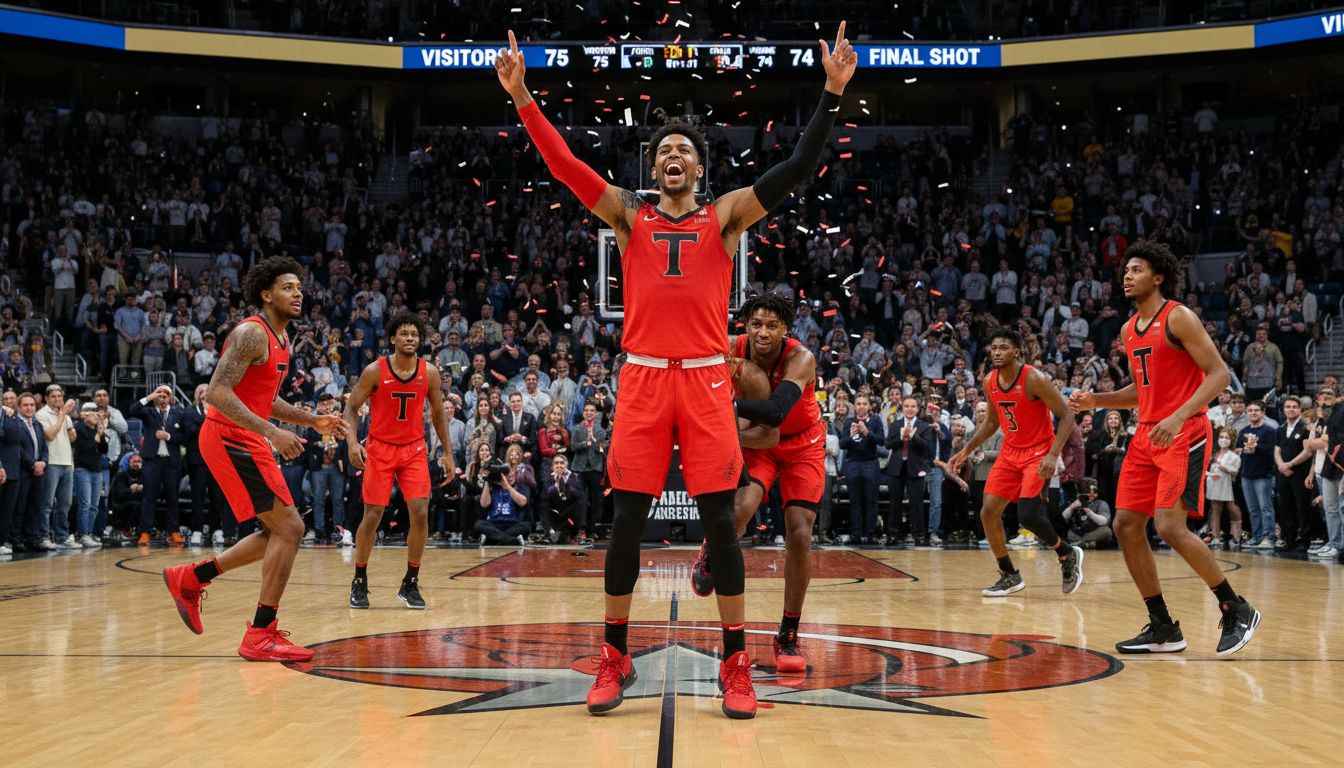
And on the other sideline, Texas Tech’s stars did exactly what stars are supposed to do in those moments. JT Toppin authored one of those performances that lives in an opposing fan base’s nightmares and its own fan base’s group chats: 31 points, 13 rebounds, three assists and, incredibly, zero turnovers against the nation’s No. 1 team. Per ESPN Research, he’s the first player in more than 20 seasons to hang 30, 10 and zero giveaways on a top-ranked opponent, and only the second ever — joining North Carolina’s Luke Maye — to post a 30-point double-double in a road win over No. 1. That’s not just a good night; that’s a legacy game. Donovan Atwell played the perfect co-star, tagging on clutch shot after clutch shot, including the go-ahead three in the final minute of regulation and another dagger triple with 2:05 left in overtime to give Tech a lead it never gave back.
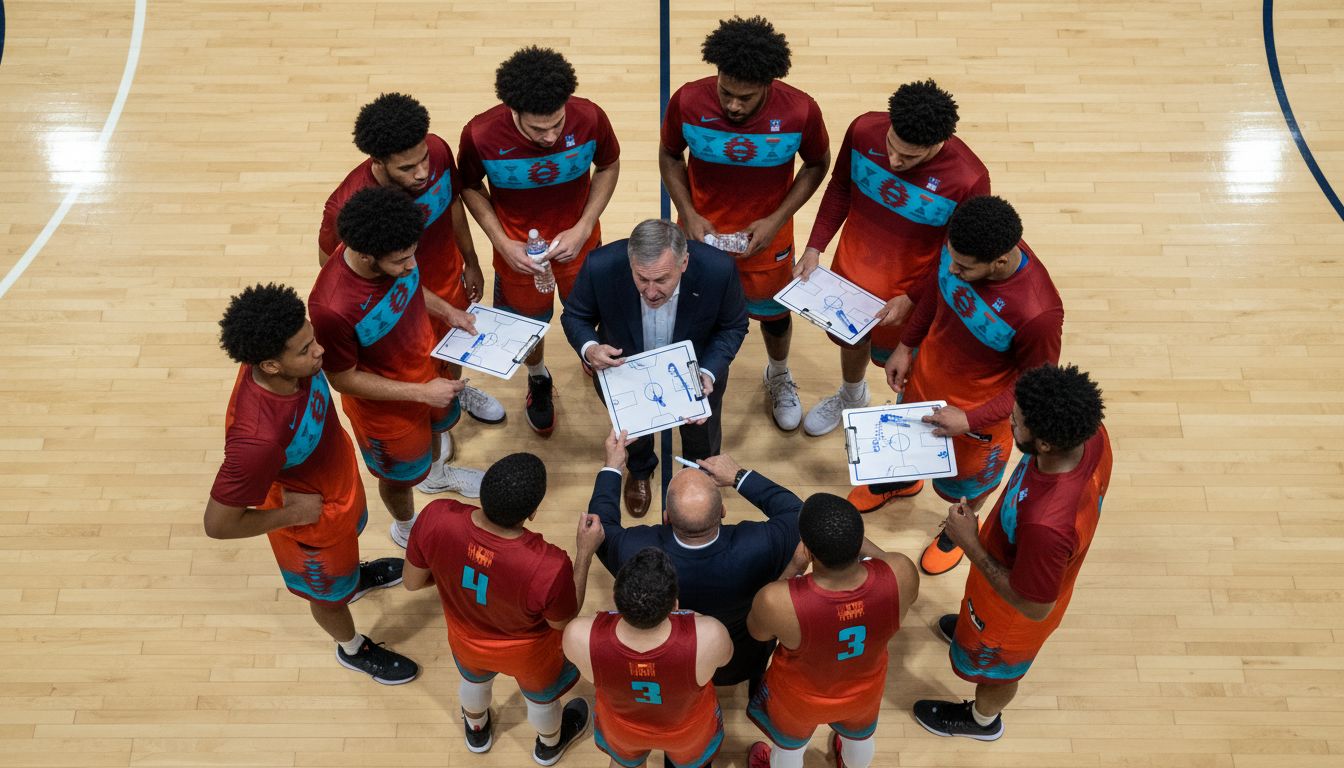
If you zoom out a bit, this win doesn’t come out of nowhere for the Red Raiders; it rounds out what might be the best high-end résumé in the country right now. They’ve already beaten Duke at Madison Square Garden — never an easy stage, even if some of us in Big East country still see the Garden as our living room — and they’ve taken down Houston at home. Now they’ve gone into Tucson and knocked off an undefeated, top-ranked Arizona that had already stacked nonconference road wins over Florida, UConn and Alabama. When you start talking about seeding in March, this is the kind of portfolio that lets you survive a bad loss or two in league play because you’ve already proved you can take out heavyweights in every environment. Texas Tech didn’t just win a game; it strengthened the argument that the Big 12 grind really might be as unforgiving as advertised.

Arizona’s First Gut Check: Koa Peat’s Injury, Texas Tech’s Statement, and What Comes Next

For Arizona, though, the context matters just as much as the final score. This wasn’t a random off night in January; it was their second straight loss after that 23-0 start, following a defeat at Kansas that finally put a dent in their aura of invincibility. And the schedule only tightens from here: a seven-game gauntlet that includes matchups with ranked BYU, Houston, Iowa State and a rematch with Kansas. They get BYU at home on Wednesday, a spot that suddenly feels less like a standard bounce-back and more like a character test. Peat’s health looms over all of it — not just because of his talent, but because in the modern NCAA-to-NBA ecosystem, you’re managing a young star’s long-term future just as much as your team’s short-term seeding.

That’s where this story intersects with the broader era we’re living in, with NIL money, pro projections and conference realignment all swirling around what used to be a simpler three-week March fairy tale. If you’re Lloyd and Arizona’s staff, you’re balancing competitive instinct with player-first responsibility: how quickly do you push a potential first-rounder back, especially when your program’s brand is now built as much on sending guys to the league as hanging banners? We’ve seen at places like UConn that you can do both — build a championship culture and a legitimate NBA pipeline — but it requires resisting the urge to treat every regular-season night like life or death. In that sense, Arizona’s next moves with Peat will say as much about the program’s identity as anything that shows up in a box score. You don’t want a February ankle tweak turning into the “what if” that hangs over a kid’s draft night or a fan base’s Final Four dreams.

In the short term, the Wildcats’ path is pretty straightforward, even if it’s not easy: find a late-game offensive rhythm without leaning on Peat as a security blanket, keep developing Awaka and Krivas as reliable interior anchors, and turn this two-game skid into the kind of adversity that tightens a locker room instead of fracturing it. Top-ranked teams don’t get judged on whether they hit turbulence; they get judged on whether they learn how to land the plane in rough air. Texas Tech has already shown it can fly into any gym and make life miserable for you; Arizona now has to show it can absorb that punch, get Peat healthy and still look like the same group that ripped off 23 straight to start the year. If they do, this week will read as the moment their season got real, not the beginning of a slide. If they don’t, we may look back on Toppin’s masterpiece in Tucson as the night the bracket shifted and nobody quite realized it yet.

Key Facts

  • Arizona lost 78-75 in overtime to Texas Tech in Tucson.
  • Freshman star Koa Peat missed the second half with a lower leg injury.
  • Coach Tommy Lloyd said testing was underway and did not provide specifics on Peat’s status.
  • Peat had two points and one rebound in 11 first-half minutes after a modest outing against Kansas.
  • Tobe Awaka and Motiejus Krivas each recorded double-doubles in Peat’s absence.
  • Arizona led by seven with 3:29 left in regulation but failed to make another field goal before overtime.
  • Ivan Kharchenkov’s free throws with 16 seconds left forced overtime.
  • Texas Tech’s JT Toppin had 31 points, 13 rebounds and zero turnovers, a rare feat against a No. 1 team.
  • Donovan Atwell hit key 3-pointers late in regulation and overtime to secure the win.
  • Texas Tech now owns major wins over Duke, Houston and Arizona.
  • Arizona started the season 23-0 with notable nonconference wins over Florida, UConn and Alabama.
  • Arizona faces a tough upcoming stretch including BYU, Houston, Iowa State and another game vs. Kansas.

Sources (1)

Back to Articles