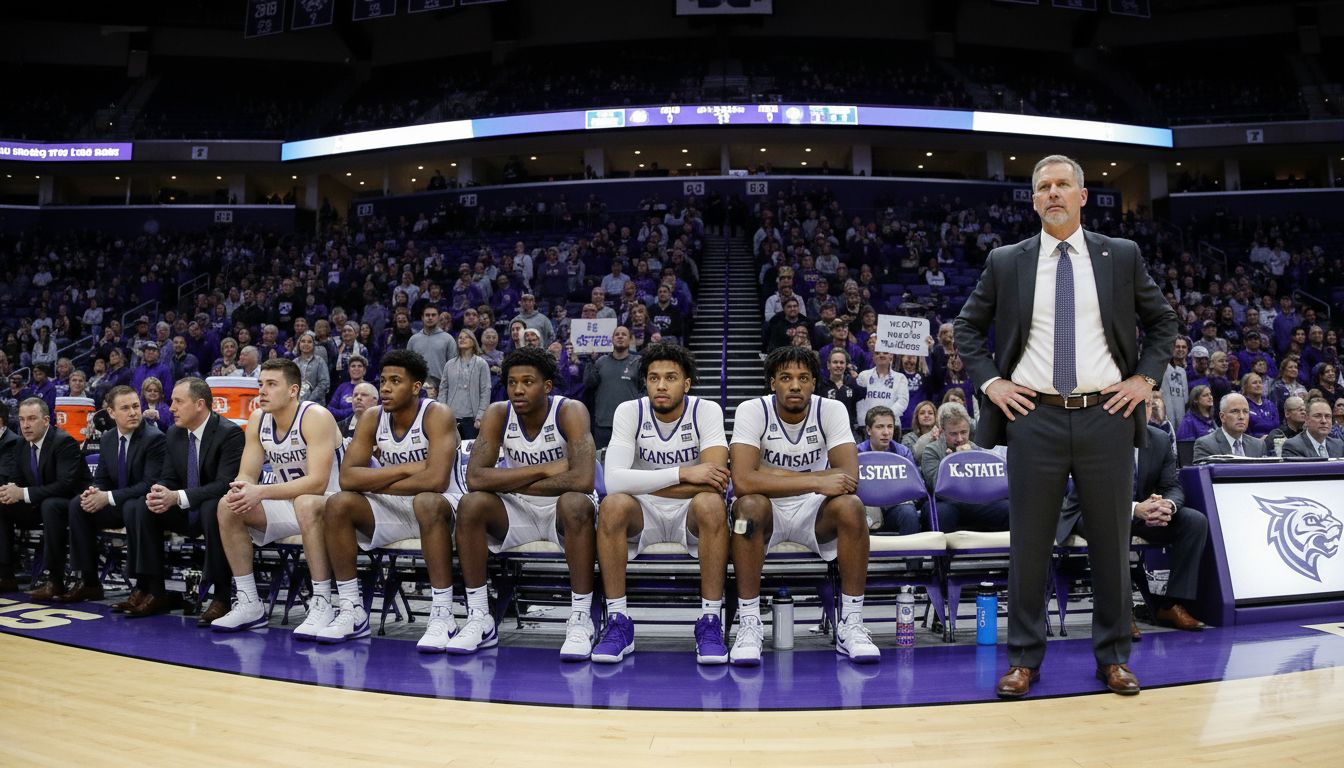
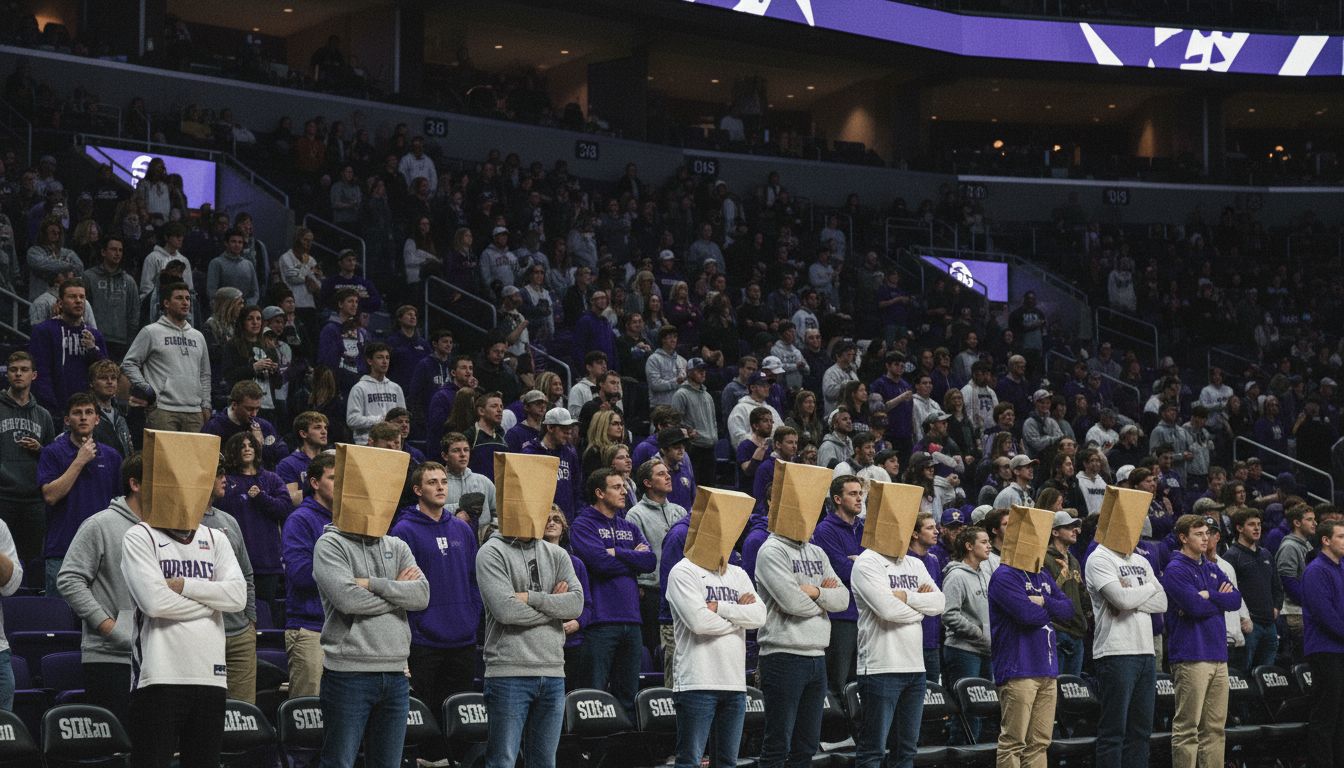
On winter nights in Bloomington, when the wind whips down Kirkwood and the lights of Assembly Hall glow like a chapel, we like to tell ourselves that college basketball is still about teaching young men and women, not just about managing brands. That is why the abrupt firing of Kansas State head coach Jerome Tang reverberates far beyond Manhattan, Kansas, and into every gym where tradition still matters. Kansas State dismissed Tang on Sunday night, four days after a 91–62 home humiliation against Cincinnati that saw angry Wildcats fans put bags over their heads in protest. Officially, athletic director Gene Taylor cited Tang’s “public comments and conduct” and the overall direction of the program as failing to meet the university’s standards for supporting student‑athletes and representing K‑State. Unofficially, this is a story about what happens when a coach’s instinct for old‑school accountability collides with a new era of player empowerment and public sensitivity.
The Cincinnati loss was bad enough on the scoreboard, but it was the postgame scene that shifted this from a rough season into a crisis of leadership. Tang, clearly seething, unloaded at the podium: “These dudes do not deserve to wear this uniform,” he said, adding that there would be “very few of them” back next season and that he was “embarrassed for the university” and the fan base. Having sat through my share of Bobby Knight postgame tirades—some justified, some wildly counterproductive—I recognize the cadence of a coach who feels his standards are being trampled. But there is a crucial difference between demanding more from your players and publicly stripping them of dignity, and administrators in 2025 are far quicker to act when that line appears to be crossed. Kansas State’s statement framed the issue as one of alignment: comments and conduct that, in their view, no longer reflected the university’s expectations for how student‑athletes should be supported, even in moments of frustration.
Context, as always in this sport, complicates the picture. Tang is not some itinerant coach with a trail of broken programs behind him; he is 59 years old, spent 19 seasons loyally assisting Scott Drew at Baylor, and helped build the Bears into a national champion by 2021. When Kansas State hired him, he immediately injected life into a stagnant program, shepherding the Wildcats to an Elite Eight in 2023 and earning a seven‑year extension with a base salary of $3.6 million and an $18.7 million buyout. Those are not the numbers of a coach the school ever expected to dismiss after a single bad stretch; they’re the numbers of a long‑term marriage that suddenly hit a very public, very messy separation. Yet this year’s 10–15 record, including a 1–11 slog in the unforgiving Big 12, turned admiration into anxiety, and anxiety into anger, especially as losses piled up and the fan base began signaling open revolt.
The optics, as the public relations people like to say, grew more fraught by the day. During the blowout against Cincinnati, fans with bags on their heads became the defining image of the season—a painful echo of NFL protest culture imported into a college arena. Days later, Kansas State went to No. 3 Houston and dropped a sixth straight game, 78–64, this time with players’ names removed from the backs of their jerseys, a symbolic gesture that only fueled more questions about internal dynamics. When a program starts sending mixed messages—players visually anonymized, fans veiled in paper bags, an athletic director preaching standards—the narrative can get away from you faster than a bad five‑minute stretch out of the locker room. In that environment, Tang’s harsh public rhetoric toward his team was no longer just an internal motivational tactic; it became Exhibit A in the case for change.
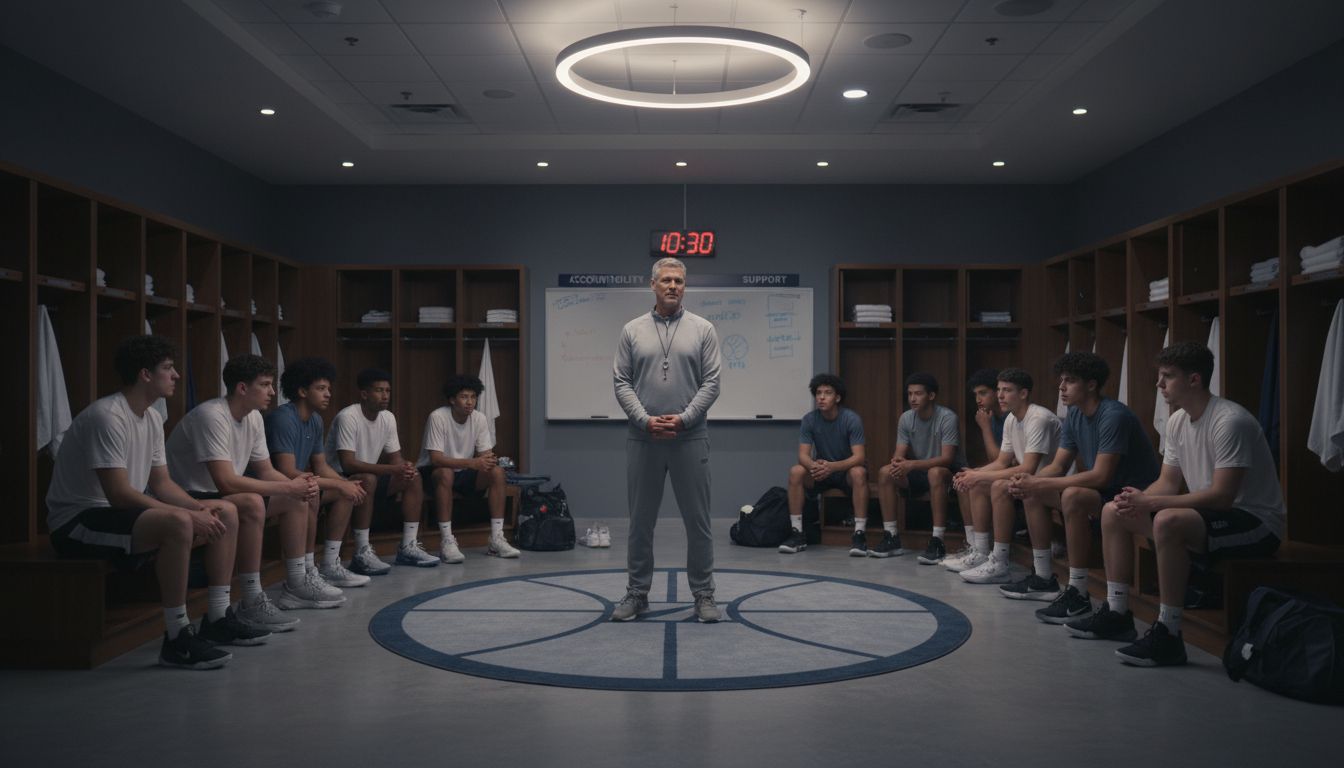
From a middle‑of‑the‑road Midwestern vantage point—one that still reveres the discipline of a Knight practice while acknowledging the damage of his worst excesses—the Tang situation looks like a cautionary tale about extremes. On one end, you have the nostalgia for coaches who “tell it like it is,” who aren’t afraid to scorch the locker room to light a competitive fire. On the other, you have a legitimate modern concern for student‑athlete welfare, mental health, and the power imbalance that comes when a multi‑million‑dollar adult lights up teenagers in front of cameras. The Big 12, like the Big Ten, has become a billion‑dollar enterprise, and with that money comes an expectation of professionalism: if you must correct your players, do it behind closed doors, not on the nightly highlight reel. In that sense, Kansas State’s decision feels less like a snap judgment about one quote and more like a boundary line: accountability, yes, public humiliation, no.
Coaching, though, is always more art than policy manual, and I suspect many veteran fans feel torn here. We can all recall moments when a pointed public challenge seemed to transform a team, and we can also list occasions when a coach’s need to vent did nothing but erode trust. Tang’s insistence that there would be “very few” current players wearing the uniform next season hints at deeper roster tension, perhaps about effort, perhaps about fit in an era of constant transfer‑portal churn. Yet when your starting point becomes mass replacement rather than development, a program’s culture can tilt from “we” to “me versus them” in a hurry, and the university likely saw that shift with alarm. The irony is that his early success at Kansas State was built on connection, energy, and belief; somewhere between the Elite Eight high and this season’s spiral, that bond appears to have frayed beyond administrative comfort.

The financial dimension underscores how dramatically priorities can pivot when values and image seem threatened. Only a year ago, Kansas State committed to Tang with an extension rich enough to signal stability, complete with annual raises and a sizable buyout that would normally deter quick action. Now the school will absorb the cost of that choice, launch a national search, and appoint an interim coach—none of which will magically fix a 10–15 roster overnight. At places that live and breathe basketball, from Manhattan to Bloomington, money usually buys patience; in this case, it could not buy the university enough distance from comments it felt undercut its own message about supporting student‑athletes. That, more than any box‑score metric, is the clearest sign of how much the ethical expectations around coaching rhetoric have shifted in the last decade.
Where does Kansas State go from here? First, the administration will need to re‑establish trust inside that locker room, convincing players that they are more than the sum of one ugly press conference clip. Second, the national search must prioritize not only tactical acumen but a coach who can navigate the Big 12’s minefield while speaking to players, fans, and administrators in a way that aligns with the school’s stated standards. The next coach will inherit a fan base that has shown both its passion and its impatience—paper bags and all—and a league where Houston, Baylor, and the rest offer no soft landings. If there is a lesson for the rest of us, it is that culture is no longer what a coach declares from the podium; it is what a university is willing to tolerate when the microphones are live and the season is going sideways.
From my seat a few states east, in a building where five championship banners hang and the ghost of 1976 still whispers about doing things “the right way,” I do not see Jerome Tang as a villain, nor Kansas State’s leaders as overzealous censors. I see a program wrestling in public with the same question that hovers over every huddle in modern college basketball: how do you demand excellence without demeaning the people you are supposed to be teaching? The answer, as ever, will not fit neatly into a press release or a contract clause, but it will shape which voices we trust to lead our teams and represent our universities. Somewhere between the paper bags in the stands and the names missing from the jerseys lies a better model of accountability—firm, demanding, and unflinching, but also humane. And if we are wise, we will judge our programs not only by the margins of victory, but by how they handle nights like Cincinnati, when everything goes wrong and the temptation to lash out is strongest.