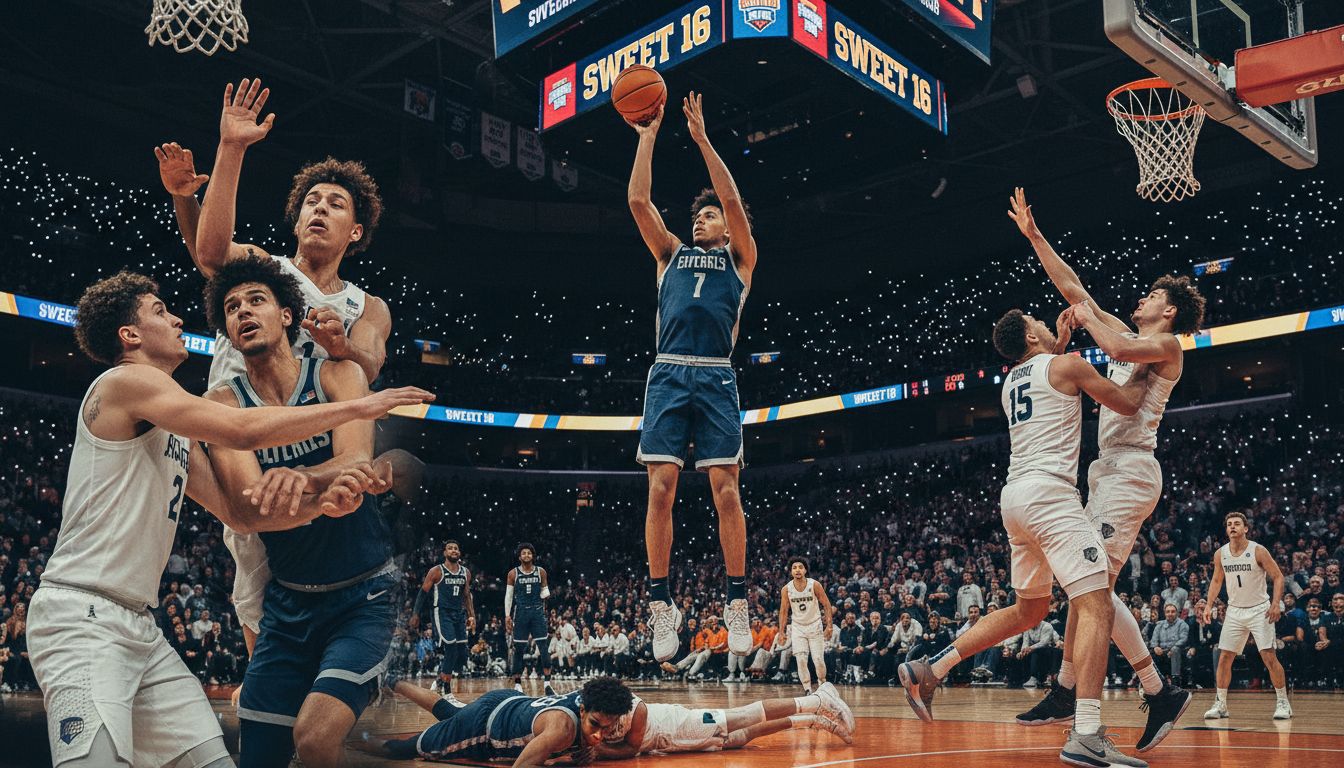
March doesn’t care about your seed, your résumé or your press clippings. By the time you hit the Sweet 16, the sport has stripped you down to what you really are: how you handle pressure, who you trust with the ball and whether your habits hold when your legs are gone.
Looking at this bracket, you can forget the committee’s lines on the board. What matters now is which teams have an identity that travels and which ones are just enjoying an extended weekend. Let’s walk through these matchups the way coaches and players feel them in the locker room: as tests of toughness, accountability and championship DNA.
Start with Texas vs. Purdue, a clash of a team that just caught fire against a machine that’s been humming all year. Texas has ridden Matas Vokietaitis’ late-season surge from the First Four to the Sweet 16, turning the 7-foot-1 big into a centerpiece who’s putting up 20 and 12 in the tournament and nearly 18 and 8 over his last dozen games. The question isn’t whether Purdue can match his size — they can — it’s whether Texas’ new defensive backbone is real enough to bother the nation’s most efficient offense.
If the Longhorns let Purdue’s Braden Smith control tempo and rhythm, all that talk about a defensive resurgence turns into noise, because the Boilermakers’ shooters, led by a red-hot Fletcher Loyer, will blow the game open from the arc. Purdue's offense is No. 1 in the land for a reason, and Texas will need a stellar shooting performance to keep up. Braden Smith, noted for his NCAA assist record, is a key leader for Purdue, making passes reminiscent of a young Avery Johnson.
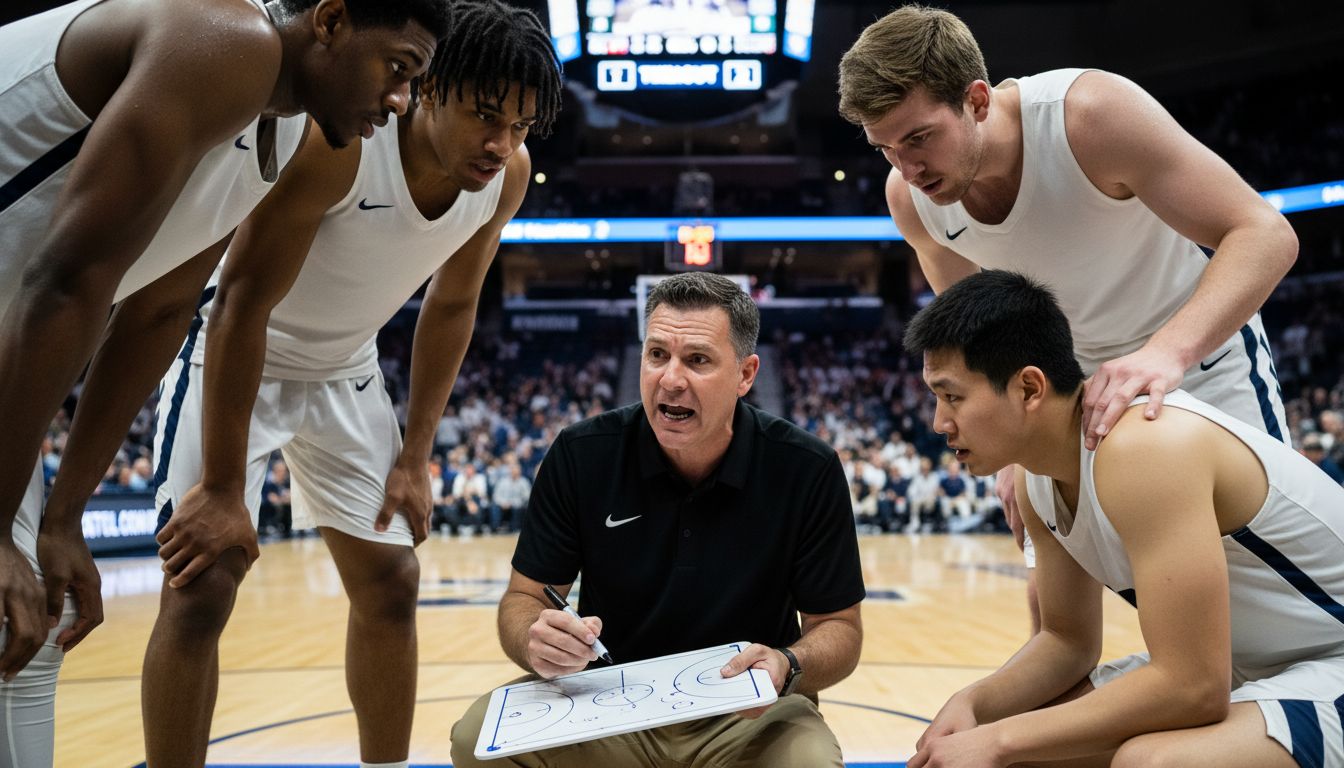
Iowa and Nebraska is less mystery, more mirror. They’ve already traded punches twice, so the film doesn’t lie: when Bennett Stirtz wins his matchup and gets downhill, Iowa looks like a team that can dictate terms; when Nebraska forces him into inefficient nights, the Hawkeyes shrink. Iowa’s biggest opponent might be its own habit of fouling, especially against a Cornhuskers group that’s comfortable living at the line and bombing away from three. Nebraska's season has been built on spacing and shooting, with Fred Hoiberg's leadership and his son's contributions being a family affair.
Arkansas vs. Arizona is all about star power versus sustained pressure. Darius Acuff Jr. isn’t just a talented freshman; he’s playing like the best guard in the tournament, closing games with a calm that veterans fake in press conferences but don’t always show when the clock is bleeding out. Arkansas’ formula is simple and ruthless: let Acuff bend the defense, force help and then punish you with big, physical teammates like Malique Ewin, Billy Richmond III and Meleek Thomas cleaning up the gaps he creates. Acuff, the SEC Player of the Year, is the first since Jimmer Fredette to average 30 points and 5 assists in his first two tournament games.
But Arizona doesn’t wear down easily — they crank up a relentless, physically exhausting style built on constant drives, foul pressure and depth that keeps coming in waves. Arizona's transition game and pick-and-roll offense are poised to exploit Arkansas' weaknesses. Arizona is seen as a complete team with a strong seven-man rotation, and they are considered by some as the team to beat in the tournament.
Illinois and Houston is a perfect contrast in basketball philosophy: the country’s best offense against one of its nastiest, most deliberate defenses. Illinois can flip a game in five minutes; we saw that against VCU when a manageable halftime edge turned into a 20-plus-point separation because the Illini weaponized their scoring runs. They’ve already handled elite defenses like Tennessee and Nebraska, which should give them real confidence against Houston’s pressure. Houston's backcourt, featuring Kingston Flemings, is electric, and they are playing in their home city for the Sweet 16, giving them a fan advantage.
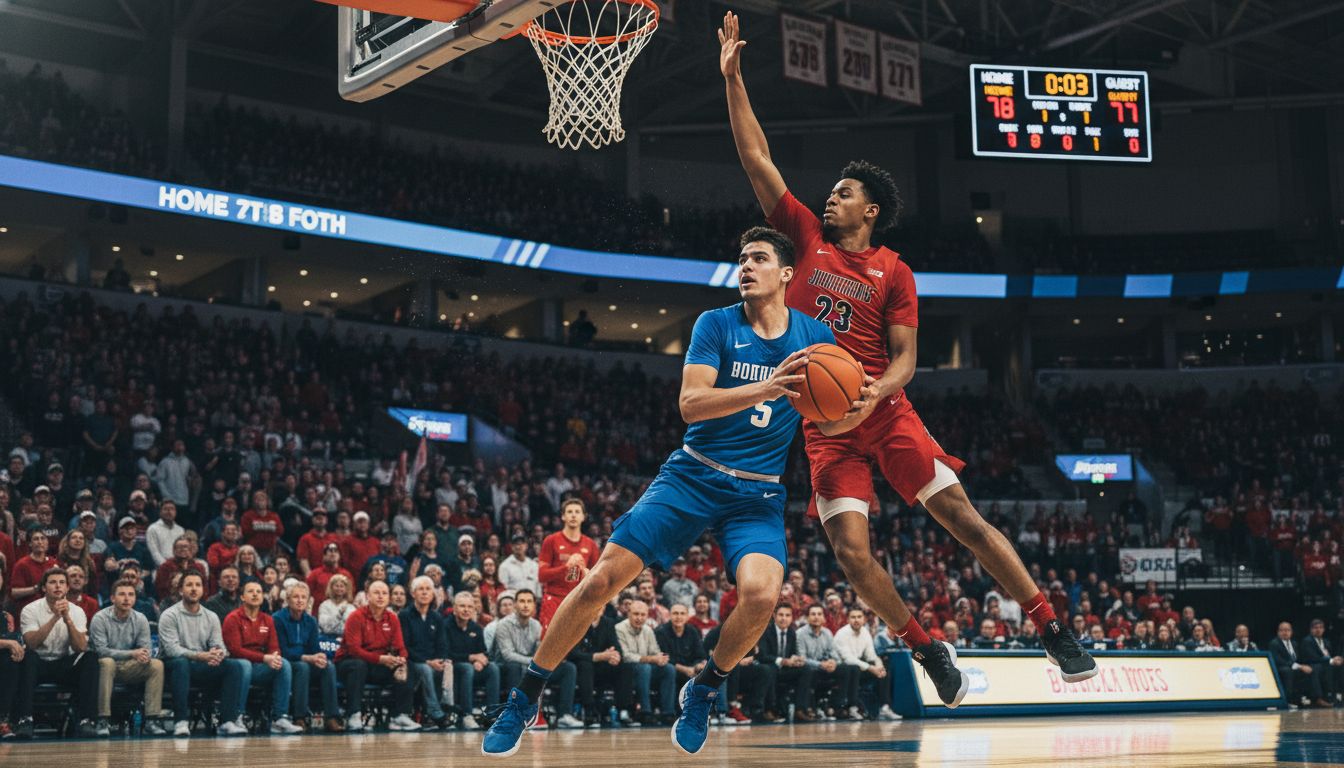
In the St. John’s vs. Duke matchup, this isn’t just about talent; it’s a clash of defensive identities and one undeniable superstar. Rick Pitino’s Red Storm bring an elite defense, but they don’t have the same length and athleticism that has occasionally bothered Cameron Boozer. St. John’s has finally found its range from deep at the right time, stacking back-to-back games with double-digit threes after going more than two months without one. Dylan Darling's key drive against Kansas was a turning point, showing the mental tenacity of St. John's players.
Alabama vs. Michigan is a style clash that feels brutally honest: Alabama is going to live or die by the three, and Michigan is going to live in the paint until someone proves they can push them out. The Crimson Tide don’t hide what they are; they lead the country in threes made, threes attempted and the share of their offense coming from beyond the arc, and their 19 triples against Texas Tech were a message — if you let this turn into a shootout, they’re comfortable in the chaos. Michigan, with rim protector Aday Mara, interior force Morez Johnson Jr. and game-breaker Yaxel Lendeborg, has the size and touch to dominate the glass and the paint.
Michigan State and UConn is as much about the names on the sideline as the ones on the jerseys. Tom Izzo has built a career on taking away what opponents do best in March, and his target here is Tarris Reed Jr., whose presence in the post changes who UConn is offensively and on the glass. UConn's Alex Karaban was outstanding in their recent win, leading the team with 27 points, showing that this team plays the right way.
Tennessee vs. Iowa State has 'fight for every inch' written all over it. Tennessee’s defensive backbone is Felix Okpara, who’s been erasing shots at the rim and forcing opponents to rethink driving lanes before they even put the ball on the floor. Iowa State, though, brings a clear identity: pressure, turnovers and fast breaks, all orchestrated by Tamin Lipsey, who just hung 26 points and 10 assists on Kentucky.
Strip away the seed lines and the hype videos, and the Sweet 16 comes down to a simple question: who shows up the same way every night when there are no more soft landings? The teams most likely to advance aren’t just the most talented; they’re the ones whose strengths don’t depend on the whistle or the venue.
Purdue’s shooting, Houston’s defensive stubbornness, Duke’s structure, Arizona’s physicality, Iowa State’s pressure and Michigan’s size all travel. On the other side, Texas’ defensive revival, Iowa’s foul discipline, Arkansas’ reliance on Acuff, Alabama’s three-point binge and Illinois’ offensive explosions are real weapons — but they’re also stress tests waiting to happen under tournament lights.
In March, you don’t get credit for potential, only for what you can repeatedly execute when the game turns ugly, and that’s what we’re about to find out over the next 40 minutes at a time.
St. John's will focus on slowing down Duke's Cameron Boozer, relying on Zuby Ejiofor and Dillon Mitchell for defensive stops. Duke's top-ranked defense will aim to limit St. John's improved 3-point shooting and capitalize on Boozer's offensive prowess.
Alabama needs a barrage of 3s to counter Michigan's dominant frontcourt, led by Aday Mara and Morez Johnson Jr. Michigan will aim to exploit Alabama's defensive weaknesses and contain Labaron Philon Jr.
Michigan State's Tom Izzo will target UConn's Tarris Reed Jr. to disrupt their offensive flow, while UConn will rely on their defensive strength and balanced scoring to advance.
Tennessee's disciplined defense, led by Felix Okpara, will be key against Iowa State's fast-paced offense, orchestrated by Tamin Lipsey. Iowa State will focus on turnovers and fast breaks to secure their path to the Elite Eight.