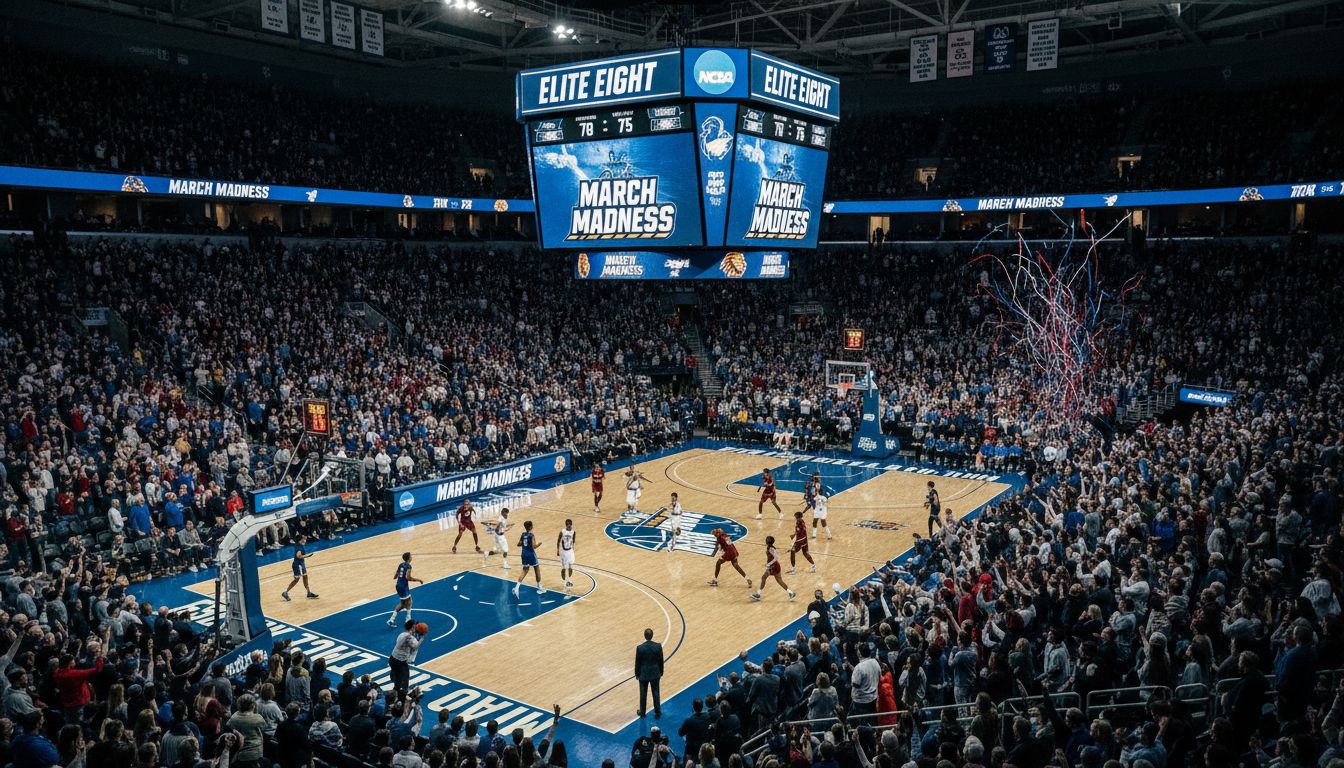
The Elite Eight is where the NCAA Tournament finally runs out of hiding places. Loose habits, soft defenses, and overhyped narratives tend to get exposed in this round, usually on national television with a commentator breathlessly reminding you "this is for a trip to the Final Four." This year’s Saturday slate gives us two very different matchups: an all-Big Ten grinder between Illinois and Iowa in the South Regional Final, and a stylistic clash between Arizona and Purdue in the West. On paper, they’re just games with point spreads, over/unders and a TV window on TBS; in reality, they’re small case studies in preparation, decision-making and who actually adjusts under pressure. If you strip away the marketing sheen, what’s left are the same questions we should ask of any powerful institution: Who is disciplined, who is accountable, and who’s been getting away with bad habits for too long.
Start in Houston, where Illinois and Iowa meet for the third all-Big Ten Elite Eight in history, and the first since 2000. Illinois owned the regular-season meeting back in January, a 75–69 win that now feels like it came from a different basketball era. What has changed most is not the Illini offense everyone already trusted, but a defense that was flagged as the soft underbelly of a would-be Final Four contender. On Selection Sunday, Illinois was a rare outlier: top-10 in Torvik’s power ratings with a defense outside the top 20, the kind of profile that usually screams, "fun second weekend, early flight home." Instead, across three tournament games, they’ve posted the nation’s ninth-best adjusted defensive efficiency, built on something very unsexy and very real: forcing contested jumpers without fouling, protecting the rim, and running shooters off the three-point line.
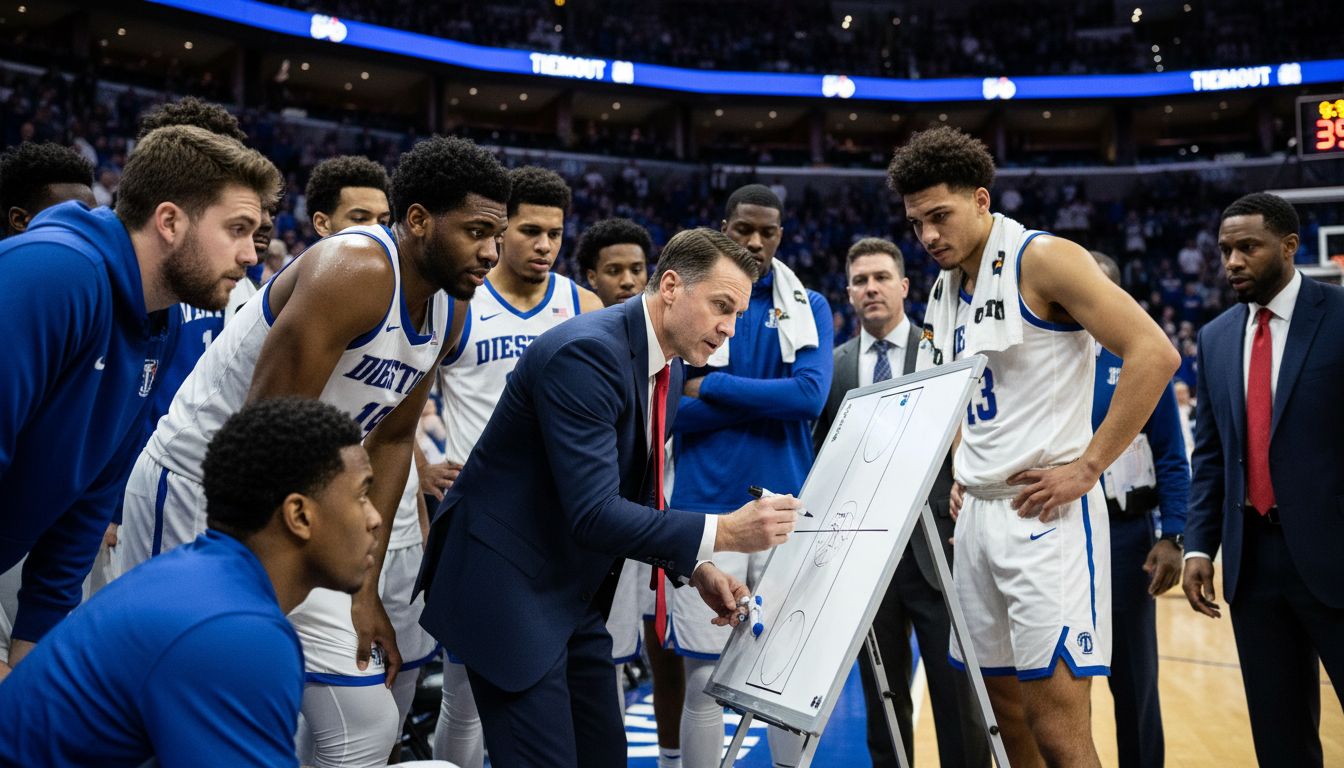
Iowa walks into that upgraded defensive structure with a familiar system and a hot hand, but also a target on its back. The Hawkeyes just handled Nebraska, another conference opponent, in the Sweet 16, yet Illinois knows Iowa’s blueprint and, crucially, Bennett Stirtz’s tendencies as a lead creator. That matters most early, before the adrenaline wears off and before Hawkeyes coach Ben McCollum can burn a whiteboard full of halftime adjustments. Oddsmakers have tilted the first-half market accordingly, and the sharp play many bettors are circling is Iowa’s team total under 30.5 before the break. In plain English, that’s a wager on Illinois’ preparation and institutional memory outlasting Iowa’s early-tournament glow, and on defense — not highlight reels — setting the tone of a likely lower-scoring grind.
None of this means Iowa is some pretender riding luck; it does mean the margin for error is thin when your opponent has a clear, repeatable plan built on film, familiarity and discipline. Teams can fake toughness for a weekend, but you cannot fake the ability to defend without fouling or the habit of closing out to the line the same way in minute two and minute thirty-eight. Illinois’ recent surge is exactly the kind of midstream course correction that separates programs willing to confront their weaknesses from those that keep selling last year’s scouting report as this year’s identity. If the Illini advance, it won’t be because the committee seeded them as a 3; it will be because they finally decided that defense wasn’t optional homework. And if Iowa survives that pressure cooker, it will be because their ball movement and shot-making held up against a game plan designed specifically to put their early-offense comfort zone in a straitjacket.
Out West, Arizona and Purdue offer a different kind of contrast — less about conferences and more about philosophy. Arizona under Tommy Lloyd has quietly become a referendum on one of modern college basketball’s loudest clichés: that you have to live and die by the three to win in March. Over their past 10 games, the Wildcats rank second nationally in adjusted offensive efficiency while sitting an incredible 360th in three-point rate. Translation: they’re torching people without jacking threes all night. Since the start of the Big 12 Tournament, they’re averaging 86.8 points per game, and their demolition of Arkansas in the Sweet 16 — 109 points, six players with 14 or more, just eight attempts from deep — looked less like a nail-biter and more like a systems stress test the Razorbacks failed in every category.
Purdue, meanwhile, arrives with a reputation built on offense and a defense that has never quite caught up to the branding. Their escape against Texas was celebrated for Trey Kaufman-Renn’s late tip-in, but the more telling subplot was how often the Longhorns got exactly what they wanted near the rim. Dailyn Swain and Matas Vokietaitis both found efficient looks inside, the kind of leakage that becomes a serious problem against an Arizona attack stocked with multiple paint creators and finishers. That’s why analytical models and humans with money on the line have leaned toward Arizona as a 6.5-point favorite: not because Purdue lacks talent, but because the Boilermakers’ defensive habits don’t line up with the job description this matchup demands. In tournament language, you can think of that spread as the market’s way of asking Purdue whether its defense is a slogan or a standard.
Tommy Lloyd’s refusal to chase the three-point arms race is not some romantic throwback; it’s a calculated bet on shot quality, spacing and pressure on the rim. In a landscape that too often rewards whatever looks modern on a graphic, Arizona has chosen to be ruthlessly efficient instead of cosmetically trendy, and the numbers have rewarded that choice. If they reach their first Final Four since 2001, it will validate a model built less on gimmicks and more on execution repeated over months, not just a weekend hot streak. Purdue, by contrast, is staring at a more basic accountability test: can this roster guard at a level commensurate with its aspirations, or is the program quietly hoping its offense can paper over the gaps one more time. Tournament history is pretty unsparing on that front; eventually, someone with Arizona’s shot profile shows up and refuses to cooperate with your defensive shortcuts.
From a wagering perspective, the angles are fairly clear: a cautious nod toward a lower-tempo, defense-driven Illinois–Iowa game with early scoring pressure squarely on the Hawkeyes, and a more assertive lean toward Arizona against the spread as the team better built to exploit its opponent’s known weaknesses. But it’s worth saying out loud what the betting lines only imply: these games are less about luck than about whether programs do the unglamorous work of fixing what the numbers have been screaming at them for months. In that sense, the Elite Eight can look a lot like a public audit, complete with receipts on defensive efficiency, shot selection and rotation choices. The teams that survive are not always the most talented, but they are almost always the ones that stopped believing their own press clippings long enough to change. And if there’s a quip hiding in all of this, it’s that March rarely punishes arrogance immediately — it waits until the Elite Eight, hands you a national audience, and then sharpens the spotlight.
So as you watch Illinois and Iowa scrap in Houston and Arizona and Purdue trade punches out West, look beyond the score bug and the live odds ticker. Ask whose game plan actually reflects the season-long data, not just the talking points, and which staff is making real-time adjustments instead of gesturing at clipboards. In a sport where coaches love to preach accountability to 19-year-olds, these two regional finals are a reminder that the adults on the sideline have some explaining to do too. If Illinois and Arizona advance as the underlying metrics suggest, it will be a win for preparation over reputation. If the underdogs flip the script, it will be because, for one night, they matched that standard and refused to let their flaws be the story — which, frankly, is a standard every powerful institution should be held to, on or off the court.