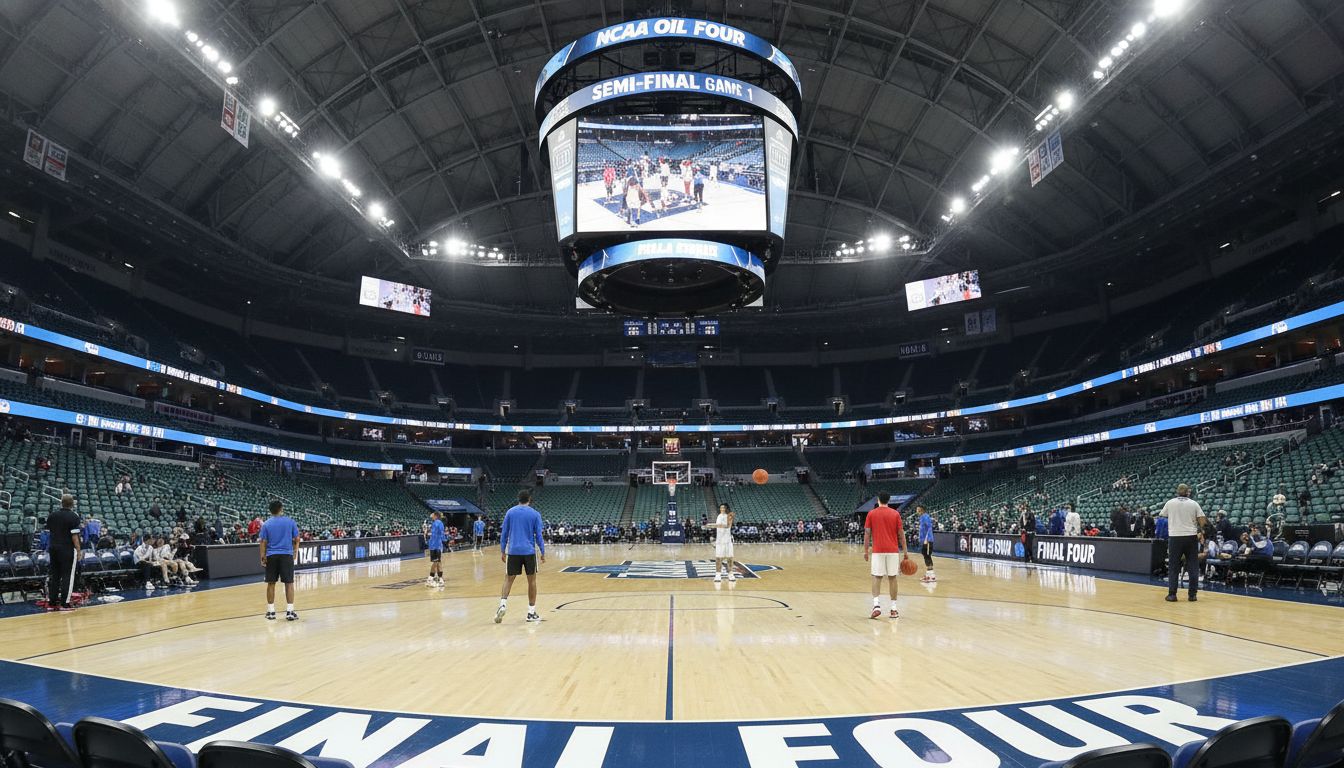
Call it the calm before the cash storm. On paper, Saturday night’s national semifinal between No. 1 Michigan and No. 1 Arizona is a clean, tactical basketball matchup: two elite offenses colliding with two elite defenses under the cavernous roof of Lucas Oil Stadium. In reality, it’s also a collision of markets, models and money, with a total that has been nudged up by public appetite for points faster than either team’s transition offense. The full-game total is marked at 157.5, with 72.5 for the first half, despite every real-world data point quietly suggesting that this matchup wants to start slow. These incongruities compel us to critically ask the same questions I pose to any powerful institution: who benefits, and what critical elements are we overlooking?
Let’s start with what we know. Michigan has encountered only one defense comparable to Arizona’s this season: Duke. That game wrapped up at a 68-63 score, against a pregame total of 151.5, and the first half slowed to 68 points – 4.5 points below the number being anticipated in Indianapolis. Reflecting on Arizona, their closest defensive analogue was Houston, resulting in opening halves of 67 and 80 points during their recent clashes, alongside full-game totals of 142.5 and 138.5. Consideration of context is crucial: the 80-point half emerged during the Big 12 tournament final, the third game in three days for both teams, essentially setting the stage for weary legs and lax closeouts. Saturday presents a contrasting scenario: six full days to prepare, scheme, and internalize defensive rotations until they become akin to muscle memory.
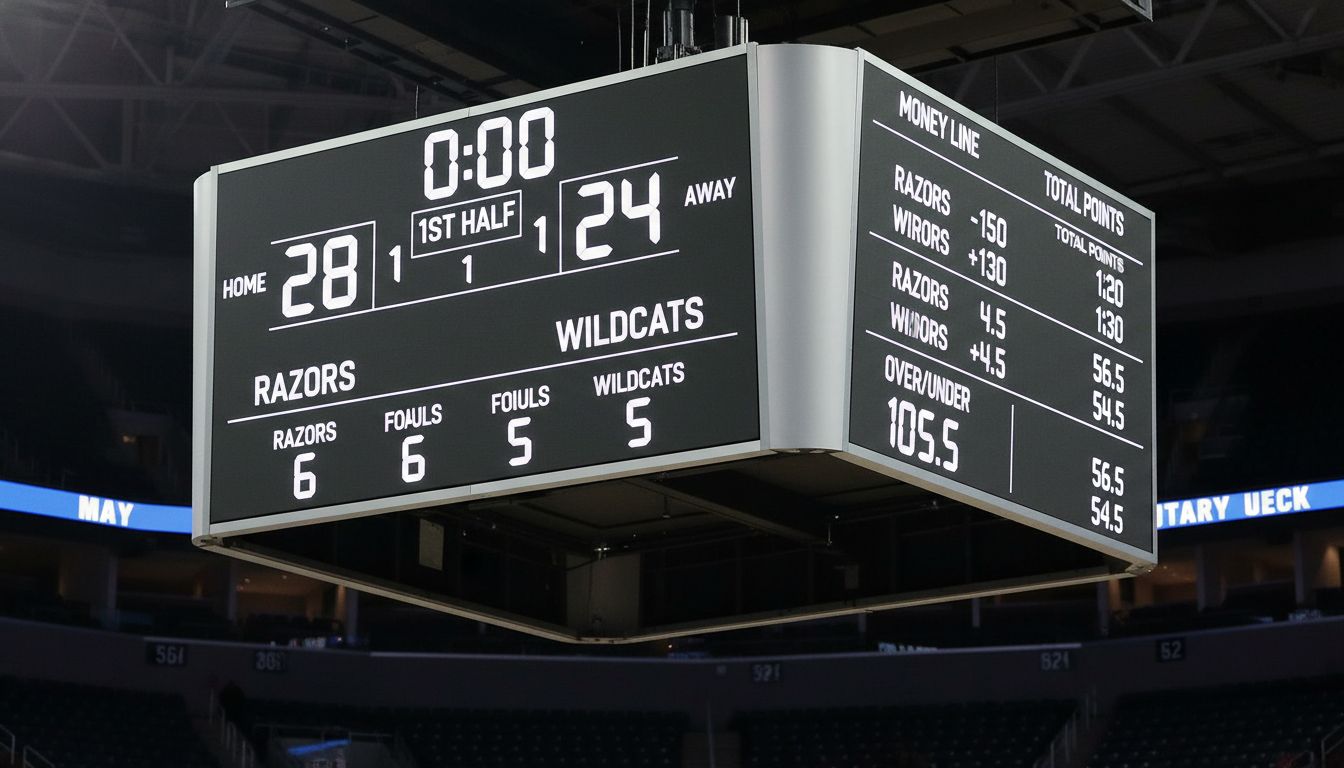
The building matters too, and not just for ticket prices. Lucas Oil Stadium is essentially an NFL cathedral doubling as a basketball court, and history denotes it’s less conducive to brisk beginnings. Across Final Fours in 2010, 2015, and 2021, national semifinal point totals in this venue ranged from the high 120s to mid-140s, underscoring an era that, while progressively offense-inclined, hasn’t adopted a pace warranting a 157.5 sticker price. The sheer size of the dome influences depth perception; shooters lose familiar visual anchors that aid in shot accuracy, akin to trying to read small print in poor lighting. This shifts decision-making into a more cautious realm, mirroring shooting in an environment calling for more conservative plays.
Here's where the narrative becomes intriguing. Despite Michigan and Arizona both heralded as top-tier offenses, these reputations largely stem from thriving against subpar defenses and leveraging pace when opportune. Confronted with elite resistance, expect a decline in numbers, slower play – indicating more half-court sets, last-second decisions, and coaches holding their play cards as if they’re scrutinizing every move. The first-half total projections however, depict an implied track meet from the get-go, disregarding that high-stakes clashes between formidable contenders more often resemble a chess game, not a sudden sprint. Neither team’s coaching staff is inclined to frivolously exhaust play options within the opening minutes of a national semifinal unless addressing a visible shortcoming.

Why set a figure this high? A partial explanation lies within harmless assumptions: models incorporate season-wide efficiency, pace, and modern offensive trends, then lean upwards because the public favors overs – fostering an optimistic game flow is naturally more appealing than banking on missed shots. Yet, there’s also a structural component, raising my anti-corruption antenna. Any landscape with asymmetric information – where books possess intricate risk analytics and the public predominantly relies on hype and highlights – will favor the house unless we embrace transparency concerning odds constructions. Dispensing with conspiracy chatter over 'rigged' lines would be premature without the necessary discourse surrounding actual basketball realities as opposed to market-driven psychology.
Purely from a basketball analysis, advocating for a slower, defensively skewed first half isn’t entirely unfounded. Both squads excel at mitigating primary action attempts, likely resulting in early sequences devoid of precision shots. Coaches will evaluate officiating trends, gauge the physical game allowance, and adapt; naturally moderating pace. Coupled with six days worth of scouting, expect initial moments resembling a legal deposition: deliberate, systematic, and devoid of needless revelations. Should the affair evolve into a shootout, anticipate this occurring post-halftime, once both teams have circumvented primary strategies, adapting players’ sightlines to the environment, as is typical when adjusting to new arenas.
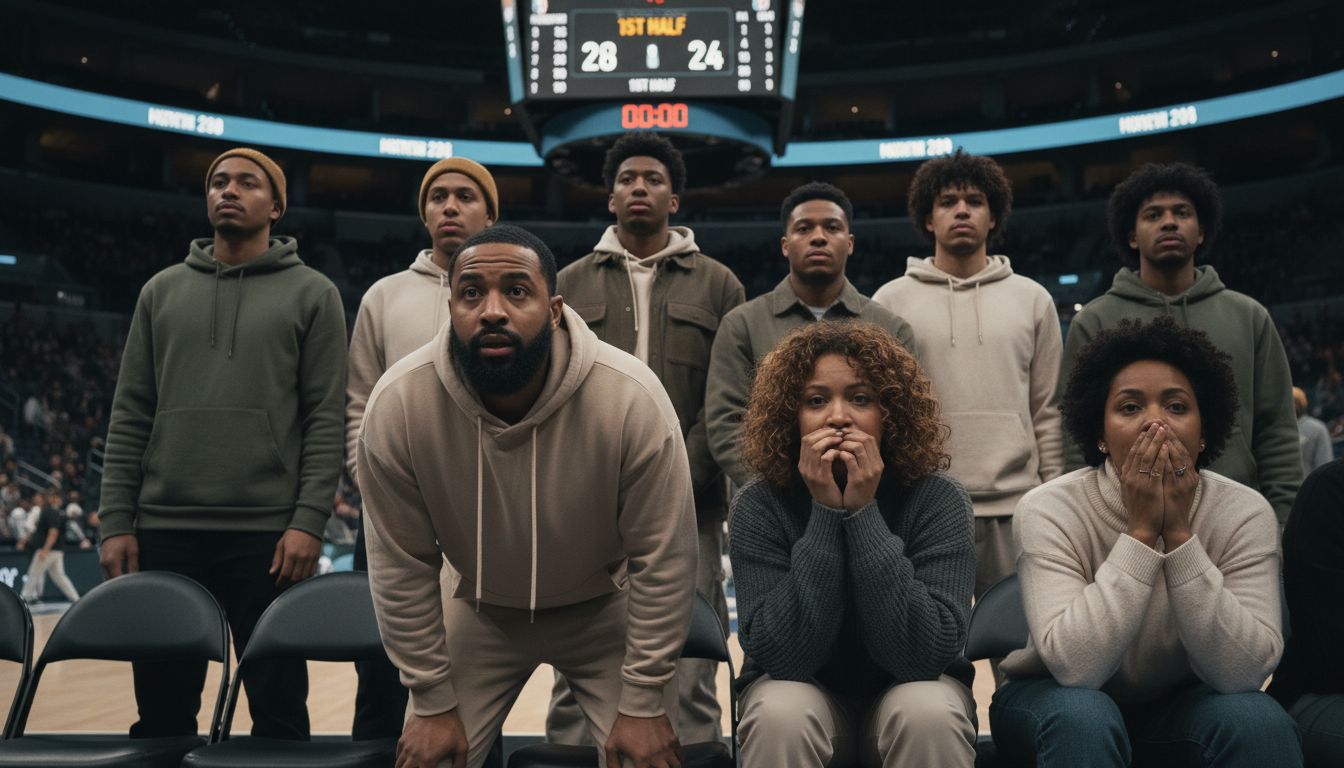
It’s integral to note, this doesn’t guarantee an under – variance remains the sport’s favored enigma, and a whistle-prone officiating crew could unravel defensive intents by liberal foul calls. Nevertheless, when every plausible comparison – Michigan versus Duke, Arizona versus Houston, prior Final Fours hosted at this location – presage a potentially modest scoreline early on, it prompts skepticism regarding perpetual narratives promising early fireworks. This theme resonates wider: inflated hype elevates expectations, elevates prices, and unsuspecting individuals could unknowingly pay a premium for narrative over substance. College sports have mirrored this dynamic through stadium financing endeavors, NIL collectives, and an escalating 'facilities arms race' that collectively leaves athletes and local taxpayers to endure the burden. While stakes on Saturday night’s wagering might be minuscule, the lesson transcends well: scrutinize finer details, question widespread assumptions, and recognize the distinction between spectacle admiration and genuine value.
From a betting perspective, opting for the first-half under 72.5 between Michigan and Arizona signifies a pragmatic audit over a flashy prognostication. The wager aligns more with trusting preparation, defensive exertion, and prevailing conditions to dampen immediate sparks the market has prematurely priced. It concurrently respects the notion that figures warrant genuine basis – numbers ought to be reflective of evidence, instead of mere anticipation of an offensive showcase. Should the match unravel dynamically from the onset, rendering under tickets seemingly naïve, that risk inheres within any decision where unpredictability looms. But if accountability remains a valued metric, then locating the origins and justifications behind odds stands as a prudent starting point, even if the sole institution you examine this weekend entails a sportsbook versus scoreboard dichotomy.