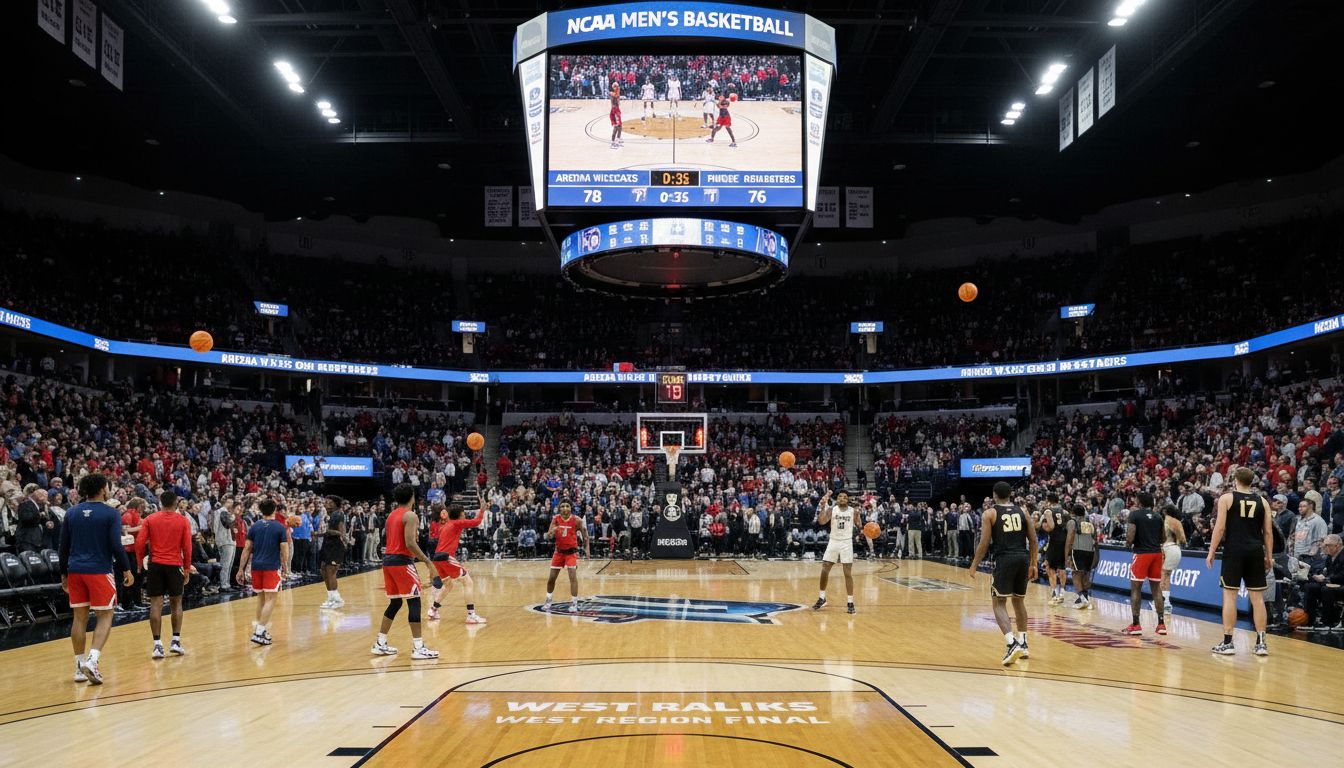
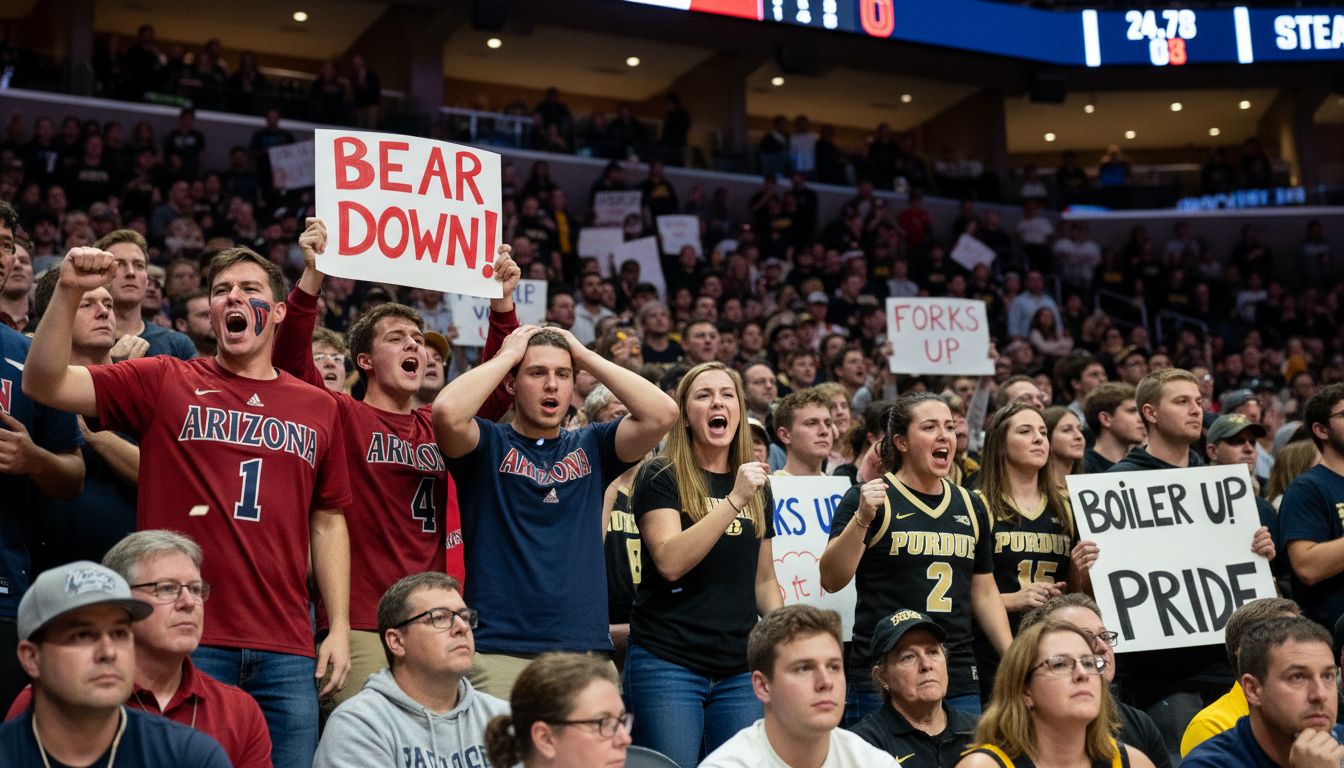
If you’re a college hoops sicko like me, this Arizona–Purdue regional final feels a little bit like March Madness comfort food: familiar brands, tortured fan bases, and 40 minutes that will probably age everyone involved ten years. On paper, it’s just a 1 vs. 2 game in San Jose with a ticket to Indianapolis on the line. In reality, it’s two entire basketball cultures trying to break out of their own therapy sessions. Arizona is dragging around 25 years of Final Four baggage, while Purdue is trying to prove that its recent wobbles were a plot twist, not the whole story. We’re not just talking about who survives and advances; we’re talking about legacies, conference pride, and which fan base gets to exhale for the first time in a generation.
Let’s start with Purdue, the preseason No. 1 that spent most of the winter looking like it had lost the GPS. The Boilermakers opened 17–1, then went 6–7 to close the regular season and stumbled to seventh in the Big Ten, which for a supposed juggernaut is basically a midlife crisis. For a while it felt like Matt Painter had burned through what might be his last, best shot at another Final Four run. Then March hit, the bracket went up, and Purdue remembered who it was supposed to be, ripping off seven straight wins between the Big Ten Tournament and the NCAA run. Now they’re one victory away from going back to the Final Four less than an hour from campus and from becoming the first team since 2009 North Carolina to go from preseason No. 1 to national champ.
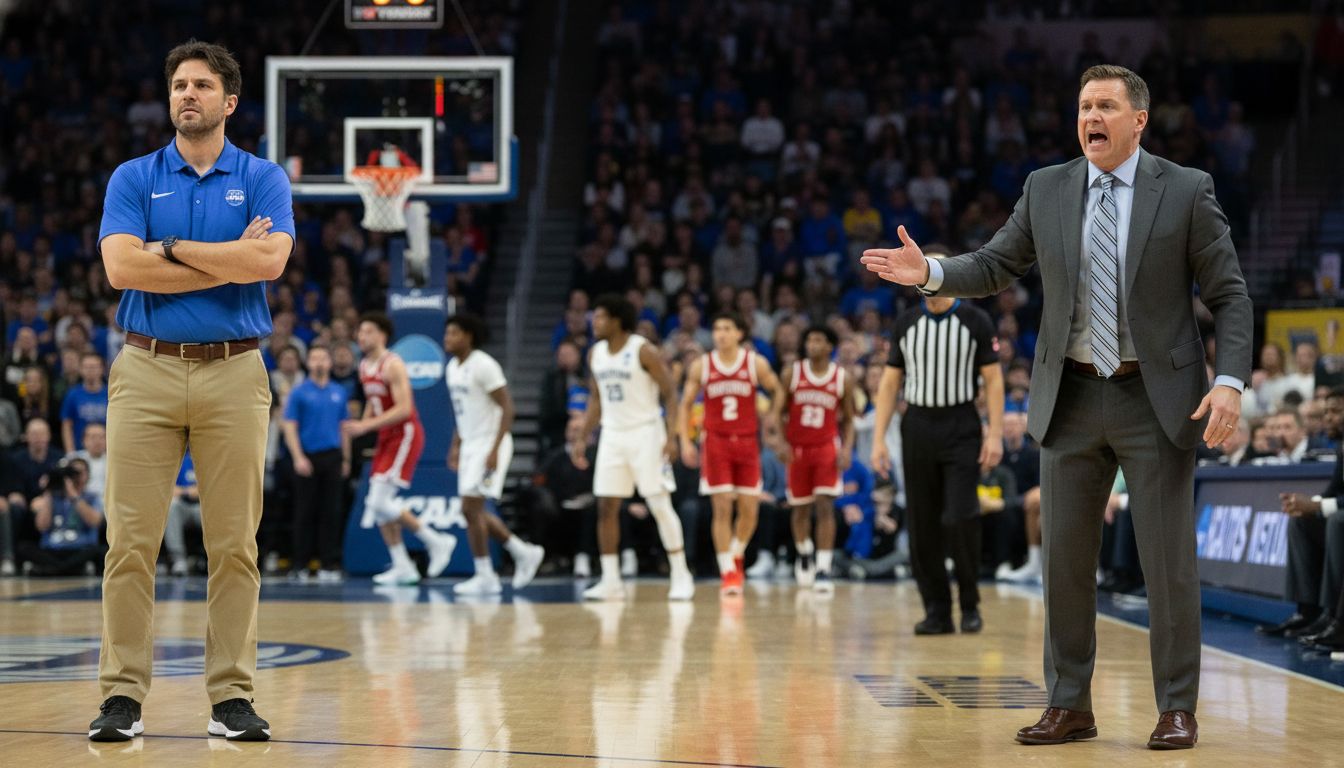
Purdue’s story always gets tangled up with the Big Ten’s, because the league hasn’t hung a national title banner in 26 years. For a conference that loves to flex its depth and TV ratings, March has been humbling bordering on cruel. Getting Purdue to the Final Four doesn’t erase all that, but it does at least crack open the door on ending the drought. Painter has Braden Smith, Fletcher Loyer, and Trey Kaufman-Renn as a long-term core, but you never really know how many true cracks at it you get in this sport. In the transfer portal era, stability is a luxury, and this feels like one of those moments when a program either breaks through or adds another chapter to the what-if file.
On the other side, Arizona’s relationship with the Elite Eight is pure horror cinema. The Wildcats have lost five straight regional finals since their last Final Four trip in 2001, and each one seems to hurt in a slightly new and creative way. Arizona fans can rattle them off like old scars: the 2005 collapse against Illinois, the back‑to‑back gut punches from Wisconsin in 2014 and 2015, and all the years that felt like missed opportunities for a blueblood that expects more. Tommy Lloyd has spent five seasons methodically retooling the program into an offensive machine, piling up 147 wins — the most ever for a coach through five seasons — yet he still hasn’t kicked down the Final Four door. For a fan base with championship‑level expectations, this season’s 35–2 record is colliding with the memory of all those Elite Eight heartbreaks in a way that makes Saturday night feel almost existential.
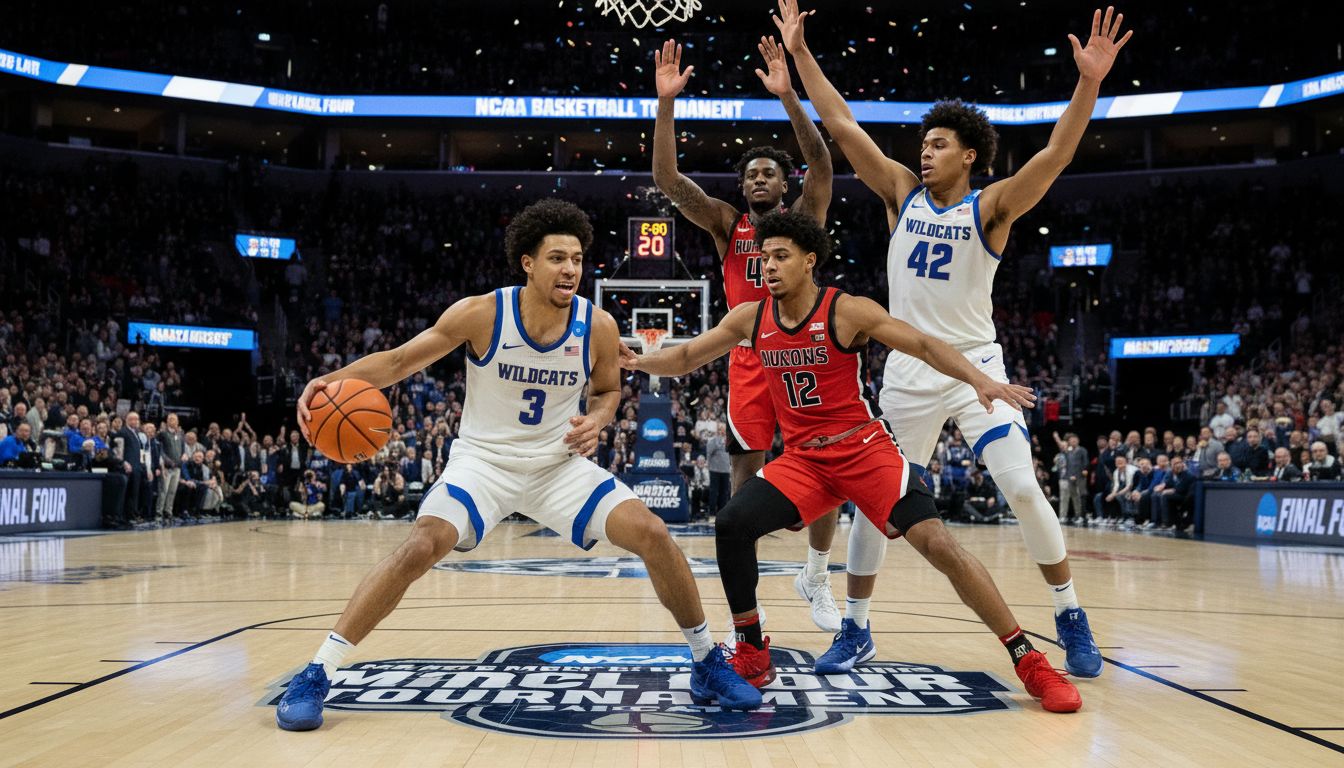
Stylistically, this matchup is basketball nerd candy. Arizona plays downhill and lives in the paint and at the free throw line, happy to win without jacking a ton of threes. Purdue, by contrast, runs the most efficient offense in the country but usually needs the perimeter to cooperate to hit its ceiling. The Boilermakers just went 4-of-20 from deep, tying a season low, and still survived thanks to a timely tip‑in by Kaufman‑Renn; against this Arizona group, that probably doesn’t fly. Given how aggressively the Wildcats switch and suffocate actions, Purdue likely needs double‑digit threes to feel safe, which puts a big neon arrow over Loyer, who’s hit nearly half his threes in this tournament stretch.
This game might quietly be remembered as the point guard game, even with all the frontcourt storylines. Purdue’s Braden Smith, the NCAA’s all‑time assists leader, is a classic floor general — the kind of guy who seems to see the game one beat ahead of everyone else. He’s been here before on this stage, and his feel for when to push, when to probe, and when to feed his bigs is the heartbeat of Painter’s system. Arizona counters with Jaden Bradley, the Big 12 Player of the Year and the closer who’s turned late‑game situations into his personal workshop, from big shots against UConn in December to Iowa State in the conference tournament. They don’t play the same style, but their value is the same: if either one blinks in the final two minutes, that might be the series of possessions we’re talking about for the next decade.
There’s another layer here that hoops lifers feel in their bones: neither Painter nor Lloyd chases trends just to fit in with what’s cool on Twitter. In an era where everyone wants five‑out, pace‑and‑space, and forty threes a night, these guys are perfectly comfortable using size, angles, and old‑school principles to bludgeon you. Purdue often plays two bigs who don’t stretch the floor, daring you to solve their half‑court riddle. Arizona pounds you inside, piles up free throws, and basically asks if you’re willing to deal with 40 minutes of body blows. You don’t have to love their styles, but from a coaching‑junkie standpoint, there’s something refreshing about two elite programs that are so fully themselves.
If you’re reading this from Husky Nation — and I know a lot of you are — this game should feel familiar in another way too. Arizona and Purdue are chasing what UConn just reestablished: a culture where March stops being a haunted house and starts feeling like home court. When you stack 30‑plus win seasons without a Final Four, as Arizona has under Lloyd, you’re living in that in‑between space where the numbers say you’re elite but the banners don’t quite agree yet. Purdue’s been there, too, with high seeds and earlier‑than‑expected exits that become part of the national punchline. Saturday night is one of those moments where a program either rewrites the narrative or doubles down on its reputation, fair or not.
From a neutral vantage point, there’s no real bad outcome here — just very different stories. An Arizona win snaps a 25‑year Final Four hex, supercharges Lloyd’s résumé, and probably cranks up the noise around him as a candidate for the North Carolina job whenever that seat fully opens. A Purdue win nudges Painter into a different tier of respect, gives the Big Ten a long‑awaited shot at ending its title drought, and proves that a midseason skid doesn’t have to define a season. Either way, someone is walking into Indianapolis with a fan base that feels both relieved and emboldened, and someone else is left wondering how many more times they can get this close without breaking through. For the rest of us, it’s another reminder of why March will always be the best theater in sports: the margins are tiny, the stakes are massive, and the scars and celebrations last a lifetime.