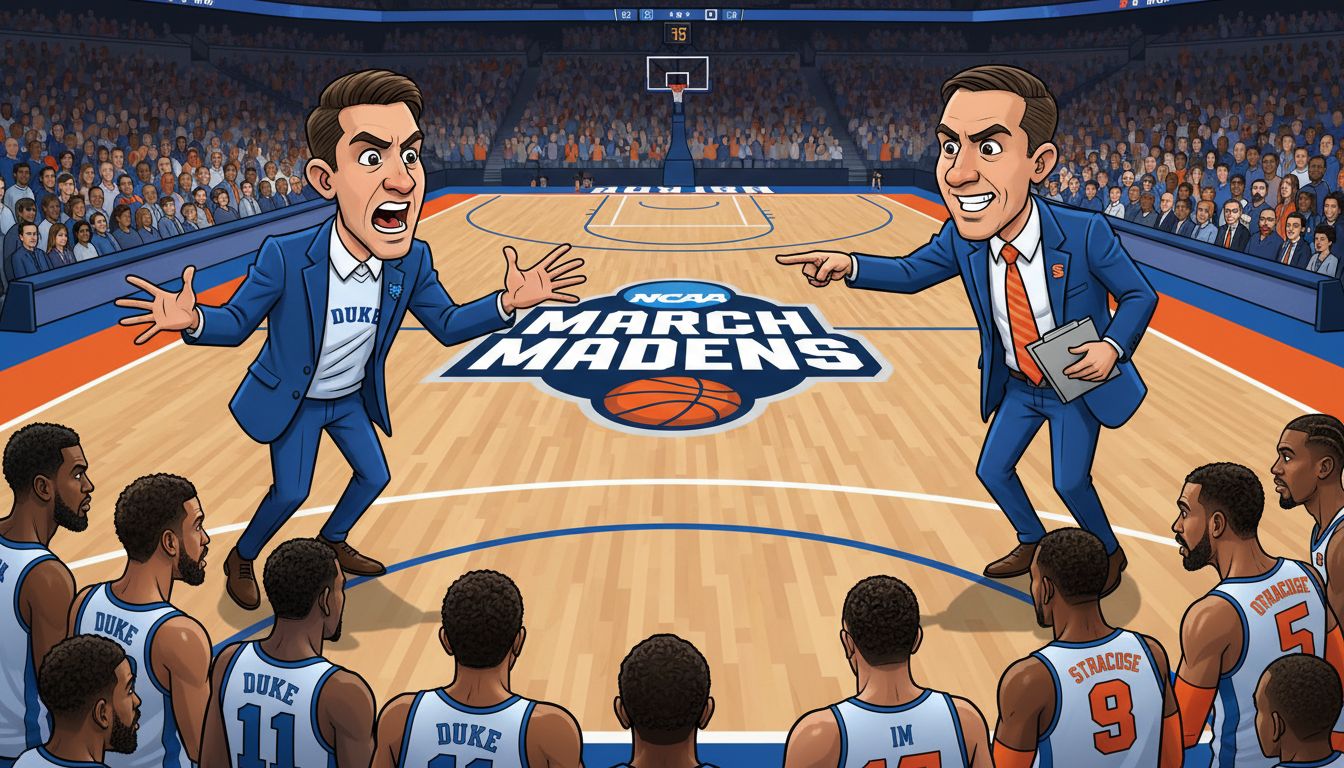
If you love college hoops history, Thursday’s Duke–Siena game is a little treat tucked inside a blowout waiting to happen. On paper, it’s your classic 1-vs-16 mismatch: Duke, the No. 1 overall seed, riding an 11-game win streak and owning the best NCAA Tournament winning percentage ever, against a Siena team that most casual fans couldn’t pick out of a lineup. But on the sidelines, we’re getting something you almost never see in March: two head coaches who both once cut down the nets as players. Duke’s Jon Scheyer and Siena’s Gerry McNamara are part of a tiny club of national-championship-winning players now running their own programs, and this matchup marks just the eighth time in NCAA Tournament history that two such coaches have gone head-to-head. For all the talk about analytics, transfer portals, and NIL, this one has an old-school soul—two former sharpshooters steering very different ships into the same March Madness storm.
Let’s start with Scheyer, because whether you pull for Duke or, like a lot of us down South, you’ve made a second career out of rooting against them, you have to respect the résumé. Scheyer was a multi-year starter and All-American for the Blue Devils, and he peaked when it mattered most, helping Duke to the 2010 national title with 15 points and five assists in the championship win over Butler. He finished his college career with 2,077 points under Mike Krzyzewski—numbers that scream "program legend" even at a place where legends are stacked like cordwood. Now in the big chair, Scheyer has wasted no time putting his stamp on Duke, guiding last year’s team to a Final Four and a 35-4 record, and then topping that by winning both the ACC regular-season and tournament titles this year. His current squad is built around elite freshmen, heavy on NBA talent, light on tournament experience, which is why he’s spending this week trying to shrink the moment down to size for his eight-man rotation.

Scheyer’s approach is more about embracing the spotlight than pretending it isn’t there. He’s told his guys, essentially, this is what you wanted, this is where you earned the right to be, and now the job is to stay present amid all the noise. He even calls all the outside attention "distractions"—but the kind you invite by being good enough to matter in March. That’s a subtle but important distinction in modern college hoops, where pressure doesn’t just come from former players and boosters anymore, but from social media, draft buzz, and bracket shows talking about you 24/7. If Duke is going to justify that 29.5-point favorite tag from the sportsbooks, it’ll be because Scheyer’s young core buys into that message and plays like this is just another game, even while every camera in the building says it isn’t.
On the opposite bench is Gerry McNamara, and if Scheyer is the polished face of a blueblood, McNamara is the grinder who built his name on big-shot toughness. At Syracuse, he never missed a start, helped win the 2003 national title alongside Carmelo Anthony and Hakim Warrick, and racked up 2,099 career points as a two-time All-Big East guard. His legend really exploded in his senior year, when he dragged Syracuse to a Big East Tournament title with four wins in four days at Madison Square Garden, including an overtime upset of UConn sparked by a one-legged three-pointer that still lives rent-free in Orange fans’ heads. Jim Boeheim, not exactly known for throwing around compliments, has called McNamara arguably the most popular player Syracuse has ever had, even while admitting there have been better pure talents. That tells you something about how McNamara connected with fans—not just with stats, but with grit and moments that felt bigger than the box score.
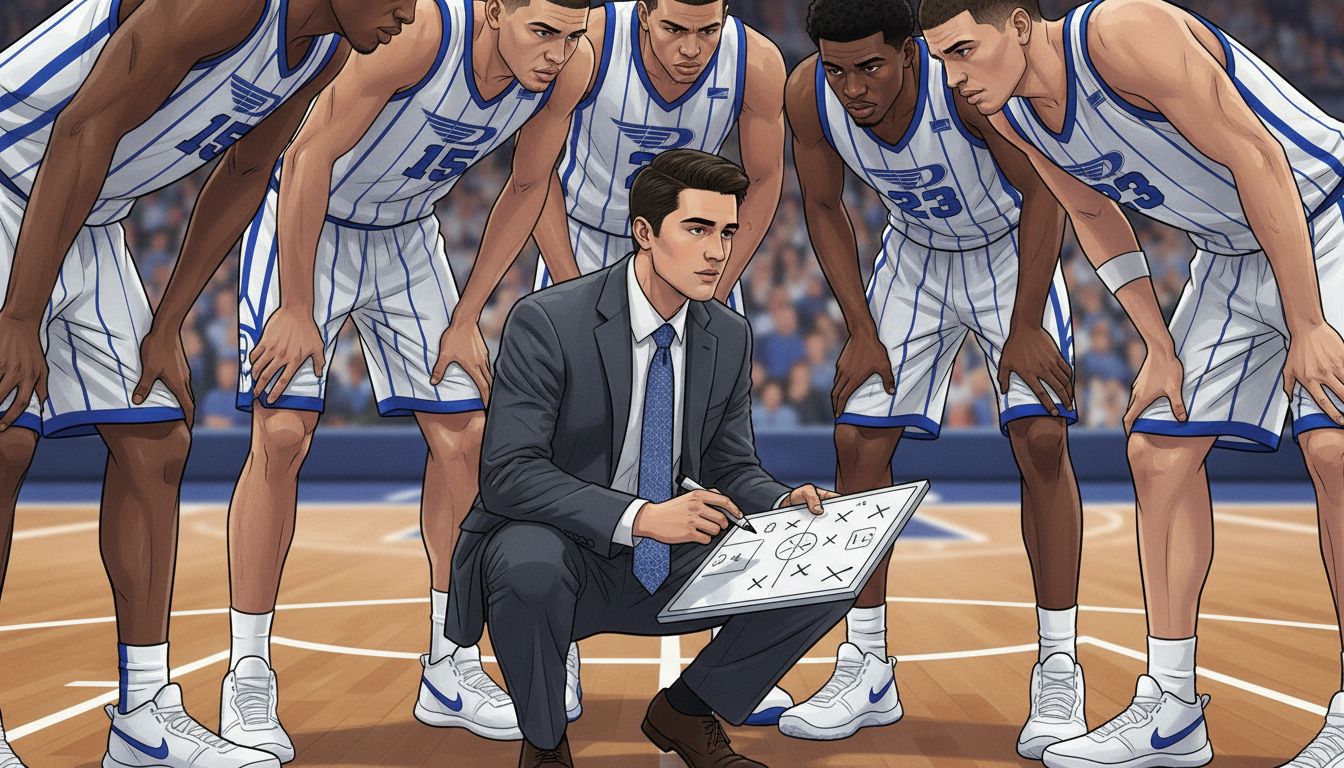
Now McNamara is trying to bottle that same underdog energy at Siena, and so far, he’s doing it faster than most folks expected. He took over a program that had just lost 28 games, and in only his second season he’s got them sitting on 23 wins and an NCAA Tournament berth, which is about as clean a culture flip as you’ll see in today’s transfer-heavy landscape. Boeheim credits his former assistant for real coaching, not just portal shopping, pointing out that McNamara had to juggle seven or eight new players, lose a couple, and then reconfigure his lineup on the fly. That’s the reality of modern roster-building: you’re not just recruiting anymore, you’re constantly re-recruiting the guys you already have while plugging holes and keeping everyone bought in. For a mid-major like Siena, navigating that churn and still putting together a winning season says a lot about McNamara’s ability to teach, adjust, and lead.
Historically, this Scheyer–McNamara showdown slots into a pretty exclusive little lineage. According to CBS Sports Research, this is just the eighth time that two former national champions as players have met as head coaches in the NCAA Tournament. The list of previous matchups reads like a who’s who of college basketball royalty: Bob Knight versus Dean Smith in multiple tournaments, Steve Alford against Danny Manning, Bobby Hurley facing off with Alford again, and even CM Newton representing Alabama back in 1976. Those games connected different eras and styles, but they all shared a common thread—leaders who’d already climbed the mountain as players trying to do it again from the sideline. Scheyer and McNamara are the millennial chapter in that story, both former sharpshooters now tasked with drawing up plays instead of finishing them.
To appreciate what makes this rare, it helps to remember how different the coaching ladder looks now compared with the days of Knight and Smith. Back then, the path was longer and more linear: start low on the bench, grind for years, and hope your shot comes along once or twice in a career. Today, between high-profile assistant gigs, shorter rebuilding windows, and the pressure on bluebloods to hire from within, former star players can find themselves fast-tracked into big jobs. Duke handing the keys directly from Krzyzewski to Scheyer was a perfect example of that power staying in the family, while McNamara’s move from Syracuse assistant to Siena head coach shows a different version of the same trust in a recognizable name with a proven playing pedigree. In both cases, the programs are betting that guys who’ve already excelled in March know how to prepare teams to handle the chaos that comes with it.
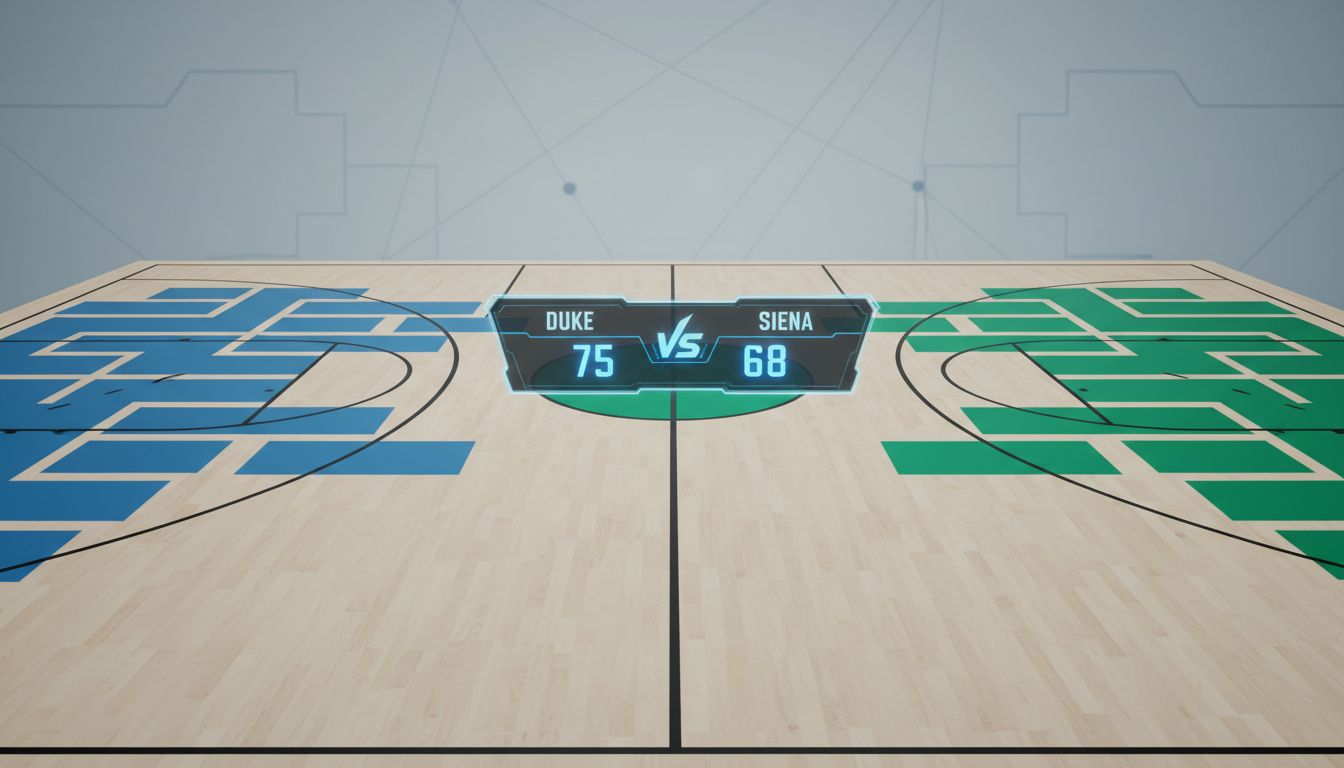
Of course, the Vegas line tells you this particular meeting of champions is more symbolic than suspenseful. Duke opened as a 29.5-point favorite, one of the biggest spreads in the first round, and the Blue Devils bring a depth of talent and athleticism that Siena simply hasn’t seen this year. If this turns into a track meet, Scheyer’s group can overwhelm you in waves, and they’ve already shown they know how to close out big games on neutral floors. For Siena, the realistic path isn’t about pulling off a miracle so much as competing with enough poise to make Duke work for 40 minutes, staying organized on defense, and turning this into the kind of grind McNamara thrived in as a player. Upsets at this level are rare for a reason, but that doesn’t make the moment any smaller for a program trying to prove it belongs in this spotlight.
Whether you’re tuning in for the blowout potential or the basketball history, this game offers a little something for everybody. Duke fans see a young coach trying to extend a blueblood dynasty into a new era, while Siena fans see the early chapters of what they hope becomes a long, scrappy rise under McNamara. For neutral observers, it’s a reminder that March isn’t just about the players on the floor; it’s also about the sideline stories, the coaching trees, and the way past championships echo into present-day matchups. As the ball tips on Thursday, we’ll see two men who once carried their teams as guards now trying to orchestrate everything from the bench, chasing the same feeling they tasted as players but with a lot more moving parts to manage. Whatever the final score, the Scheyer–McNamara matchup will stand as one more link in a small but fascinating chain of champions-turned-coaches crossing paths when the stakes are highest.