Every February, when the air in Cameron gets a little tighter and the students start camping out in K‑Ville with the fervor of a religious pilgrimage, the college basketball world pretends to be surprised by the same old truth: the regular season still matters. Conference titles, especially in the power leagues, are not just decorative banners; they are the quiet currency of seeding, momentum and, dare I say, institutional pride. Oddsmakers understand this better than most, which is why the 2026 futures boards already read like a midterm exam in program stability and late‑season execution. Look closely at these odds and you do not just see numbers; you see a snapshot of who has built real, sustainable leverage over their league and who is merely enjoying a fleeting uptick in form. Let us walk through the major conference races on the board and separate the programs behaving like grown‑ups in February from those still trying to fake it until March.
We begin, of course, with the only proper starting point in civilized college basketball discourse: the ACC, where Duke sits as a commanding favorite at -1100 to win the regular season. That price is less a gambling line than a referendum on structural superiority. At 13-1 in league play, Duke has created exactly the kind of margin an old‑money program should: enough cushion that one off night does not send the whole season into a tailspin. Virginia lurks at +500 with a tidy 10-2 mark, and Tony Bennett’s teams are too disciplined to be dismissed, but the path is narrow. For the Cavaliers to steal the crown, they almost certainly must win in Cameron on February 28, an assignment that has humbled far better rosters and coaches over the decades.
From a tactical standpoint, the odds here reflect something sharper than simple record comparison: the capacity to control tempo, withstand runs and execute late-game sets in hostile environments. Duke’s edge is not just talent, though there is plenty of that; it is the accumulated institutional memory of winning these kinds of stretch-run games. Virginia’s pack-line defense can ugly up any contest, but the problem with turning every game into a rock fight is that one or two unlucky bounces can undo an entire month’s worth of work. If you are backing the Cavaliers at this price, you are essentially betting that a low-possession grinder in Cameron will break their way. Old hedge-fund hands would call that an inefficient risk profile; in basketball terms, you are buying the long shot in a building that has made a living pulverizing long shots.
Shift to the new-look Big 12, and the market tells a different story entirely: volatility, parity and a little bit of chaos around the edges. Houston sits just a hair under even money at -105, with Arizona at +170, Iowa State at +600 and Kansas at +1200, and each has a plausible path to the top of the table. Intra-conference records — Houston at 11-2, Arizona at 10-2, Iowa State at 10-3, Kansas at 9-3 — suggest a cluster rather than a coronation. What really matters here is the compressed schedule gauntlet: Houston hosting Arizona on February 21, then turning around to play at Kansas on the 23rd, while Arizona still must host Kansas on the 28th and travel to Iowa State on March 2. These are not merely big games; they are leverage points where two- and three-game swings crystallize in the standings and in the markets almost overnight.
An old-money centrist by temperament prefers systems that reward consistency over noise, and the Big 12, for the moment, feels more like a high-beta stock than a blue-chip bond. Houston has the closest thing to a defensible favorite’s profile: hardened in close games, miserly on defense and efficient enough on offense to avoid prolonged droughts. Arizona offers the more romantic play — athletic, explosive and capable of blitzing opponents — but those same traits can result in erratic late-February performances when legs get heavy and scouting reports get sharper. Iowa State and Kansas, meanwhile, are the classic value positions: not front-runners, but experienced, battle-tested outfits that you would not be embarrassed to be holding a ticket on when the final week arrives. For the serious bettor, the correct posture in this league is humility: recognize that the range of outcomes is wide and that even very smart analysis can be undone by a two-minute stretch of whistle-happy officiating in Ames or Lawrence.
The Big East board, by contrast, offers a study in two-party dominance that would make any centrist smile, even if the rhetoric gets heated. UConn at -175 and St. John’s at +150 are effectively running against each other in a race no one else has the fundraising, or the roster, to join. The Huskies’ 14-1 league mark plays the elder statesman, while the Red Storm’s 13-1 record carries the air of a charismatic insurgency fresh off an 81-72 win in the first meeting on February 6. Their rematch in Connecticut on February 25 may end up functioning as a de facto primary for the regular-season title. From a tactical lens, this is a contrast between UConn’s structured, physically imposing half-court execution and St. John’s more free-flowing, pressurized style that asks opponents to make decisions under duress for 40 minutes.
Odds-makers have understandably shaded toward the defending champion Huskies, who have fewer weaknesses and more proven answers in late-clock situations. But anyone who watched St. John’s carve them up at home knows that the Red Storm’s ceiling is not theoretical. If you believe in continuity, rim protection and rebounding as the bedrock of championship basketball, UConn at this number still feels slightly discounted. If, on the other hand, you are persuaded that modern college hoops increasingly rewards pace, spacing and waves of live-ball pressure, then St. John’s looks like the better value, especially if you trust their guards to make enough shots on the road. Either way, the second meeting will tell us whether February 6 was an outlier or a data point in a genuine rebalancing of power atop the league.
In the Big Ten, the market has dropped all pretense of drama and installed Michigan as a -1200 behemoth over Illinois at +600, and the reasoning is straightforward enough. The Wolverines’ 15-1 conference mark has created a near-insurmountable cushion over Illinois at 12-3, and the schedule gifts Michigan only one remaining true stress test: a road trip to Champaign on February 27. When the odds are this lopsided, you are not really debating basketball traits so much as asking whether the favorite can avoid self-inflicted wounds. Michigan’s profile — disciplined offensively, solid on the glass, and deep enough to survive foul trouble — suggests a program that understands how to close out a title chase. Illinois, talented and dangerous on its best nights, is fighting both math and time; a single misstep, anywhere on the remaining schedule, renders the chase academic.
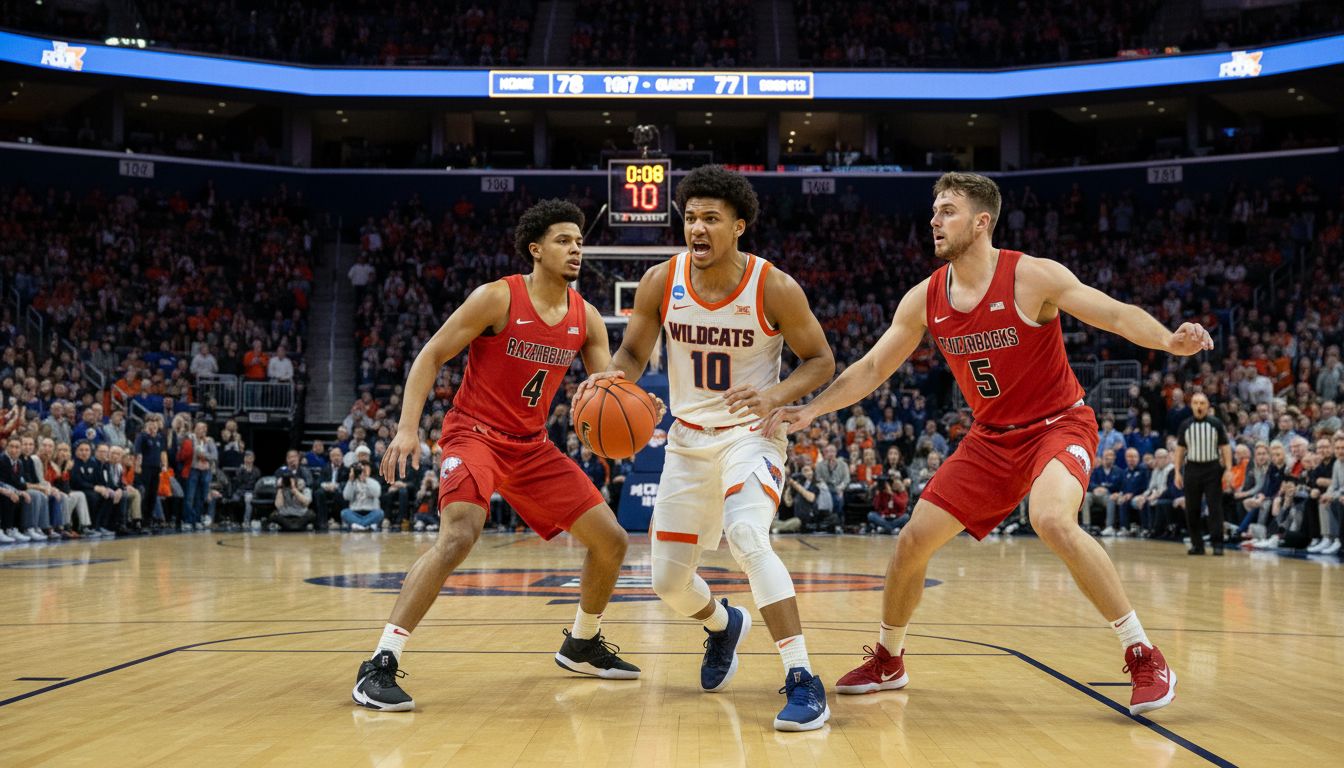
The SEC race looks remarkably similar on paper, with Florida priced at -1200 and Arkansas at +550, yet the underlying dynamics differ in revealing ways. Florida, the defending national champion at 11-2 in league play, carries not just a target on its back but also the institutional expectation that titles are to be defended, not merely enjoyed. Arkansas at 9-3 has positioned itself as the primary challenger, circling the February 28 visit to Gainesville as the pivotal opportunity to flip the narrative. Unlike in the Big Ten, though, the stylistic clash here makes an upset scenario more imaginable. Florida’s experience and poise are undeniable, but Arkansas has enough length, athleticism and defensive activity to drag the Gators into a game played on less comfortable terms.
Taken together, these power-conference odds sketch a map of where genuine structural advantage still exists in college basketball and where the old hierarchies are being meaningfully tested. Duke in the ACC and Michigan in the Big Ten look every bit the patrician favorites: deep, organized and relatively insulated from variance. Houston and the Big 12 contenders, along with the UConn–St. John’s duel and the Florida–Arkansas dynamic, speak to a sport that has become more complex at the margins, where smart coaching and roster construction can narrow the gap, even against brand-name powers. For the fan, the lesson is twofold: enjoy the chaos, but respect the programs that have learned how to tame it over a full regular season. And for those of us who grew up believing that certain gyms — Cameron very much among them — still bend probability in their own direction, these odds feel less like prophecy and more like a polite acknowledgment of a reality the banners have been quietly stating for years.