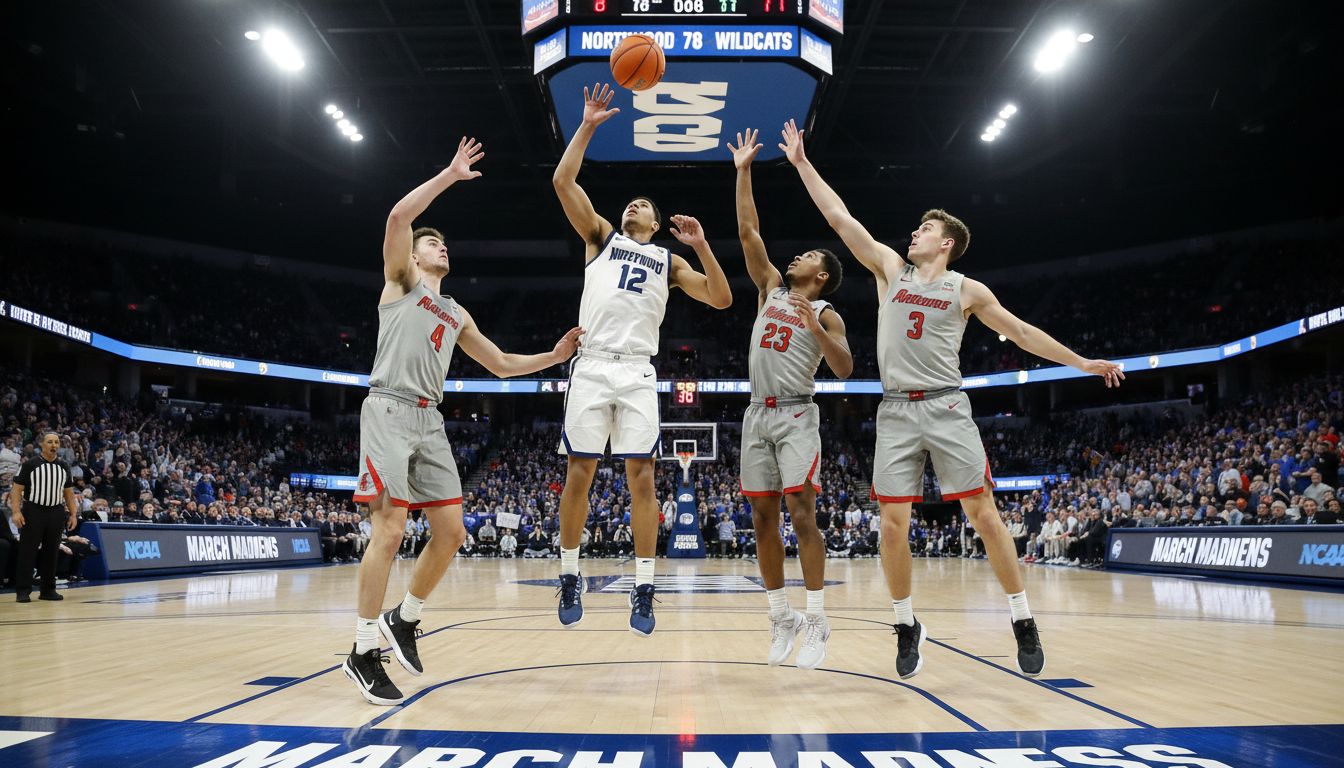
Every March, we all swear we’re going to be smarter with our brackets, and every March some 11-seed from a league we barely watch makes us look silly. The 2025 tournament went almost completely chalk, with the Elite Eight full of top-three seeds and a Final Four of four No. 1s, which is basically the NCAA’s version of plain oatmeal. Still, the beauty of this thing is the possibility that Cinderella actually shows up, even if the math says she’s running late this year. ESPN’s BPI-based Giant Killers model doesn’t give any team seeded 11 or worse even a 40% chance to win in the first round, and only one 12-seed cracks 20%. So if you’re trying to find a couple of smart upset darts without setting your whole bracket on fire, let’s walk through the matchups the numbers like most—and where the eye test adds a little nuance.
The juiciest potential upset sits in the 11-6 game between VCU and North Carolina, where the model gives the Rams a 39% chance to advance. UNC’s upside took a clear hit when star freshman Caleb Wilson was lost for the season with a broken thumb, and the Tar Heels’ efficiency sagged in the games he missed, especially on the offensive glass and inside the arc on both ends. That vulnerability lines up perfectly with a VCU group that’s won 16 of 17 and plays a modern, spread-out style—eight rotation players with at least 18 made 3s and a relentless habit of living at the free throw line. On paper, Carolina still has more talent, but a shorthanded blueblood facing a confident mid-major with shooting and tempo flexibility is exactly the kind of profile you look for when you’re circling 11-seeds. You don’t have to pick the Rams everywhere, but if you’re in a big pool and want a calculated swing, this one checks the right boxes without being pure guesswork.

In the other 11-6 pod, NC State and Texas both get a 37% shot against BYU, depending on who survives the First Four. NC State limps into Dayton having dropped seven of nine, but we literally just watched this program make a Final Four run as an 11-seed two years ago after stumbling through ACC play, so their late-season stumbles aren’t an automatic red flag. This version of the Wolfpack scores it better than that 2024 group and can keep up with BYU offensively, but their defense has bled points—87 per game allowed over the last nine, with opponents hitting nearly 11 3s a night. If they beat Texas and see the Cougars, State’s path is obvious: protect the ball like they have all year and lean into their elite 3-point shooting to try to trade fire with a BYU team diminished by the loss of Richie Saunders but still dangerous with AJ Dybantsa and Robert Wright III. Texas, on the other hand, brings plenty of scoring but a shaky defense, and their X-factor is 7-footer Matas Vokietaitis, whose impact is often capped by foul trouble but whose presence is crucial if they draw BYU’s thinned-out front line.
SMU brings the ACC-adjacent flavor as a potential 11-seed Giant Killer against Tennessee, though the Giant Killers model is lukewarm at just 25% upset odds. First the Mustangs have to handle Miami (Ohio) in the First Four, which the projections expect them to do, but Tennessee is a completely different problem: the Vols are the best offensive rebounding team in the country and can just bludgeon you with second chances. For SMU, everything starts with the health of B.J. Edwards, their best defender, who is working back from an ankle injury that coincided with a 1-4 skid. If Edwards is close to himself, SMU has a path by turning Tennessee’s turnover issues into live-ball runouts and avoiding a half-court slugfest they’re unlikely to win on the glass. If he’s limited, you’re mostly talking yourself into brand-name fatigue—Tennessee’s March scars—rather than a genuinely strong upset profile.
The model’s favorite 12-seed is High Point against Wisconsin, with a 24% chance for the Panthers to pull what’s become the most clichéd upset pick line on the bracket. High Point lives on turnover margin, ranking in the top five nationally in turnover rate on both offense and defense and squeezing 21 points per game out of opponent miscues, which is a wild number at this level. The problem is that Wisconsin might be the worst possible draw for that specific strength, because the Badgers are elite at avoiding live-ball turnovers and calmly executing in the half court. Guards John Blackwell and Nick Boyd have been on a heater, combining for 50 points per game over the last four, which forces High Point to not just create chaos, but also actually cool off hot shot-makers on the perimeter. If you want a 12 over 5 because your pool demands it, this game can be your swing, but know that the analytics are closer to cautious optimism than full-on upset alert.
The other 12-lines that show up on the Giant Killers radar—McNeese-Vanderbilt and Akron-Texas Tech—have similar outlines but meaningful differences. McNeese is the country’s most ruthless team at turning defense into offense, leading Division I with 22.3 points per game off turnovers, while Vanderbilt prides itself on ball security and steady guard play from Tyler Tanner and Duke Miles. That strength-on-strength dynamic makes this more of a gut-feel game: either McNeese’s pressure travels in a tournament setting, or Vandy’s guards hold serve and make the Cowboys work in the half court, where talent and size usually tilt toward the power-conference side. Akron’s shot at Texas Tech, meanwhile, is heavily shaped by the Red Raiders losing All-American JT Toppin to a season-ending ACL injury and stumbling into March with three straight losses. Both teams are heavily 3-point dependent—Tech gets 43% of its points from deep, Akron 39%—but the Zips are the smallest team in the field, which means their margin for error on the boards and in defensive rotations is razor-thin against Christian Anderson, one of the most dynamic creators in the tournament.
Northern Iowa’s 12-5 shot at St. John’s carries a 15% upset probability and reads like a classic tempo tug-of-war. If the Panthers are going to pull this off, they need to slow the game, make perimeter jumpers and, crucially, keep the Red Storm from feasting on the glass. St. John’s doesn’t rely on the 3 like some of the other higher seeds here; the Johnnies are built on paint pressure and second-chance points, with Zuby Ejiofor and Dillon Mitchell cleaning up everything around the rim. UNI does get a boost from having Tristan Smith back healthy in the frontcourt, and his physical presence has aligned with their late-season improvement, but over 40 minutes you’re asking a smaller, less explosive roster to win almost every possession-detail battle. That’s not impossible in a one-game sample, but it’s the kind of ask that keeps the upset probability in the mid-teens instead of something that really jumps off the page.
The last piece of this puzzle is South Florida’s 11-6 shot against Louisville, where the model sees only a 19% chance for the Bulls to crash the party. Don’t let that number fool you into thinking USF is a soft opponent: they’re 19-3 since late December, with the three losses decided by a combined five points, and they do damage by piling up second-chance points behind Izaiyah Nelson and bombing away from deep with Wes Enis and Joseph Pinion. Louisville, though, has a very specific identity—it wants to shoot a ton of 3s, with 11.5 makes per game and 41% of its points coming from beyond the arc—and that fits tournament conditions well if the Cards are healthy. The swing factor is freshman guard Mikel Brown Jr.’s back; if he’s limited, Louisville’s depth and shot creation take a hit, and suddenly a game already projected as the highest-scoring first-round matchup has even more volatility. If you like rolling the dice on shootouts, this is the kind of game where you pick an upset and don’t watch the first 10 minutes, because it can snowball either way in a hurry.
Zooming out, the Giant Killers model is pretty blunt this year: the odds of multiple deep Cinderella runs are lower than we’ve grown used to, even though the First Four and 11- and 12-seeds still offer a few intriguing angles. Betting markets have widened their lines, and high seeds are generally stronger relative to the field, which is part of why we ended up with such a chalky 2025 bracket and could see something similar again. From a bracket strategy standpoint, that doesn’t mean you avoid all upsets; it just means you pick your spots carefully, lean on profiles that actually fit historical patterns—strong guard play, clear stylistic edges, or injuries to favorites—and resist the urge to force chaos in every region. Teams like VCU, whichever 11-seed emerges to face BYU, and maybe one or two of the 12s with turnover-driven identities give you plausible chances to steal points without blowing up your Final Four. Cinderella might not own the whole ball this March, but if you listen to what the numbers are telling you and pepper in a little of your own hoops sense, you can at least give her a decent invitation on your bracket.