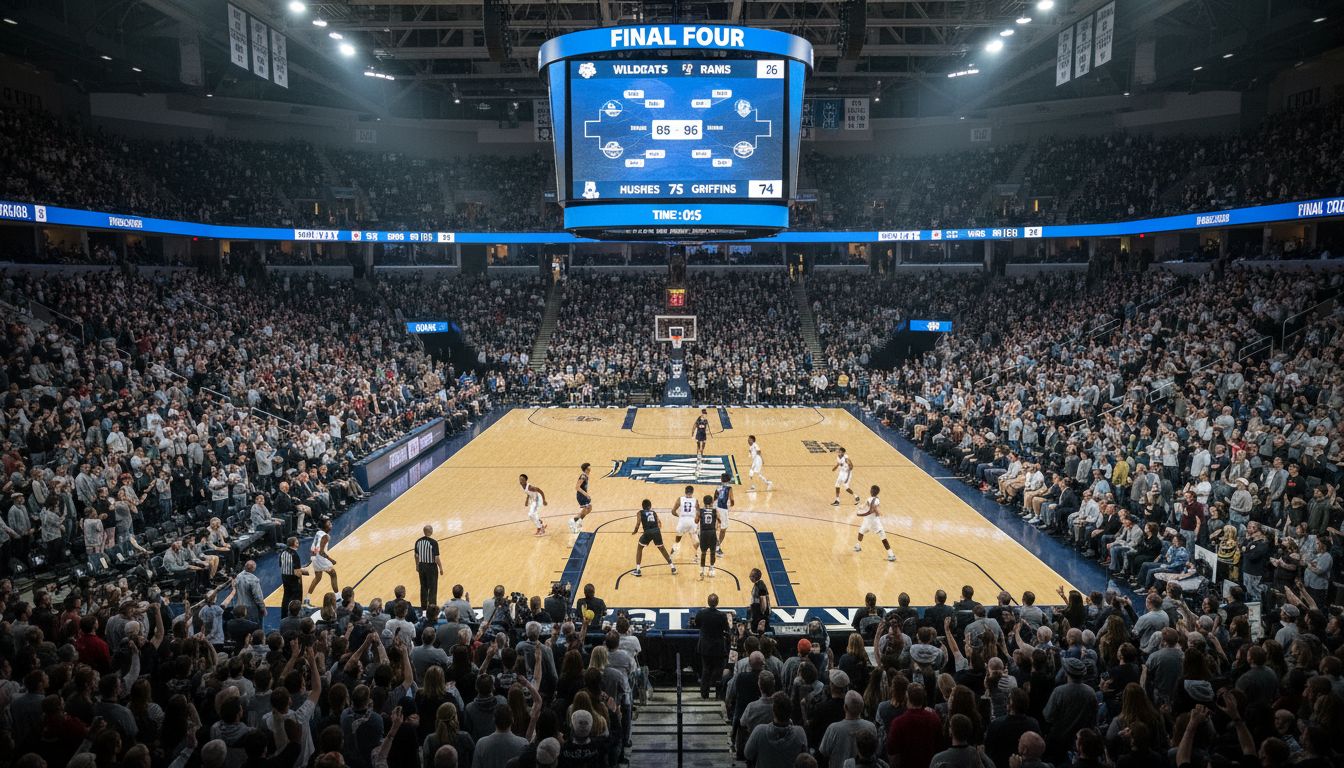
Every March, we pretend the NCAA tournament is a pure meritocracy decided by whistles and jump shots, but the 2026 bracket is also a map of who holds power in college basketball right now. Look closely at this field and you see three converging forces: coaches who’ve mastered the one‑and‑done economy, programs that weaponize depth and experience, and a fast‑rising class of mid‑majors trying to crash a shrinking party. Duke and Arizona headline that first group, built on blue‑chip freshmen and analytics‑approved efficiency; Iowa State, Michigan and Florida embody the second, winning with layered rosters and grown‑man frontcourts; Northern Iowa, Akron and McNeese represent the third, squeezing into the field with elite defenses or hyper‑efficient offenses and very little margin for error. The public sees “68 teams, equal chance,” but the spread between a one‑seed with NBA‑ready size and a small‑conference champ that played the 300‑something‑th toughest schedule is as structural as it gets. You can enjoy the chaos of upsets and still admit the board is tilted before the opening tip.
Start with the East, where Duke arrives as the No. 1 seed and the only team ranked top‑four nationally in both offensive and defensive efficiency. Cameron Boozer headlines a roster thick with projected first‑round picks, while Jon Scheyer has quietly built a four‑year run of top‑20 defenses that would make his predecessor proud. On paper, it’s everything you’d script for a title favorite: star power, length, and a scheme that travels. The soft spot is experience and health, with key contributors Patrick Ngongba II and Caleb Foster nursing foot injuries and a core dominated by freshmen and sophomores. If you’re filling out a bracket, you’re really betting on whether Duke’s learning curve on late‑game possessions can flatten in real time against teams like Michigan State and Arizona that have been through these wars before.
The rest of the East is a crash course in contrasting identities. UConn brings a familiar Danny Hurley blueprint: physical defense funneling drivers toward Tarris Reed Jr. and an offense that hums until turnovers pile up. Michigan State turns every game into a drag race, pushing off makes, trusting Jeremy Fears Jr. to make high‑speed decisions and living with some ugly giveaways as the cost of doing business. Kansas is built around Darryn Peterson, a likely No. 1 overall pick whose on‑court gravity is undeniable, yet the Jayhawks’ best stretches came when injuries forced everyone else to grow without him — a chemistry test that will decide whether they’re more than a highlight reel. At the other end of the seed list, Siena, Cal Baptist and North Dakota State arrive with sound schemes and proud histories, but also with the reality that their dominance came in leagues where the scouting resources and NIL budgets don’t resemble what they’ll see from Duke or Kansas on day one.
Move West and Arizona looks like the most structurally complete team in the field: a massive front line with Motiejus Krivas and freshman Koa Peat, real depth, and the rare ability to dominate the glass without sacrificing tempo. The Wildcats have worn the “best team in the country” label for long stretches, but their modern scar tissue is real — a single Final Four since that 1997 title and three straight Sweet 16 exits under Tommy Lloyd. Purdue offers the flip side: a ruthlessly efficient offense under Matt Painter, driven by point guard Braden Smith’s playmaking, paired with a defense that springs just enough leaks to keep every high‑seed game interesting. Gonzaga is back with a heist‑movie roster loaded with 22‑year‑olds and all‑league transfers, but an injury‑clouded Braden Huff leaves Mark Few’s team a piece short of true title talk. Further down, teams like Arkansas and Wisconsin push the three‑point experiment to extremes — the Razorbacks trying to run opponents off the floor with Darius Acuff Jr., the Badgers launching more than half their shots from deep — a reminder that in this era, style choices are as much about recruiting reality and resource gaps as they are about pure X‑and‑O philosophy.
The Midwest bracket reads like a referendum on roster building in the portal age. Michigan’s frontcourt of Yaxel Lendeborg, Morez Johnson Jr. and Aday Mara is a case study in what happens when a coach like Dusty May convinces three former centers to embrace shared space and responsibility — and then watches turnovers threaten to undo all that bully‑ball dominance. Iowa State is the counterpoint, less about one overwhelming matchup and more about a grown, connected machine led by Tamin Lipsey and Milan Momcilovic, who’ve turned years of chemistry into a defense and offense that rarely beat themselves. Virginia is one of this year’s quiet rebuilds: Ryan Odom has replaced the program’s recent offensive anemia with a multi‑layered attack built around Belgian forward Thijs De Ridder and a deep rotation of shooters and rim protectors. Lower down the seed line, you see the portal’s volatility on full display: Texas Tech reeling from JT Toppin’s injury, SMU and Miami (Ohio) trying to prove their video‑game numbers aren’t just the product of soft schedules, and Wright State riding a sophomore‑heavy core into the tournament with almost no big‑game seasoning. On paper, it’s parity; in practice, the programs with the most stable infrastructures tend to be the ones still standing in the second weekend.
In the South, Florida looks like the rare defending champion that hasn’t lost its edge. Thomas Haugh and Rueben Chinyelu anchor a front line that owns the glass and erases mistakes, while guards Xaivian Lee and Boogie Fland have finally cut down the early‑season sloppiness that nearly torpedoed their repeat bid. They’re also a reminder that you can be a national power and still lug around an obvious flaw: a 3‑point percentage barely above 31%, perilous in a tournament where one cold weekend can undo a year’s work. Houston arrives with its familiar defensive snarl and an unusually experienced roster for the portal era, but recent three‑game skids and a reliance on freshman stars hint at a team that can still be pushed out of its comfort zone. Illinois, Nebraska and Vanderbilt form one of the more intriguing clusters in the field — a hyper‑tall Illini team powered by late‑blooming freshman Keaton Wagler, a Nebraska program chasing its first ever NCAA win behind savvy transfers and defensive buy‑in, and a Vandy squad that leans into pace, spacing and analytics but lives in fear of getting crushed on the boards. This is where style, matchups and simple math collide: who can manufacture good shots when whistles swallow, who can survive the nights when their favorite shot isn’t falling, and who can keep their best five on the floor without fouling out.
From courtside, all of this presents as pure basketball drama; from 30,000 feet, it’s also a story about money, leverage and accountability in the modern NCAA. Programs that thrive now tend to have three things the box score won’t show you: robust NIL collectives, scouting staffs that look like pro front offices and coaches empowered with long leashes and big buyouts. When you read that Ohio State’s Bruce Thornton is one of just 22 power‑conference players to stay four years at the same school in the NIL era, that’s not nostalgia — it’s a tell about how volatile and transactional the landscape has become. When you see Louisville’s entire March outlook hinge on the health of a freshman star like Mikel Brown Jr., or Alabama’s bracket vibe change overnight because of a pre‑tournament arrest, you’re getting glimpses of systems that ask teenagers to carry billion‑dollar brands while the adults in charge cash guaranteed checks. The mid‑majors in this field — from Cal Baptist and McNeese to Northern Iowa and Troy — are operating on a fraction of those resources, often flying commercial, playing buy‑games for operating revenue and hoping their best players aren’t poached in the next portal cycle.
None of that means you should feel guilty about filling out a bracket or enjoying a 12‑over‑5 upset; it does mean we should be honest about what we’re watching. The NCAA likes to sell March as a level playing field where the only currency is execution under pressure, but any reporter who has sat through a budget meeting or sifted through collective paperwork knows the real bracket is drawn long before Joe Lunardi hits publish. The teams projected as “tough outs” here tend to be the ones with deeper benches, more continuity and fewer off‑court distractions — not by accident, but because their institutions have decided to invest heavily and consistently in that stability. Meanwhile, coaches on the hot seat, athletic departments cutting corners and programs juggling scandals often show up in March with brittle depth charts and no margin for error, then wear the early exit as if it were a fluky shooting night. If there’s a through‑line from Duke’s loaded efficiency profile to Prairie View A&M’s scramble just to get in, it’s this: talent and tactics decide games, but structure and accountability decide how often you get to play them.
So how should you read this 2026 tournament if you care about more than just office‑pool glory? Start by appreciating the variety of basketball on offer — from Saint Mary’s deliberate, data‑driven half‑court grind to Arkansas’ run‑and‑gun chaos, from Northern Iowa’s suffocating defense to High Point’s video‑game tempo. Then, when you see a blue blood stumble or a mid‑major punch above its weight, ask what that says about how those programs are managed, resourced and held to account. A hot shooting night can flip a game; sustained competence, transparent governance and a willingness to invest in player support tend to flip eras. And as for your bracket, here’s the uncomfortable truth: the safest picks often overlap with the schools that have been winning on the balance sheet and in the backrooms for years. The joy of March is that, for 40 minutes at a time, that advantage can shrink just enough for someone like Cal Baptist’s Dominique Daniels Jr. or Hofstra’s Preston Edmead to seize the mic. Enjoy those moments. Just don’t confuse them with proof that the system, as a whole, is fair.