Strip away the brackets, the office pools and the mascots on ladders, and March is still a coaches’ tournament at its core. Nobody sees the field more clearly than the people who have spent five months scheming to beat it, so when 25 coaches and scouts quietly handicap the 2026 men’s NCAA field, you listen.
Their consensus this year was blunt: four programs had separated from the pack — Arizona, Duke, Michigan and defending champion Florida — with everyone else chasing. However, the opening weekend of the 2026 men's NCAA tournament brought unexpected outcomes, with reigning national champion and No. 1 seed Florida dropping a close battle with scrappy 9-seed Iowa, and Kansas being eliminated on a buzzer-beating layup by St. John's.
Arizona, the coaches’ favorite, pulled 12 of 25 title votes after bullying its way through the Big 12 tournament. The Wildcats’ identity is old-school and unapologetic: overwhelming size, relentless offensive rebounding, and top-five efficiency on both ends of the floor. Arizona is also noted for being one of the few top seeds led by freshmen, with Brayden Burries and Koa Peat as their top scorers, a factor that historically has not led to Final Four success.
Duke’s case was built around one man and the structure around him. Cameron Boozer, a National Player of the Year frontrunner, was described by ACC coaches as a matchup with no clean answer. Duke, as the No. 1 overall seed, faced a tough path in the East region, historically the second-most successful region in terms of national titles. However, Duke suffered a stunning 73-72 loss to No. 2 seed UConn in the Elite Eight, marking a significant collapse after leading by 19 in the first half.
Michigan’s arc over the last month read like a reminder that even juggernauts can wobble. A month ago the Wolverines looked untouchable; then came a loss to Duke, a torn ACL for key guard L.J. Cason, and a Big Ten tournament setback against Purdue.
Florida, meanwhile, attempted to win a second straight national title, but their journey ended unexpectedly in the second round against Iowa. After a shaky 5-4 start and an early SEC stumble, the Gators lost just once in their final 17 games, riding a dominant frontcourt trio of Thomas Haugh, Alex Condon and Rueben Chinyelu. However, history was against them as only two defending champions have advanced beyond the first weekend since 2016.
Outside the top band, the Big East duo of St. John’s and UConn sat in that uncomfortable middle ground: dangerous enough to scare anyone, inconsistent enough to bust your bracket in either direction. St. John's stunned Kansas with a buzzer-beating layup to reach the Sweet 16.
Purdue offered the cautionary tale and the comeback story rolled into one. The preseason No. 1 turned into a 7-seed in its own conference tournament after a 6-7 skid, only to rip off four wins in four days and beat Michigan for the Big Ten crown.
No March preview is complete without a nod to the bracket’s would-be Cinderellas, the double-digit seeds that have coaches either intrigued or quietly nervous in film rooms. Miami (Ohio) drew praise for its collective poise and selfless offense, with multiple players capable of taking over a game.
Layered over all of this is a freshman class that has refused to wait its turn, reshaping ceilings in a sport that used to be run almost exclusively by juniors and seniors. Kansas’ Darryn Peterson has flashed No. 1-pick talent when healthy, especially as the Jayhawks play with pace around Melvin Council, Tre White and Flory Bidunga.
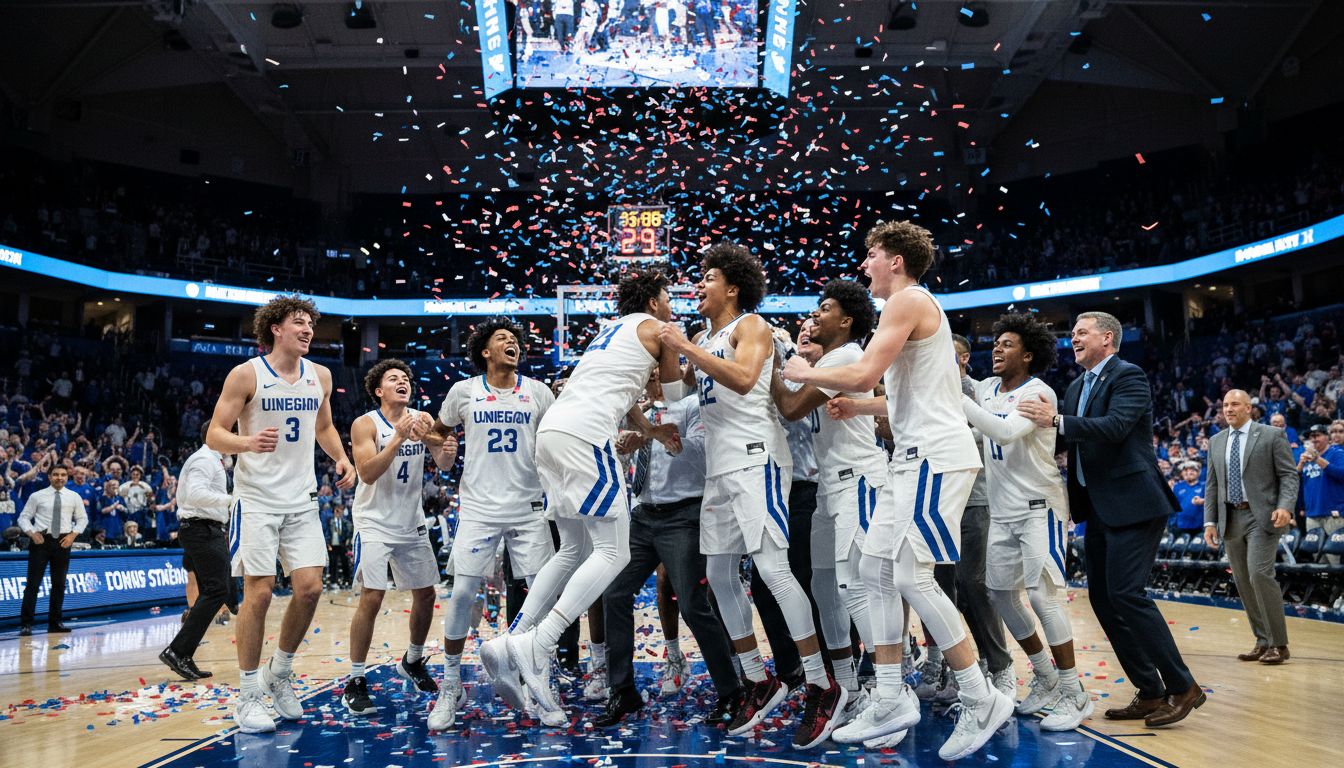
The 2026 Final Four is set with No. 1 seed Arizona facing No. 1 seed Michigan, and No. 2 UConn squaring off against No. 3 seed Illinois. Arizona makes its first Final Four appearance since 2001, while Illinois returns for the first time since 2005. Michigan is back in the Final Four for the first time since 2018, and UConn is making its third appearance in the final weekend in the last four seasons.
UConn, after a blowout loss to St. John's in the Big East title game, fired off four consecutive wins, including a stunning victory over No. 1 overall seed Duke. The Huskies' star, Tarris Reed Jr., is having a breakout season, while veteran Alex Karaban leads the team.
Illinois, under coach Brad Underwood, boasts a collection of veteran talent and freshman stars, with Keaton Wagler and David Mirković leading the charge. The Illini have the No. 1 offense in adjusted efficiency, and their height makes them formidable on the boards. They are set to face UConn in a rematch of their November game, where UConn held Illinois to a season-low 61 points.
Arizona's freshman trio of Peat, Burries, and Kharchenkov have been pivotal, with Jaden Bradley as the ultimate closer. Despite a weakness in 3-point shooting, Arizona's size and physicality have overwhelmed opponents, as seen in their comeback win against Purdue.
Michigan, under coach Dusty May, has built a title contender with a strong frontcourt and key transfers. The Wolverines shoot 61.2% on 2-pointers, ranking second in Division I, and have returned to the Final Four after a significant turnaround.
The new insights highlight that Arizona is the most balanced team, Michigan has the best defense, Illinois boasts the best offensive engine, and UConn is led by the best coach, Dan Hurley. Each team has excelled in specific areas during their tournament runs, contributing to their success in reaching the Final Four.
Betting odds for the national semifinals have Illinois favored by 1.5 points over UConn, with an over/under of 139.5, while Michigan is favored by 1.5 points over Arizona, with an over/under of 157.5. Illinois is noted for its efficient offense and strong performance in low-scoring games, while UConn will aim to keep the game low-scoring to leverage their defensive strengths.
UConn's path to the Final Four included a remarkable comeback against Duke, with Tarris Reed Jr. playing a crucial role. The Huskies' ability to maintain patience and execute under pressure was key, with Braylon Mullins hitting a decisive 3-pointer against Duke.
Illinois' defensive resurgence has been pivotal, holding opponents to low shooting percentages and excelling in rim protection. David Mirković's performance will be crucial against UConn, both offensively and defensively.
Arizona's dominance in the paint and free throw line has been unmatched, with Koa Peat and Motiejus Krivas leading the charge. Ivan Kharchenkov's defensive prowess will be tested against Michigan's Yaxel Lendeborg.
Michigan's ability to shift gears and dominate games quickly has been a defining factor, with Morez Johnson Jr. needing to adapt defensively against Arizona's versatile offense.
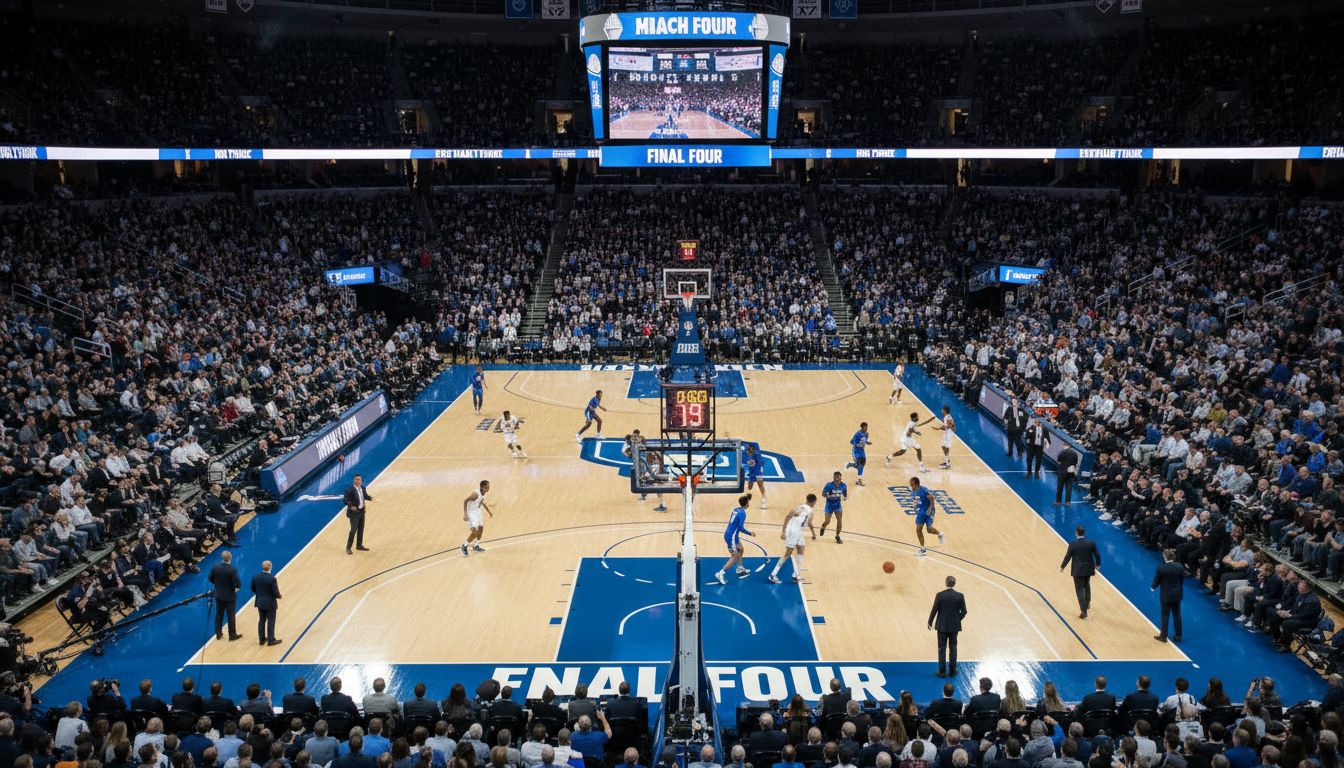
After three thrilling weeks of college basketball action during March Madness, the 2026 NCAA Tournament comes to a close over the next few days with the Final Four in Indianapolis. Saturday night's two-game slate at Lucas Oil Stadium features four teams that have consistently ranked among the top 10 to 12 in the country, along with a mix of coaching pedigrees -- a seasoned veteran, a two-time national champion and two rising stars.
Unlike most years, there is no surprise team in the field. Each of these programs has viewed itself as a title contender for months, and fulfilling that expectation will come down to execution.
To say these teams arrive in Indianapolis with momentum might be an understatement -- even if their paths differed. This marks the first time three Final Four teams enter the national semifinals with four NCAA Tournament wins by double digits. Arizona, Michigan and Illinois each rolled through their regions, contributing to the best combined tournament point differential (+282) for a Final Four since 2009.
UConn's momentum comes differently. The Huskies stormed back from a double-digit deficit against No. 1 overall seed Duke in the Elite Eight, completing a 19-point comeback capped by one of the most memorable shots in tournament history. That run has propelled Dan Hurley's team back to the stage where it cut down the nets in 2023 and 2024. While UConn may not be the current favorite, none of the other teams can match its championship pedigree.
The night begins with No. 2 seed UConn facing No. 3 seed Illinois in a rematch of a late-November nonconference game at Madison Square Garden, won by the Huskies by 13 points. Illinois has evolved since then, fueled by the emergence of All-American guard Keaton Wagler. UConn, meanwhile, has leaned on star big man Tarris Reed during an impressive tournament run. The earlier matchup offers some context, but the semifinal will reveal far more once play begins.
The nightcap features one of the most anticipated national semifinals in recent memory. Arizona and Michigan -- the tournament's only No. 1 seeds remaining -- enter ranked No. 1 and No. 2 nationally in KenPom's adjusted efficiency ratings. The Wildcats won the Big 12 regular-season and tournament titles, while the Wolverines claimed the Big Ten regular-season crown before falling to Purdue in the conference title game.
Combined, Arizona and Michigan are 71-5, with few discernible weaknesses. Both rank among the top five nationally in offensive and defensive efficiency, setting the stage for a high-level matchup defined by size, execution and depth -- a true clash of titans.
Throw out the stats from the first meeting between these teams -- a 74-61 UConn win -- because Keaton Wagler and Tarris Reed, each of whom was later named Most Outstanding Player of their respective regionals, played fewer than 15 minutes in that game. A more useful lens is how both teams have performed recently.
Illinois' defensive efficiency has improved significantly from its season-long baseline, while UConn has leaned more heavily on Reed's presence in the post as its primary offensive option. Both teams are comfortable operating in the half court, and with the Huskies' deliberate pace in particular, this projects as a lower-possession game.
The difference is that Illinois has consistently played -- and excelled -- in that style. The Fighting Illini have held three straight opponents under 60 points, including wins against Houston and Iowa, two teams that also prefer a slow tempo.
If that defensive form carries over to Indianapolis, Illinois is well-positioned to make it a difficult scoring night for UConn.
We've often heard about teams struggling to shoot in football stadiums. What helps offset that? Size. And these two teams have plenty of it.
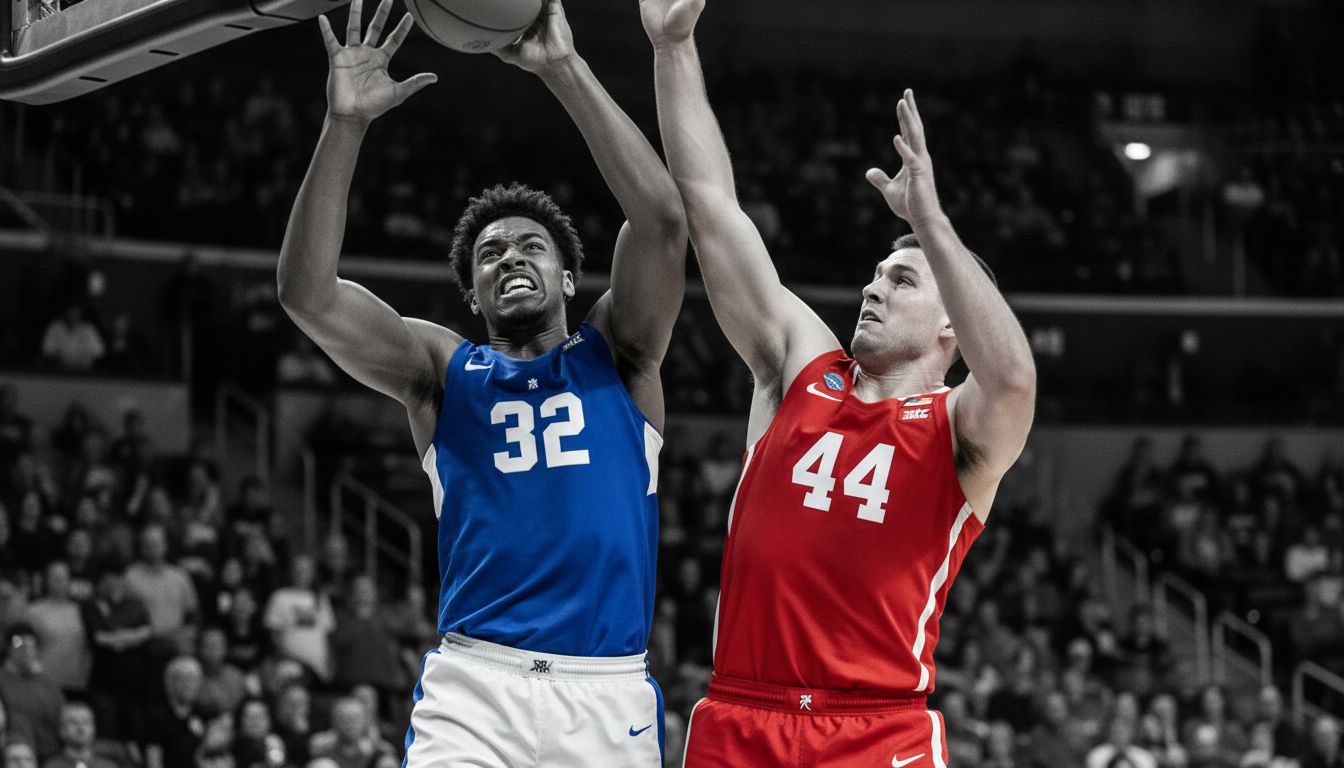
The average height of the starters in Arizona-Michigan is 79.5 inches, making it the second-tallest Final Four matchup in the past 50 years, according to CBS Sports research. Arizona uses its positional size to dominate the offensive glass, while Michigan's size fuels one of the most efficient two-point offenses in the country.
If both teams relied heavily on 3-point shooting, there might be concern about replicating regular-season production in a venue like Lucas Oil Stadium. That's not the case here -- particularly for Arizona, which operates more inside-out.
That said, this matchup also features the nation's top two defenses. For our favorite pick, the expectation is a first half that reflects the anticipated pace and scoring, followed by a second half where adjustments lead to more stops and a slower tempo.
With a full-game total of 157.5 requiring sustained offensive production over 40 minutes, the focus instead is on the first half.
The new source article provides a detailed position-by-position breakdown of the matchups, highlighting key players and their potential impact. Illinois' Keaton Wagler is noted for his impressive shooting and low turnover rate, giving Illinois an edge at point guard against UConn's Silas Demary Jr., who is limited by injury. UConn's Braylon Mullins, despite his recent shooting struggles, remains a threat, while Illinois' Jake Davis offers reliable shooting and defense. In the forward position, Illinois' David Mirkovic and UConn's Alex Karaban are evenly matched, with Mirkovic's size and skill posing a challenge for Karaban. Tarris Reed's dominant tournament performance gives UConn an advantage at center, but Illinois' Tomislav Ivisic's shooting ability could stretch the floor. Illinois' bench, led by Andrej Stojakovic, provides significant depth, while UConn's bench has been bolstered by returning players.
For the Arizona vs. Michigan matchup, Arizona's Jaden Bradley and Brayden Burries are highlighted for their scoring abilities, while Michigan's Yaxel Lendeborg and Morez Johnson Jr. are noted for their defensive prowess and rebounding. The battle between centers Aday Mara and Motiejus Krivas is expected to be a key factor, with Michigan's bench offering more depth.
The new insights suggest Illinois has the tools to exploit UConn's defensive vulnerabilities, while Michigan's defensive strength and Yaxel Lendeborg's performance could be decisive against Arizona.