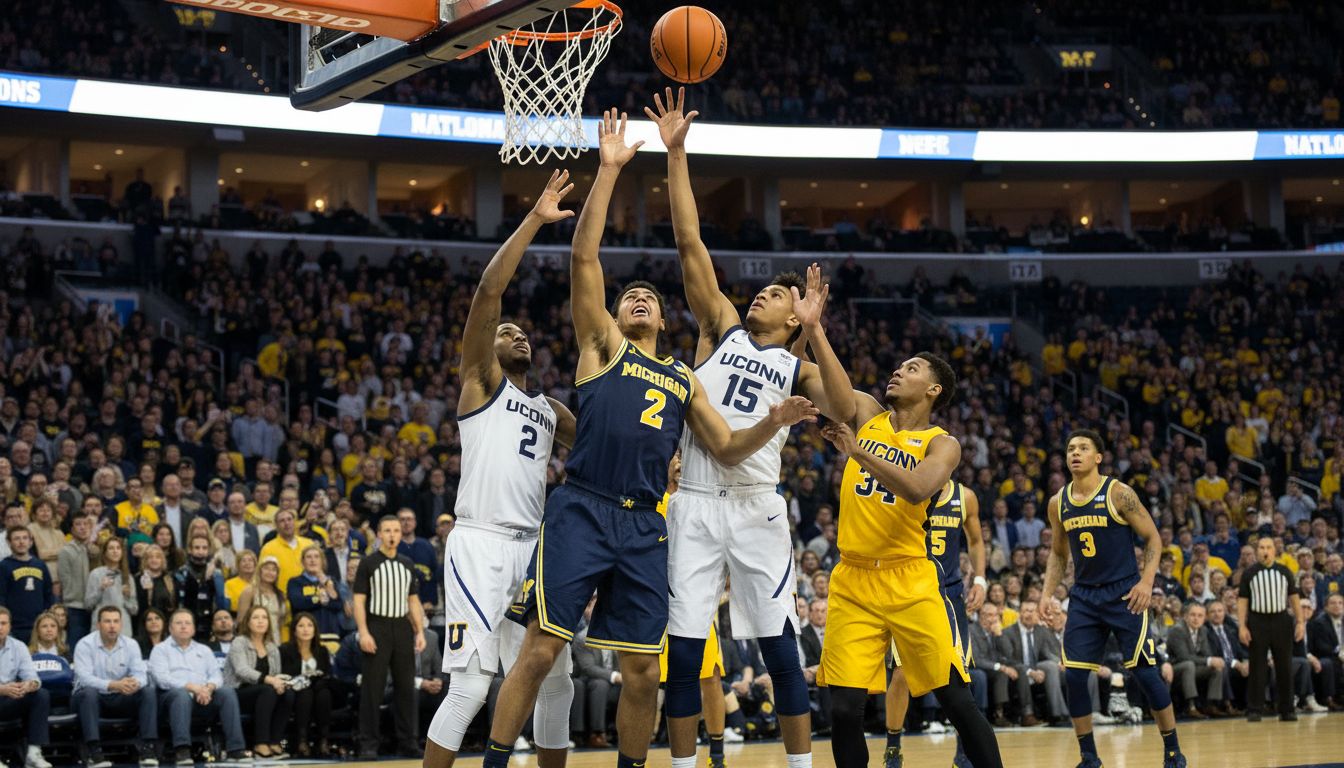
If you love college basketball played at full tilt, Monday night’s national title game between Michigan and UConn is your kind of revival service. You’ve got two very different ways of winning colliding on the biggest stage: Michigan wants to hit you in the mouth with size, speed, and paint touches, while UConn wants to put you through an offensive maze and then hound you for 30 seconds on the other end. It’s bully ball versus basketball calculus, and somewhere in between we’re going to find a champion. From where I’m sitting down here in Lexington, this matchup isn’t about stars or brand names; it’s about who can force the other guy to play their style for 40 minutes. Let’s walk through how this game tilts, possession by possession, and why the tempo, not the headlines, might decide the trophy.
Start with the basics: Michigan is at its best when this thing turns into a track meet, and the numbers back that up. The Wolverines are 0-2 this year in games with 63 possessions or fewer, and both losses tell the same story – slow them down, and suddenly that "most dominant transition offense in the game" looks human. Purdue dragged them into a 63-possession mud fight and won 80-72; Duke pulled them into a 62-possession grinder and walked out 68-63 winners. When Michigan can run, Arizona-style, they look like they’ve got six guys on the floor; when they’re stuck in the halfcourt, the advantage shrinks to something a well-prepared opponent can survive. So if you’re looking for the first big strategic question of this championship: can UConn pull the pace down into the low 60s and live in the slop it loves?
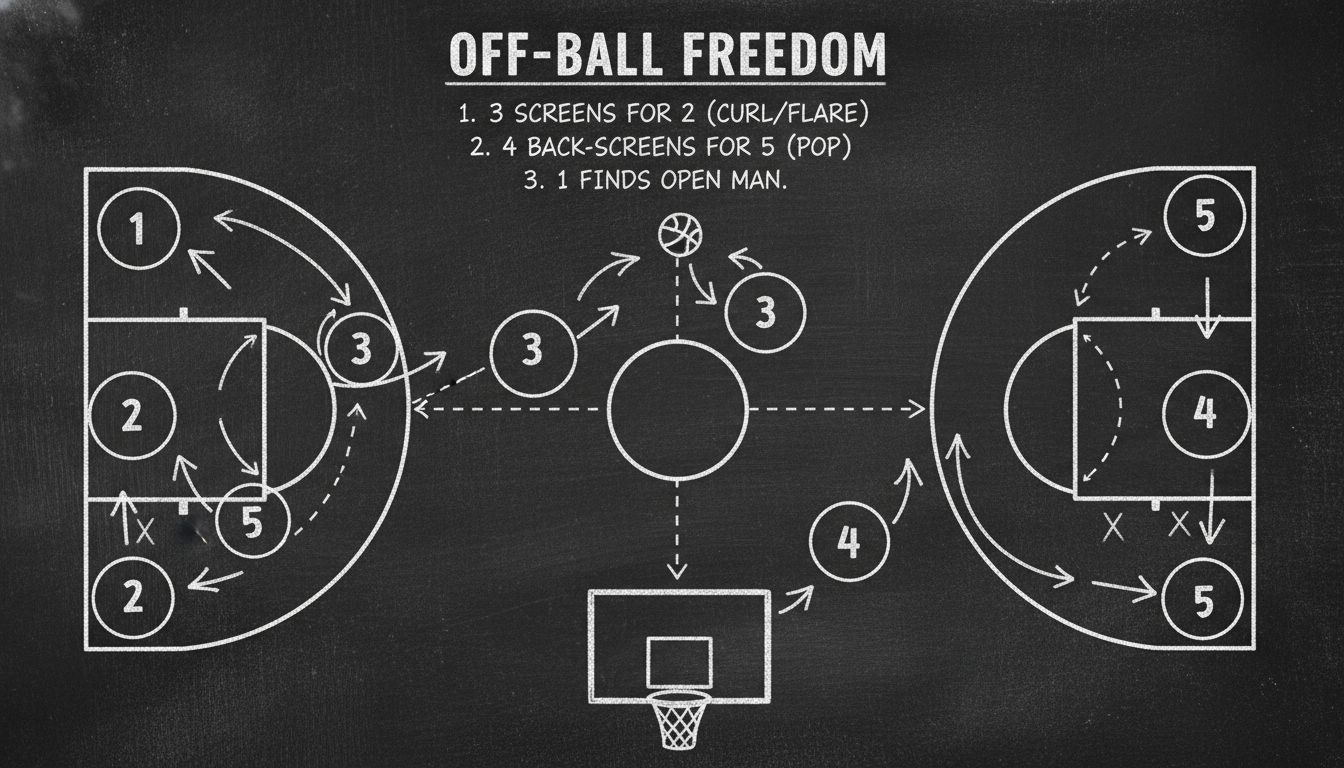
On the other side, UConn isn’t winning this game by overpowering Michigan inside – not against that front line. The Huskies win with structure, screening, and more counters than a small-town diner. They average 9.3 points per game directly off screens, second in the entire country, and that isn’t by accident. Dan Hurley’s offense is a blur of ghost screens, staggers, back screens, re-screens and dribble handoffs that never really stop once they start; you don’t guard one action, you survive a whole sequence. The problem for Michigan is that its size, which usually overwhelms people, could become a liability if their bigs can’t navigate all that off-ball traffic and stay attached to shooters.
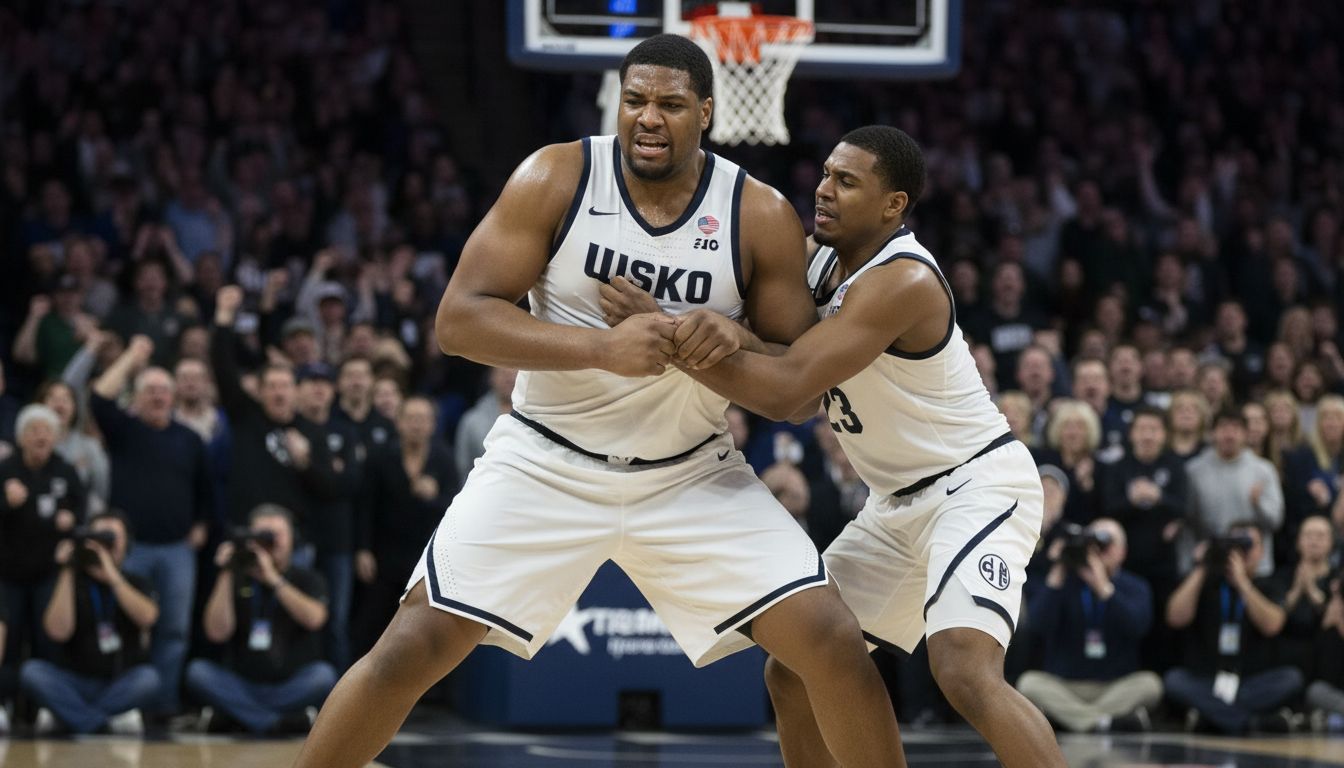
The most intriguing individual chess match might be Morez Johnson versus Alex Karaban. Johnson is a 6-foot-9, 250-pound wrecking ball who wants deep catches and second chances; Karaban is a 38% career three-point shooter who thrives sprinting off movement and cutting into space. If Johnson can chase Karaban around those screens without getting lost, Michigan can live with some makes and still control the paint. If he can’t, UConn suddenly has a pressure point it can attack over and over, especially with Karaban due for a breakout after going just 2-for-13 from three in his last two games. Dusty May knows what’s coming, and he’s already talking about the need for discipline to guard for the full shot clock and finish possessions with rebounds on those long jumpers.
Perimeter matchups will shape everything around those bigs. Elliot Cadeau’s speed at point guard is a real concern for UConn, especially if Braylon Mullins draws that assignment and has to guard without fouling all night. Nimari Burnett and Solo Ball are almost mirror images – veteran shooters who understand angles, spacing, and how to punish late closeouts. But there’s a wrinkle: Ball’s foot injury coming out of the Final Four win over Illinois puts his status in doubt, and that’s a problem for a UConn team that needs shooting to keep Michigan’s size honest. Without Ball at something close to full strength, the Huskies’ margin for error from deep shrinks, and Hurley himself has admitted they can’t get away with another cold shooting night in this one.
If UConn is going to tilt this game in its favor, it starts with turning it into what coaches politely call a "grind" and what the rest of us might call ugly basketball. Hurley’s group is comfortable in 63-possession rock fights; they’ve played thirteen of them already and over twenty games at 65 possessions or fewer. That’s where their physical defense, ball pressure, and ability to string actions together really show up. The blueprint is straightforward, even if it’s hard to execute: hound Michigan’s ball handlers, force turnovers, and make the nation’s most unselfish offense settle for isolation looks late in the clock. Every empty trip, every deflection, every long, contested two is another brick in UConn’s upset wall.
Michigan’s counter is simple in theory and brutal when it’s rolling: play downhill with force, attack early in the clock, and pound mismatches until the defense breaks. Deep duck-ins for Johnson against Karaban will be available, and high-low actions featuring Johnson or Aday Mara can stretch UConn’s help to the breaking point. Tarris Reed is a major swing piece here; he’s the primary answer to UConn’s inside presence, and the Huskies don’t have a lot of extra bulk to throw at him if he gets rolling. If Reed gets UConn’s front line in foul trouble, there’s no Donovan Clingan waiting in the tunnel with extra eligibility – that’s when Michigan’s size advantage turns into a full-on problem. For the Wolverines, every transition push, every early post seal, every quick-hitting drive is one step away from UConn’s comfort zone and toward the kind of game they usually dominate.
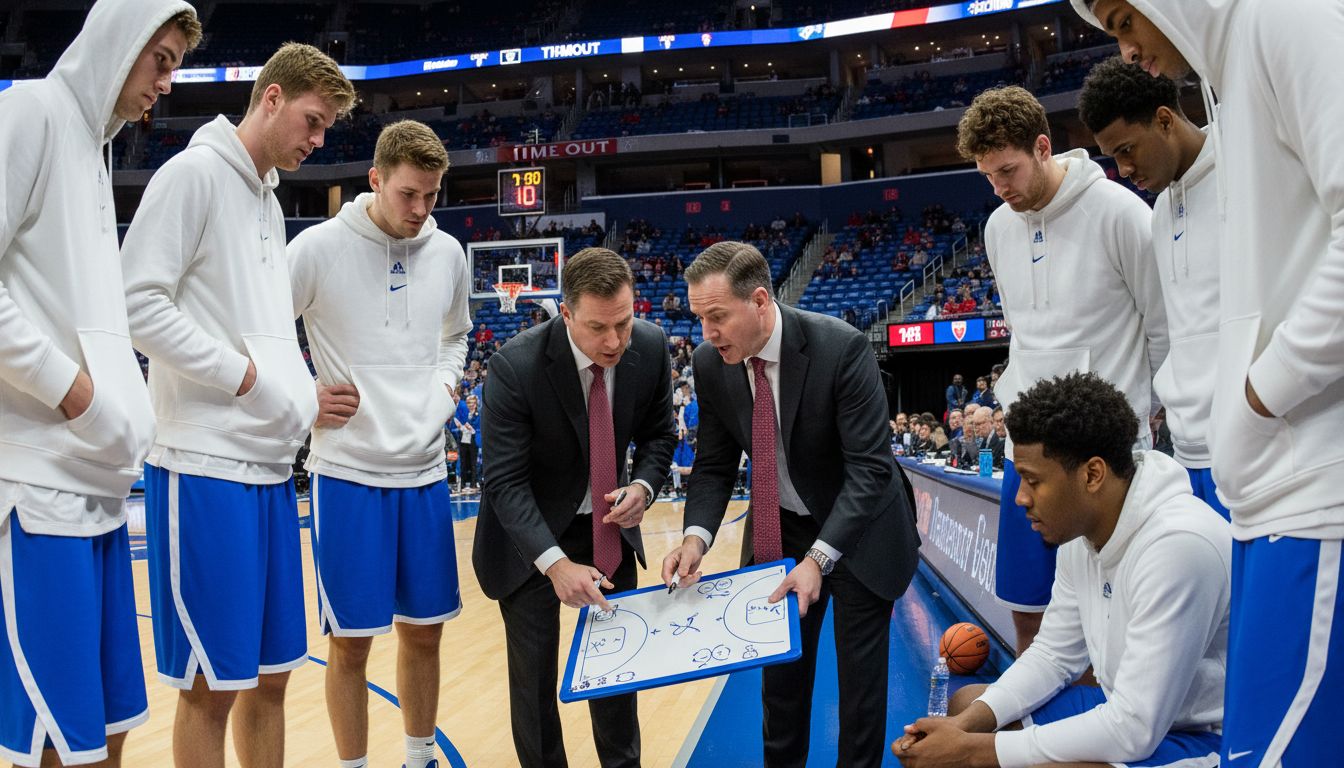
There’s also a subtle tactical lever both staffs will pull: switching on UConn’s off-ball actions. Michigan may try to switch one-through-four and dare Silas Demary Jr. to be a scorer late in the clock rather than a facilitator. That sounds good in a film room, but in real time, staying organized against Hurley’s layered sets is a tall order; one miscommunication and a shooter is stepping into a clean look. UConn, in turn, will try to load up the paint without completely abandoning the arc, living with some tough twos from post-ups instead of surrendering runouts and rhythm threes in transition. This is the kind of game where "good" defense for 25 seconds won’t be enough – the last five seconds, and the rebound, might end up deciding a championship.
From a neutral standpoint – yes, even for a Kentucky guy watching two non-SEC teams – this is a matchup that shows why college hoops is still special. You’ve got coaching staffs that are elite gameplanners, rosters with clear identities, and a title game that’s more about execution and adjustments than one-and-done star power. The tension isn’t just "who’s better"; it’s whether Michigan can drag UConn into a fast, physical game, or whether UConn can slow the Wolverines down and turn this into halfcourt problem-solving. Whichever team bends less and imposes its rhythm is likely the one cutting down the nets. If you love possessions that feel like mini-battles and coaching moves that feel like chess instead of checkers, settle in – this one should reward your attention.
Zooming out, matchups like this are a reminder that the sport still belongs to teams that know exactly who they are and don’t flinch when someone tries to pull them out of character. Michigan won’t suddenly morph into a slow, grind-it-out ball-control group, and UConn isn’t going to turn this into a track meet to chase highlight plays. They’ll each lean into what’s gotten them here: Michigan’s speed, strength, and paint dominance, UConn’s relentless screening, defensive fire, and comfort in the muck. Somewhere in the middle, in those key possessions where one side imposes its style on the other, a champion will emerge. And when the confetti falls, you can bet coaches from Lexington to Los Angeles will be stealing a few pages from the winner’s game plan, because this title game is as much a clinic as it is a coronation.