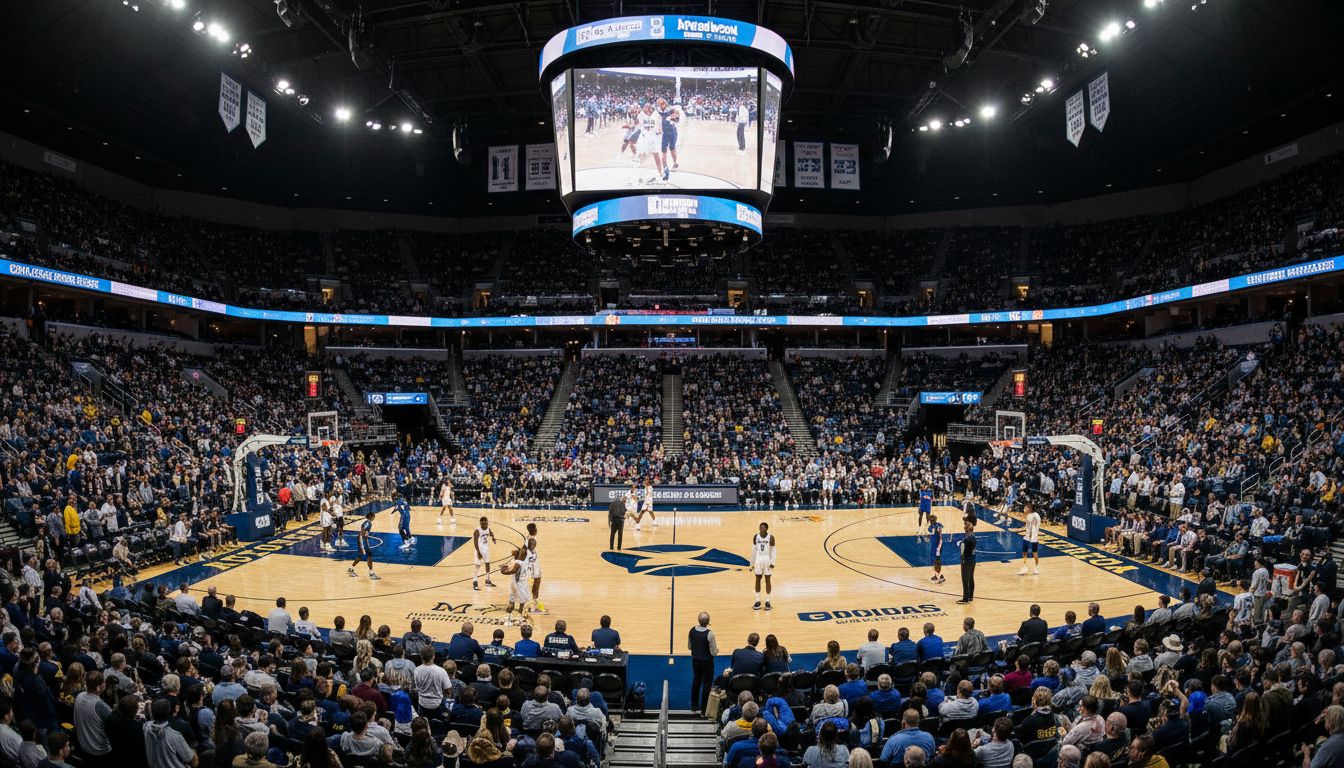
On paper, Saturday night’s clash in Washington, D.C., is a neutral‑court non‑conference game in February; in practice, it has the weight and wattage of a national semifinal. Top‑ranked Michigan arrives at 25–1, flattening opponents with an efficiency that would make any old‑school Big Ten purist nod approvingly, while No. 3 Duke is 24–2 and fresh off turning Syracuse into a case study in what happens when you invite a sledgehammer to a knife fight. When you see two teams this polished, this disciplined and this ruthless meet outside of March, you’re not just watching a game—you’re getting a sneak preview of which program can best translate regular‑season dominance into tournament inevitability. From my seat in Durham—figuratively in Cameron, spiritually in the rafters next to a certain legendary banner—the more interesting question isn’t simply "Who wins?" but "What does this matchup tell us about who these teams really are when the lights are brightest?" That, after all, is the coin of the realm for blue bloods: not how you look on a random Tuesday in January, but how your habits hold under championship scrutiny.
Let’s begin with Michigan, because their résumé this season reads like a polite but firm notice to the rest of the sport. At 25–1, they’re not just winning; they’re imposing structure on games, dictating tempo and shot quality with the quiet arrogance of a program that knows exactly who it is. Double‑digit dominance at No. 7 Purdue, leading by as many as 20 in a hostile gym, is the sort of performance selection committees and veteran scouts circle in red ink. Add in non‑conference eviscerations—Gonzaga and San Diego State by 40, Villanova by 28, Auburn by 30—and you begin to see a pattern that’s hard to dismiss as mere schedule luck or hot shooting. This is a team with size, functional depth and the kind of two‑way connectivity that turns good teams into nightmare matchups when whistles tighten and possessions shrink.
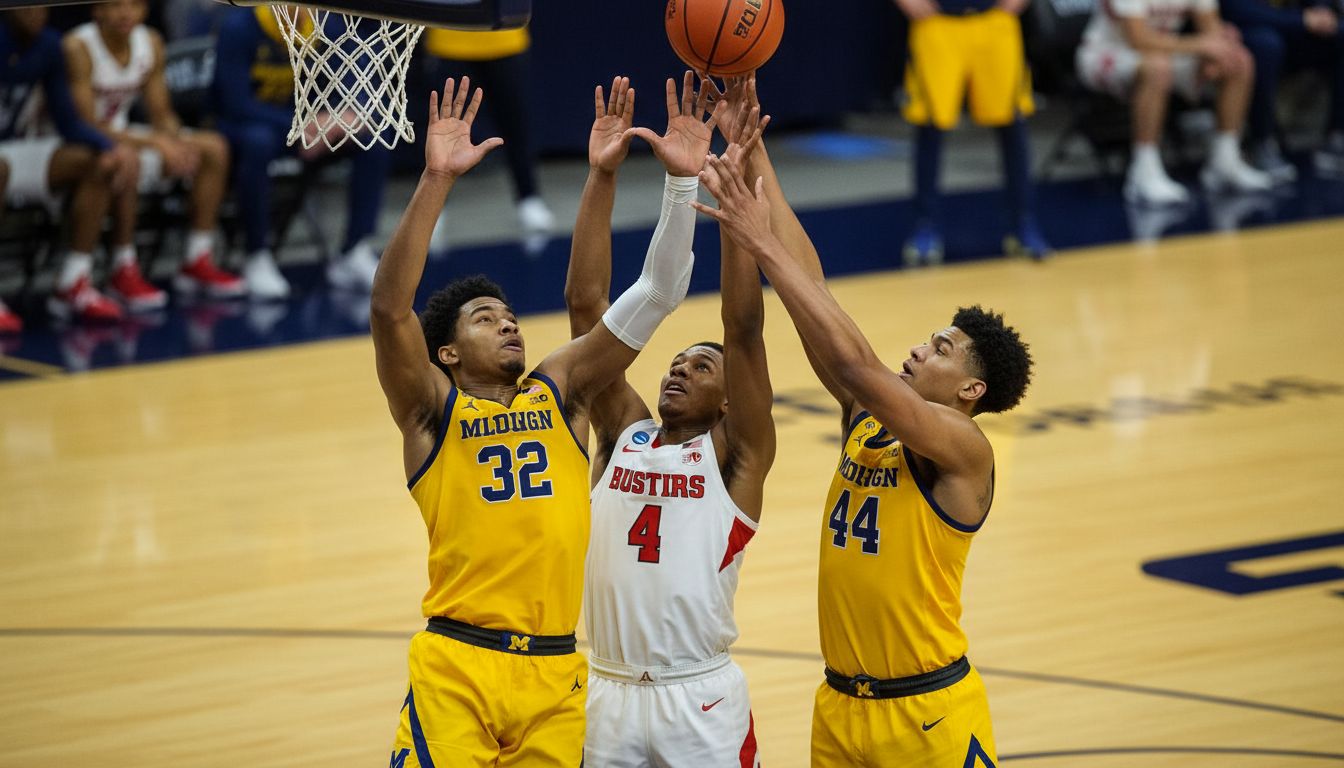
Duke, however, is not one of those anonymous victims scattered across Michigan’s path; Duke is the standard by which those paths are measured. At 24–2, the Blue Devils have been quietly, almost annoyingly efficient—annoying at least to those who secretly hope reports of Duke’s post‑Krzyzewski mortality weren’t exaggerated. Demolishing Syracuse by 37 is less remarkable for the margin and more for the manner: sharp rotations, shot selection that would earn an approving eyebrow from any old‑money trustee, and a defensive effort that squeezed the life out of an experienced ACC opponent. If Michigan has been the season’s blunt instrument, Duke has been the scalpel—precise, deliberate, and increasingly comfortable carving up whatever scheme appears on the whiteboard across from them. The truth, as it usually does in college basketball, lives in the tension between those two identities.
Layered onto the stylistic contrast is the setting: a neutral court in Washington, D.C., where neither side enjoys the rhythms and sightlines of home. Veteran coaches will tell you that unfamiliar backdrops have a way of humbling even elite offenses; depth perception from the corners, timing off the glass, even the feel of the rims can shave a few points off otherwise clean looks. That’s one reason the total sitting around 148.5 invites a hard look at the under, particularly when both teams have the defensive maturity to turn this into a series of half‑court examinations rather than a track meet. Neutral floors also tend to reward the program, not the moment—system, not streak—because the usual crowd‑driven runs are blunted, and execution has to generate its own energy. If you believe, as I do, that the great programs carry portable habits, then the question becomes whose habits are more transferable to a cavernous D.C. arena on a winter weekend.
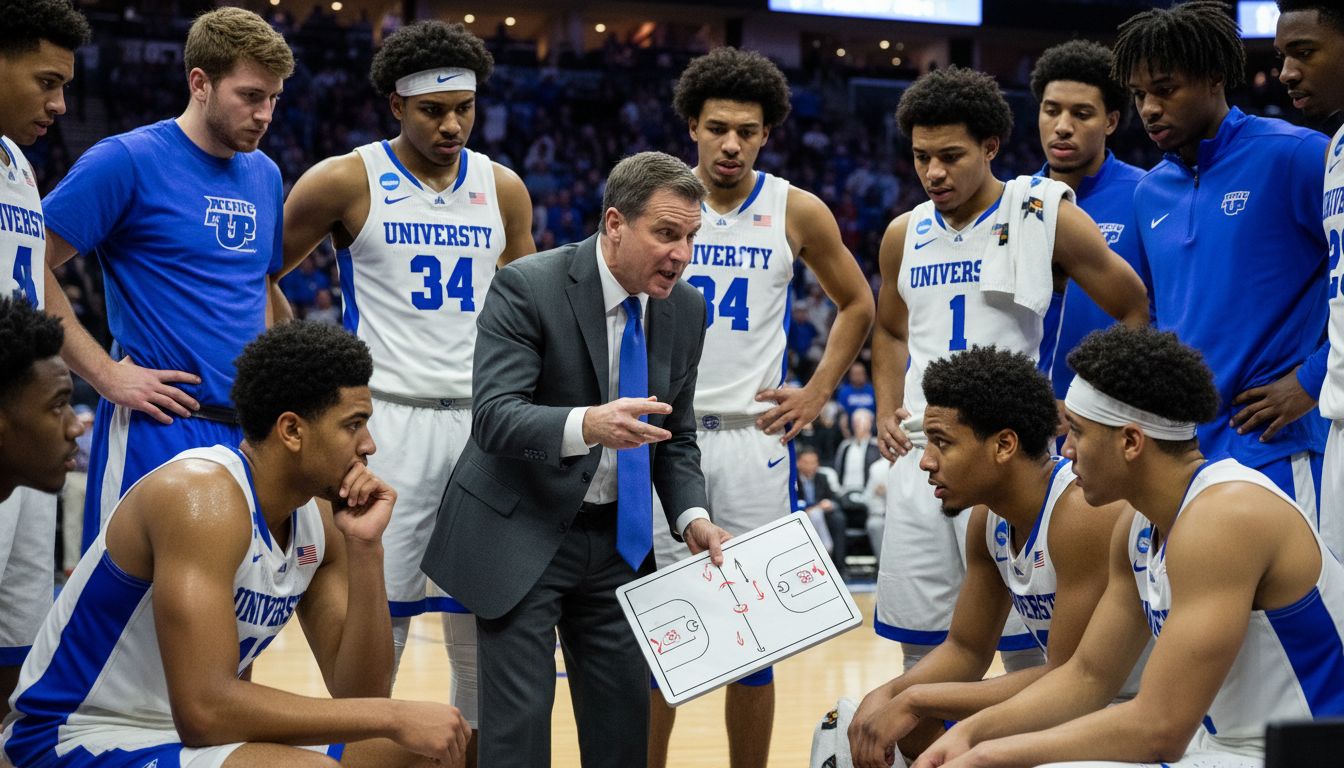
Now, the betting market’s opening stance—Michigan favored by 2.5—is a quiet acknowledgement of that résumé we just walked through, and in fairness, you don’t go 25–1 and annihilate multiple tournament‑caliber teams by accident. Oddsmakers are effectively saying that, on a neutral floor, Michigan has been just a hair more trustworthy possession to possession, and that their size and depth profile as the safer short favorite. For those inclined to view this through the futures lens, backing Duke for the national title at +700 becomes an intriguing piece of portfolio management. If the Blue Devils win, that price tightens immediately, and you’ve bought a blue‑blood asset at a relative discount; if they lose respectably to the nation’s top team, the number probably hovers in the same neighborhood, because the market tends to forgive high‑level losses more than it forgets sustained excellence. In other words, this game is less a referendum on Duke’s viability than it is an information‑gathering exercise on Michigan’s ceiling.
From a tactical perspective, Michigan’s advantage is rooted in sheer physicality paired with depth—the ability to throw multiple long, disciplined bodies at you and grind your offensive sets toward the baseline of your playbook rather than the ceiling. Their non‑conference demolition jobs weren’t built on fluky shooting nights; they came from winning the glass, controlling the paint, and turning every possession into a test of your conditioning and composure. Duke, by contrast, has leaned into versatility and skill, with lineups that can stretch, switch and punish mismatches without abandoning defensive principles. When you marry that with a staff that still thinks the game in the old Duke way—possession value, weak‑side rotations, defending without fouling—you get a team that may not look as overpowering on a scoreline, but travels well into March. The subtlety here is that Michigan’s size can be blunted by smart spacing and disciplined closeouts, whereas Duke’s precision can be disrupted by brute force and a tight whistle; officiating, as ever, will be the uninvited but influential guest at this particular soirée.
As for the under 148.5, it’s worth remembering that when two elite teams meet on a neutral court, the first casualty is usually rhythm. Both staffs know each other’s pet actions, both will have spent the week scripting coverages for late‑clock situations, and neither will be inclined to allow transition runouts that could tilt momentum. You’re likely to see longer, more deliberate possessions, an emphasis on shot quality over volume and, if early shooting is shaky in the new environment, a slight collective tightening that drags pace down another notch. Defense, in games like this, becomes not just a means to an end but a form of prestige—each stop a quiet assertion of program identity. For all the pyrotechnics in their respective records, there’s a strong case that the most sustainable edge in this matchup isn’t who scores more easily, but who is more comfortable winning a game that never quite opens up.
All of this, of course, exists in the long shadow of March. For Michigan, a statement win over Duke on a neutral floor would confirm what the numbers already suggest: this is a team with a legitimate claim to the No. 1 overall seed and the attendant path advantages that come with it. For Duke, a win would be both résumé gold and a subtle restoration of order—a reminder that for all the new money and nouveau powers in the sport, the old guard in Durham still expects to be in the thick of the title conversation. Even a competitive loss, though, doesn’t derail Duke’s season; it merely shifts the narrative from "dominant" to "still refining," which, if we’re honest, is where most championship teams live in February anyway. In a tournament environment increasingly defined by volatility, both programs are chasing not perfection, but repeatable habits that hold up over six games in March and April.
So where does that leave us for Saturday night? The sober, spreadsheet‑driven view says Michigan minus the points is the correct side: deeper frontcourt, more demonstrable blowout equity this season, and a track record of turning good teams into cautionary tales. The old‑money, blue‑blood part of me, however, resists the idea that Duke should be treated as anything less than a live underdog when the lights are bright and the stakes feel vaguely like April. If forced to choose a betting angle, I’d be more inclined to attack the under and, if one insists on a side, perhaps nibble at Duke’s futures number rather than wage ideological war over 2.5 points in a single game. After all, the real legacy of a game like this won’t be the spread; it will be the tape, quietly studied in film rooms from Durham to Ann Arbor, as both programs refine the habits that will matter when the brackets finally arrive.