Every February in the Midwest, you can tell how a season’s going by how quiet the gym gets when someone hits the floor and grabs a knee. We talk about systems and schemes, but so often March comes down to one rolled ankle or one fractured hand. This year’s stretch run has been no different, with key injuries reshaping conference races and at least one high‑profile firing reminding everyone that words can be just as costly as turnovers. From Spokane to Chapel Hill and out here in Big 12 country, the margin between a dream season and a cautionary tale feels razor thin. If you love college hoops, this is the part of the calendar when your bracket scribbles start to feel less hypothetical and a lot more fragile.
Start with Gonzaga, where forward Braden Huff’s left knee injury will keep him out through the end of the regular season. He’d already been shelved with a 4‑to‑8 week timeline after a practice injury on Jan. 14, but now Mark Few has essentially circled "post‑WCC tournament" as the first realistic return date. For a program that has built its reputation on cohesion and continuity, losing a versatile big this late is like pulling a board out of a Jenga tower that’s already swaying. Gonzaga will still look like Gonzaga on paper, but they’re now trying to hold seeding position while playing without a key frontcourt piece and hoping he’s healthy enough to matter when the real lights come on. In a sport where rotations tighten in March, replacing a trusted contributor with committee minutes can be the difference between a protected seed and a dangerous 6‑or‑7 line matchup.
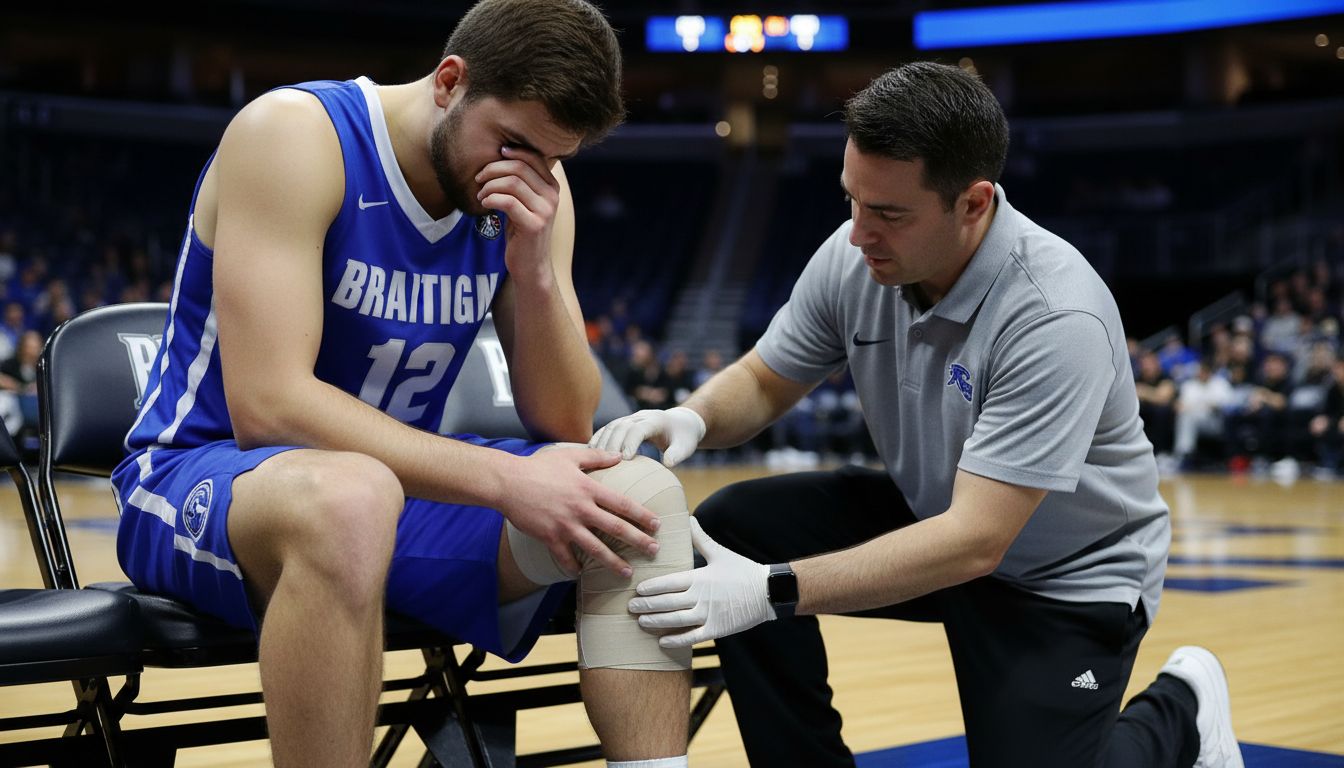
Arizona is dealing with its own gut‑check moment after freshman forward Koa Peat went down with a lower‑body injury and missed the second half and overtime of the Wildcats’ loss to Texas Tech. Tommy Lloyd hasn’t offered any clarity yet on Peat’s status, which leaves everyone guessing how serious it is. Peat’s 13.8 points and 5.4 rebounds per game don’t just vanish without a ripple; those are the numbers of a young cornerstone, not a role player. If you’ve watched enough seasons, you know how this story can fork: either the team rallies around the next man up and grows tougher, or the load on the remaining scorers becomes unsustainable against tournament‑level defenses. In Tucson they’re surely hoping this is a short‑term scare, but until there’s an update, Arizona’s ceiling is written in pencil instead of ink.
In Provo, BYU absorbed the kind of double hit that forces a coaching staff to rewrite its March blueprint overnight. Senior forward Richie Saunders tore his ACL in a win over Colorado, effectively ending his college career and taking the Cougars’ leading three‑point shooter off the floor. That follows an earlier season‑ending ACL injury to senior guard Dawson Baker, a one‑two punch you wouldn’t wish on any roster in February. For a stretch‑heavy offense like BYU’s, losing 64 made threes from Saunders isn’t just an aesthetic change; it collapses spacing, shrinks driving lanes, and makes every set a little easier to scout. The Cougars had already dropped four of five before the Colorado win, and now their margin for error in chasing national relevance has narrowed to a sliver that would make even a veteran team nervous.
On the other side of the country, North Carolina is trying to hold serve in the ACC without Caleb Wilson, the freshman who has been carrying a blue‑blood scoring load with 19.8 points and 9.4 rebounds per game. Wilson fractured his left hand in a loss to Miami on Feb. 10, just days after dropping 23 on Duke in a rivalry game that probably felt familiar to anyone who grew up on Tobacco Road VHS tapes. His return timeline is murky, but there’s reported optimism he’s back before the ACC Tournament, which is code for "the doctors think it’s possible, but we’re all crossing our fingers." With only six games left over three weeks, North Carolina is in that delicate phase where you try to protect your star’s long‑term health while also knowing that seeding, momentum, and locker‑room belief are all on the line. Anyone who has ever watched a title contender wobble late knows how quickly an injury like this can turn a one‑seed dream into an uncomfortable bracket reveal.
Out here in Manhattan, Kansas State’s drama hasn’t come from twisted ligaments but from twisted words and a program that, fairly or not, was judged to be sliding in the wrong direction. Head coach Jerome Tang was fired for cause with the Wildcats sitting at 10‑15, ending what had been, not long ago, one of the Big 12’s feel‑good stories after his 2023 Elite Eight run. The university cited Tang’s public comments and conduct, zeroing in on his blistering postgame remarks after a 91‑62 loss to Cincinnati in which he said, "These dudes do not deserve to wear this uniform" and predicted that very few players would be back next year. Athletic director Gene Taylor referenced contract language about avoiding embarrassment to the university and pointed to the national and local backlash as justification for a for‑cause move instead of a standard buyout. It’s a reminder that in today’s landscape, coaching isn’t just about Xs and Os or even wins and losses; how you talk about your players in public can be the loose thread that unravels everything.
Tang, for his part, pushed back hard, saying he was deeply disappointed, that he had always acted with integrity, and that he believed he’d served Kansas State and its student‑athletes well. He framed his tenure as a calling, thanking his faith, his players, and the fan base, and expressing pride in what they had built together. From a neutral vantage point, you can see two truths tugging at each other: a frustrated coach using old‑school, hard‑edge language after a lopsided loss, and an administration wary of how that language lands in a modern era where player empowerment and public perception matter as much as the final score. Kansas State rewarded Tang after that 2023 run with a seven‑year extension, a rising salary starting at $3.6 million, and an $18.7 million buyout, which makes the decision to fire him for cause not just about culture but about dollars and cents. In the Big 12, where budgets are big and patience is short, that kind of separation is as much a financial statement as it is a moral one.
Watching all this from just down Highway 24, it’s hard not to contrast Kansas State’s turmoil with the long, steady line of continuity in Lawrence. At Kansas, the standard for how a coach talks about the program, the players, and the jersey has been shaped over decades, dating back to Phog Allen and reinforced through Allen Fieldhouse nights where you can almost feel the tradition in the rafters. That doesn’t mean coaches haven’t had hard conversations with players behind closed doors; it just means that once the microphones are on, most of the criticism has usually stayed in the film room and not on the podium. In an era of NIL, transfer portals, and instant reaction, that old‑fashioned discretion seems less like a quaint habit and more like a competitive advantage. Players talk, parents talk, and recruits absolutely weigh whether a place will have their back when the shots aren’t falling, which is why how you say something now travels almost as far as what you run on offense.
The broader theme tying these storylines together is how fragile a college season really is, no matter how solid it looks in October. A fractured hand in Chapel Hill, a torn ACL in Provo, a wobbly knee in Spokane, and a few angry sentences in Manhattan all ripple out into locker rooms, fan bases, and selection committee meetings. For every program riding high into March, there’s another trying to patch together rotations or manage a public relations storm just to stay afloat. If there’s any constant, it’s that depth, communication, and culture matter more now than they ever have, even if they don’t show up neatly in a box score. Some years the ball bounces your way and the roster stays healthy; other years, as any honest coach in the Big 12 or ACC will tell you, you’re one awkward landing or one hot mic away from rewriting the story you thought you were living.
As the final weeks of the regular season play out, fans will keep refreshing injury updates, parsing AD statements, and recalibrating their bracket predictions based on each new twist. The teams that navigate this minefield best won’t necessarily be the ones with the shiniest preseason rankings but the ones that blend honest accountability with respect, and depth charts with a little good fortune. If your favorite program is relatively healthy, stable, and boring right now, that might actually be the best sign of all heading into March. There’s always a temptation to treat the sport like a drama series, but for coaches and players living it, the preference is usually a lot more mundane: quiet training rooms, calm press conferences, and a chance to let the basketball, not the headlines, decide their fate. In a month built on madness, sometimes the surest edge is the one nobody notices until it’s hanging on a banner.